
Climate Resilience Through Nature
Climate change will make our city warmer. It can also bring about extreme weather and cause sea levels to rise, thus increasing the risk of flooding.
Last updated on 26 May 2026
There are opportunities to leverage green and blue spaces to adapt to the impacts of climate change while providing recreational and ecological benefits.
Intensifying greenery for a cooler city
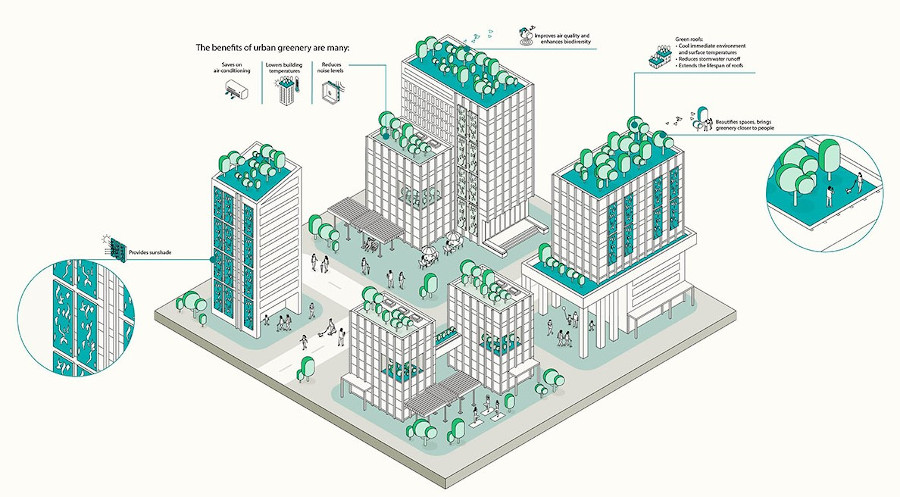
Urban areas tend to be warmer than rural ones because roads, buildings and other structures made of cement, asphalt or steel absorb and trap heat from the sun. This is known as the urban heat island effect. We will cool down our built-up areas by intensifying urban greenery.
Increasing skyrise greenery
Green walls, green roofs and rooftop gardens mitigate the urban heat island effect by lowering building temperatures. The result is a more comfortable and beautiful environment to live, work and play in. We are promoting the implementation of more skyrise greenery in Singapore's buildings and aim to increase coverage from 143 ha to 200 ha by 2030.
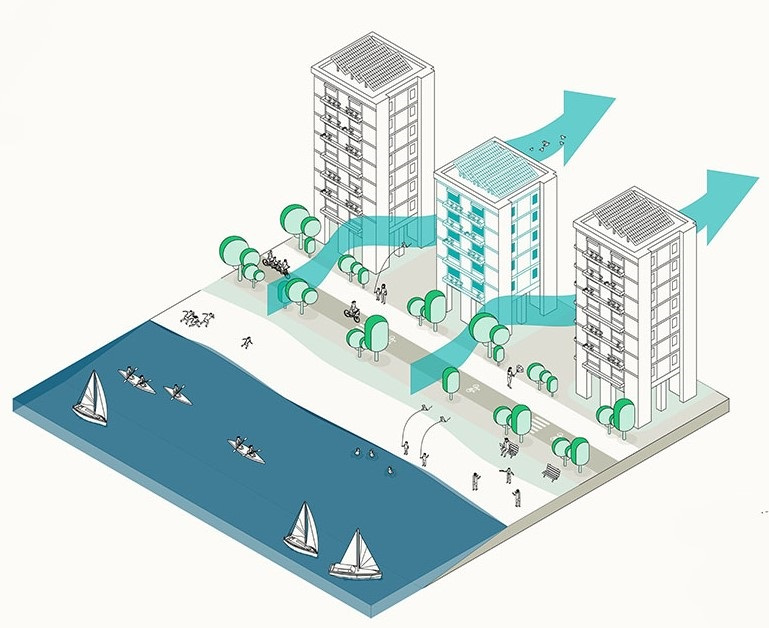
Increasing porosity at coastal areas
Waterfront sites are the gateways of sea and land breezes due to sea cooling and sun warming effects. We can increase porosity at coastal areas to take advantage of this.
Greening industrial hotspots
Future industrial estates will be greener with more pleasant working environments.
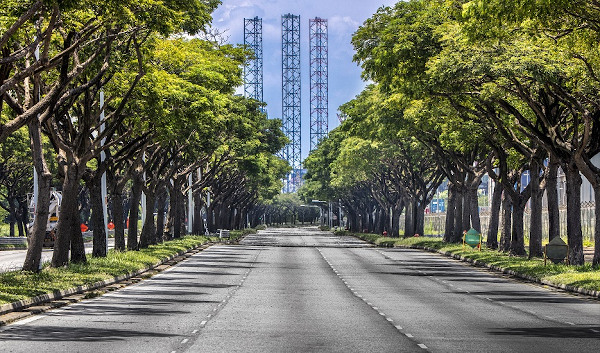
Jurong Island © JTC
We target to plant 34,000 more trees to mitigate the urban heat island effect and create a more attractive working environment. This is part of JTC’s green initiatives to create a sustainable energy and chemicals park.
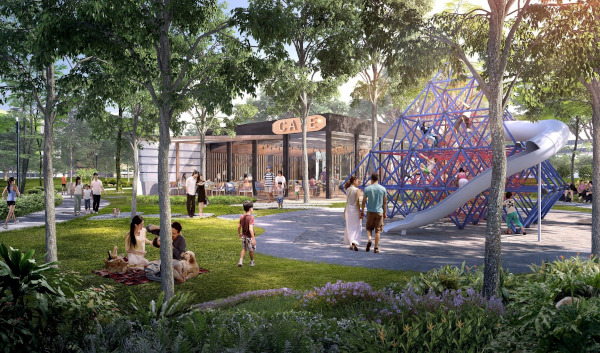
Jurong Innovation District – Advanced Manufacturing Hub © JTC
Masterplanned by JTC, the district is designed to maintain a sustainable balance between business and the environment. It will be a clean and eco-friendly estate with parks and green spaces for all to enjoy. The buildings will incorporate environmentally sustainable features too.
Leveraging nature-based solutions
Traditional infrastructure such as ponds and canals for managing stormwater can be integrated with green and blue features to enhance biodiversity and recreational value.
Transforming canals into rivers and streams
Many of our concrete canals and ponds have adopted the Active, Beautiful, Clean (ABC Waters) Programme concept to integrate greenery into the design, creating attractive destinations for both nature and people.
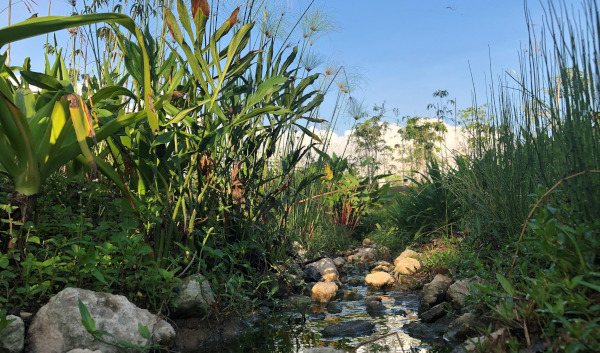
Neram Streams @ Jurong Lake Gardens © NParks
The riverbanks of the Neram Streams are planted with semi-aquatic plants to create habitats for animals and insects. They also cleanse stormwater runoff from the surrounding areas before channelling it into Jurong Lake.
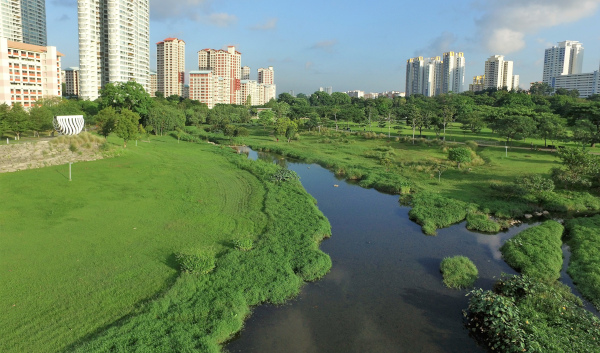
Kallang River @ Bishan-Ang Mo Kio Park© PUB
The rejuvenation project not only increased the capacity of the waterway, but also created additional habitats for biodiversity.
The concrete canal was transformed into a naturalised river using a series of soil bioengineering techniques involving plants and natural material that help to stabilise the riverbanks. They also form natural habitats that enrich the biodiversity of the park.
Learning from nature to protect our coasts
Our coastal protection efforts will be supported with natural solutions and nature-based enhancements.
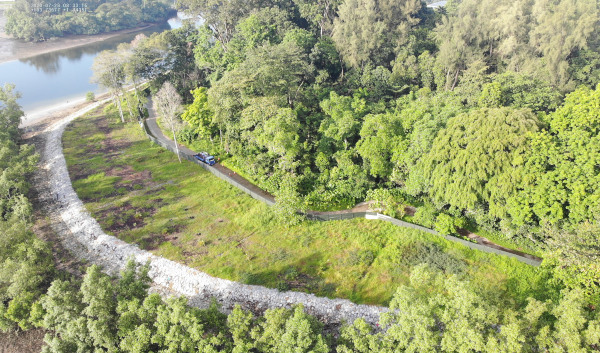
Kranji Coastal Nature Park © NParks
A sloping rock structure known as a revetment has been installed between the original mangroves and new vegetation belt along the shoreline to slow down waves and encourage accretion of mud for mangrove enhancement.
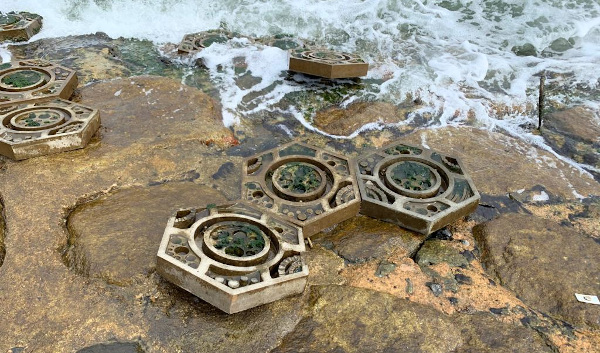
Changi Bay © NParks
Biodiversity tiles that come with crevices, grooves and pits have been installed on existing seawalls to support marine life such as crabs, snails and starfish.
The Marine Climate Change Science research programme will also help inform the development of evidence-based interventions and solutions. This will help safeguard our coastal and marine ecosystems against climate change and leverage existing natural capital in our green and blue spaces.