
AI for Cities
Artificial intelligence is changing how we plan and run our city, across our urban planning and operations' sectors. Come explore how AI is being put to work for Singapore.
Last updated on 15 June 2026
AI for Cities: Shaping Our Urban Future
Visit our exhibition to explore how artificial intelligence (AI) is transforming how we plan, design, and manage our city for a more liveable and sustainable future.
Date: 3 June 2026 to 21 August 2026
Location: URA Centre, Level 1, Atrium
Building on a foundation of data
Singapore has long used data to guide how we plan and manage our city. Today, AI builds on this foundation, helping us better understand complex urban systems, anticipate change, and make more informed decisions.
This exhibition traces the journey of AI in our city – from the pioneering work in data science and modelling that laid the groundwork, to today's applications across three key approaches: machine learning for pattern recognition and prediction, deep learning for analysing complex visual data, and agentic and generative AI for more autonomous reasoning and action.
Together, these advances mark a new era in how we plan, design and operate our city.
Predicting and optimising our city
As Singapore navigates evolving challenges such as an ageing population, changing work patterns, and climate change, integrating machine learning into our analytics offers new ways to plan ahead with greater precision.
The Land Transport Authority (LTA)'s Singapore Integrated Transport and Energy Model (SITEM) integrates large datasets across Singapore’s transport and energy systems. By using machine learning to process and refine this data before running simulations, the model provides a more accurate representation of real-world conditions, helping to optimise Singapore’s transition to electric vehicles. Key capabilities of the model include:
Integrating diverse urban data to better assess infrastructure needs
Supporting decisions on placement of chargers based on usage patterns and demand
Evaluating grid capacity to create a more accessible and reliable EV charging network for drivers
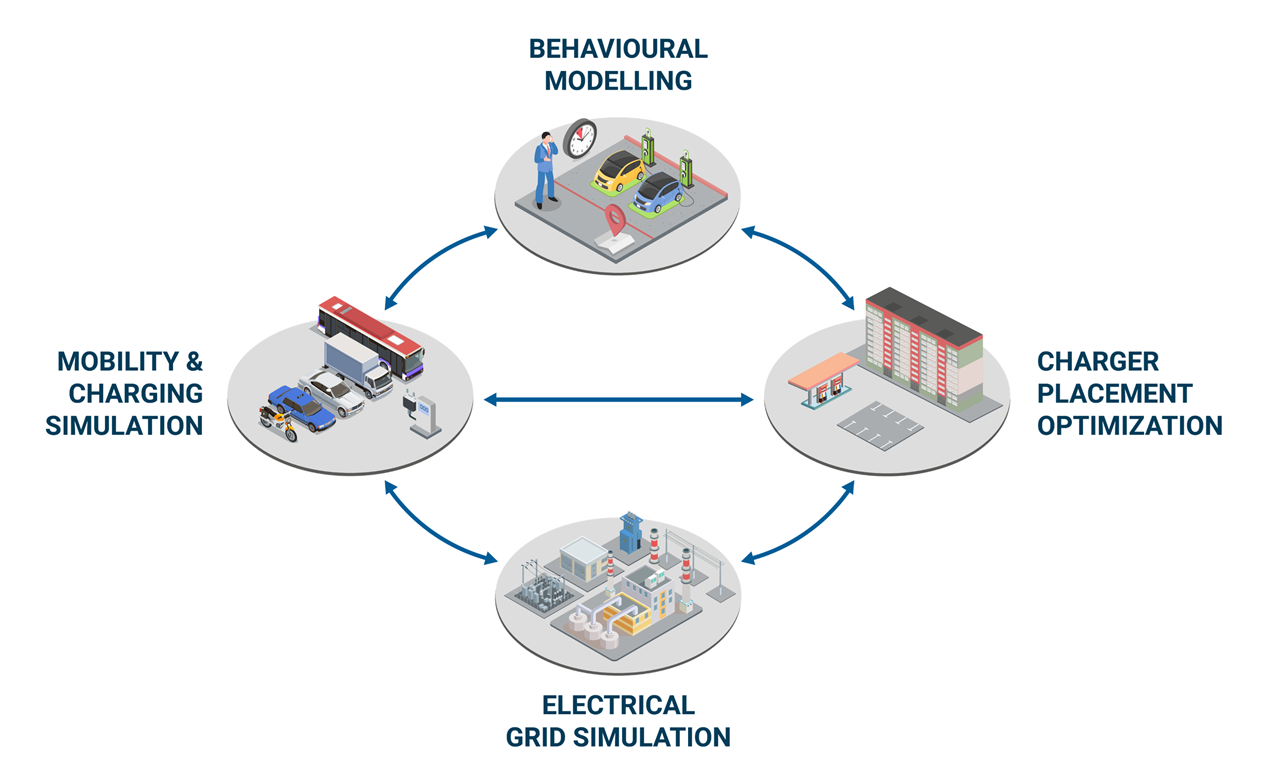
SITEM Overview – Modelling and Simulation Framework (Image source: Agency for Science, Technology and Research (A*STAR) and LTA)
At the heart of Punggol Digital District, JTC Corporation (JTC)'s Open Digital Platform (ODP) serves as a smart city operating system, integrating building systems, sensors and IoT devices into a single platform.
Developed jointly by JTC and GovTech, the ODP powers a 3D digital twin of the district. This enables real-time monitoring of estate systems, scenario simulations, and early identification of potential issues before they escalate.
Beyond conventional monitoring, the platform uses AI and machine learning to actively support decision-making. It recommends settings to optimise energy use in systems such as cooling towers and lifts and includes an AI chatbot that allows quick access and analysis of live and historical building data.
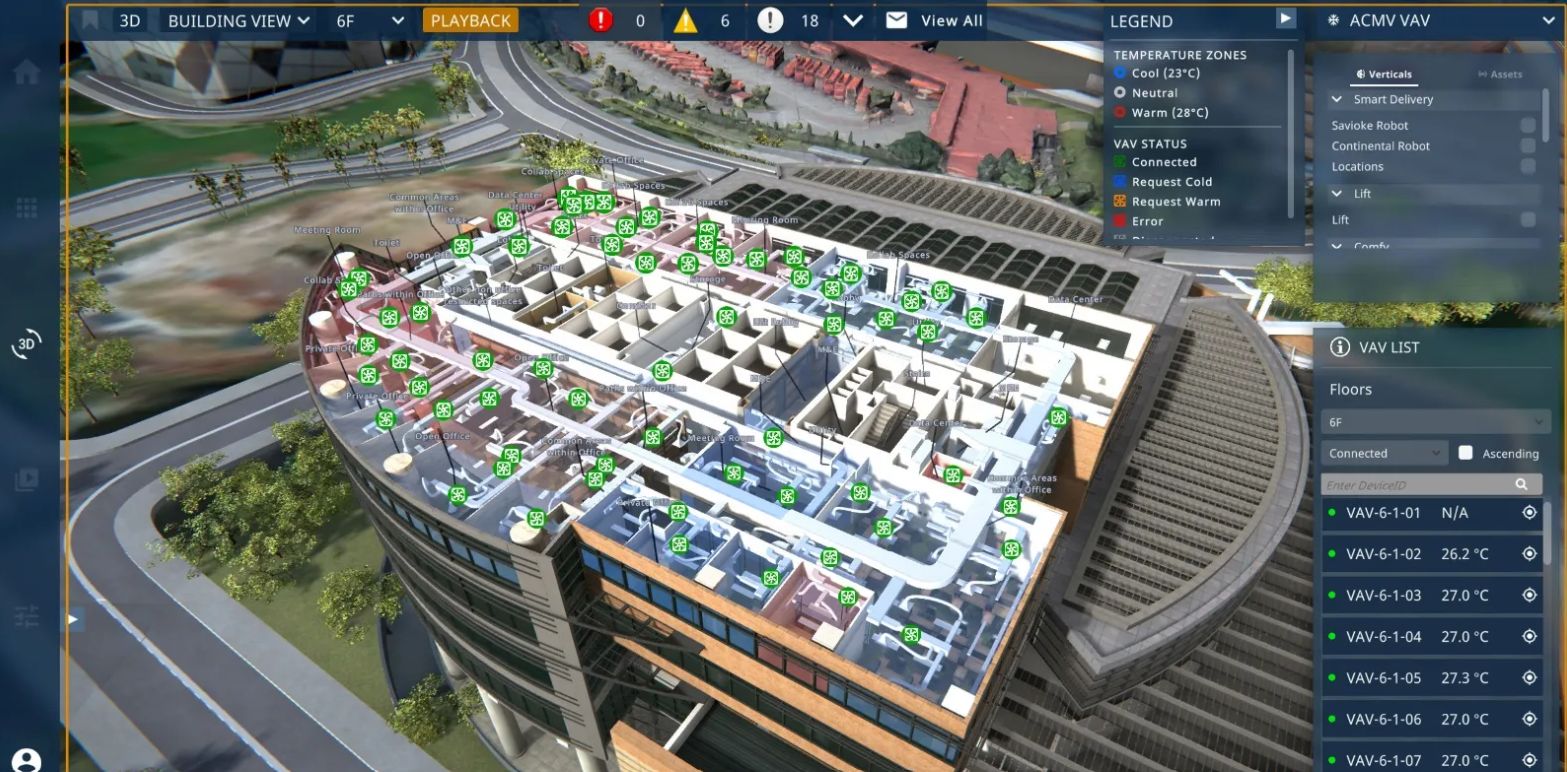
Interface of ODP; showing historical data can be saved and played back to aid troubleshooting for facility management-related issues. (Image source: JTC)
Seeing and understanding our urban environment
Another AI approach, deep learning, has enhanced our ability to analyse complex visual data and opened new possibilities for urban safety and building management.
Our video analytics system uses cameras mounted on patrol vehicles to automatically identify unsafe parking in real-time. The trial system achieves over 95% accuracy, helping to encourage better parking habits and create safer road conditions for all road users.
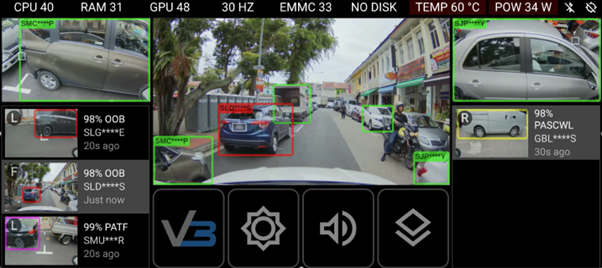
Screenshot that showcases the video analytics ability in identifying unsafe parking behaviours (Image source: V3 Smart Technologies)
For our built environment, Building and Construction Authority (BCA)'s portable microwave holographic imaging (MHI) system offers a non-invasive approach to building inspections. Instead of drilling and removing panels, this handheld scanner uses deep learning to analyse MHI data and detect structural defects in building facades. Key benefits include:
Faster and less disruptive inspections for building owners and occupants
Clearer, more actionable insights for inspectors
Improved safety for both inspection workers and the public
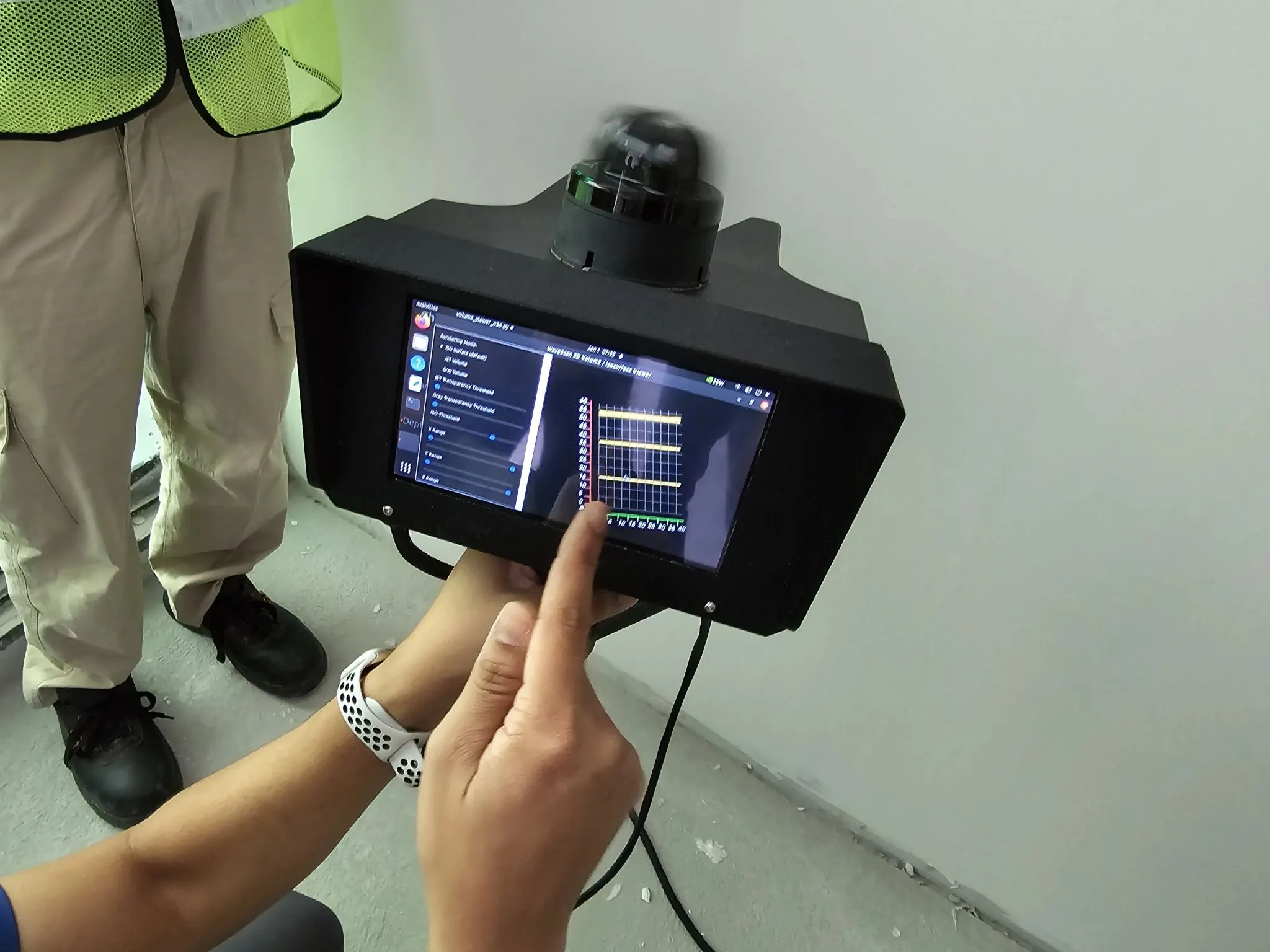
Physical prototype of the non-invasive portable scanner, developed by WaveScan (Image source: Mr Thanabal Kaliannan)
Towards autonomous and intelligent systems
Singapore is taking a calibrated approach to autonomous vehicle deployment, progressively expanding AV use across both passenger and logistics applications to address evolving urban mobility needs.
Punggol is now home to Singapore's first autonomous shuttle service deployed within a residential estate. Operated by ComfortDelGro-Pony.ai and Grab-WeRide, three routes have been launched to connect residents to key amenities, and the service has since served thousands of riders, helping residents get around more easily for short trips between transport hubs and homes. These vehicles use real-time data to navigate safely, adjust to traffic, and take more direct routes to reduce travel time.
Beyond passenger transport, FairPrice Group and Pokka, in collaboration with Zelos Technology, are pioneering Singapore's first retailer-supplier autonomous vehicle transport route, moving goods between facilities more efficiently and allowing staff to focus on higher-value work.
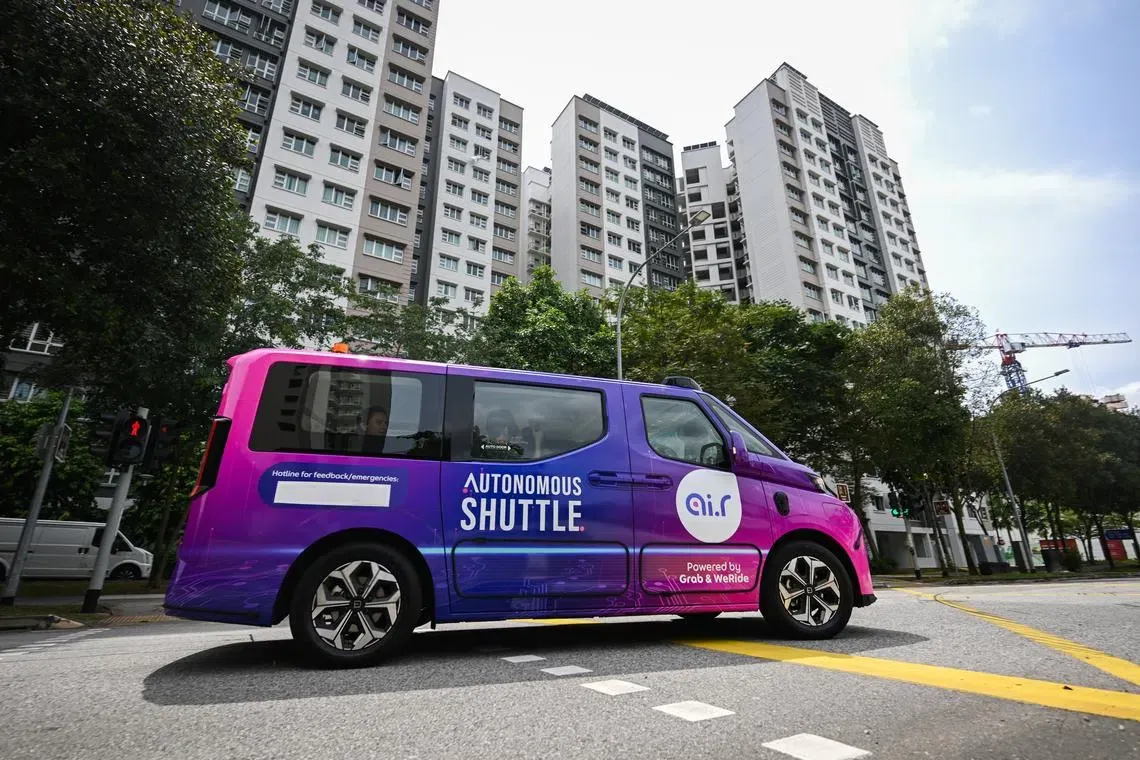

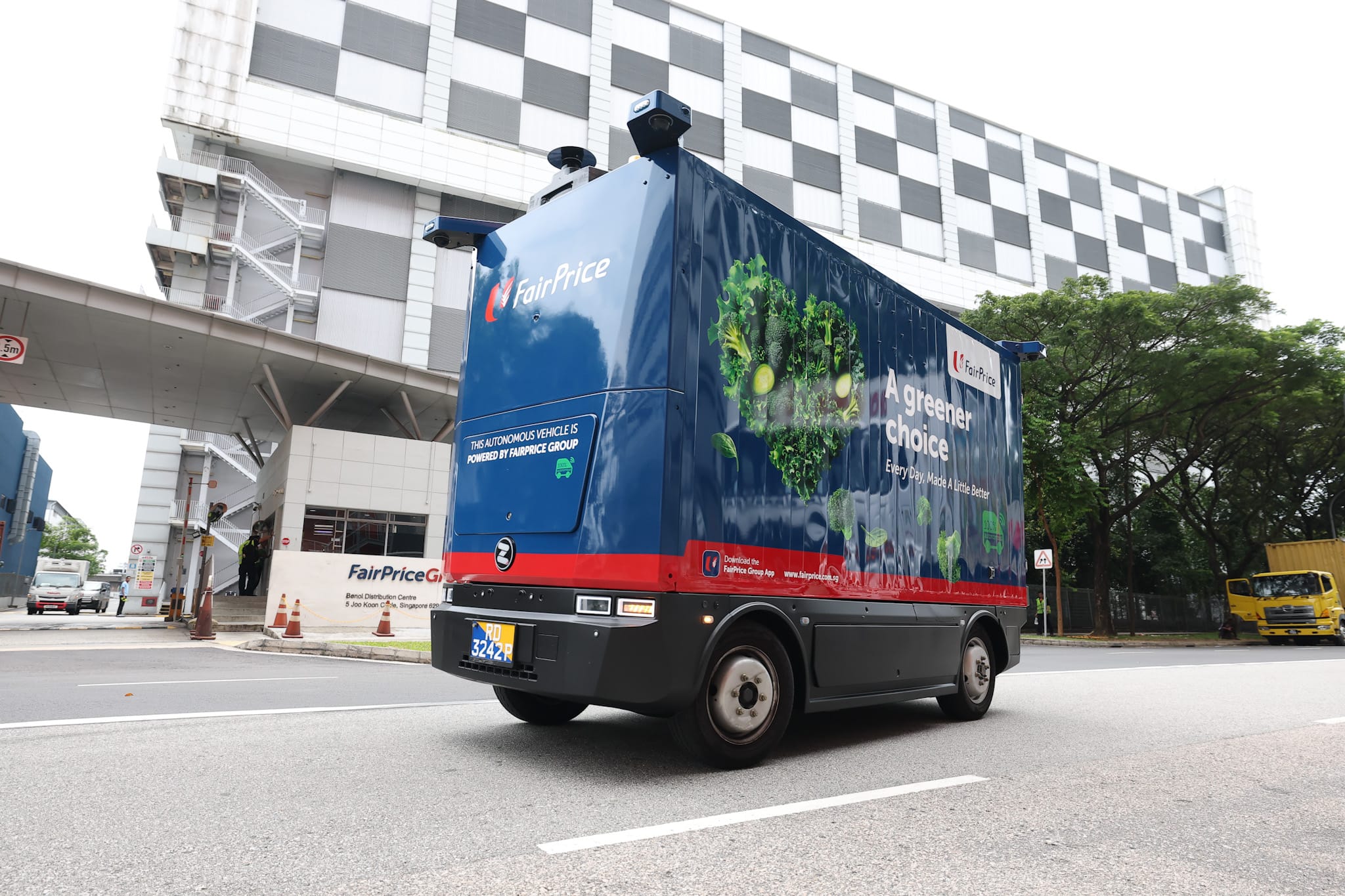
FairPrice Group Autonomous Vehicles (Image Source: FairPrice Group)
Generative AI is also making specialised knowledge more accessible. URA is developing a Large Language Model-based chatbot called the Development Control (DC) Assistant, designed to help developers, architects and members of the public navigate and apply URA's development control guidelines with greater ease. Unlike traditional chatbots that operate on a pre-set list of questions, the LLM allows the tool to interact with users much like a human expert would — interpreting questions posed in natural, conversational language and generating guidance tailored to the context of each query.
Users can ask specific questions such as "What are the setback requirements for a mixed-use development in the Central Business District?" or "Can I convert my shophouse's ground floor for residential use?" and receive almost immediate, contextually accurate responses with relevant regulatory references, powered by automated updates from URA's website. The DC Assistant is a culmination of multiple rounds of prototype testing and refinements based on industry feedback, and will be made available to the industry in 3Q 2026.
We will continue exploring how AI can help us create a more liveable, inclusive and sustainable city, as we work together with our research community, industry and agencies to meet the evolving needs of Singaporeans.