'Long Island'
Learn how 'Long Island' will protect our East Coast from rising sea levels, strengthen water resilience, and create more land for future possibilities.
Last updated on 24 September 2026
We have been engaging widely to shape the plans for ‘Long Island’ and would love to hear from you. Share your feedback and indicate interest for future engagements here (opens in new tab).
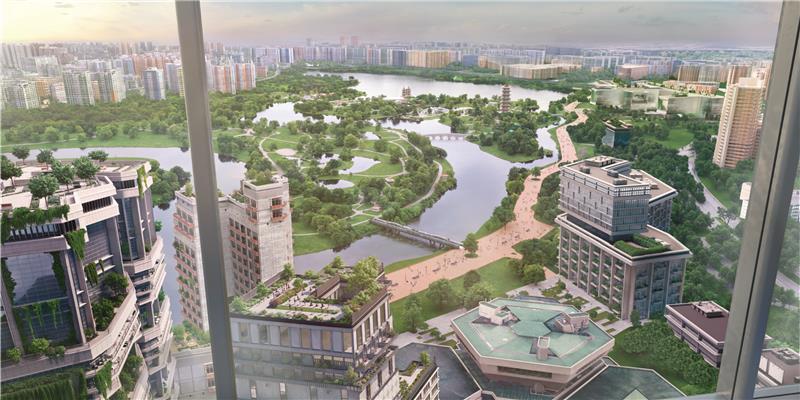
‘Long Island’ offers an integrated solution that will meet multiple national needs. The project entails reclaiming about 800 hectares of land off the East Coast, potentially in the form of ‘islands’, to protect the low-lying area from sea level rise and strengthen Singapore’s flood resilience, enhance our water resilience with a new reservoir, and create additional land to meet future development needs. The creation of ‘Long Island’ will also present new recreational opportunities by adding around 20 kilometres of new waterfront parks, part of a larger and continuous 120-kilometre-long stretch of accessible waterfront space along Singapore’s southern coast.
In November 2023, Mr Desmond Lee, then-Minister for National Development and Minister-in-charge of Social Services Integration, announced (opens in new tab) that agencies will commence public engagement and technical studies for ‘Long Island' given the urgency to protect the East Coast from sea level rise and to ensure that the plans for ‘Long Island’ reflect Singaporeans’ aspirations. Prime Minister Mr Lawrence Wong also highlighted (opens in new tab) the potential of turning challenges into opportunities through ‘Long Island’.
URA and partner agencies have since engaged more than 14,000 members of the public and stakeholders to understand their aspirations for ‘Long Island’ and seek their ideas on the preliminary concept for the project. We will continue to engage and study the project extensively to shape a ‘Long Island’ that reflects our aspirations and caters to the needs of future generations.
3 things you need to know about 'Long Island'
How is our East Coast at risk?
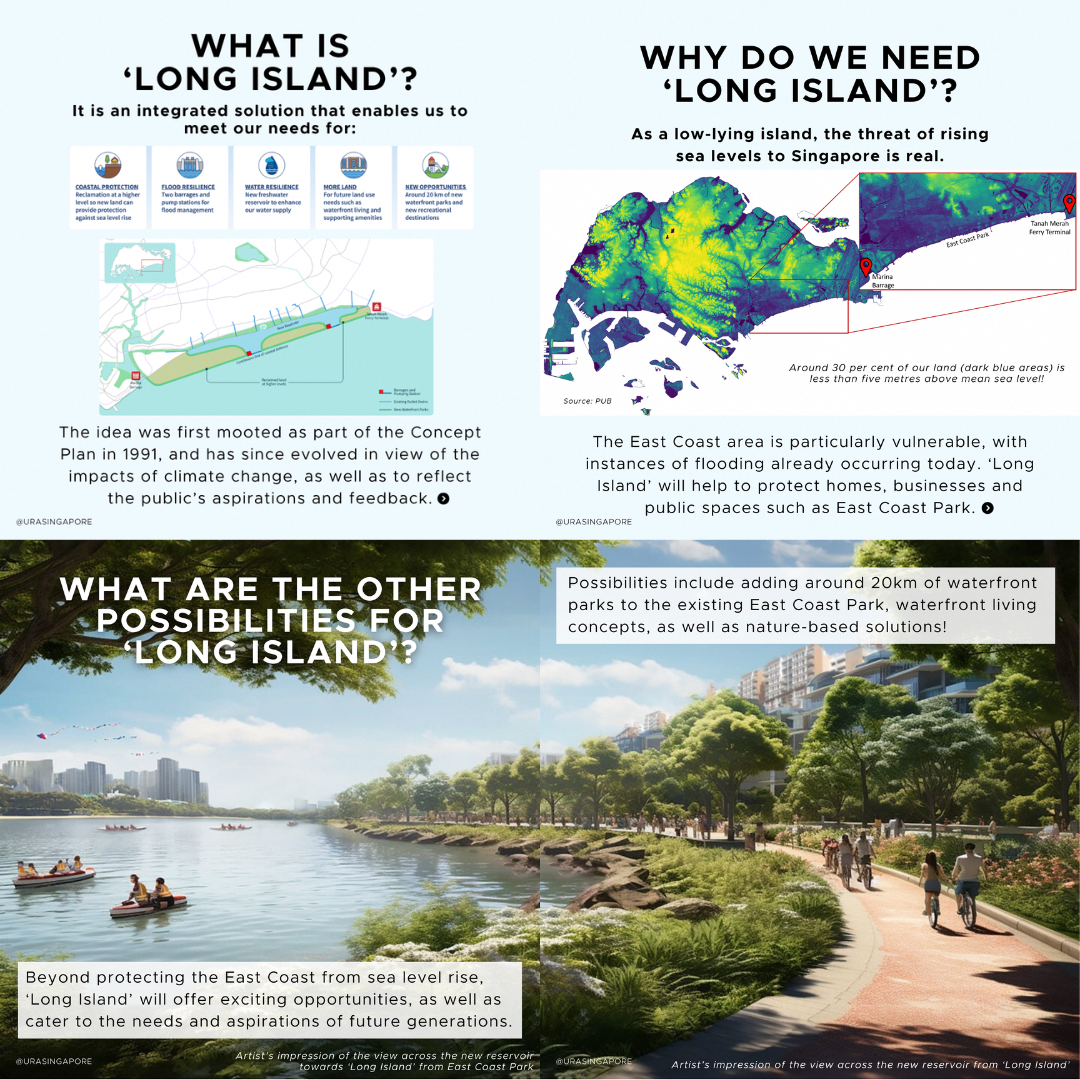
Based on the 3rd National Climate Change Study, mean sea level surrounding Singapore could rise by up to 1.15m by 2100. When extreme high tides coincide with storm surges, sea level could rise up to 4-5m. With around 30% of our land less than five metres above mean sea level, sea level rise poses a critical threat for Singapore. This is especially the case for the low-lying East Coast area, where there are already instances of flooding during high tides. We therefore need ‘Long Island’ to protect homes, businesses, critical infrastructure and public spaces in the area, such as Changi Airport and East Coast Park.
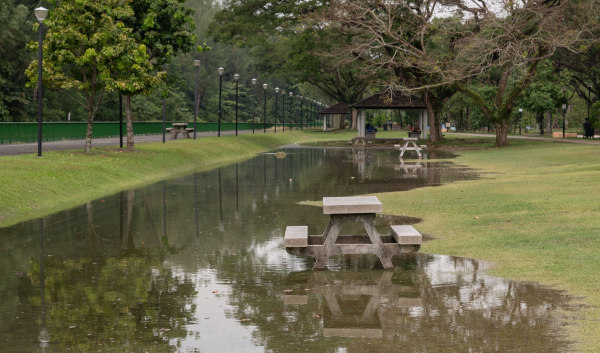
High tide at East Coast Park in 2024, causing sea water to overflow the banks of a drain. Photo Credit: PUB, Singapore’s National Water Agency
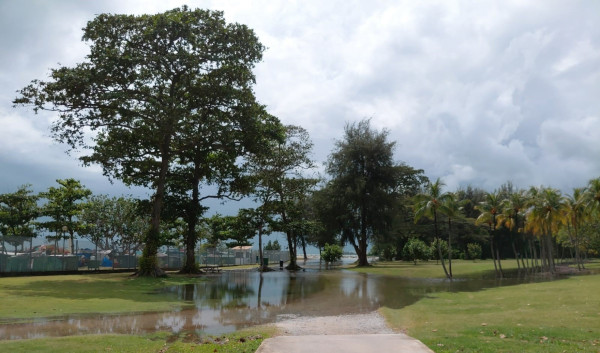
High tide causes water to backflow into East Coast Park in 2026. Photo Credit: National Parks Board
How will 'Long Island' protect the East Coast?
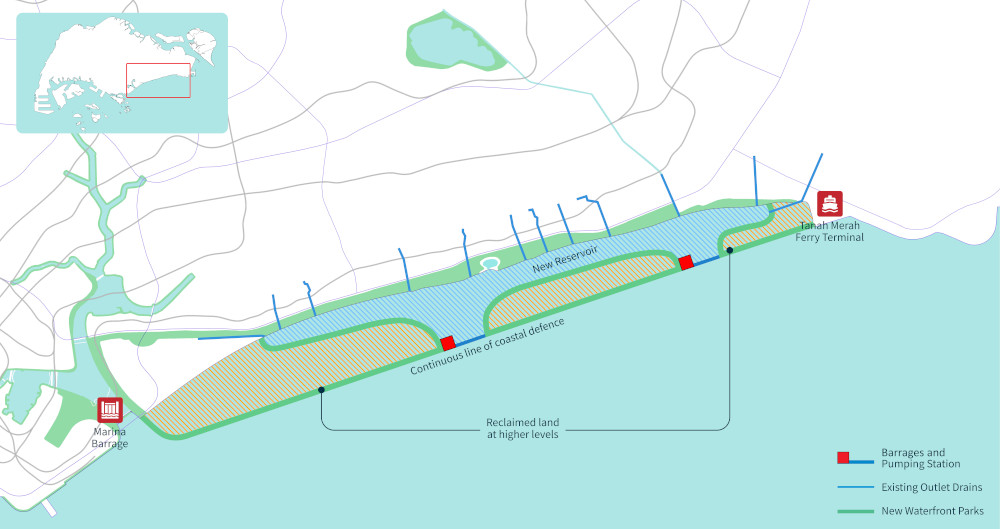
Land will be reclaimed to a higher level and form a continuous line of defence for protection against rising sea levels, with 12 outlet drains along the coast draining water into a new reservoir with two centralised barrages and pumping stations. Similar to Marina Barrage, this will keep out seawater during high tides and discharge stormwater into the sea during heavy rainfall.
Have we considered other alternatives?
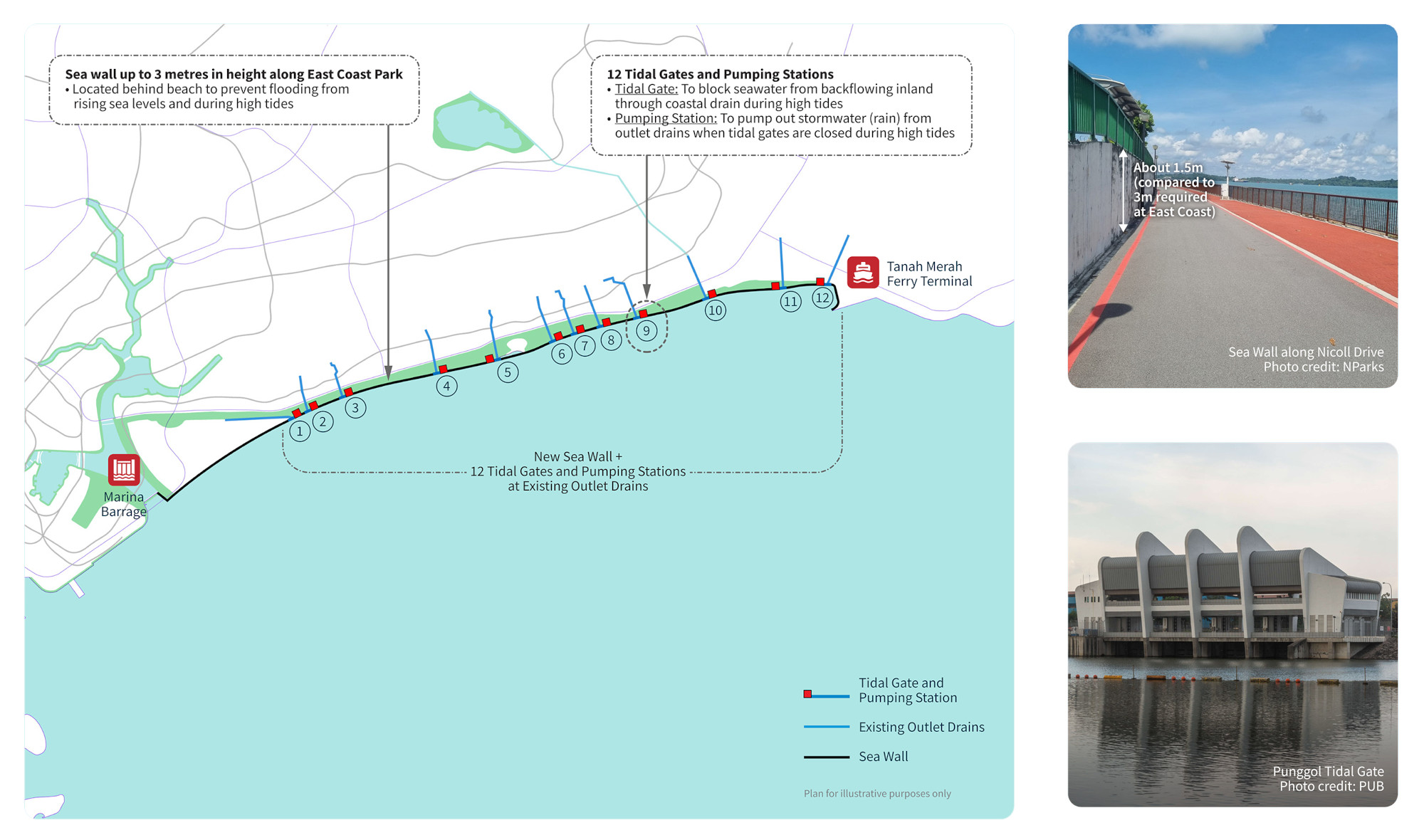
Agencies had studied building a sea wall of up to 3 metres in height along East Coast Park, supported by 12 new tidal gates and pumping stations along East Coast Park (one at each of the 12 existing outlet drains). However, this is not ideal because the construction of the sea wall would result in extended periods of disruption to park users, and the 12 new pumping stations would take up a large amount of park space, equivalent to about 15 football fields.
Is the 'Long Island' concept new?
The concept was first mooted under the Concept Plan in 1991. Given the critical impact of climate change, the plan for ‘Long Island’ was reviewed and subsequently represented as a potential solution to protect the East Coast area against sea level rise during the National Day Rally in 2019.
What opportunities can we look forward to?
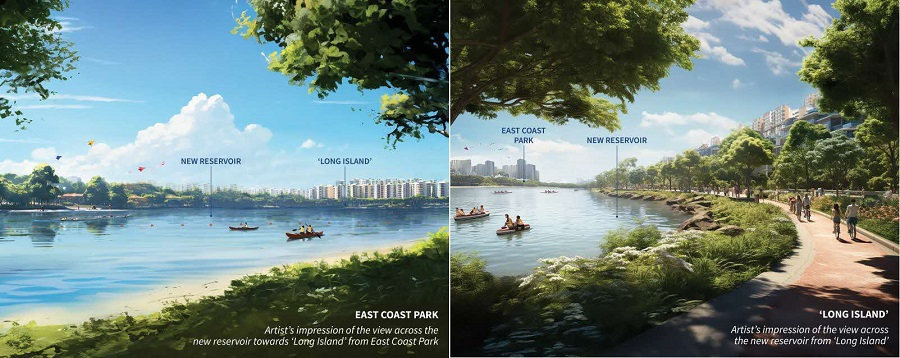
Beyond flood protection, the new reservoir will provide a new source of water supply, enhancing Singapore’s water resilience. ‘Long Island’ will also present exciting opportunities and cater to the needs and aspirations of many generations of Singaporeans. Around 20 kilometres of new waterfront parks could be added to East Coast Park, which will triple the length of waterfront parks in the area. New green and blue spaces could be integrated with recreational spaces, waterfront living concepts and nature-based solutions to create multi-functional and climate resilient spaces for homes, recreation and nature.
How long will it take to realise 'Long Island'?
‘Long Island’ could be about two times the land area of Marina Bay and is expected to take a few decades to plan, design and implement. Given the urgency to protect the East Coast from sea level rise, agencies have initiated technical studies and are engaging the public and stakeholders to shape the plans.
What do the technical studies entail?
The technical studies include site investigations, engineering studies and environmental studies. These studies will examine the potential impact of reclamation works for 'Long Island' and explore a combination of engineering and nature-based solutions to minimise potential impact to the environment and existing uses. They will also guide the creation of innovative, cost-effective and robust designs that integrate coastal protection measures with land reclamation.
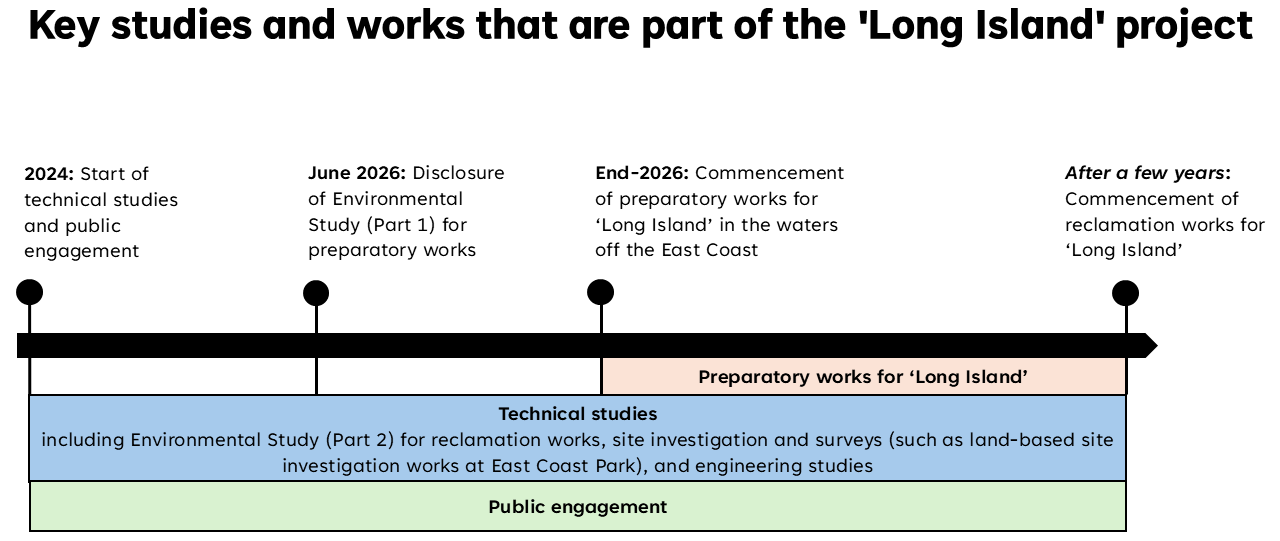
Technical studies commenced in 2024 and will be completed in phases over the next few years. Together with feedback and ideas gathered from the public and stakeholders, the findings from these studies will inform the development of detailed plans for ‘Long Island’, to ensure that the plans:
Minimise disruption to existing uses as far as possible;
Are sensitive to the environment;
Can be implemented in a timely manner to protect Singapore from sea level rise; and
Able to meet multiple national needs, including strengthening flood and water resilience, providing more land for future development needs, and creating new recreational opportunities along the East Coast.
Read about ongoing and completed technical studies and works for ‘Long Island’, what to expect and safety advisories.
Did you know? Land reclamation is not new in the East Coast area!
Major housing estates and public spaces along the East Coast including Marine Parade as well as East Coast Park, were developed on land that was reclaimed from the 1960s-1980s to meet Singaporeans’ housing and recreational needs. The East Coast Parkway was also integrated as part of the reclaimed land to provide a seamless connection from the city to Changi Airport, contributing to Singapore’s growth into a global aviation hub.
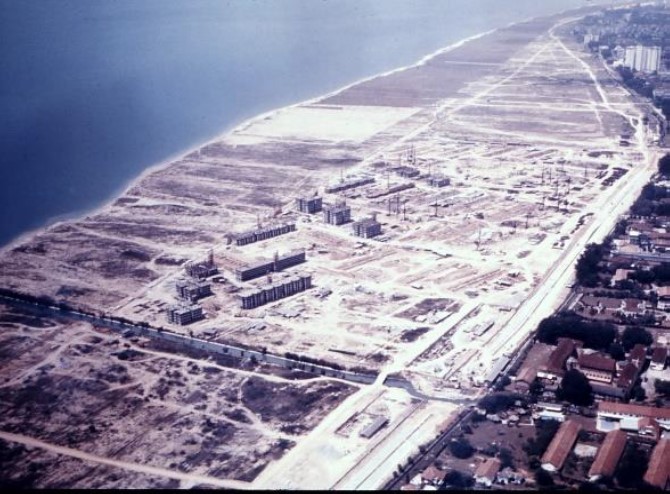
First blocks of flats under construction in Marine Parade, 1972. Marine Parade was the first HDB estate to be built entirely on reclaimed land. (Source: HDB)
Shaping plans for ‘Long Island’ together
URA and partner agencies have been engaging the public and stakeholders, including nature groups, sports and recreational interest groups, businesses and the local community. We will continue to engage widely to gather our aspirations and discuss broad ideas on the plans for ‘Long Island’.
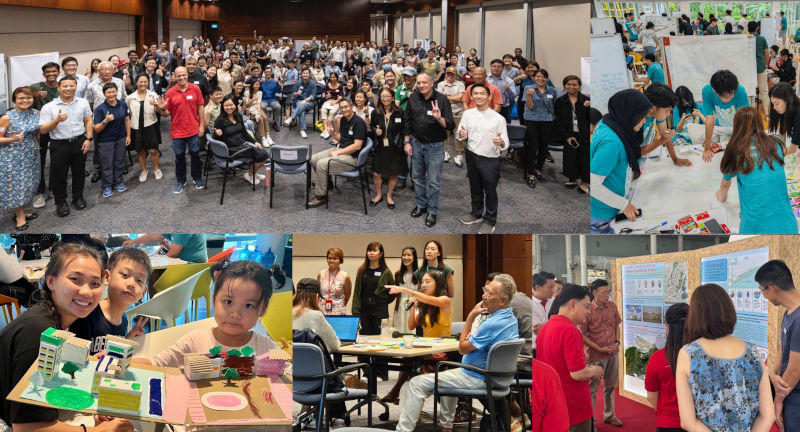
‘Long Island’ Engagements
Click for a snapshot of engagements that have taken place so far!
From 2024, we have engaged over 14,000 people from all walks of life, such as members of the public, residents in the East Coast area, users of East Coast Park, and students, through various platforms including more than 10 focus group discussions. Stakeholder groups, including grassroots leaders and businesses in the East Coast area, Friends of East Coast Park, the nature community as well as sports and recreational interest groups, were also invited to share their feedback at dedicated dialogue sessions. We have also received over 6001 responses through our online feedback form.
The youth have also been participating actively. The 15th edition of the Challenge for the Urban and Built Environment (CUBE) held from 18 to 22 November 2024 saw around 120 students from 18 junior colleges, polytechnics and Institutes of Technical Education draw up innovative concepts for ‘Long Island’ as a vibrant mixed-use waterfront area for live, work and play. They also looked at ways to connect the existing East Coast Park to the future ‘Long Island’ with extensive green and blue spaces while meeting coastal protection needs. On 25 November 2024, URA also held a workshop with around 140 secondary four students as part of the Our Singapore Leaders Programme co-organised by the National Youth Council and National Community Leadership Institute (NACLI). Learn more about their ideas here (opens in new tab).
Conceptual plans for ‘Long Island’ were exhibited for public feedback at URA’s Draft Master Plan 2025 exhibition from 25 June to 29 November 2025, URA's Recreation Master Plan exhibition from 14 April to 30 September 2024, and Urban Lab exhibition, ‘Shaping a Heat Resilient City’, from 17 November 2023 to 1 March 2024.
1 Over 600 responses through our online feedback form as of 2024.
Click for a recap of feedback received
We have received diverse aspirations from our engagement sessions. As of end 2024, the feedback received reflects consensus on the need to protect the East Coast from rising sea levels. Participants also appreciated ‘Long Island’ as an effective solution that brings multiple national benefits.
Your aspirations for ‘Long Island’
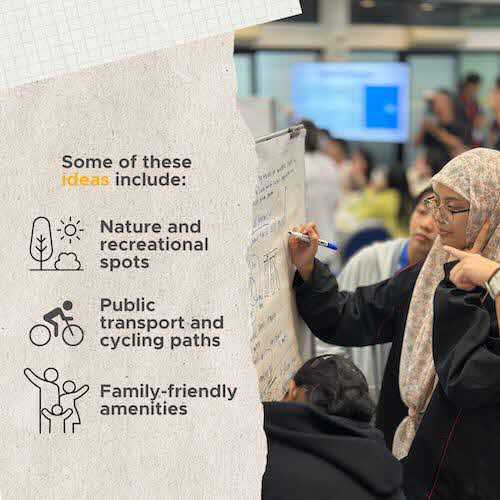
During the engagement sessions, many exciting ideas were shared:
Blend living spaces with nature, sports, and recreation
Incorporate sustainable design
Create habitats for marine life to thrive
Design accessible and inclusive spaces
Develop new recreational spaces
Maintain access to water activities
Preserve the recreational character of East Coast Park
Build housing while creating new green spaces
Planning for tomorrow, today
Many emphasised the importance of:
Engaging more Singaporeans, especially the youths, in the planning process
Ensuring the project meets both current and future needs
Implementing the project urgently while minimising disruption
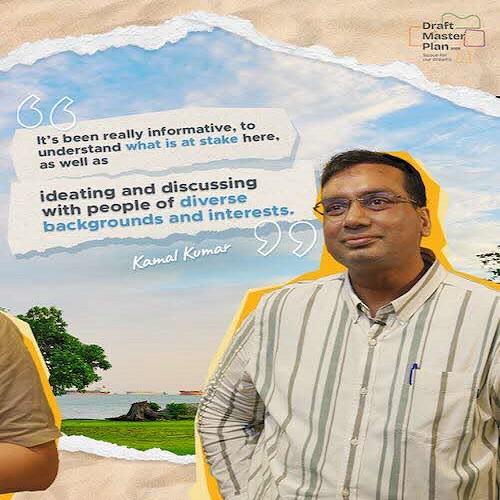
Here's what some of you shared with us!
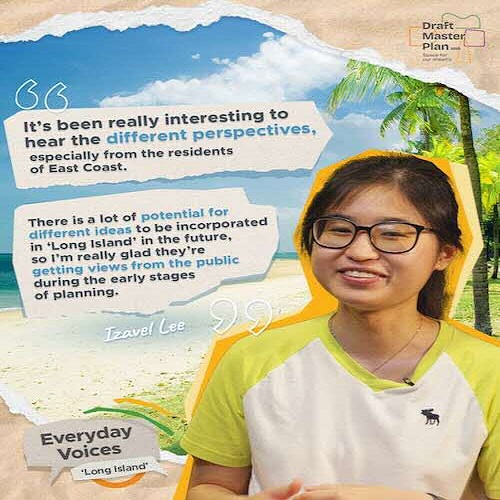
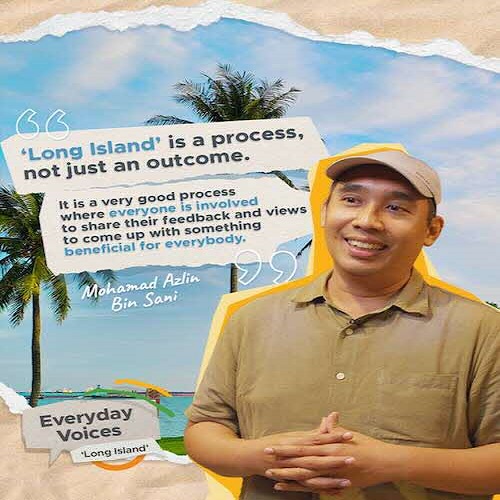
What's next for 'Long Island'?
Agencies will continue to evaluate the feasibility of ideas, and factor them into the ongoing technical studies. For example, many participants expressed the importance of retaining the recreational nature of East Coast Park. There were also suggestions for the creation of beaches and bio-revetments that can be integrated with the new ‘Long Island’ coastline and for the future ‘Long Island’ reservoir to support recreational uses and water activities, similar to Marina Reservoir.
Agencies are planning more engagements with stakeholders and the public to dive deeper into key topics, such as the types of activities that could take place along the new ‘Long Island’ coastline and future reservoir. More details will be shared in due course.
The ideas and feedback from these conversations, together with findings from the technical studies, will be reviewed thoroughly and will guide the development of a shared vision and detailed plans for ‘Long Island’.
Share your feedback and indicate interest for future engagements
Preparatory works for 'Long Island' to commence from end-2026
Measures to be implemented to mitigate impact on the environment and community
Given the large scale of the 'Long Island' project, preparatory works are essential to lay the groundwork for timely implementation of the critical coastal protection strategy, enabling us to address climate risks and meet our national needs.
The preparatory works will take place in the waters off the East Coast, and primarily involve the removal of seabed obstructions, followed by the construction of temporary sand bunds and sand infilling.
The preparatory works will be conducted in phases. The first phase will start in end-2026 and will be carried out in the waters west of Bedok Jetty. To facilitate the continued use of part of the sea space fronting East Coast Park for water sports and the hosting of major international sporting events, including the Southeast Asian (SEA) Games in 2029, the second phase of preparatory works in the waters east of Bedok Jetty will only commence after the completion of these events. More details on the timeline for the second phase will be shared when ready.
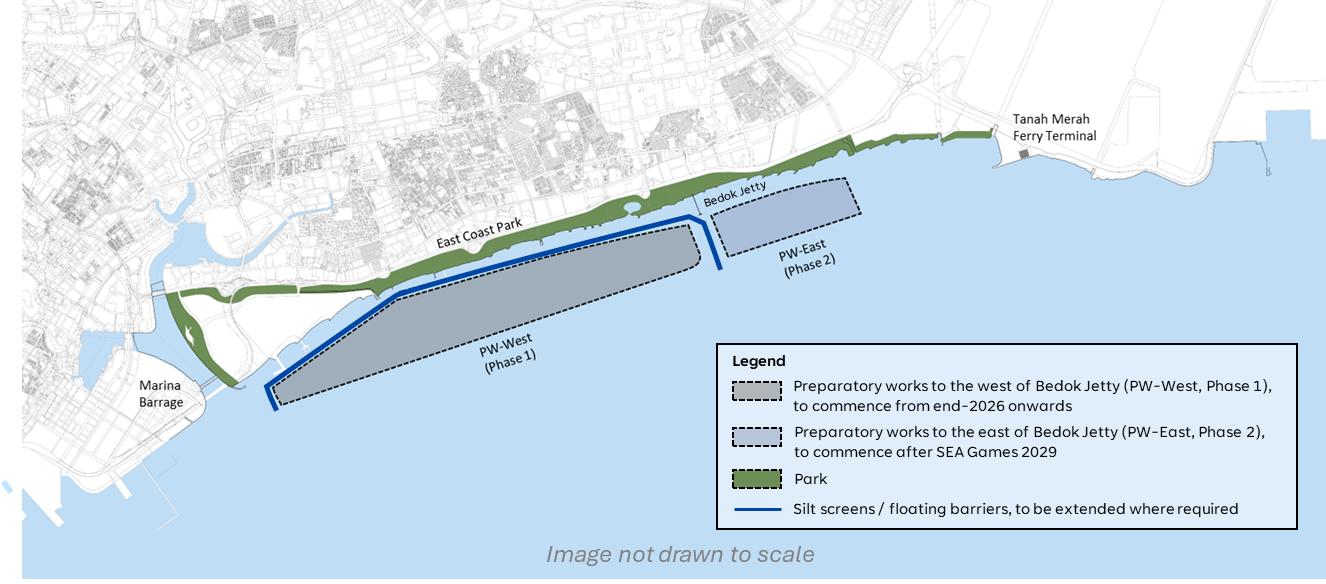
Indicative area of preparatory works for 'Long Island'
The area that is used for preparatory works is not reflective of the future land profile of 'Long Island'. The main reclamation works for ‘Long Island’ will only be undertaken later.
Read the full media release on the preparatory works and access the Environmental Study report at go.gov.sg/hdb-environmental-study-reports-longisland (opens in new tab).
Note: This webpage will be updated with the latest information on ‘Long Island’.