
'From Dreams to Rail-ity'
Discover winning entries from an ideas competition for the former Tanjong Pagar Railway Station.
Last updated on 5 June 2026
How will you re-imagine the former Tanjong Pagar Railway Station (TPRS) as a unique heritage and recreational node along the Rail Corridor?
In April 2024, we launched an ideas competition to hear your ideas on how the TPRS can be transformed.
The competition attracted 93 submissions from individuals and teams based in Singapore and overseas, which were thoroughly evaluated by a jury panel comprising representatives from URA and the private sector.
Winning proposals included ideas such as a vibrant community hub with pop-up retail, art galleries, cafés, co-working spaces and a beautifully landscaped forecourt. The proposals will help shape the detailed plans and design for TPRS as a new community node and southern gateway into the Rail Corridor.
About the Former Tanjong Pagar Railway Station
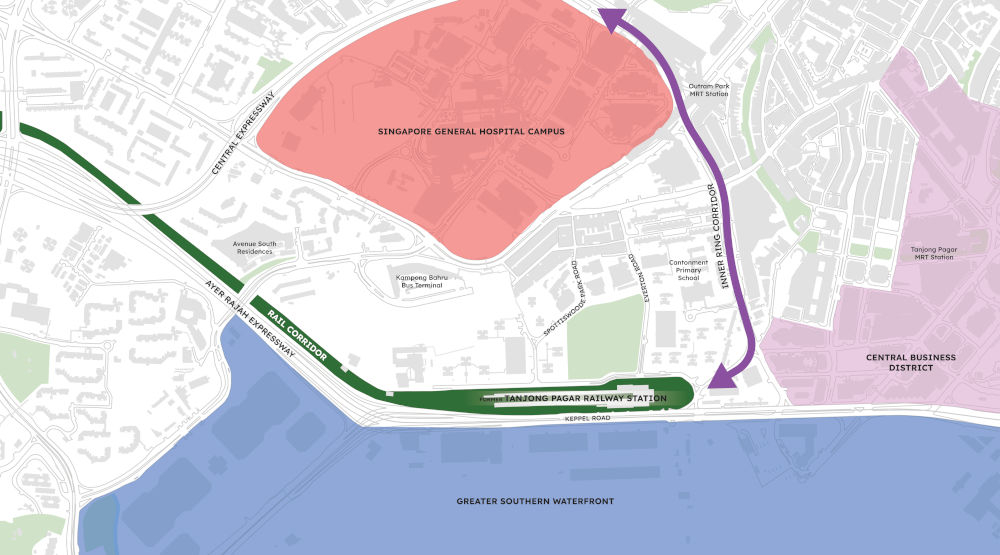
Located at the fringe of the Central Business District (CBD) and surrounded by established housing estates, the former Tanjong Pagar Railway Station (TPRS) will serve as the key southern gateway to the Rail Corridor, the CBD and the future Greater Southern Waterfront (GSW).
A green network within the future GSW will connect TPRS and the Rail Corridor to the waterfront and key places of interest along the southern coast, e.g. Labrador Nature Reserve, Pasir Panjang Park, Pasir Panjang Power District and West Coast Park, etc.
History
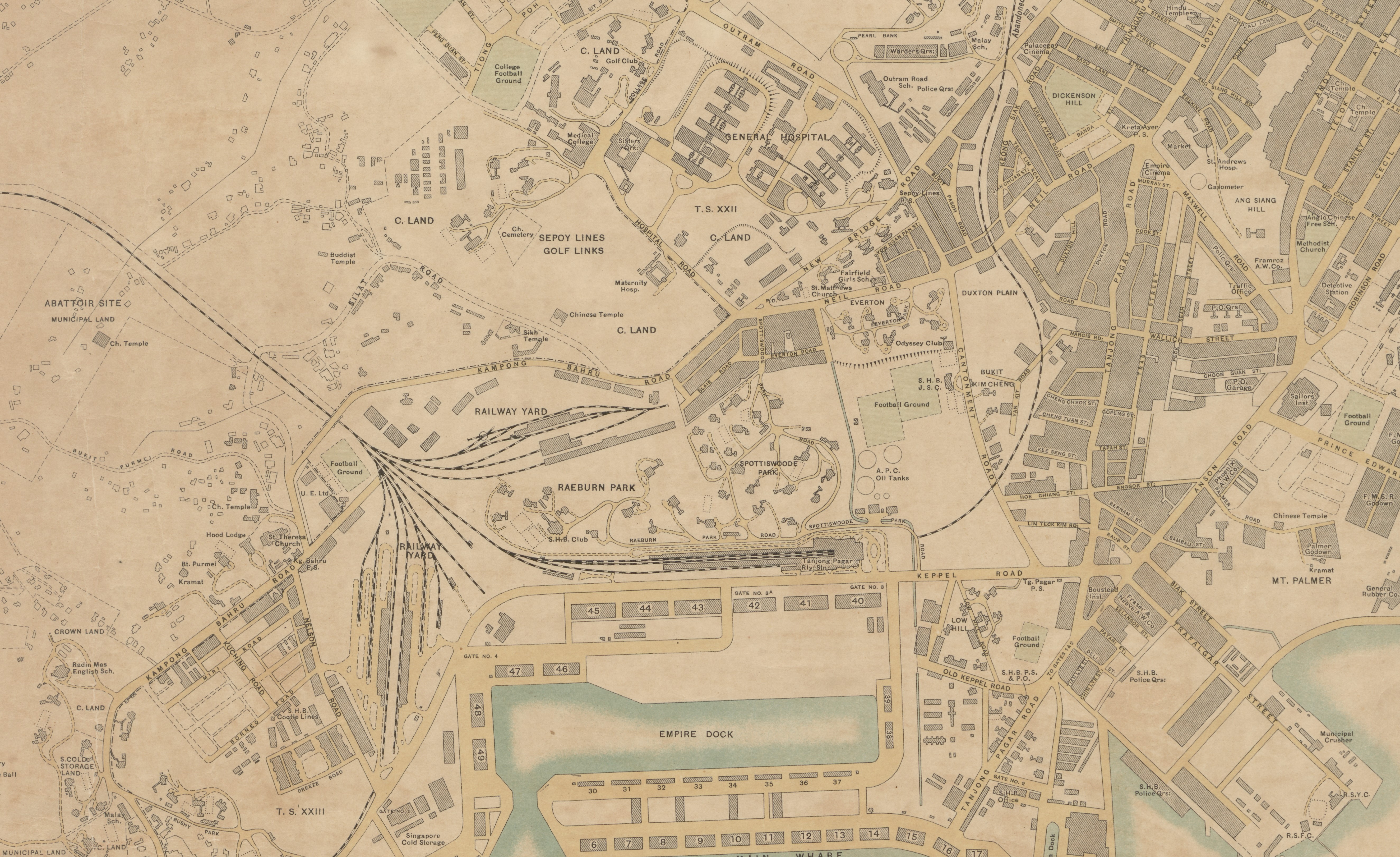
Photo credit: Singapore Land Authority collection, courtesy of National Archives of Singapore
Opened in 1932, TPRS was the southern terminus station along the Malay Peninsula’s West Coast Rail Line, which stretched from Singapore in the south to Butterworth, Penang in the north.
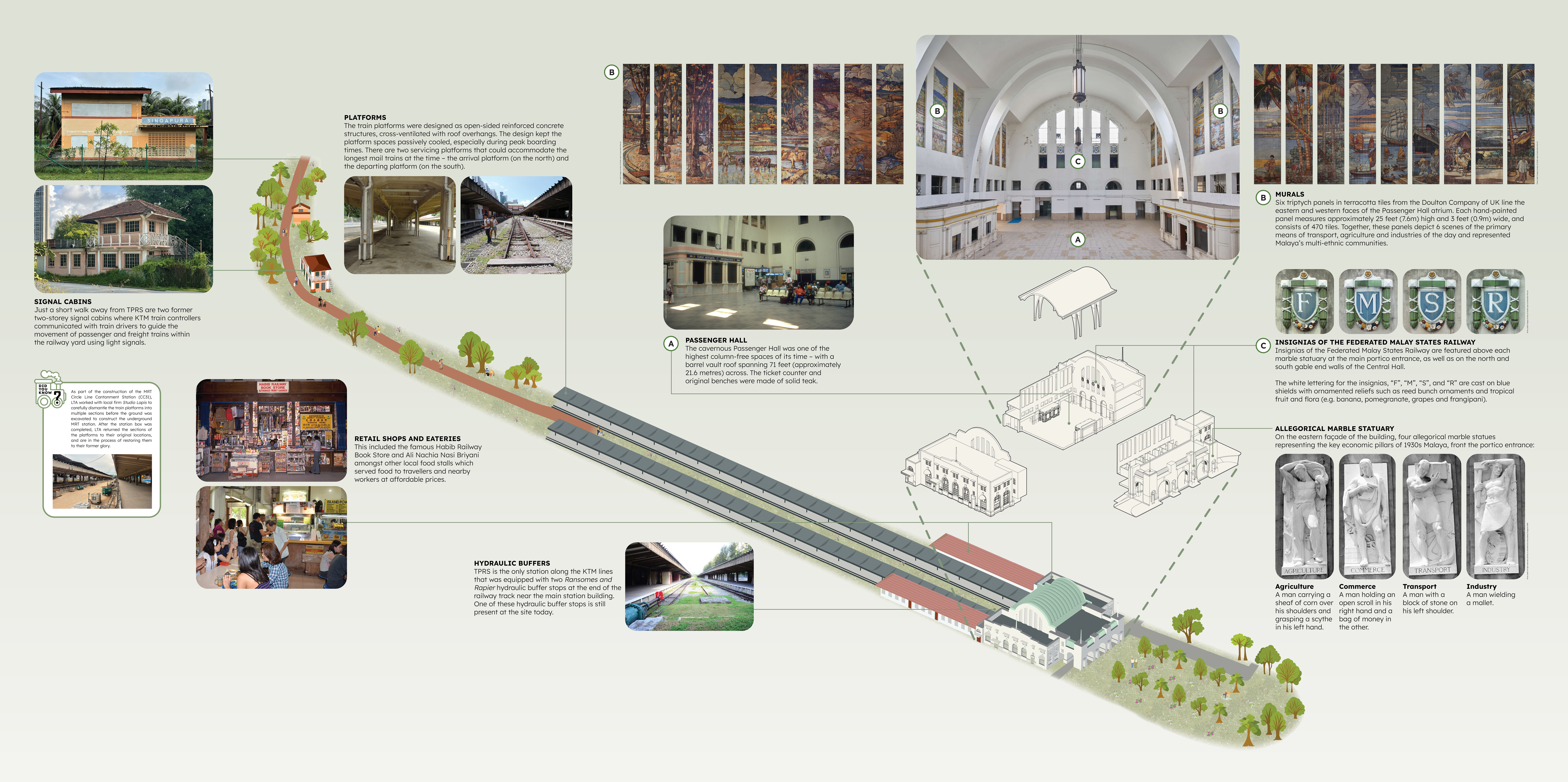
TPRS stood out as a local landmark for its grand façade, designed with Neo-classical and Art-Deco influences. The station also housed a hotel on its upper floors.
During its peak, the hotel was frequented by dignitaries such as Malayan royalty who enjoyed visiting the restaurant within the hotel. The station also included amenities such as a small convenience store known as the Habib Railway Book Store, a money changer and station canteen.
Historical features of Tanjong Pagar Railway Station
Winning Entries
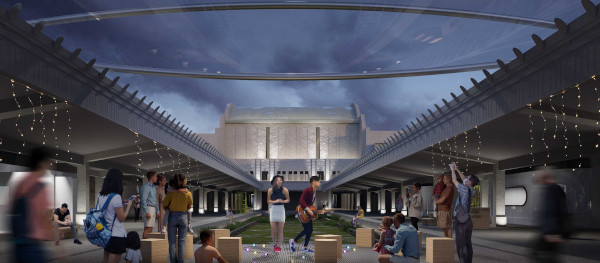
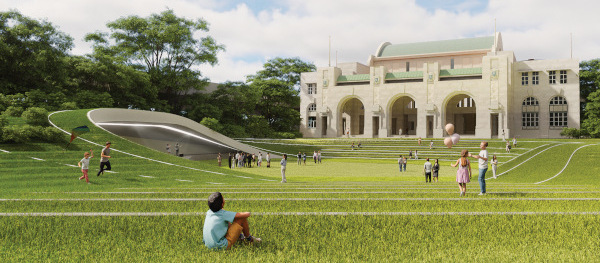
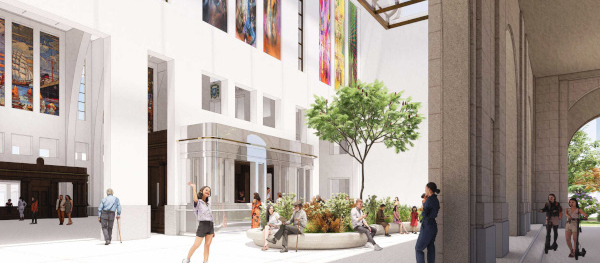
Participants were challenged to formulate an overall design concept for the TPRS site, which considers the site’s heritage and relationship with surrounding developments.
The winning submissions presented strong and coherent visions supported by innovative concepts to adaptively reuse the railway station and transform it into a vibrant node for the community.
They also suggested different ways to allow the public to better appreciate the architectural and historical features of the monument building while opening it up for inclusive community uses.
Special Mentions
Another three submissions were awarded special mentions for specific ideas and concepts that were commendable.
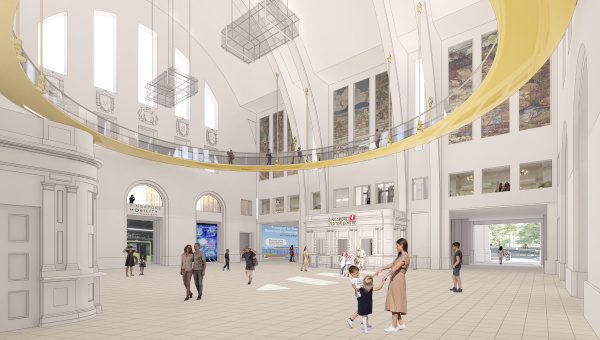
Experiencing TPRS through a New Lens [PDF, 20.9 MB]
Tim Tang Ho Yin, Christina Kong Ka Yu (Hong Kong)
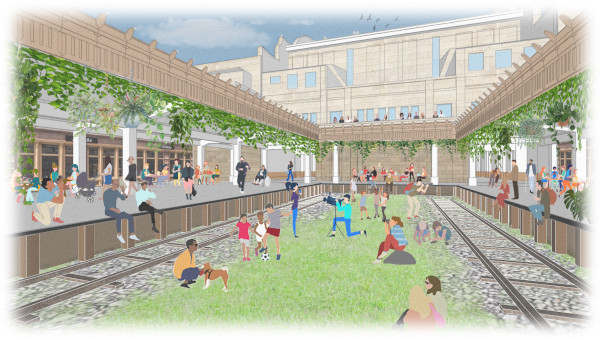
Tanjong Pagar Ever After [PDF, 14.8 MB]
Asmita Puspasari, Friska Lirenzsa, Muhamad Rendy Abdillah, Prabowo Hanifianto, Rizkika Zulhijjiani (Indonesia)
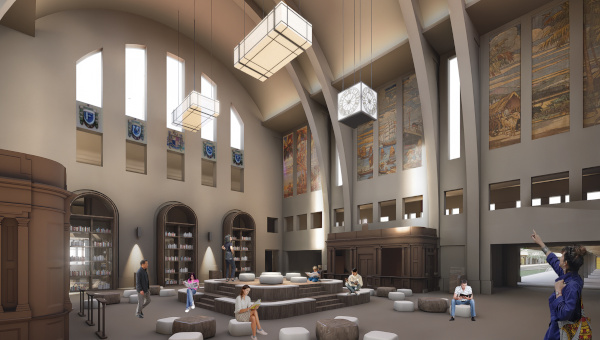
Loco-Motion [PDF, 22.1 MB]
Kay Ngee Tan Architects (Singapore)
Key Ideas
Here are some of the ideas received during the competition. Let us know what you think about them, and the kind of activities you would like to see in each space!
Forecourt
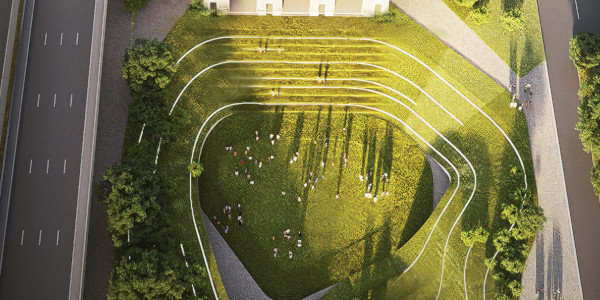
0KM Hub by PTW Architects
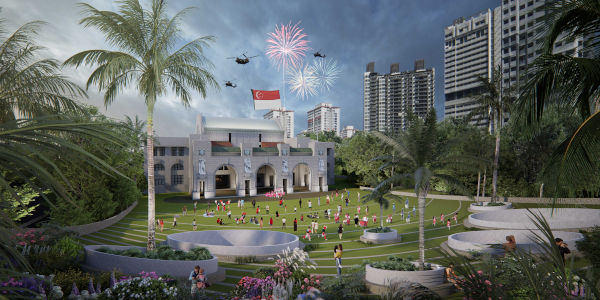
Landscaped lawn and terraced seating that can double up as a performance and events space.
Rail Life by Kenneth Chiang
Multi-functional space with underground carparks and building services tucked underground.
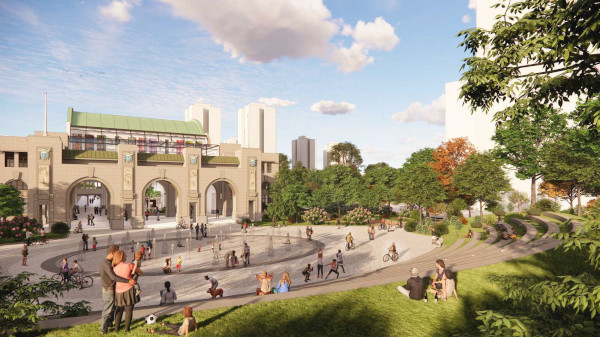
Tapestry of Reawakened Spaces by ACME Space Ltd
Interpretive play features for a variety of uses.
Main Building
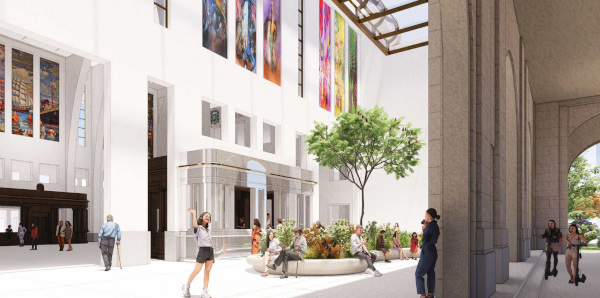
Tapestry of Reawakened Spaces by ACME Space Ltd
Modifications to the building to create more usable spaces.
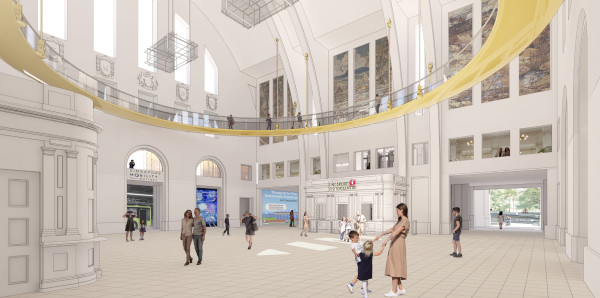
Experiencing TPRS through a New Lens by Tim Tang Ho Yin and Christina Kong Ka Yu
Addition of viewing decks to allow close-up viewing of the murals, new staircases and platforms can be built within the central hall.
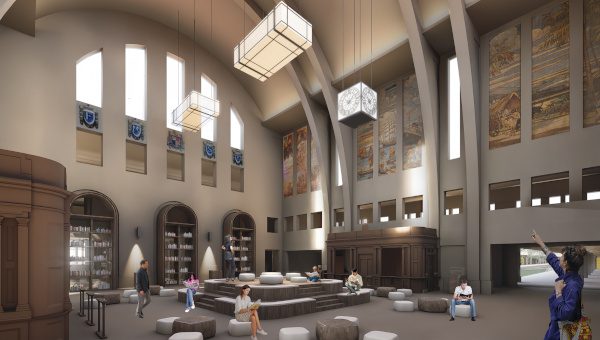
Loco-Motion: Community Generator by Kay Ngee Tan Architects
Flexible use of the central hall for events.
Platforms
This is an optional subtitle for the Infocards component
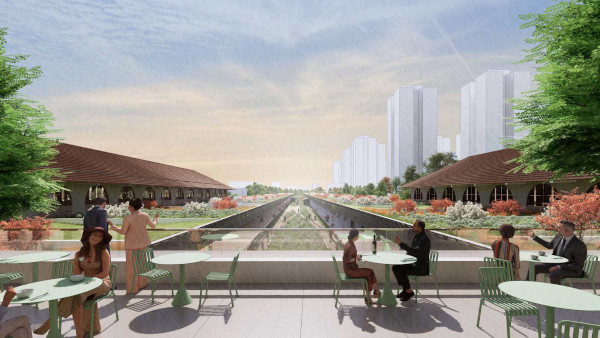
Tapestry of Reawakened Spaces by ACME Space Ltd
Opening up new views of TPRS.
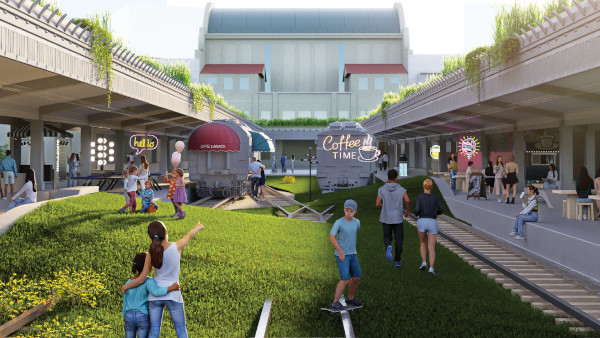
0KM Hub by PTW Architects
Bridging the platforms to create more usable spaces.
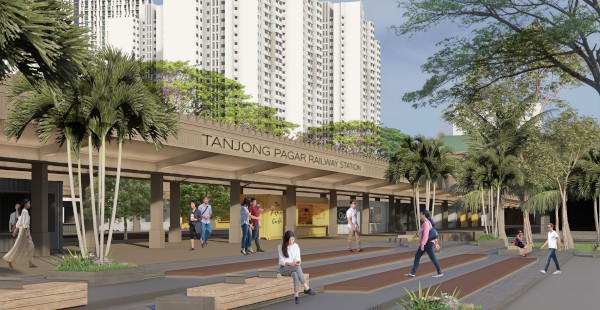
Loco-Motion: Community Generator by Kay Ngee Tan Architects
Creating new access points through the site.
Signal Cabins
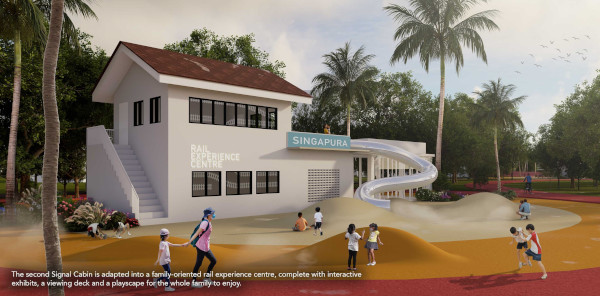
Rail Life by Kenneth Chiang
Refurbishment of signal cabins to house new uses.
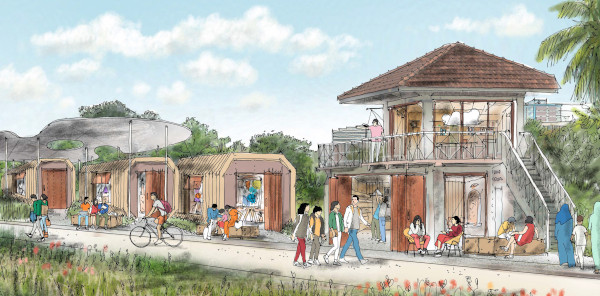
Singapura Steam Studios by Studio Egret West
Introduction of new buildings alongside the signal cabins to accommodate new community uses.
What's Next?
The submissions from this competition have further added to the rich ideas and concepts that could potentially be implemented to achieve the vision of TPRS as a vibrant node for the community.
URA will be embarking on the next stage of the journey - to distil key concepts from the feedback, ideas and proposals gathered for TPRS over the years, and to study their feasibility for implementation.
Plans to develop TPRS will take place after 2028, following the completion of the Cantonment MRT Station, and restoration works on the building.