
Sustaining Land and Space Options
It is important to sustain our land and space options to ensure future generations will not run out of space.
Last updated on 28 May 2026
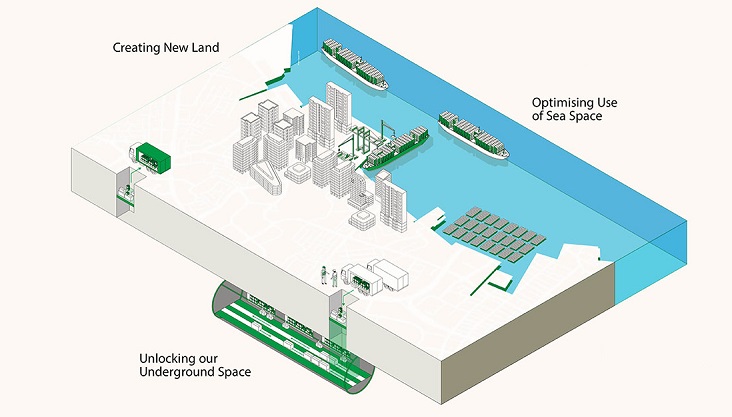
We constantly find ways to optimise our land through building higher, co-locating uses, and recycling land for redevelopment as leases expire.
Optimising use of sea space
We are working with the industry and researchers to identify opportunities to optimise the use of our sea space in a manner sensitive to the marine environment. We do this through co-locating uses, matching appropriate uses to suitable sites, and harnessing technology.
We are also exploring ways to co-locate different sea space uses, such as the co-location of solar photovoltaic systems with fish farms along the East Johor Straits.
We are studying ways to optimise anchorage usage as our port continues to grow, such as rolling out a “just in time” platform to enhance ship turnaround time through coordinating the scheduling of services such as pilotage, towage and bunkering.
Creating new land
Beyond traditional methods of land reclamation, we have been looking at creative and innovative solutions for land creation.
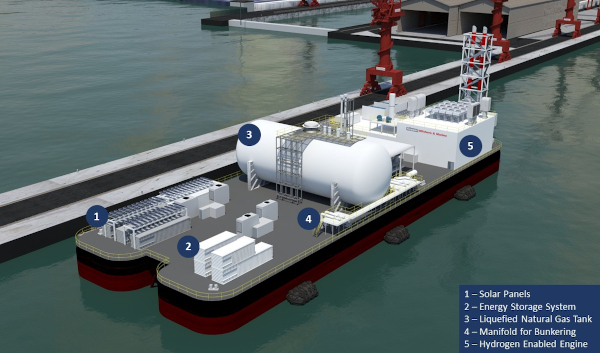
EMA partnered Keppel Offshore & Marine to test-bed Singapore’s first floating Energy Storage System. The project will explore a first-of-its-kind battery stacking solution to reduce land take by up to 40% © Keppel O&M
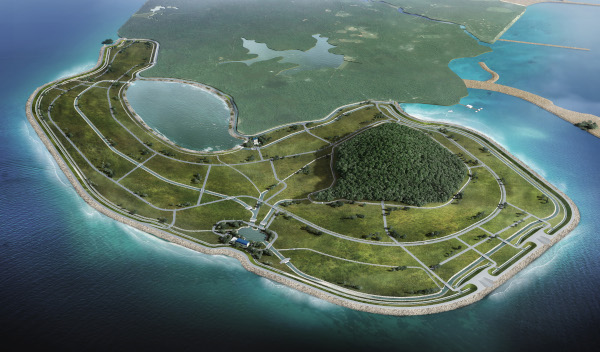
The polder project at Pulau Tekong significantly reduces the need for sand in reclaiming land. © HDB
Unlocking our underground space
Underground caverns, which are located within strong rocks, can be a significant space resource. We will explore the feasibility of creating more cavern spaces to meet future needs.
Jurong Rock Caverns
Developed by JTC and located on Jurong Island, an energy and chemicals park, the Jurong Rock Caverns is one of two cavern developments in Singapore.
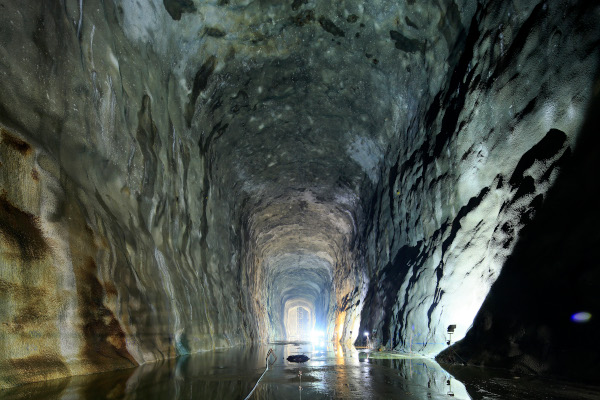
© JTC
It can store up to 1.47 million m3 of liquid hydrocarbons. This use of subterranean space enhances the security and safety of storing products and also translates to a saving of approximately 60 hectares of land above ground, which can be used for higher value-added activities such as chemical manufacturing activities.
In future, these caverns could be tapped on for storage, to house utilities, or suitable industries as we move towards more automated industrial processes. Such caverns can also house underground logistics systems which can move goods efficiently and free up surface road traffic.