
Conservation Area
Short Street Conservation Area
Applicable Guidelines
Historic District Guidelines
Conservation Area
Short Street Conservation Area
Find out more about Short Street Conservation Area.
Important Information
All proposed works will need to comply with the Conservation Guidelines and the Specific Restoration Guidelines (SRG). Conservation Permission is required before all additions & alteration works and operations of new use can begin.
Owners, architects and engineers intending to carry out restoration works or development within conservation areas are required to comply with the conservation principles, planning parameters and restoration guidelines for conserved shophouse and bungalow building typologies, as well as planning parameters and envelope control guidelines for new buildings within conservation areas accordingly.
For other building types, which do not conform to the standard shophouse or bungalow typology, these will be evaluated on a case-by-case basis in accordance with conservation principles. [1]
About
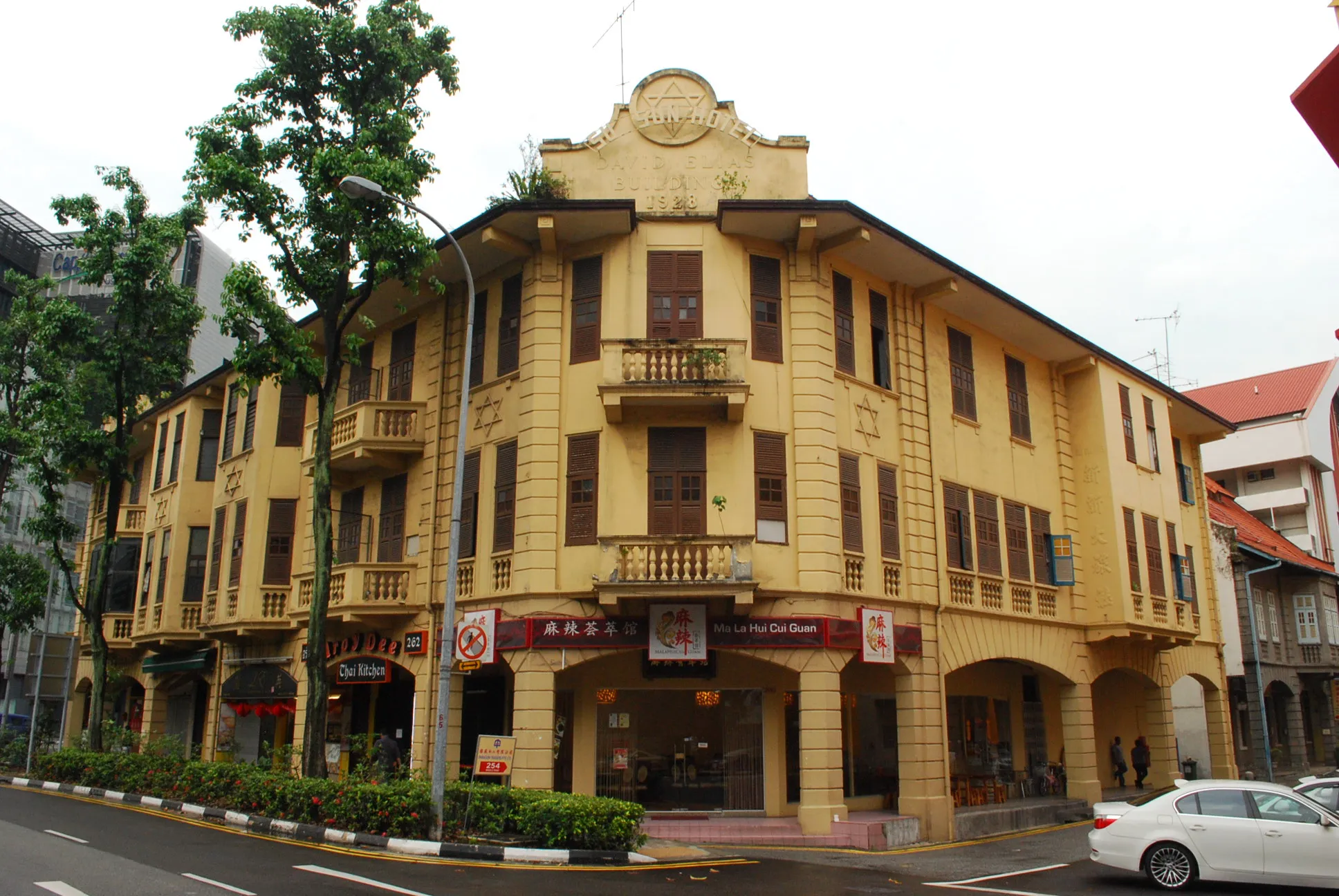
Located along Short Street and Middle Road, the conservation area contains 13 units of two-storey shophouses mainly of the Early and Transitional Shophouse styles that include the landmark David Elias Building and the former Middle Road Hospital.
The History
Short Street begins at the junction where four roads meet, namely, Middle Road, Selegie Road, Sophia Road and Wilkie Road. It was probably named after Septimus Short, a speaker who spoke on public issues related to the railways and docks.
The Architecture
The David Elias Building prominently anchors the corner of Short Street and Middle Road. Built in 1928 by a Jewish merchant, it was designed by architects Swan & Maclaren. It is a three-storey "stripped" neo-classical building reflective of the architectural style popular in the 1920s. The Classical-style flavour appears in the rusticated treatment of the first storey arcade and Italianate balconies. Where the classically-proportioned facade joins the roof, the strongly projecting concrete slab serves both as cornice to the Classically-proportioned façade and eaves to the roof. The roof is high-pitched and broad, and the two-storey high cantilevered bay windows create visual interest on its front façade. The six-pointed Star of David is used as a bas-relief decoration.
The former Middle Road Hospital used to occupy the building next to the David Elias building along Middle Road until 1988, when the National Skin Centre took over the treatment of skin diseases. The hospital building was built in the 1940s during the Japanese Occupation as the Doh-Jin Hospital, to serve a growing Japanese community in the area. In fact, the Japanese Consulate was housed nearby, in the building that became Mount Emily Girls’ Home, now known as Emily Hill. The hospital was designed by local architect Kwan Yow Luen, who was reportedly approached after seven other architects had previously failed. The hospital was renamed the Middle Road Hospital after the war in 1945 and functioned as a centre for the treatment of skin diseases as well as gaining ‘notoriety’ as the centre for treatment of venereal diseases, which is likely to have precipitated references to it as the ‘social hygiene hospital’.
The Legacy
The David Elias building is a key landmark, highly visible and recognisable at the corner of Short Street and Middle Road. It remains as an important historical and cultural marker of the eminence of the Jewish community in Singapore.
Gazetted on 28 October 1994 for conservation.
Guidelines and Procedures
Apply for Specific Restoration Guidelines (SRG) (opens in new tab)
Use Guidelines and Submission Process for Buildings in Historic Conservation Areas
[1] The conservation guidelines for shophouses and bungalows will generally be applied by URA in the consideration of a development application. However, if the circumstances or planning considerations relevant to a case warrant it, URA may in its discretion decide to depart from these general guidelines. The guidelines, principles and illustrations found in the guidelines are not exhaustive in covering all possible site conditions and variations in building type. Persons intending to carry out a development are advised to take this into consideration and check with URA through enquiries or development applications to confirm if their proposals can be allowed.