
Conservation Area
Mount Pleasant Conservation Area
Applicable Guidelines
Bungalow Guidelines
Conservation Area
Mount Pleasant Conservation Area
Find out more about Mount Pleasant Conservation Area.
Important Information
All proposed works will need to comply with the Conservation Guidelines and the Specific Restoration Guidelines (SRG). Conservation Permission is required before all additions & alteration works and operations of new use can begin.
Owners, architects and engineers intending to carry out restoration works or development within conservation areas are required to comply with the conservation principles, planning parameters and restoration guidelines for conserved shophouse and bungalow building typologies, as well as planning parameters and envelope control guidelines for new buildings within conservation areas accordingly.
For other building types, which do not conform to the standard shophouse or bungalow typology, these will be evaluated on a case-by-case basis in accordance with conservation principles. [1]
About
The Old Police Academy (OPA) at Mount Pleasant holds a distinguished place in Singapore's history as the first permanent institution established to train and professionalise the colonial police force. Opened in 1929 and operational for over eight decades, the site bears witness to the development of law enforcement in Singapore. Today, its conserved buildings are being thoughtfully integrated into a new HDB housing estate that seeks to honour the area's rich heritage while looking towards the future.
The History
Built on land purchased from Jewish businessman E.S. Manasseh, the Police Depot was opened in 1929, marking the first time British Singapore had a permanent institution to train and professionalise its law enforcement body in the Straits Settlements. For over eight decades, the OPA provided police training and education to generations of officers until 2005, when its functions relocated to the Home Team Academy in Choa Chu Kang.
The Architecture
The five conserved buildings i.e. Blocks 1, 2, 13, 27 and 28 from the original Police Depot, were built between 1926 and 1930. They were laid out to make good use of the site terrain.
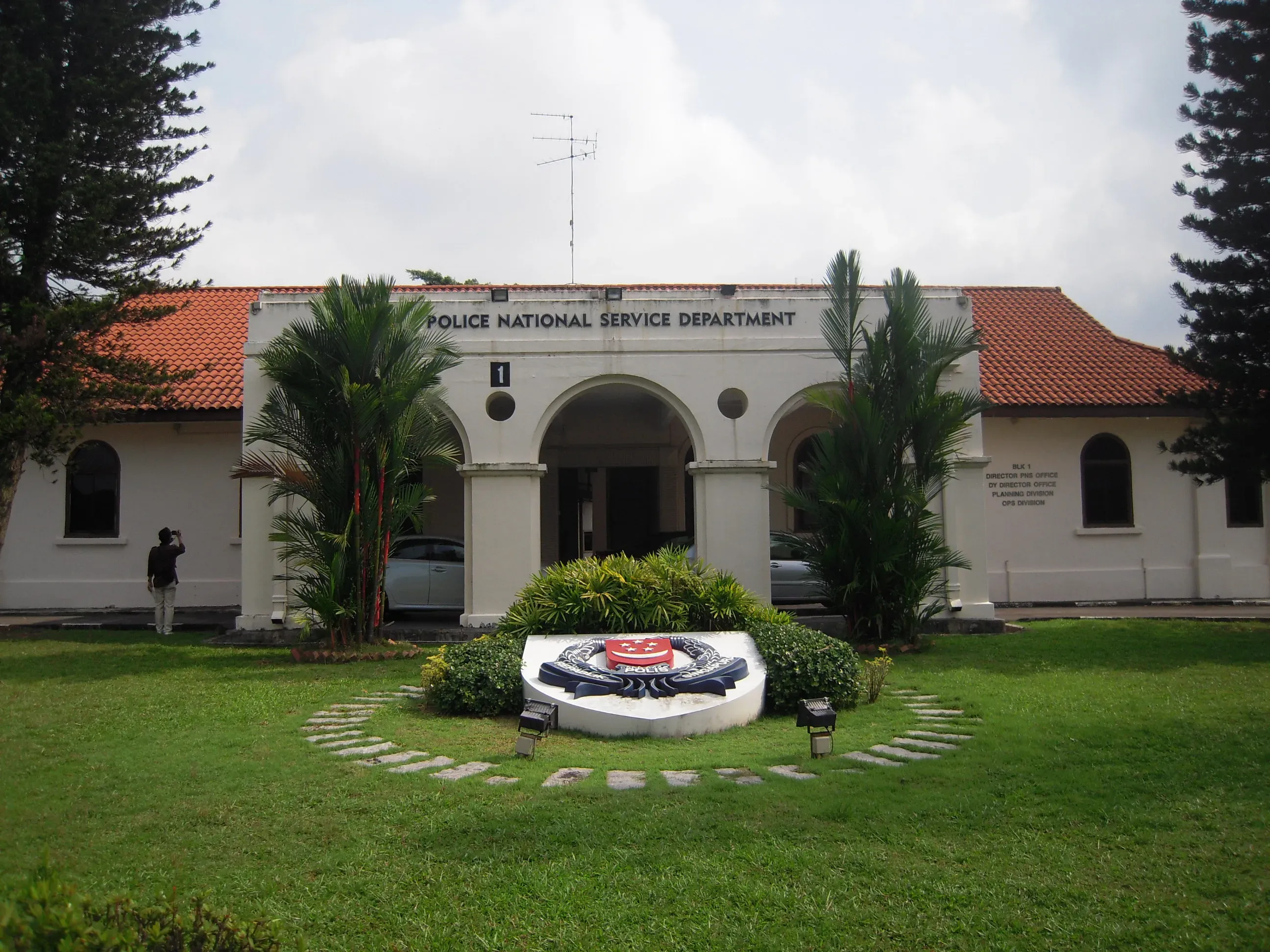
Block 1 is characterised by a triple arched car porch, arched windows and an entrance portal frame accentuated with Neoclassical plaster mouldings.
Block 2 has a U-shaped floor plan with surbaisse pediments at both ends to anchor the rectangular linear frontage.
Block 13, a 1-storey plantation style house raised on masonry piers, has extensive verandah and large timber shutters for natural ventilation to suit its original hospital use.
Blocks 27 and 28 are a pair of colonial buildings which drew inspirations from the Arts and Crafts movement. Each block has a unique butterfly-shaped semi-detached house layout with atypical porches at both ends.
The building at 153 Mount Pleasant Road, conserved just outside the OPA site boundary, has Art Deco style architecture and has been serving as the Senior Police Officers’ Mess. Built in 1931, the 2-storey stately building is emphasised by a large central porch with an open roof terrace.
The Legacy
A new HDB housing estate is being planned to weave in the rich tapestry of heritage and nature in the area, while capitalizing on the new Mount Pleasant MRT station. Besides retaining Blocks 1, 2, 27 and 28 for adaptive re-use, the housing estate will keep part of the OPA’s parade square as an open space, reference OPA architectural elements where feasible, and re-cycle some physical elements as street furniture or markers. One of the buildings will house a redesigned neighbourhood police post in the upcoming housing estate.
Guidelines and Procedures
[1] The conservation guidelines for shophouses and bungalows will generally be applied by URA in the consideration of a development application. However, if the circumstances or planning considerations relevant to a case warrant it, URA may in its discretion decide to depart from these general guidelines. The guidelines, principles and illustrations found in the guidelines are not exhaustive in covering all possible site conditions and variations in building type. Persons intending to carry out a development are advised to take this into consideration and check with URA through enquiries or development applications to confirm if their proposals can be allowed.