
Conservation Area
Mountbatten Conservation Area
Applicable Guidelines
Bungalow Guidelines
Conservation Area
Mountbatten Conservation Area
Find out more about Mountbatten Conservation Area.
Important Information
All proposed works will need to comply with the Conservation Guidelines and the Specific Restoration Guidelines (SRG). Conservation Permission is required before all additions & alteration works and operations of new use can begin.
Owners, architects and engineers intending to carry out restoration works or development within conservation areas are required to comply with the conservation principles, planning parameters and restoration guidelines for conserved shophouse and bungalow building typologies, as well as planning parameters and envelope control guidelines for new buildings within conservation areas accordingly.
For other building types, which do not conform to the standard shophouse or bungalow typology, these will be evaluated on a case-by-case basis in accordance with conservation principles. [1]
About
This conservation area along Mountbatten Road contains 15 bungalows mainly of the Victorian and Art Deco styles.
The History
Mountbatten Estate is one of five subzones in the Marine Parade area and is named after Lord Louis Mountbatten who later became Earl Mountbatten of Burma.
There was a vast coconut plantation known as Grove Estate, stretching from the original shoreline towards the former Grove Road, which is now Mountbatten Road. The estate too, is part of the East Coast and was famed for its beach and waterfront location. In the late 19th century and early 20th century, the wealthy set up homes here, dotting the estate with bungalows.
The Architecture
The single-storey raised bungalows of the rich were such a familiar sight along Mountbatten Road, that they were nicknamed "Millionaires' Bungalows". This type of house was first built in India and were found to be effective in keeping the heat of the tropical sun away as the under-floor ventilation kept the rooms cool.
The Legacy
Today, Mountbatten Estate is described as being an area with a good mix of quality bungalow housing and residential apartments. 15 of these buildings that range from Art Deco to Victorian to early Modern styles have been set aside for conservation.
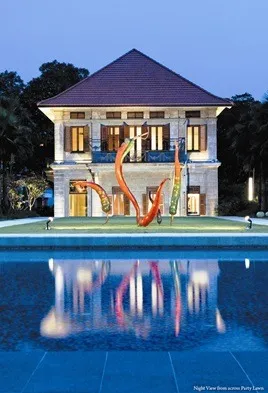
745 Mountbatten Road was once a two-storey Early Modern style bungalow also known as ‘Chansville’, the home of the late Dr Chan Ah Kow and his seven children - including Alex, Roy, Patricia and Mark - who were well known in the 1960s and 1970s for their swimming prowess. Chansville has been restored and extended and is now part of a development consisting of five bungalows called the Five Legends of Mountbatten.
733 Mountbatten Road, a single-storey Early Style bungalow built in 1927, received the URA Architectural Heritage Award in 2004 [http://www.ura.gov.sg/conservation/733mountb.htm]. The restored bungalow was also recognised with a 2008 Unesco Asia-Pacific Heritage Award for Culture Heritage Conservation for demonstrating good conservation practice in combination with innovative solutions for providing additional space in the re-use of this heritage building.
Conserved on 23 July 1993
Guidelines and Procedures
[1] The conservation guidelines for shophouses and bungalows will generally be applied by URA in the consideration of a development application. However, if the circumstances or planning considerations relevant to a case warrant it, URA may in its discretion decide to depart from these general guidelines. The guidelines, principles and illustrations found in the guidelines are not exhaustive in covering all possible site conditions and variations in building type. Persons intending to carry out a development are advised to take this into consideration and check with URA through enquiries or development applications to confirm if their proposals can be allowed.