
Conservation Area
Geylang Conservation Area
Applicable Guidelines
Secondary Settlement Guidelines
Conservation Area
Geylang Conservation Area
Find out more about Geylang Conservation Area.
Important Information
All proposed works will need to comply with the Conservation Guidelines and the Specific Restoration Guidelines (SRG). Conservation Permission is required before all additions & alteration works and operations of new use can begin.
Owners, architects and engineers intending to carry out restoration works or development within conservation areas are required to comply with the conservation principles, planning parameters and restoration guidelines for conserved shophouse and bungalow building typologies, as well as planning parameters and envelope control guidelines for new buildings within conservation areas accordingly.
For other building types, which do not conform to the standard shophouse or bungalow typology, these will be evaluated on a case-by-case basis in accordance with conservation principles. [1]
About
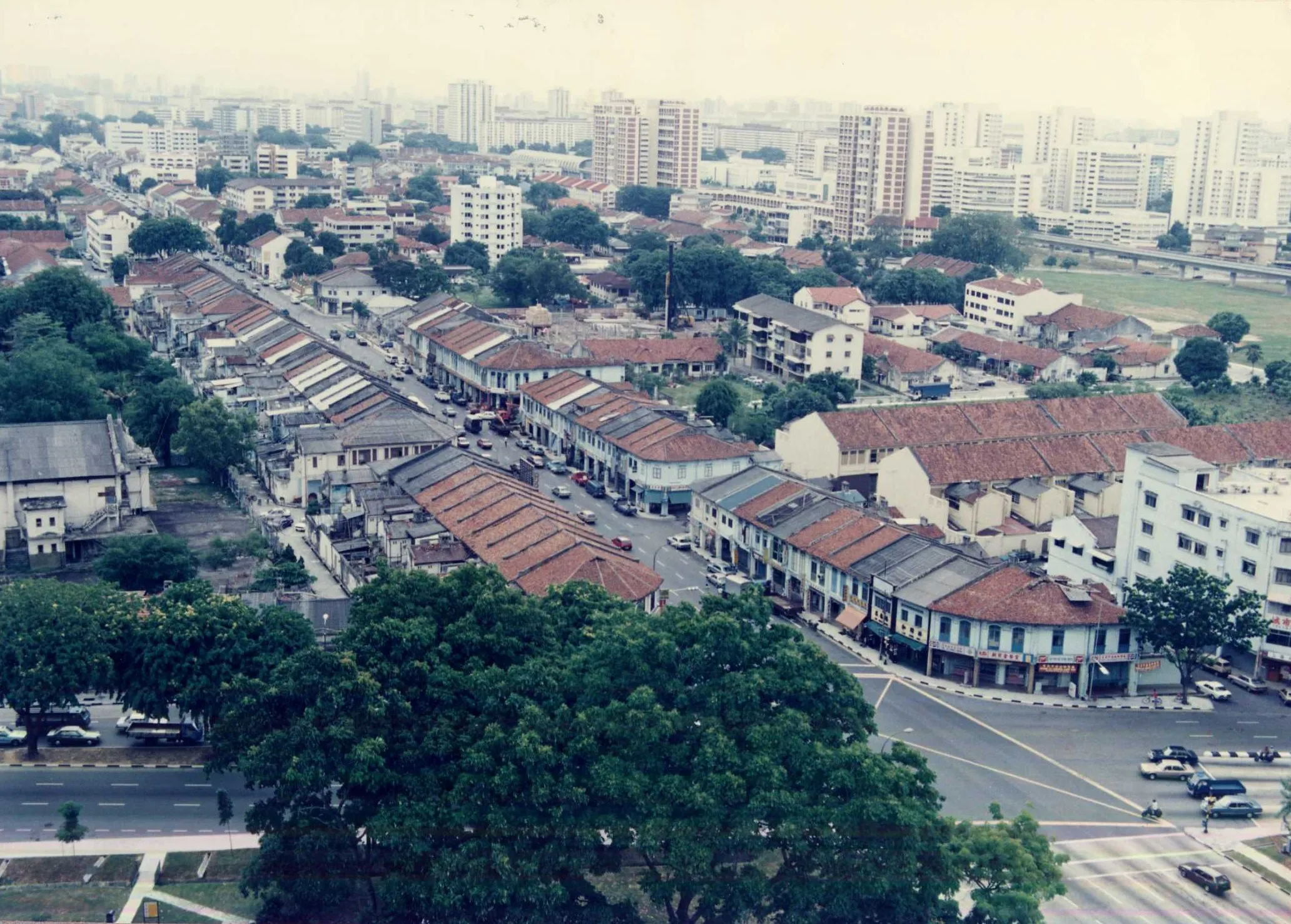
The Geylang Conservation Area is defined by the boundaries of Sims Avenue, Paya Lebar Road, Guillemard Road and Mountbatten Road. Synonymous with its multiplicity of uses, mix of cultures, wealth of eateries and roadside fruit stalls, colourful Geylang is a hive of activity round-the-clock.
Geylang Road can be described as a commercial spine, with the lorongs forming residential enclaves. The combination of low-rise bungalows and rows of shophouses along the lorongs provides a gentle contrast to the buildings along the main Geylang Road.
Geylang is an area with a rich architectural heritage. It has a wide range of shophouses depicting Early, First Transitional, Late, Second Transitional and Art Deco styles, which demonstrate the range of building types and styles spanning the 1910s to the 1950s. It also has a good selection of bungalows that can be truly considered "Singapore Eclectic" — a polyglot style drawn from a potpourri of Malay, European and Chinese influences. Besides these, there are many new expressions of the shophouse form. Together, they give Geylang a unique urban character with a human scale.
The History
The establishment of Geylang as a place of settlement dates back to the second half of the 19th century. Geylang was established during the early 1840s when the British Government dispersed the Malay floating village at the mouth of the Singapore River. The Malays and the Orang Laut then resettled at the mouths of the Kallang and Geylang Rivers, which flowed into a common bay known today as the Kallang Basin.
Geylang was first known as Geylang Kelapa, indicating the presence of coconut plantations in the area. The initial settlers lived in houses built on stilts over the river basin, congregating along the river to form residential enclaves. The first Malay kampong formed was Kampong Melayu, the original name for today's Geylang Serai.
Geylang Road originated as the earliest trunk road linking the downtown area at the Singapore River to the northeastern part of Singapore. It had an electric tramline running along its length, terminating at a lemongrass processing factory located where Geylang Serai Market stands today. This early agricultural area was known for the fragrant lemongrass, or serai, grown as a cash crop by the Malays who settled here. The name Geylang Serai is therefore said to be derived from the lemongrass factory, or Kilang Serai in Malay.
By the early 20th century, Geylang had expanded into two parts separated by the Geylang River. The eastern part — Geylang Serai today — was populated by Malays who lived in traditional houses and used the land for agriculture. The western area was divided into a series of lanes termed "lorongs" and was mainly inhabited by the Chinese. Most of the Chinese shops were set up strategically between the Kallang and Geylang Rivers, providing goods and services such as jewellery and pawn shops. These two distinct communities gave Geylang its split character in terms of population, streetscapes and building layouts.
At the turn of the century, with population growth and a housing boom, Geylang transformed from an agricultural centre into an area for speculative housing ventures. The kampongs along the rivers were phased out due to frequent flooding and poor sanitation, leading to the major urban redevelopment of Geylang. The post-World War I building boom further drove the urbanisation of lower Geylang Road, the parallel Sims Avenue and the lorongs in between. With this, Geylang became an experimental ground for new housing types that incorporated variations on the shophouse and bungalow typologies, and its architecture grew diverse in form, typology and style.
Geylang also acquired a name for itself as an entertainment district. In 1936, a group of businessmen established the Happy World Amusement Park — later known as Gay World — along Lorong 2. The main draws of the park were its cinemas and indoor stadium, though it eventually closed in the 1970s.
The distribution of architectural styles across Geylang follows this pattern of historical development. Along Geylang Road, Early-style shophouses are situated between Lorongs 11 and 13, 12 and 14, and 27A and 29, suggesting a multi-nodal linear development pattern where all these nodes were eventually merged until a contiguous streetscape resulted. The large proportion of First Transitional, Late and Second Transitional shophouses reflects the very intensive development that took place during the boom period. The substantial number of Art Deco buildings further indicates the flourishing of Geylang as a secondary settlement in later years.
The Architecture
The Geylang Shophouse
The repetitive rhythm set up by the columns and pilasters on the ground floor of the shophouses at regular intervals contributes to the overall unifying character of the Geylang streetscape.
The area also has a number of eye-catching Late-style shophouses that demonstrate the full flowering of the cultural hybridisation that occurred in Singapore between World War I and World War II, when the simplified Art Deco and Moderne styles became popular. Buildings such as those at Lorong Bachok exemplify the coming together of Asian and European tastes to create a unified and pleasing whole. Wooden fretwork from the Malay house is present, while Peranakan aesthetic influence can be seen in the use of colourful European tiles on the front walls. Chinese influence is typified by the V-shaped natural clay tiles of the roof and the unique three-dimensional plaster reliefs used extensively on façades. European features include the French windows that are louvred on the upper half and panelled below, glazed fanlights and Neo-Classical cornice work. The traditional door-gods of Chinese culture are replaced by almost life-sized plaster figures of Indian soldiers of the 19th century.
These most ornate of shophouses have counterparts in other parts of Singapore that urbanised around the same time, such as Balestier Road, Jalan Besar, Joo Chiat and Tanjong Katong.
The Geylang Bungalow
Compared with the palatial colonial bungalows in the Central Area, the Geylang bungalow is smaller in scale, occupying a smaller lot with higher site coverage. The Geylang bungalow embodies a uniquely Singaporean vernacular domestic architecture. The three predominant bungalow styles are Early, Victorian and Art Deco, though these styles incorporate a fusion of Malay, Chinese and European features. Their presence in this neighbourhood is a rare visible reminder of the early urbanisation of the fringes of Singapore city. The small stock of bungalows in Geylang is also representative of the range of detached housing types that were once widely seen across Singapore.
Malay roof forms are utilised, such as the bumbong perak and the bumbong lima. The layout of the Malay village house has also been adopted in the form of the so-called "Malay bungalow plan". Preceding the Rumah Ibu (main body of the bungalow) is the serambi (reception verandah); other Malay-inspired features include the anjung (porch), rumah tangga (staircase) and awan larat (wood carving motif). The domestic architecture in Geylang can thus be defined as either "Singaporean Eclectic" or "Singaporean Malay".
Other Buildings
Nestled along Geylang Road and the surrounding areas are other building types that serve as both local landmarks and markers of Singapore's architectural and social development.
Geylang Post Office — The Geylang Post Office is a three-storey building of an Early Modern style, which moved away from the use of excessive façade decoration in favour of a more restrained look that was perhaps considered more suitable for a public building.
Former Queens Theatre (Grandlink Square) — This was one of the major theatres along the road, catering to the then-burgeoning cinema industry. It is an architectural exercise in the use of Neo-Classical features to create a grand and exotic appearance, with a large pediment, half dome and double-storey archway — perhaps designed to stand out amongst its two-storey surroundings.
Masjid Khadijah — This mosque is a good example of a late 19th century hybridisation between the Neo-Classical styles that were becoming popular amongst the Indian Muslim community and the traditional Malay mosque with its pitched roof as the central feature. Of particular note are the elegant arches around the main prayer hall and the delicate moulded plasterwork throughout.
Former Eastern Aerated Water Factory — This building is a reminder of the light industries that sprang up in the area to serve a growing population that demanded the latest in modern goods and tastes. As with many industrial buildings, while the production line occupied a functional shed, considerable resources were poured into the front façade in order to advertise the business. The building is a good example of the Moderne style of the 1930s, with an elongated stepped pediment and a flagpole atop a two-storey building. A row of well-proportioned windows sheltered by very thin concrete sun-shades creates a light feel to the façade. The main decorative feature and highlight of the façade are the words — in English and Chinese — proclaiming the business's name, rendered in pre-cast three-dimensional plasterwork. The English lettering is in a flowing cursive script, while the Chinese lettering is a rare example of Art Deco-style Chinese characters. The pre-cast diamond-shaped terrazzo plaque bearing the image of a steamship is perhaps one of the few known remaining examples of this form of decorative architectural device.
The Legacy
Nos. 6 & 10 Lorong 29 Geylang — A pair of two-storey Art Deco bungalows were restored, converted into maisonette flats and integrated with a new eight-storey condominium. They can be viewed through a double-volume opening creatively punched through the condominium block. This project received a URA Architectural Heritage Award in 1996.
Guidelines and Procedures
Resources
[1] The conservation guidelines for shophouses and bungalows will generally be applied by URA in the consideration of a development application. However, if the circumstances or planning considerations relevant to a case warrant it, URA may in its discretion decide to depart from these general guidelines. The guidelines, principles and illustrations found in the guidelines are not exhaustive in covering all possible site conditions and variations in building type. Persons intending to carry out a development are advised to take this into consideration and check with URA through enquiries or development applications to confirm if their proposals can be allowed.