
Conservation Area
Chatsworth Park Conservation Area
Applicable Guidelines
Bungalow Guidelines
Conservation Area
Chatsworth Park Conservation Area
Find out more about Chatsworth Park Conservation Area.
Important Information
All proposed works will need to comply with the Conservation Guidelines and the Specific Restoration Guidelines (SRG). Conservation Permission is required before all additions & alteration works and operations of new use can begin.
Owners, architects and engineers intending to carry out restoration works or development within conservation areas are required to comply with the conservation principles, planning parameters and restoration guidelines for conserved shophouse and bungalow building typologies, as well as planning parameters and envelope control guidelines for new buildings within conservation areas accordingly.
For other building types, which do not conform to the standard shophouse or bungalow typology, these will be evaluated on a case-by-case basis in accordance with conservation principles. [1]
About
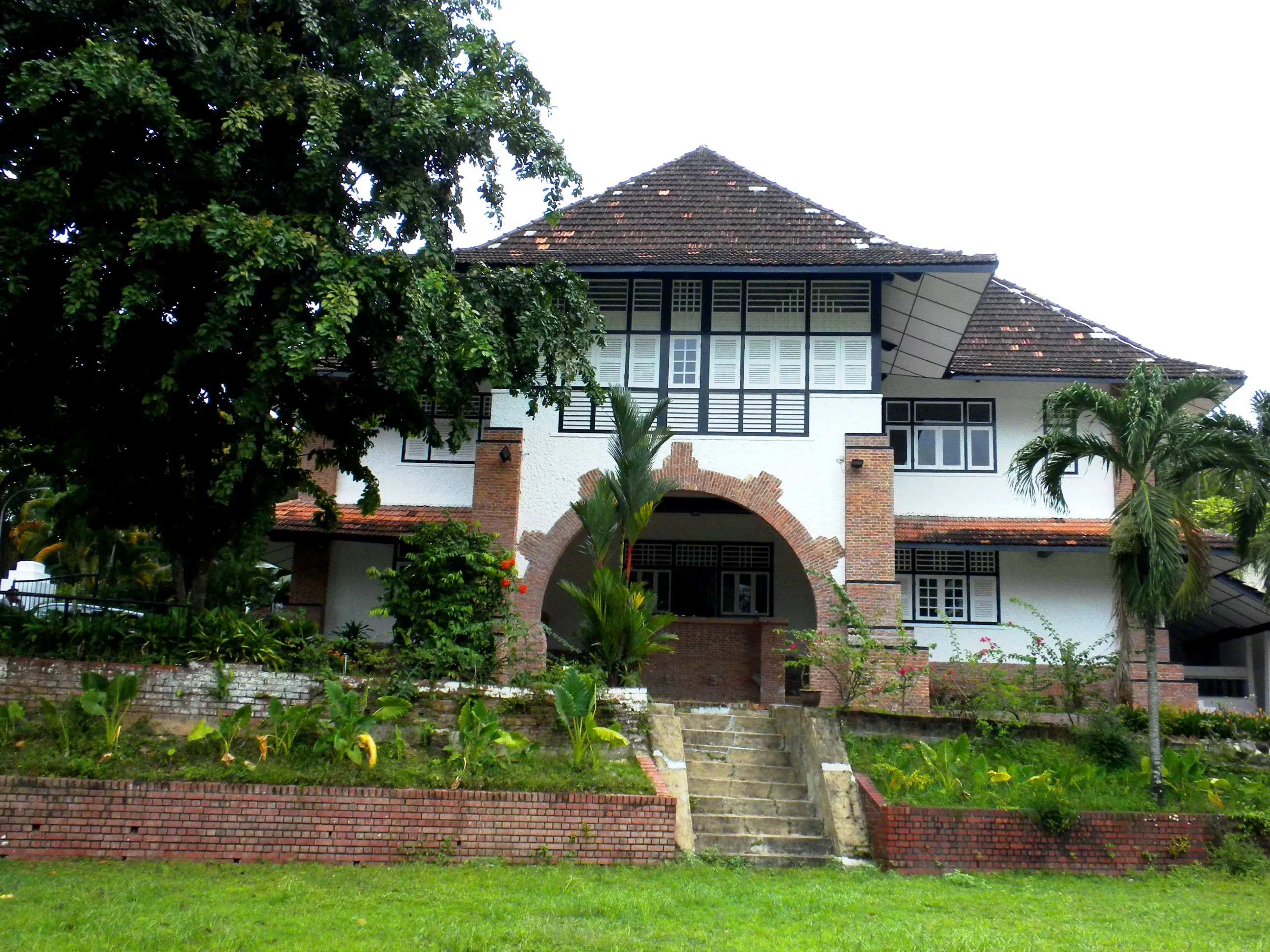
Bounded by Tanglin Road, Jervois road, Cable Road, Nathan Road and Grange Road, the Chatsworth Park Good Class Bungalow Area is one of the finest residential areas in Singapore. This conservation area consists of 27 conserved bungalows mainly of the Art Deco and ‘Black and White’ Bungalow styles.
The History
The conserved houses presently in the area were built in the 1920s and 1930s. Many were privately owned by firms such as McAlister & Co., Cable & Wireless, the Straits Trading Company and the Firestone Rubber Company as accommodation for their expatriate staff. The verdant landscape settings are just as impressive as the fine residences themselves.
The end of the First World War precipitated a boom in house-building in Singapore. After the war, architects in Singapore simply picked up from where they had left off four years previously, which included a return to the ‘Black and White’ house style of the prewar years; some of the finest Black and White houses belong to that early postwar period. Between 1919 and 1923, over sixty tropical ‘Mock Tudor’-style houses were commissioned and built in the private sector and in terms of numbers, this period represents the high water mark of the ‘Black and White’ house.
The Architecture
The Eastern Extension Australasia & China (EEA&C) Telegraph Co. was one of Swan & Maclaren’s biggest clients in the immediate postwar era, commissioning eight houses for the company’s new residential estate between Jervois Road and Nathan Road (Holt Road and Cable Road were built to provide access to the estate). Because of the nature of the site, some of the houses were set back from the driveway, requiring a covered way extending to the front door to afford visitors protection from Singapore’s fierce tropic sun and torrential monsoon rain.
No.2 Cable Road is a good example of the tropical Edwardian style house, built for Municipal Commissioner, Mohamed Namazie. Designed in 1913 by David McLeod Craik, a former government architect in the Municipal Engineer’s office who had just joined Swan & Maclaren after some time in practice on his own, the Namazie house was one of his first commissions for the firm. The ground plan is square, and the rooms are organized in terms of their use and patterns of circulation through the house rather than subscribing to any notion of Classical symmetry. A distinctive feature is the main entrance porch which is placed at one corner and set at an angle of 45 degrees to the main body of the house; this was quite a popular configuration at the time. A light and airy sitting verandah, with timber shutters and glazing, extends from the drawing room over the porch and each bedroom on the first floor has its own private balcony or verandah. The whole is surmounted by a pyramidal roof, topped by a lantern-like jack roof, which helps to light and provide ventilation for the centre of the house.
Founded in 1857, McAlister & Co. was one of the longest-established trading houses during the colonial era. From the beginning of the 20th century its principal business interests lay in shipping, coal and exports. In 1920, Swan & Maclaren were commissioned to build a mess and four bungalows for the firm on Cable Road. All the major European firms in Singapore at that time had a mess for unmarried members of staff – a place where bachelors lived and took their meals together. The McAlister mess built by Swan & Maclaren in 1920 is still standing, and embraces the quintessential elements of the classic postwar Black and White house. The other McAlister & Co. bungalows on Cable Road are interesting because they are built on the ground in the Anglo-Indian manner, rather than being raised on piers in the Anglo-Malay style.
The Legacy
A substantial number of beautiful Black and White houses still grace the grounds along Cable Road, Chatsworth Park and Chatsworth Road.
No.3 Chatsworth Park, a two-storey Art Deco bungalow, was designed by Frank Brewer and built in 1923. The building was awarded a URA Architectural Heritage Award in 1997 for careful restoration of many key features of the conserved main building, including its brick arches with their keystones and fair-faced brick bases and the addition of contemporary new extensions to its rear and side.
No.14 Cable Road, once a mess hall used by staff of McAlister & Co., has reinvented itself from a classic mock-Tudor style Black and White house into a contemporary family home, complete with a masterfully designed new annexe with careful choice of materials and colour scheme. The project was awarded a URA Architectural Heritage Award in 2008.
The bungalows were gazetted on 29 November 1991 for conservation. Only No. 2 Holt Road was gazetted on 3 October 1992 for conservation.
Guidelines and Procedures
[1] The conservation guidelines for shophouses and bungalows will generally be applied by URA in the consideration of a development application. However, if the circumstances or planning considerations relevant to a case warrant it, URA may in its discretion decide to depart from these general guidelines. The guidelines, principles and illustrations found in the guidelines are not exhaustive in covering all possible site conditions and variations in building type. Persons intending to carry out a development are advised to take this into consideration and check with URA through enquiries or development applications to confirm if their proposals can be allowed.