
Conserved Building
36 Beach Road
Applicable Guidelines
Other Building Guidelines
Conservation Area
Former Beach Road Camp Conservation Area
Historic address: 1 Beach Road
Block 1
About
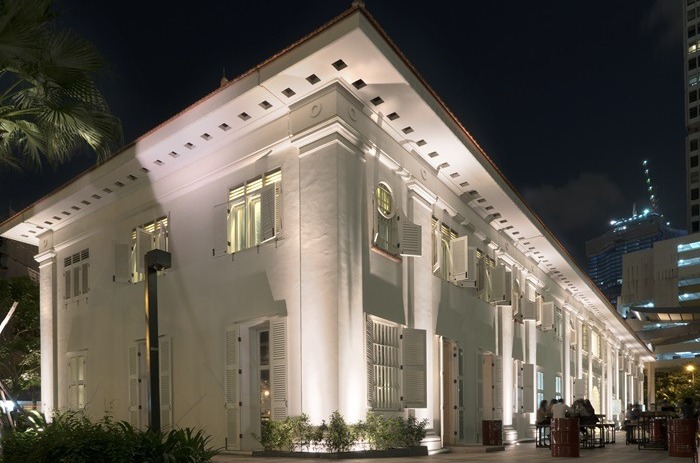
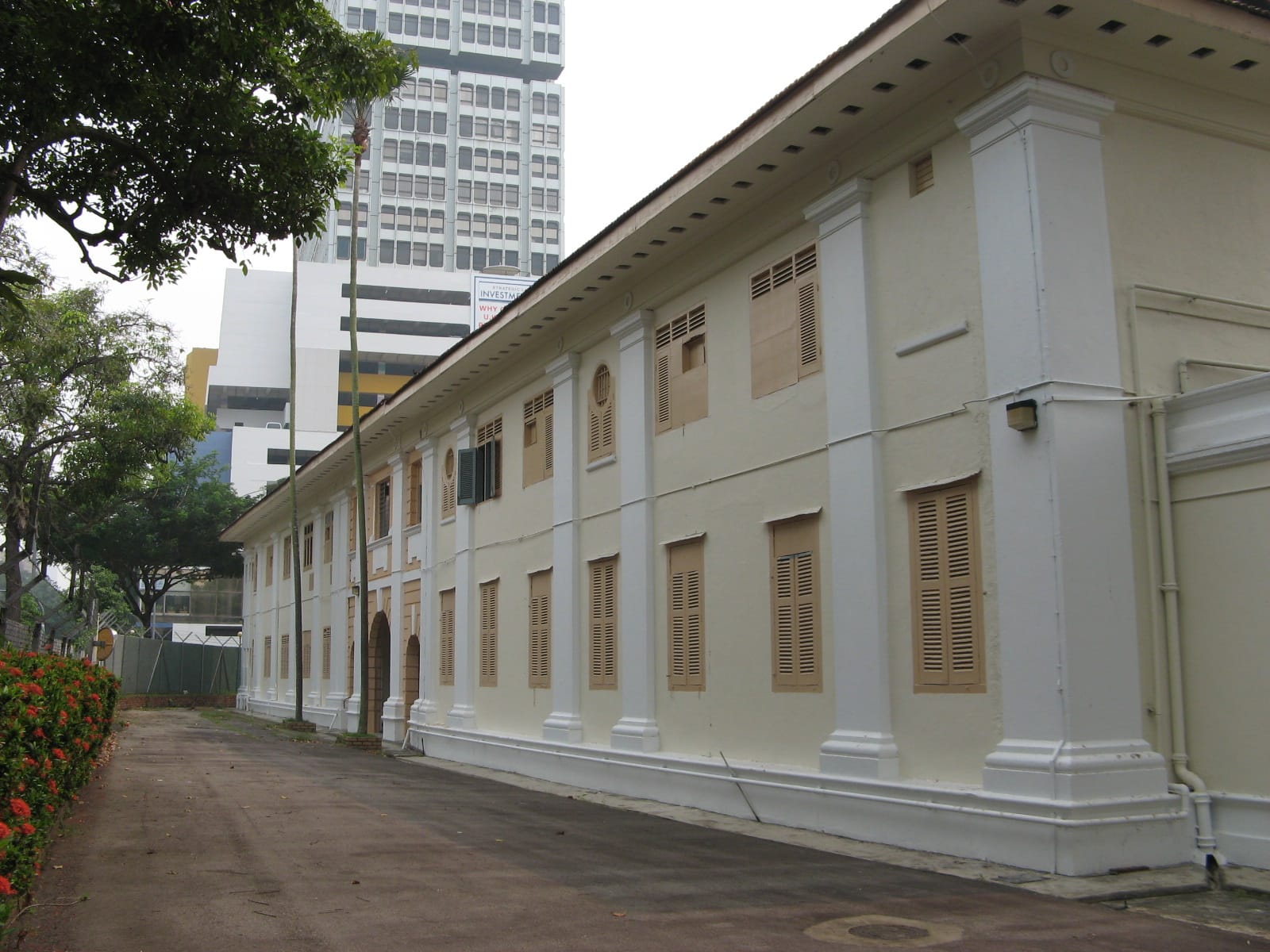
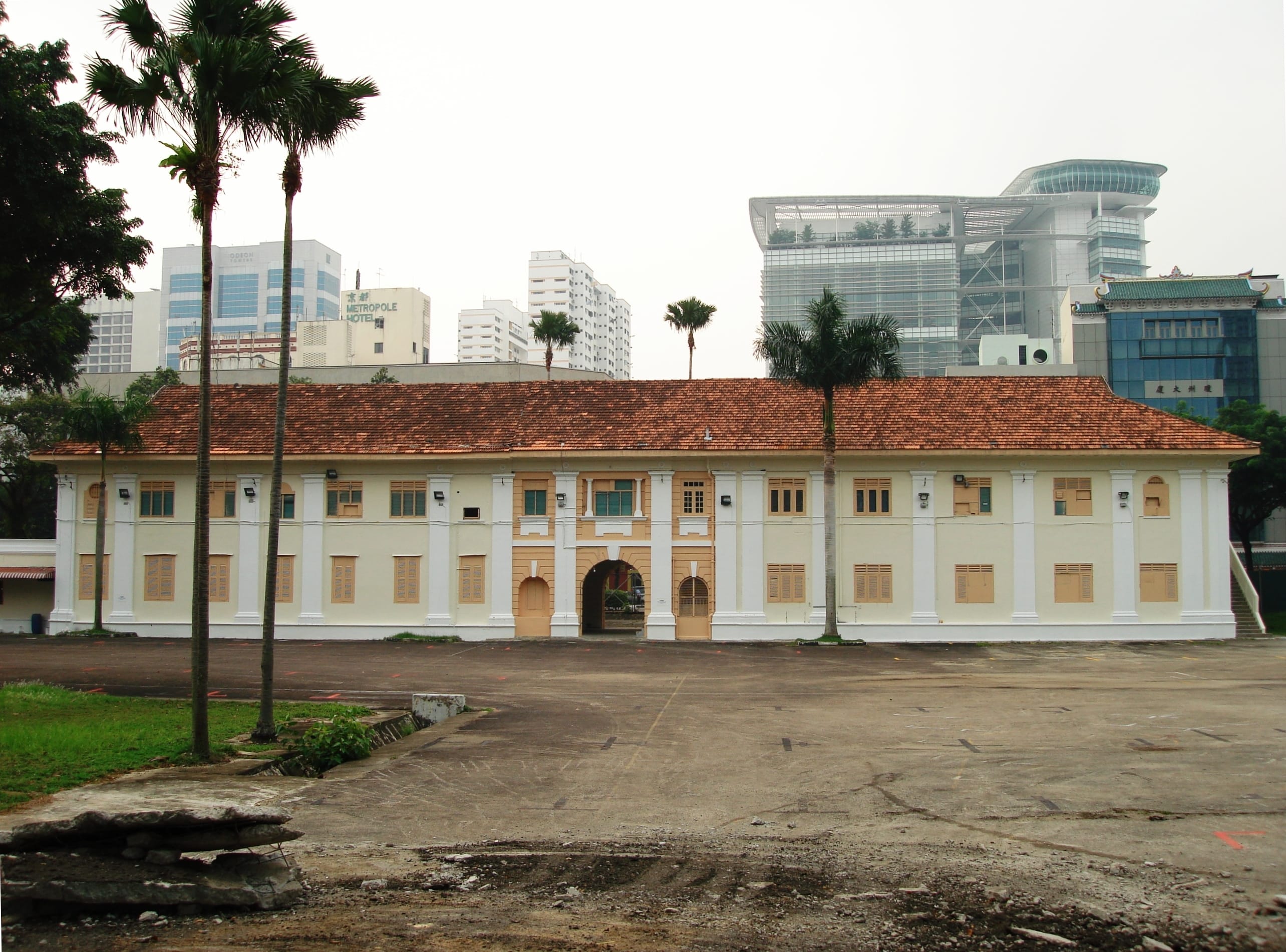
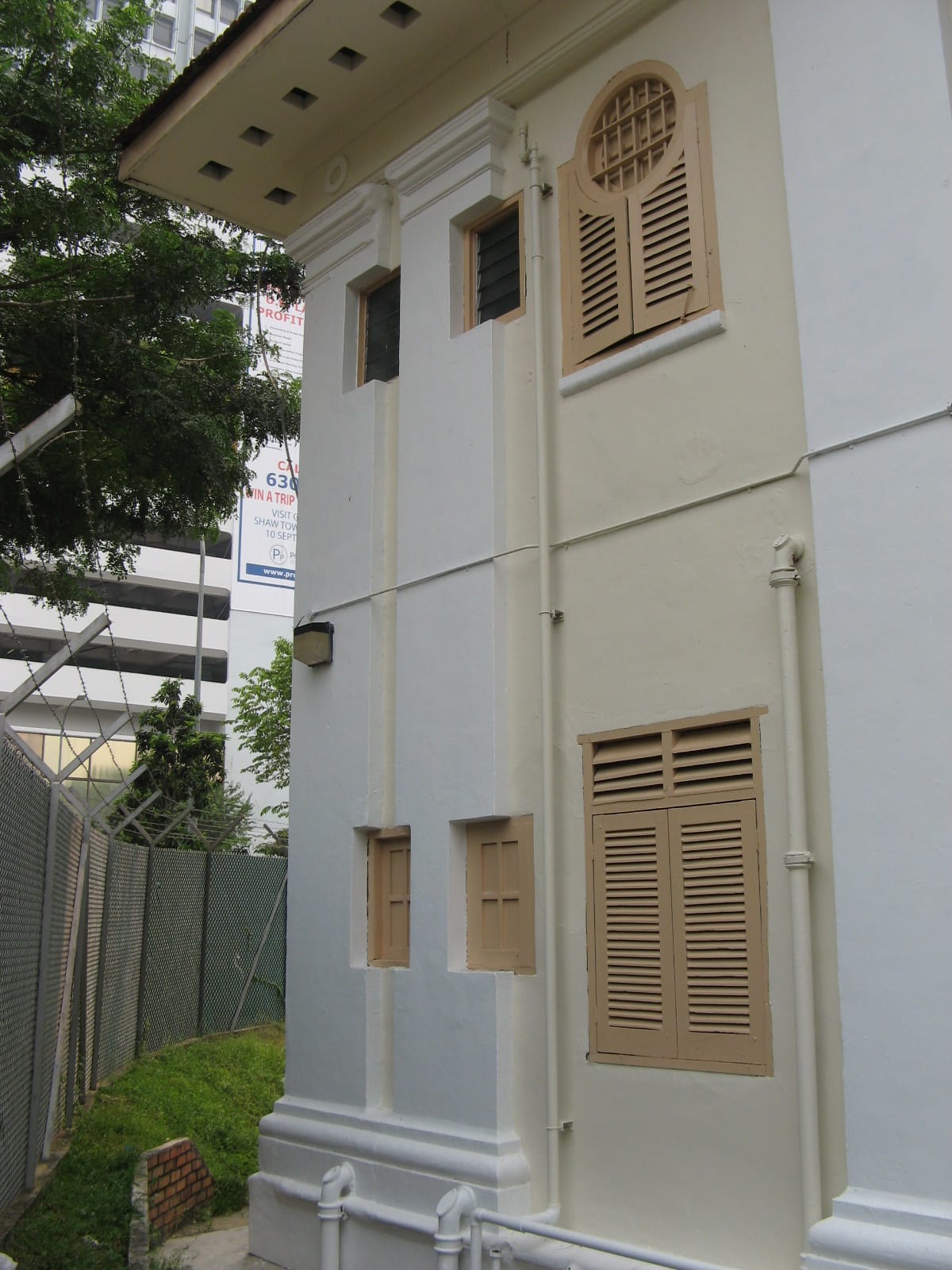
The former Singapore Armed Forces (SAF) NCO Club, Blocks 1 and 14 of the old Beach Road Camp have created a distinctive stretch of road with historical military and police buildings. These buildings help to tie the site of the old colonial government buildings around Empress Place and the Padang through to the Raffles Hotel (National Monument) to the surrounding historic urban fabric of Purvis and Liang Seah Streets (Beach Road Conservation Area) where traditional shophouses (circa 1910-20s) have been conserved.
The History
Beach Road, as the name implies, was the original seafront prior to reclamation. In the early 1800s, as part of Singapore’s first Town Plan, Sir Stamford Raffles designated the area around it as the European Town. Its sea-frontage made it the main European residential area as well as that of the wealthy Asians and it became known as ‘The row of 20 houses’. In the 1860s, when the area became overcrowded as the settlement prospered, many of the houses along the road were converted into hotels and boarding houses to meet the demand of a growing population. The road remained on the seafront until the 1870s and 1880s and during these periods, the area soon ceased to be a fashionable residential area. The land was later reclaimed over several phases, starting from about the 1900s for the construction of Beach Road Camp and later on, the Nicoll Highway. The final major stage of reclamation was carried out in the 1970s.
Within the Beach Road area, there are the Raffles Hotel which was gazetted a national monument in 1987 and the two- and three-storey shophouses within the Beach Road Conservation Area which were gazetted in October 1991.
The Building
As a result of greater public interest in the conservation of more modern buildings in Singapore as well as landmarks of social and community history, the Urban Redevelopment Authority set up the Conservation Advisory Panel in June 2002 to provide more public input and participation on its building conservation programme. The former NCO Club and Blocks 1, 9, 14 of the former Beach Road Camp - were among the first set of buildings that the panel evaluated and recommended for conservation.
The conservation of these buildings has helped to retain the identity of the area and create a distinctive streetscape along the stretch of Beach Road from the Gateway Towers to War Memorial Park. The buildings mark the architectural evolution of Military buildings in Singapore, and more importantly, they are testament to the turbulent political events of the early 20th century in Singapore that led to the eventual independence of our country. The buildings also are reminders of the history of the sacrifice that many have made in the course of protecting our land.
Gazetted for conservation on 9 October 2002.
The Legacy
As a result of greater public interest in the conservation of more modern buildings in Singapore as well as landmarks of social and community history, the Urban Redevelopment Authority set up the Conservation Advisory Panel in June 2002 to provide more public input and participation on its building conservation programme. The former NCO Club and Blocks 1, 9, 14 of the former Beach Road Camp - were among the first set of buildings that the panel evaluated and recommended for conservation.
The conservation of these buildings has helped to retain the identity of the area and create a distinctive streetscape along the stretch of Beach Road from the Gateway Towers to War Memorial Park. The buildings mark the architectural evolution of Military buildings in Singapore, and more importantly, they are testament to the turbulent political events of the early 20th century in Singapore that led to the eventual independence of our country. The buildings also are reminders of the history of the sacrifice that many have made in the course of protecting our land.
Gazetted for conservation on 9 October 2002.
Guidelines and Procedures
All proposed works will need to comply with the Conservation Guidelines and the Specific Restoration Guidelines (SRG). Conservation Permission is required before all additions & alteration works and operations of new use can begin.
Residential Fronts are characterised by timber casement windows flanking a double-leafed timber door. All buildings with residential front which is existing and/or identified in the 'Specific Restoration Guidelines', regardless of land use zoning, shall be retained and restored.
Any proposed additions and alterations to this conserved building are subject to evaluation. Please submit your proposal for URA's review.
Apply for Specific Restoration Guidelines (SRG) (opens in new tab)
Gallery
Explore Street View
The building can be found at this street.