
Conserved Building
43 Bukit Pasoh Road
Applicable Guidelines
Historic District Guidelines
Conservation Area
Chinatown - Bukit Pasoh Conservation Area
Historic address: 43 Bukit Pasoh Road
Ee Hoe Hean Club 怡和轩俱乐部
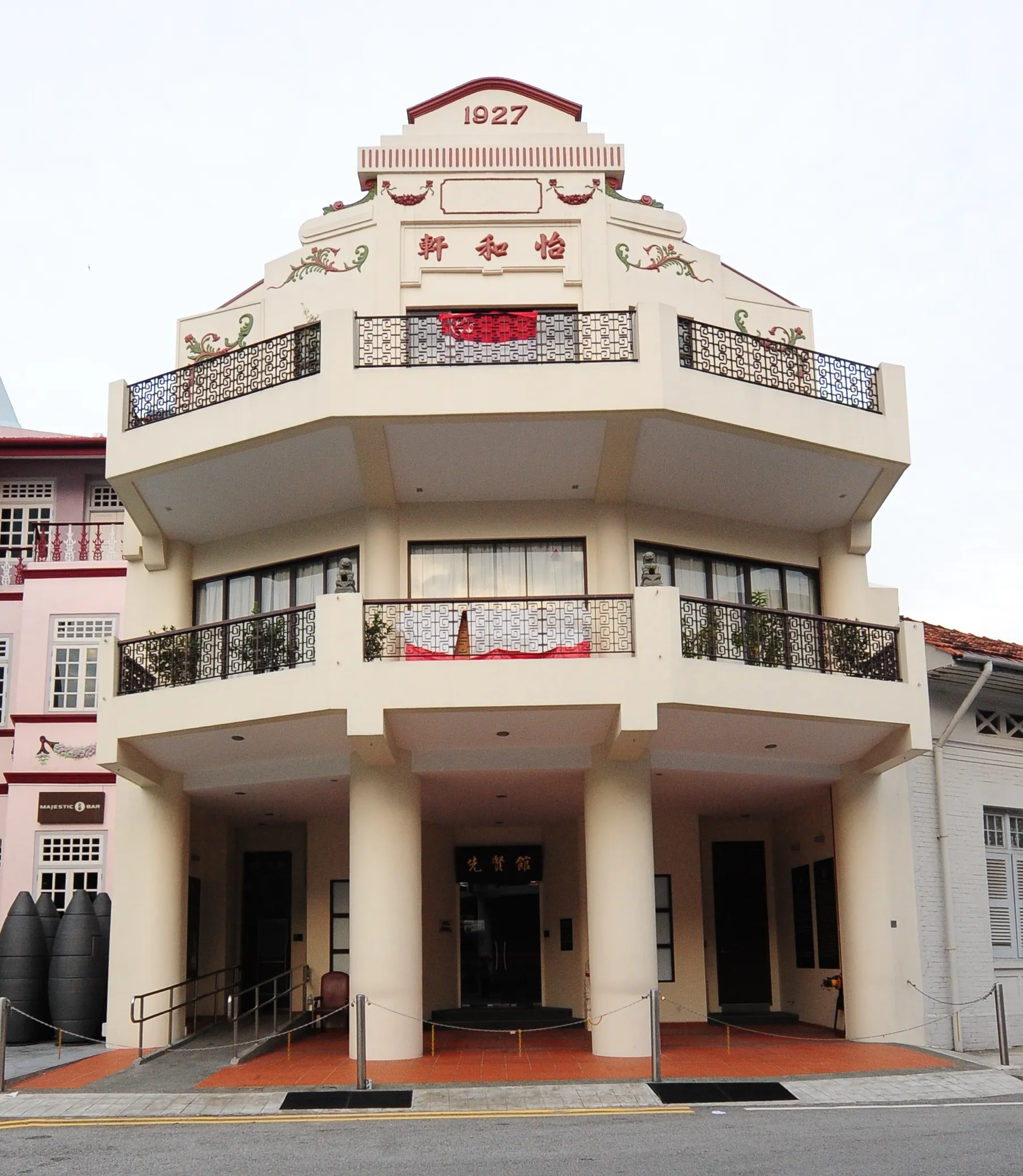
About
The Ee Hoe Hean Club was founded in the late 19th century on Club Street by prominent business leaders in then-Malaya and Singapore. Although the club's name was pronounced in Hokkien, membership was open to all Chinese regardless of clan or dialect.
The History
The club was founded in 1895 by a group of Hokkien community leaders for the wealthy Chinese elite. More than a social and business club, its members were actively involved in the political development of China in the early 20th century. It supported the 1911 Xinhai Revolution, which overthrew the Qing Dynasty, leading to the establishment of the Republic of China. During World War II, it was the headquarters of the anti-Japanese China Salvation Movement in Southeast Asia.
Important projects such as supporting the Chinese republican revolution led by Dr Sun Yat-sen, the mobilisation of overseas Chinese in support of mainland China against foreign invasion, periodic fund-raising to support the Tong Chai Medical Hall, and the founding of the Singapore Chinese Chamber of Commerce and the Chinese High School were all spearheaded at the club. During the colonial era and under the leadership of Tan Kah Kee, it served as the base for the nationalistic and patriotic movements of the overseas Chinese in this part of the world.
The Legacy
Lim Chwee Chian was reputed to be the first chairman of the club, followed by Tan Kah Kee, Lim Nee Soon, Li Jun Cheng, Tan Lark Sye, Ko Teck Kin, Soon Pen Yam, and Oei Hong Bie respectively. Currently, the chairman is Lim Chin Joo. Ee Hoe Hean has remained an all-men's club. Prominent members include pioneers such as Teo Eng Hock, Tan Chor Nam, Dr Lim Boon Keng, Lin Bing Xiang, Tan Ean Kiam, Aw Boon Haw, and Lee Kong Chian, who were all key leaders of the Singapore Chinese community.
The ground floor Pioneers' Gallery is open for visits and entry is free.
Guidelines and Procedures
All proposed works will need to comply with the Conservation Guidelines and the Specific Restoration Guidelines (SRG). Conservation Permission is required before all additions & alteration works and operations of new use can begin.
Residential Fronts are characterised by timber casement windows flanking a double-leafed timber door. All buildings with residential front which is existing and/or identified in the 'Specific Restoration Guidelines', regardless of land use zoning, shall be retained and restored.
Use Guidelines and Submission Process for Buildings in Historic Conservation Areas
Apply for Specific Restoration Guidelines (SRG) (opens in new tab)
Explore Street View
The building can be found at this street.