
Conserved Building
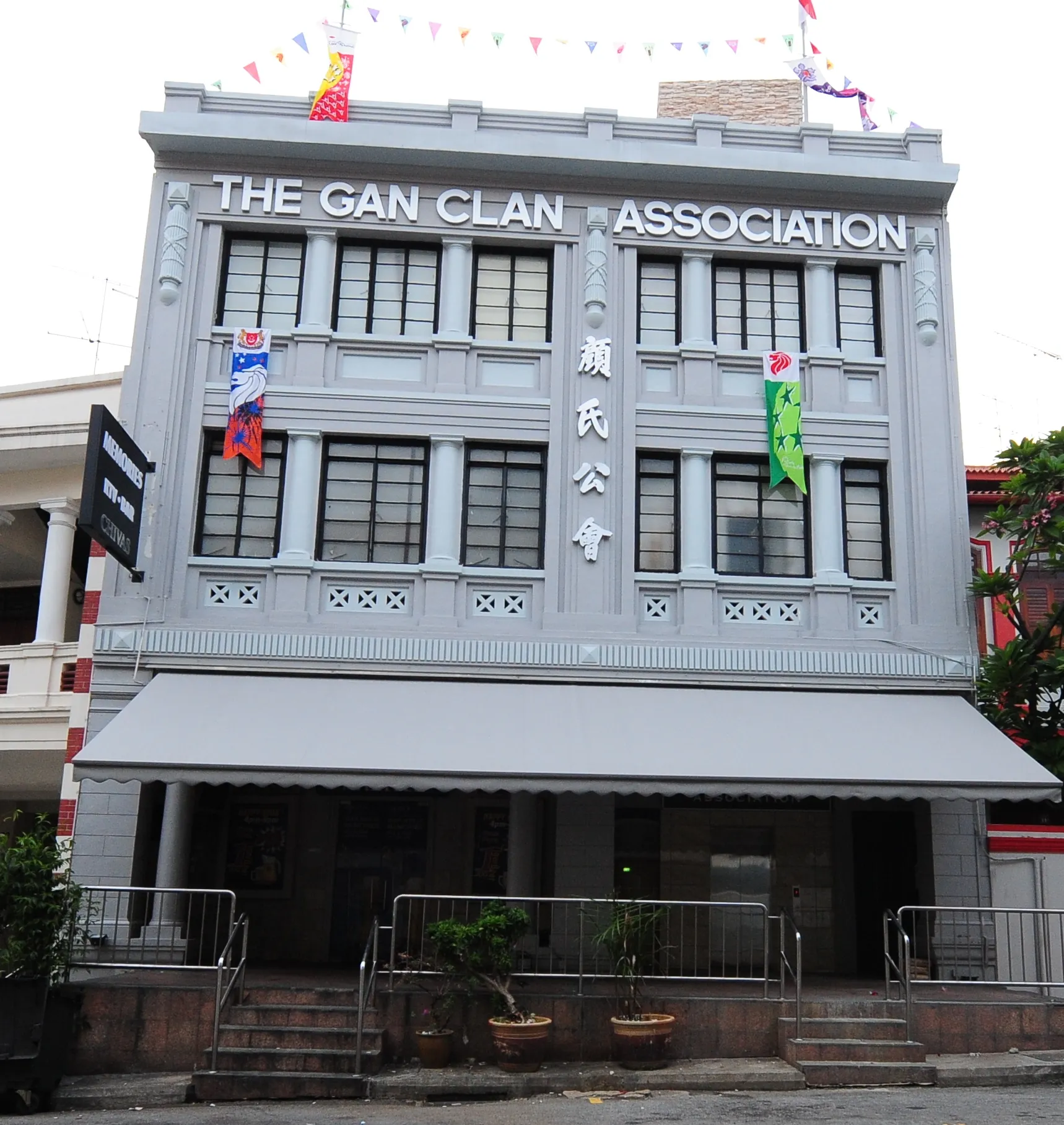
18 Bukit Pasoh Road
Applicable Guidelines
Historic District Guidelines
Conservation Area
Chinatown - Bukit Pasoh Conservation Area
Historic address: 20 Bukit Pasoh Road
About
The Gan (颜) immigrants have a long history in Singapore. According to epigraphic evidence, a pioneer, Yan Lin, had acquired land and made contributions to the Thian Hock Keng temple and a cemetery for Gan clansmen.
The History
Prior to World War Two, there was a Lu Guo Tang Gan Clan Association which organised ancestral worship at the Gan's public tomb in Leng Kee Hill during the Qingming Festival, but there is no record of its establishment. It ceased to operate during the Japanese Occupation.
On 3 June 1948, the Lu Guo Tang was re-registered under the Societies Ordinance. However, it was forced to dissolve due to a weak organisational structure. Nevertheless, the Gan clansmen never gave up the idea of forming a clan association.
When Singapore separated from Malaya in 1965, Gan Yue Cheng saw the urgency of establishing a Gan Clan Association. He gathered 11 like-minded Gan clansmen to form a fund-raising committee. A pro-tem committee was set up at 142 Cross Street. In 1966, the Gan Clan Association was officially established with Gan Yue Cheng as its first president. With generous donations from members, the Gan Clan Association was able to secure a permanent home for fellow clan members at 18 & 20 Bukit Pasoh Road.
The Legacy
In 2013, the association set up the Gan Heritage Centre to celebrate the historic and cultural significance of the Gan ancestry. The Centre presents an illustration and documentation of the story of the Gan Clan, from the etymological origins of the Gan surname to its present status. Above all, the Gan Heritage Centre is a living museum that encourages interaction with its visitors, particularly younger audiences in search of their ancestral roots and cultural identities.
Guidelines and Procedures
All proposed works will need to comply with the Conservation Guidelines and the Specific Restoration Guidelines (SRG). Conservation Permission is required before all additions & alteration works and operations of new use can begin.
Residential Fronts are characterised by timber casement windows flanking a double-leafed timber door. All buildings with residential front which is existing and/or identified in the 'Specific Restoration Guidelines', regardless of land use zoning, shall be retained and restored.
Use Guidelines and Submission Process for Buildings in Historic Conservation Areas
Apply for Specific Restoration Guidelines (SRG) (opens in new tab)
Explore Street View
The building can be found at this street.