
Conserved Building
23 Amber Road
Applicable Guidelines
Bungalow Guidelines
Conservation Area
Amber Road No. 23 Conservation Area
Historic address: 23 Amber Road
Former Chinese Swimming Club
About
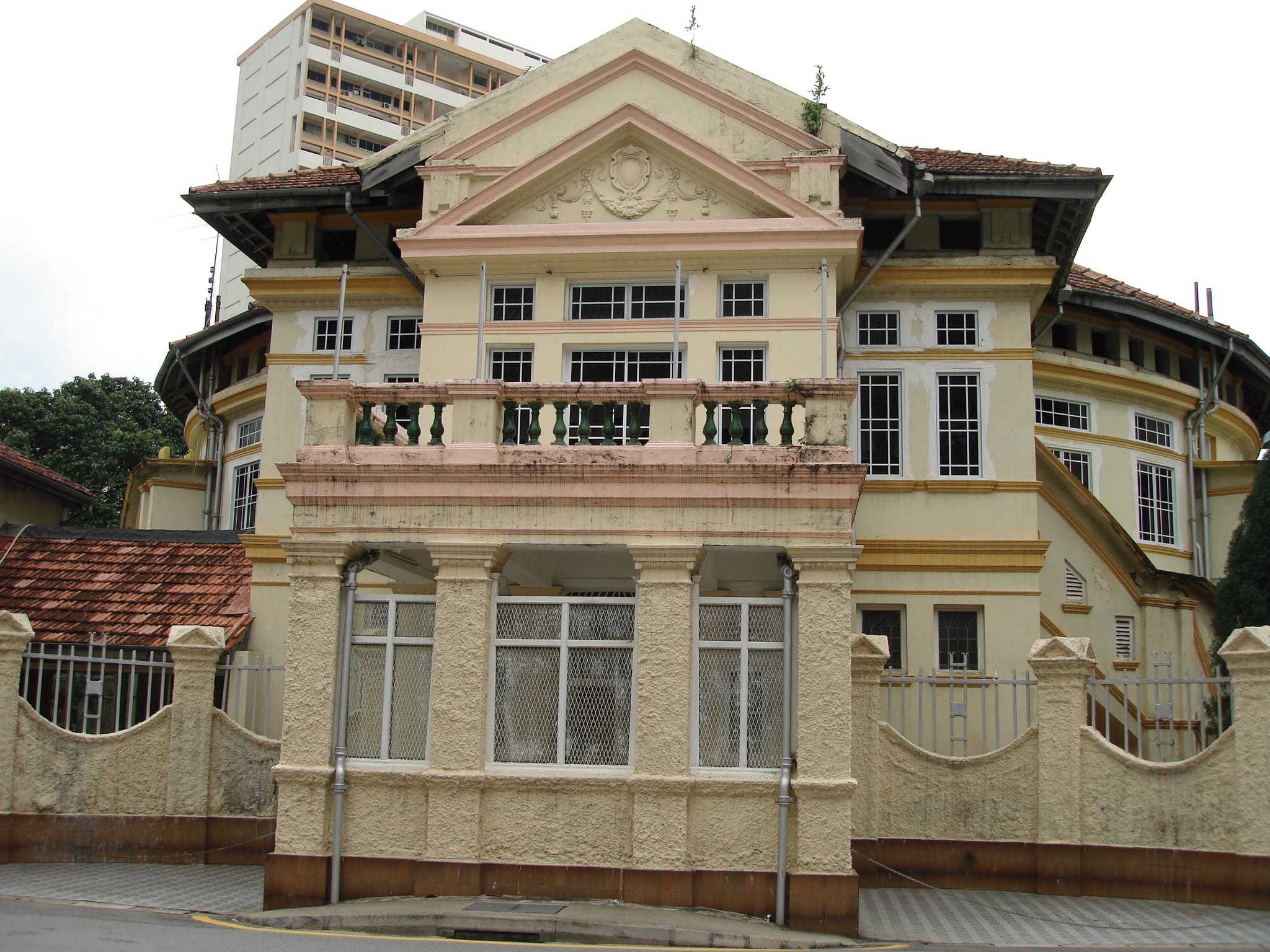
23 Amber Road is a two-storey bungalow located off the Amber Road roundabout, adjacent to the well-known Chinese Swimming Club.
The History
The bungalow was commissioned in the early 1900s by A.W. Cashin. His father was Joseph William Cashin, a lawyer's clerk who made good and became the first Eurasian millionaire in Singapore. The latter made his fortune from opium farms (legal in the 1880s) and real estate. The Cashin family owned a vast quantity of land and properties including the Matilda House at Punggol. Cashin Street, off North Bridge Road, was also named after them. 23 Amber Road is believed to have been given to A.W. Cashin’s brother-in-law subsequently.
The bungalow originally overlooked the sea directly. However, in the 1960s-70s, the coastline was shifted due to land reclamation and new developments sprang up in the area. Since then, passers-by have been more familiar with the view of the bungalow from Amber Road.
The Building
This Victorian-style bungalow was designed in 1912 by R.A.J. Bidwell, the architect credited with many prominent colonial buildings such as Raffles Hotel, Goodwood Park Hotel and Victoria Concert Hall while he was with the firm Swan & Maclaren. The bungalow originally had double frontages, one facing Amber Road and the other facing the sea.
The Legacy
To retain the most visible part of the bungalow as well as its contribution to the identity of the street, the entrance porch and stair hall as well as part of the boundary wall facing Amber Road have been conserved and integrated with a new high-rise residential development.
Gazetted on 3 September 2007 for conservation
Guidelines and Procedures
All proposed works will need to comply with the Conservation Guidelines and the Specific Restoration Guidelines (SRG). Conservation Permission is required before all additions & alteration works and operations of new use can begin.
Residential Fronts are characterised by timber casement windows flanking a double-leafed timber door. All buildings with residential front which is existing and/or identified in the 'Specific Restoration Guidelines', regardless of land use zoning, shall be retained and restored.
Explore Street View
The building can be found at this street.