
Placemaking
The secret behind the UK business improvement districts' effectiveness
31 March 2026
At the heart of the UK’s 340 Business Improvement Districts (BIDs) is strong partnerships. Since 2004, BIDs have invested £1 billion1 in local services and offerings to enhance local areas, improve the public realm and create well-loved destinations. Leading BID expert, Ruth Duston, the Founder of Primera Corporation managing 12 BIDs, reveals what it takes to build memorable places that last.
The first BID in the UK started in Kingston in 2004, a key retail destination in southwest London. What were people’s initial perception of BIDs?
Ruth: In the beginning, the BID movement in the UK was very much focused on small precincts with retail offerings. There was initial scepticism about their value proposition: Why should we be doing this? Shouldn't this be paid for by the public sector?
However, landowners and businesses soon realised that the public sector may not have the resources to deliver all the essential services they were looking for, for example, keeping the streets clean. They started to investigate the BID model, which could address such needs and much more. Over the years, BIDs have evolved to be more strategic in their role within the civic governance structure.
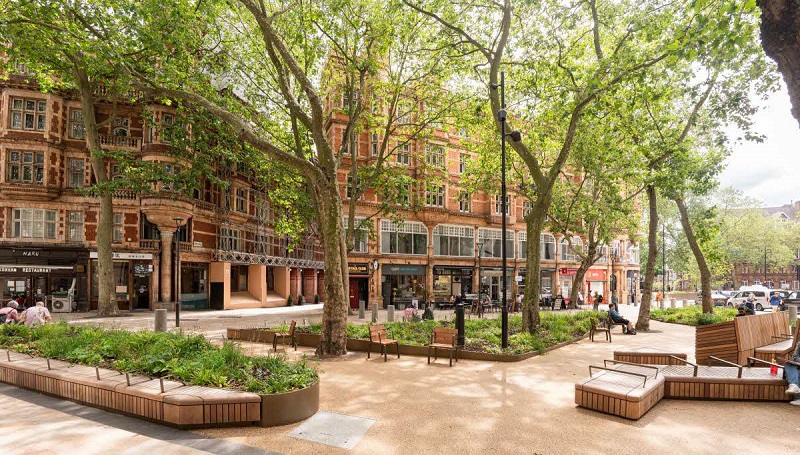
The revitalised Princes Circus in Camden - BID-led improvements to public spaces help create more welcoming and vibrant urban environments. Image: Mikey Lee
What is the most significant value of having a BID?
Ruth: BIDs can be a representative and unified voice for landowners, business owners and stakeholders in an area. You can't improve an area or advocate for change if you work in silos. It must be done through a collective approach.
Eastern City BID installation in the City of London - collaborative initiatives enhance the experience and identity of business districts. Image: Mikey Lee.
Larger BIDs have very strong corporate representation. These probably represent all the FTSE 100 companies2 in the UK, with over one million employees and 40,000 businesses.
The collaboration between BIDs and the public sector help support the local government structure because they can address challenges and needs in hyper-local areas. Not only do they offer local intelligence, but they also have closer engagements with the businesses and residents – something the public sector may not have the resources to do.
What has enabled BIDs to grow over the years?
Ruth: Strong collaborations between businesses, the local community and the public sector have enabled BIDs to have a much stronger vision and impact based on shared mutual interests.
Many of the UK's BIDs have focused on accentuating the unique selling points of local areas, retaining their characteristics by finding ways to blend the old and new. This helps to create dynamic and vibrant destinations.
How do you manage diverse stakeholders’ priorities and get buy-in for BIDs?
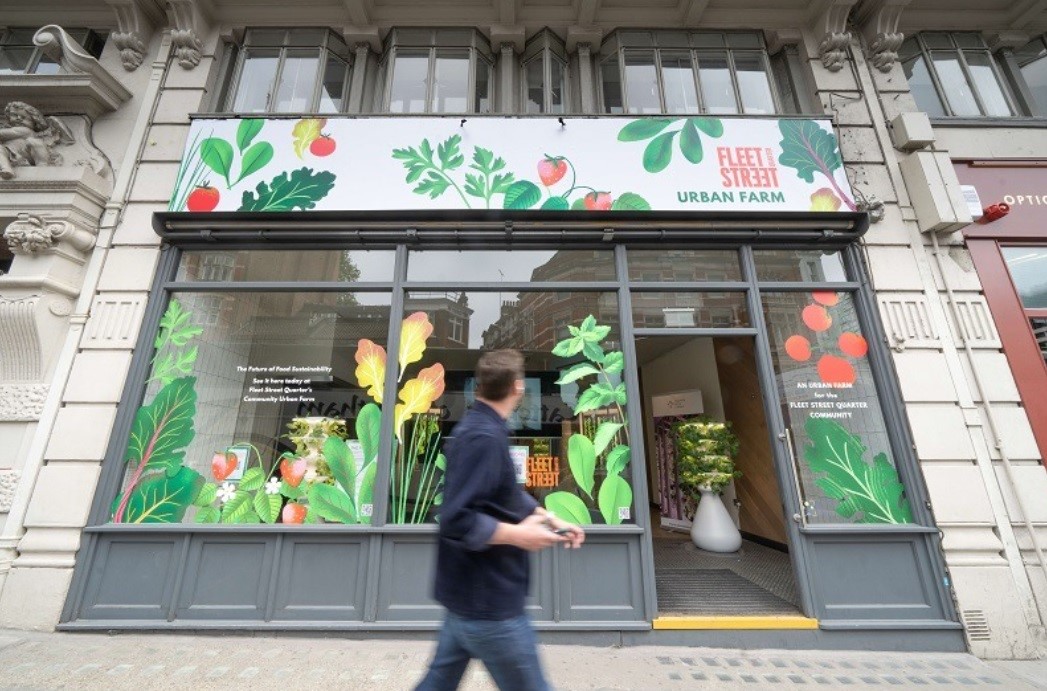
Fleet Street Quarter’s “Urban Farm” – activations of vacant spaces help bring life to underused units while engaging local communities. Image: Mikey Lee.
Ruth: It’s impossible to make everybody happy. Managing various priorities is about navigating and managing differences and expectations. It’s also important to rally people behind a strong vision and shared purpose.
Before we develop a BID, we normally set up an initial partnership with about 10 to 12 seed funders. This team is predominantly made up of landowners or large corporate tenants. They invest for a maximum of two years, creating the opportunity to assess if BID is the right model for the area based on a couple of factors: support from businesses and residents, as well as its economic viability.
With that seed money, the team can carry out small pilot schemes to demonstrate the value of the BID. During this two-year period, they build community support by allowing people to see how they operate. This is so that by the time the team ballots for a BID, everybody is on board.
Beyond providing basic services for the area, BIDs can also make a difference in enhancing the public realm. What is one example of a BID going above and beyond?
Ruth: A good example would be the Strand Aldwych, where one of London's busiest and most congested roads was converted into a vibrant 7,000 square metre car-free, green pedestrian space in 2022.
Nobody was championing the effort. This significant improvement was driven by the Northbank BID together with the Westminster City Council. This ambitious initiative resulted in better air quality and reduced fatalities. It also created a vital shared space connecting key cultural and educational institutions in the area.
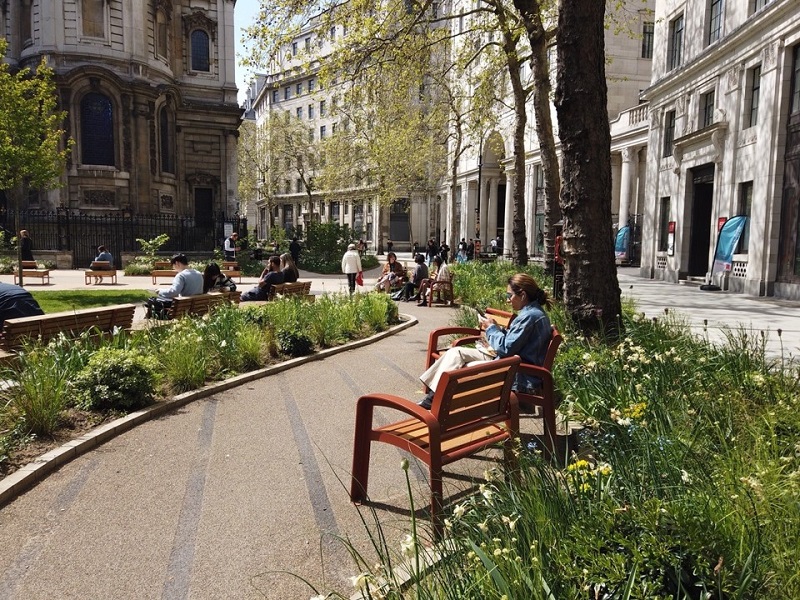
Strand Aldwych, London - One of the city’s busiest roads reimagined as a vibrant car-free public space (2022). Image: LDA Design.
What metrics do you use to measure the impact of your efforts?
Ruth: We use soft metrics and hard metrics. We've developed a platform across our BID portfolios measuring footfall, how people move around an area, the direction of their travels, their dwell time, and amounts of money spent.
We also do regular consumer surveys to understand people's experience. For events and activations, we investigate how many came, how many stayed, and whether people return to join future activities.
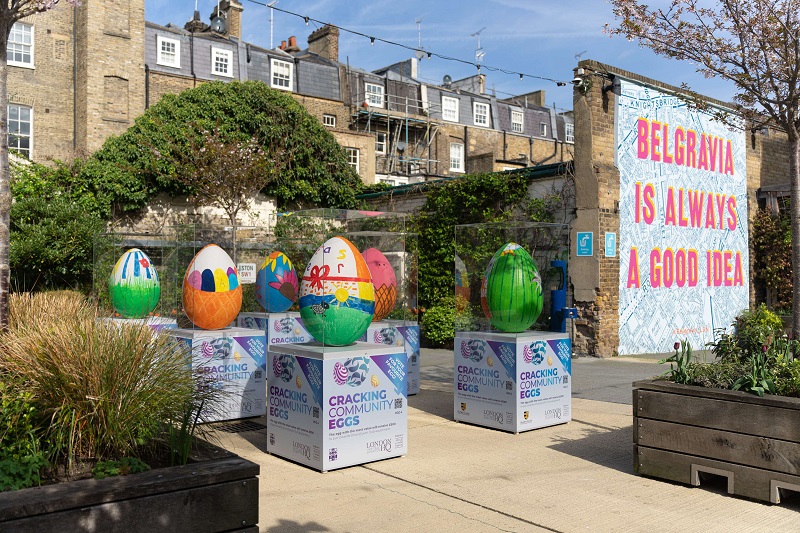
Easter Egg Trail in London Heritage Quarter – events organised by BIDs attract visitors and increase footfall in local districts. Image: Mikey Lee.
What are some key lessons you’ve learnt from managing successful BIDs?
Ruth: A major lesson is to do your homework to first assess if the BID is the right fit. Make sure you communicate and engage with stakeholders regularly so that when you go through the balloting process to garner support for the BID, you have a strong mandate from the business community.
Another lesson I’ve learnt is to manage the stakeholders' and community's expectations – do not overpromise. Communication is key in keeping everyone informed of successes and the impact of the BID efforts.
Lastly, carry out lots of small quick wins as well as bigger projects so that you show the value of the BID quickly to levy payers. You need to hit the ground running once you become a BID because people want to see results quickly.
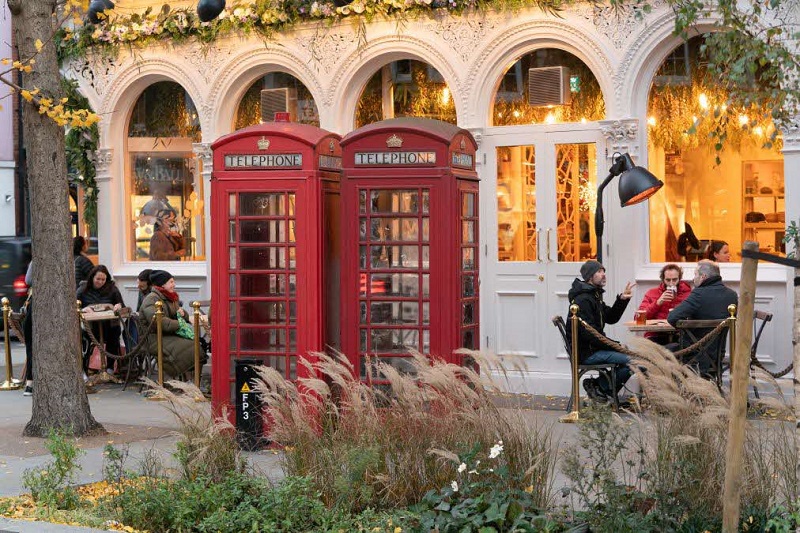
Public realm improvements in Harley Street BID - upgrades to streets and shared spaces help demonstrate value quickly to businesses and stakeholders. Image: Mikey Lee.
UK's BIDs
A Business Improvement District (BID) is a business-led organisation where local stakeholders have voted to invest collectively to improve their area. Introduced in 2004 and supported by the UK BID Regulations Act, BIDs are modelled on similar organisations established in Canada and the US since the 1960s. The UK's BIDs have evolved from pilot efforts to becoming a critical part of local governance, economic development and urban management.
About Ruth Duston
With over 35 years’ experience working across the public and private sectors, Ruth Duston is a leading authority on urban regeneration and place-based partnerships. She has played a pivotal role in major London developments including London Docklands, Paddington Basin and Kings Cross. She is a key player in establishing and leading some of London’s most influential business districts, unlocking significant private-sector investment and driving long-term economic growth, world-leading place management initiatives and innovative regeneration models.
She is the Founder and Chief Executive of Primera Corporation, a specialist consultancy that supports business communities and delivers transformational BIDs and partnerships across Central London.
She spoke at URA’s Place Management Forum 2026, "Shaping Tomorrow’s Precincts: Role of BIDs and Stakeholders", on 29 Jan 2026. She spoke together with Jeffrey LeFrancois, Executive Director, Meatpacking District Business Improvement Association (New York City), and Daniel Lim, Director, Urban Solutions & Placemaking Lead, Think City (Malaysia).
Singapore has been exploring the BID model with five pilot BIDs so far. Learn more about Singapore's BID journey.
_____________
1 BID Foundation. “Business Improvement Districts celebrate 20 years and £1billion invested in UK towns and cities”. Institute of Place Management, Manchester Metropolitan University, February 9, 2024. https://www.placemanagement.org/news/posts/2024/february/business-improvement-districts-celebrate-20-years-and-1billion-invested-in-uk-towns-and-cities/ (opens in new tab)
2 The FTSE 100 is an index made up of shares from the 100 biggest companies by market capitalisation on the London Stock Exchange.