
Placemaking
Secret to New York City’s Meatpacking District: Public spaces and friendships
6 April 2026
The strong public realm and warm relationships amongst store owners are key assets BIDs should leverage to create memorable experiences, says Jeffrey LeFrancois, Executive Director of New York City's Meatpacking District Business Improvement Association. He shares why people continue to be drawn to this charming neighbourhood.
The Meatpacking District in New York has evolved from its early days as an industrial hub of slaughterhouses in the early 1900s to becoming a premier high-end cultural and fashion destination. How would you describe it today?
Jeffrey: It has become a place where everyone wants to be. From fashion to tech and food, this historic neighbourhood is a fusion of grit and glamour. We are seeing those who have gone clubbing here now come back with their families, re-experiencing the place in a different way.
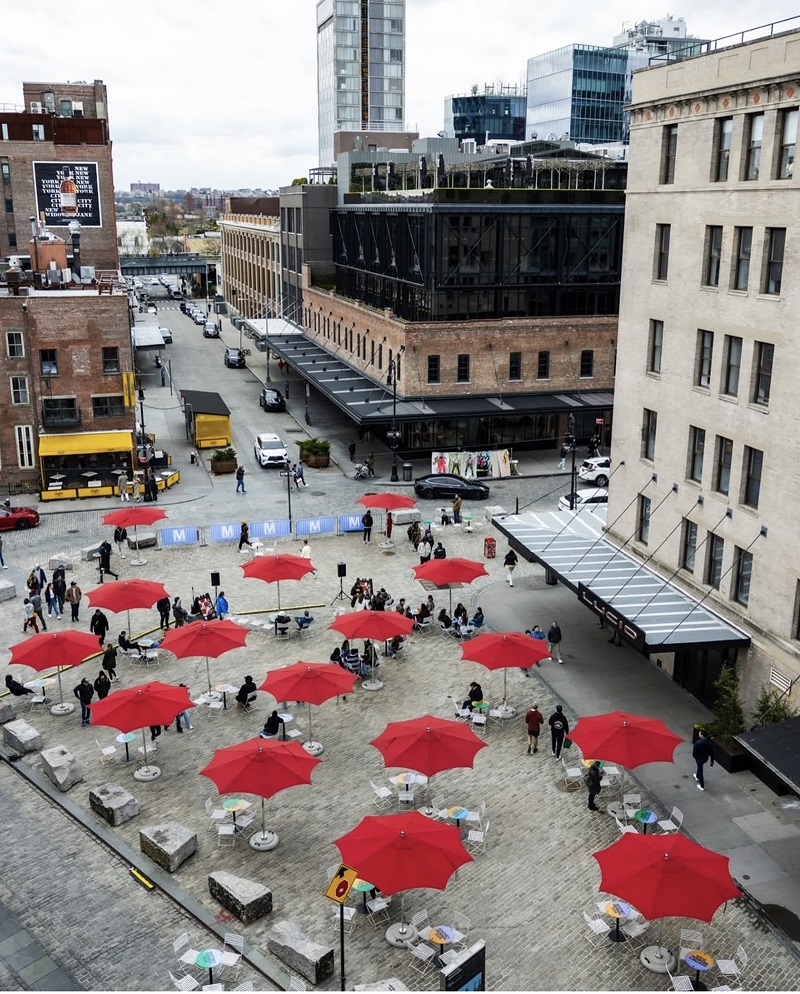
The iconic red umbrellas at Gansevoort Plaza in the Meatpacking District. Image: BrakeThrough Media.
Besides the relocation of Whitney Museum to the district in 2015 and the High Line, with both attracting millions of visitors, we have new attractions introduced in 2023 such as the Gansevoort Peninsula, an expansion of the Hudson River Park and Pier 57, a market hall with a popular rooftop park.
One of the biggest assets of the district is its public realm.
Jeffrey: I've always believed that the neighbourhood itself is the district's key asset. We should treat the public realm the same way luxury retail stores treat their products, because the public realm is where life happens. I want people to have a great experience, not just in retail stores but outside of them, when they move from one place to another.
Whether you're browsing the shops or catching up with friends, you should be enjoying these activities in well-designed and high-quality public spaces. Thus, over the years, we have been working to enhance the public realm.
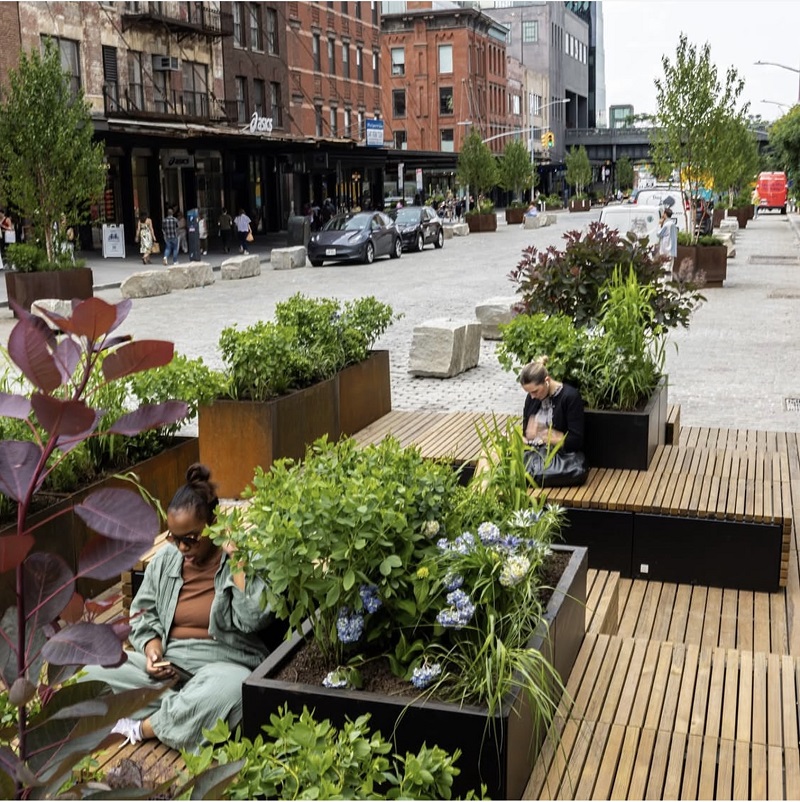
An example of an enhanced public space at the West 14th Street in the Meatpacking District with decks, seating and greenery. Image: Meatpacking District BID.
When New York made Open Streets permanent in the post-COVID-19 pandemic, we installed planters to close off city streets. We have also introduced curbside decks elsewhere, with public seating and tall trees. In total, we have 30,000 square feet of public plazas and four open streets.
We are regularly experimenting to enhance the streetscape in prioritising pedestrians. This creates a more inviting and engaging atmosphere and enables people to enjoy more of the district.
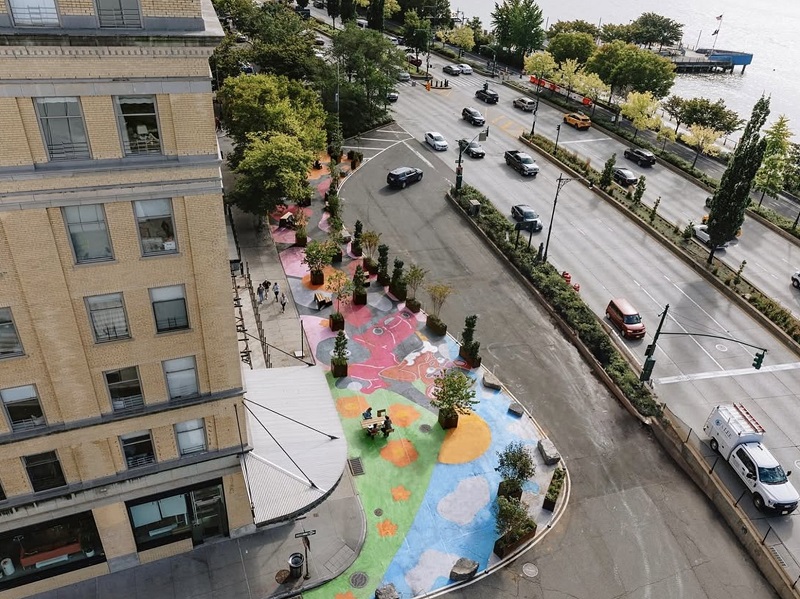
The Gansevoort Landing was transformed into a pedestrian plaza space in 2023 as part of the Meatpacking District BID's public realm improvement efforts. Image: Meatpacking District BID.
The Meatpacking District is home to 77 retail stores, with a diverse mix of luxury brands and direct-to-consumer brand storefronts. How does the BID influence the retail mix and support the business ecosystem to keep the district thriving?
Jeffrey: We can't tell landlords what to do nor influence the rents. But what we can do is share with them useful data and insights on gaps in the retail mix, what we need more of and what's trending.
We also actively offer support to businesses, covering both corporate brands and mum-and-pop shops that may need help with driving foot traffic, insurance or business interruption.
How do you manage diverse stakeholder needs and interests?
Jeffrey: We manage this by understanding their needs on an individual level and from a wider perspective. We have ambassador teams that build relationships with store managers, owners and other stakeholders. They will drop by stores to check in, make their rounds in the neighbourhood to maintain a good presence and support.
At the same time, we have our Board of Directors who take on a broader perspective in prioritising what to focus on. The constant challenge is when we're doing a programme on one block, people will ask "Why not the other block?" You have to be willing to explain and know how to tell people no - not because we don't like them, but because we can't always do something everywhere.
What are some key metrics that are useful for your BID stakeholders?
Jeffrey: Footfall data is important for property owners for leasing and tenanting spaces. Everyone wants to know the numbers, especially high and low times. We share the information on our website so that it is easily accessible.
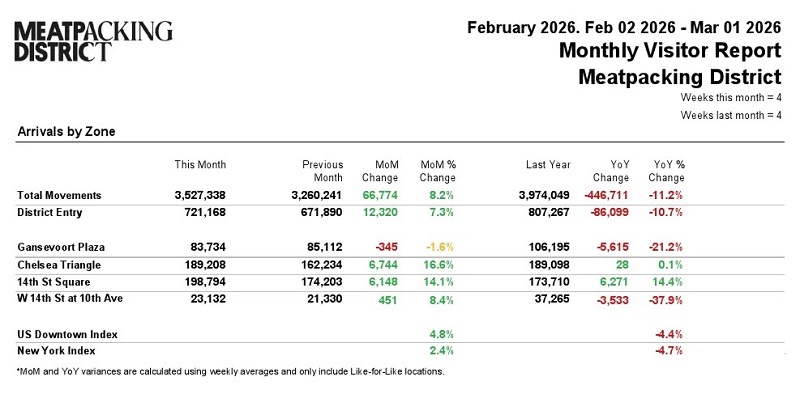
Example of key statistics and data that the Meatpacking District BID shares with its stakeholders regularly. Image: Meatpacking District BID.
For specific areas, we do manual counting where we hire people with clickers to count every 15 minutes for five minutes over a six-hour period. For neighbourhood-wide data, we use sensors that track people's movements. We also leverage mobile data to understand people's movements and patterns.
In addition, we do regular street surveys for people to rate the district against other neighbourhoods on cleanliness, programming, etc. We get several thousand responses over the course of a year.
How do you sustain interest in the district all year round?
Jeffrey: We are constantly thinking about creating big moments with signature events that drive attention and headlines. For example, in 2024, we hosted 100 life-sized Indian elephants on the streets, sharing the message about human and wildlife coexistence.
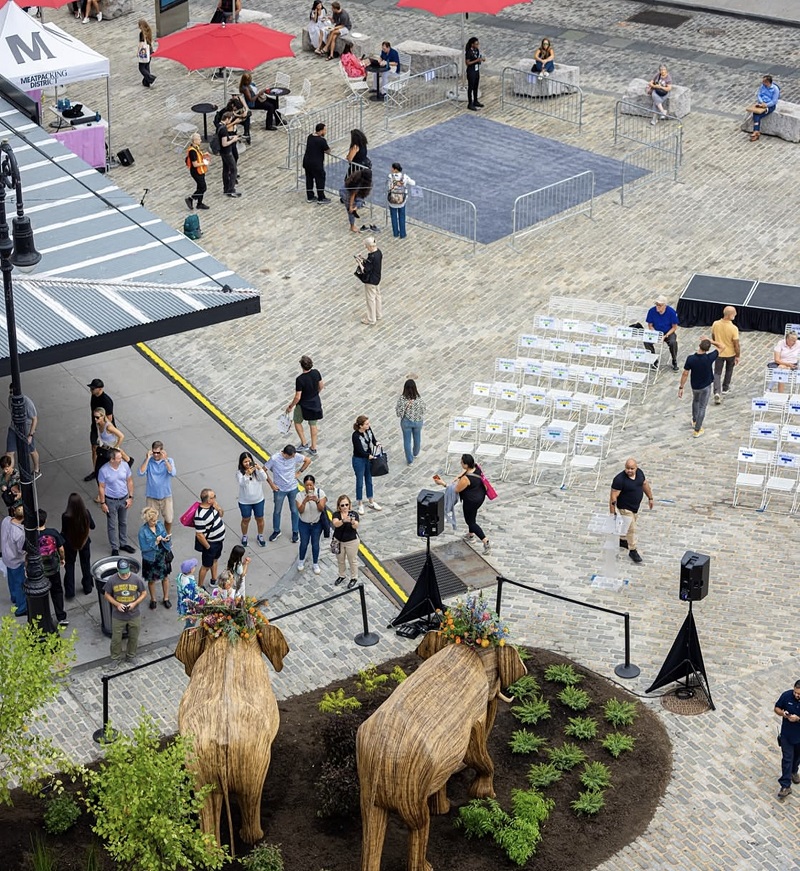
The Great Elephant Migration installations at the Meatpacking District. Image: Meatpacking District BID.
It was one of the largest outdoor art installations in New York since 2005, capturing people's imagination. It attracted a lot of people to the district, benefitting businesses and the community. At the same time, we have smaller and more intimate programming like afternoon music on the plaza.
We also encourage the retail stores and brands to be creative in doing their own programming that can take place both in their stores and outside. Public spaces can be activated with pop-ups and more experiential marketing activities.
This way, people feel like there's always something going on throughout the year.
What’s interesting is store owners are working together to organise key events.
Jeffrey: We have a Retailers Committee within the BID with four Co-Chairpersons, who are managers from different stores. The committee meets every quarter where we get feedback on marketing and event ideas for the district. This has fostered a strong friendship amongst the retail store managers over time. They started working together to organise key events and activities.
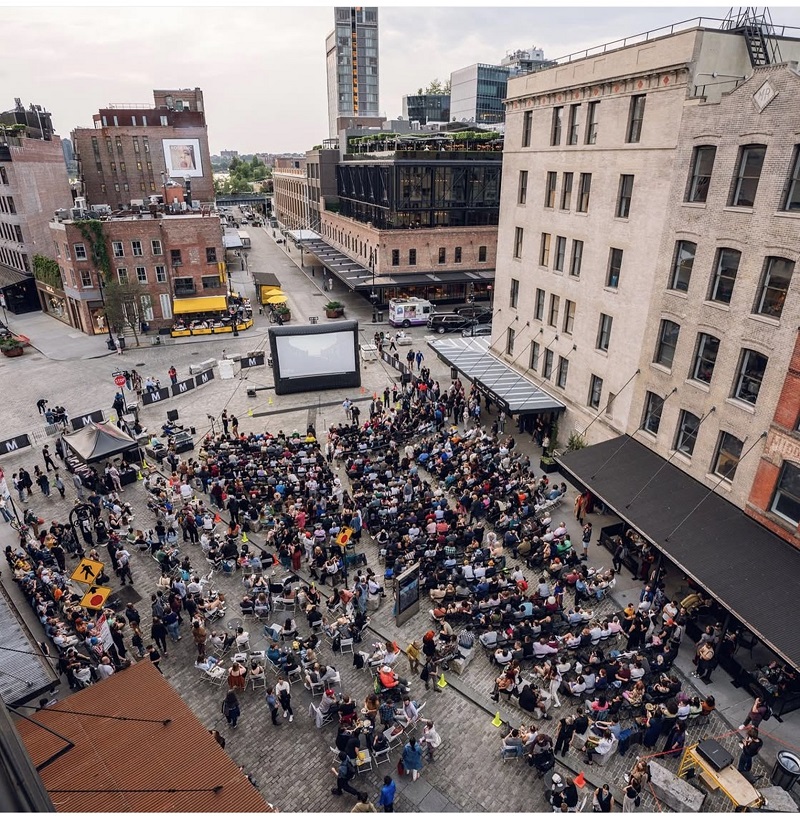
An example of the many activities organised by the Meatpacking District BID, a movie event held at the Gansevoort Plaza. Image: Meatpacking District BID.
Although they are competitors, they support one another. Some may even walk their customers to one another's stores based on what the customers are looking for. This creates an even better shopping experience for everyone, benefitting businesses and the area as a whole.
What is one lesson you have learnt in sustaining the district?
Jeffrey: A key lesson learnt is that you can't be afraid to fail. You must keep experimenting and trying new things. Getting people to see that you are experimenting is also important, showing that you are constantly trying new things.
________
About the Meatpacking District BID and Jeffrey LeFrancois
Established in 2003, the Meatpacking District Management Association is one of the 77 Business Improvement Districts (BIDs) in New York City. The Business Improvement District (BID) is a business-led organisation in a defined geographical area where local stakeholders have voted to invest collectively to improve their environment. The Meatpacking District BID serves the businesses, residents, and visitors of the area with a common goal to programme, promote, and take care of the district.
Jeffrey LeFrancois (in the photo above at the opening of the Gansevoort pedestrian plaza; image: Meatpacking DIstrict BID) became its Executive Director in 2019 after being in the organisation since 2015. Prior to this, he served as the Chief of Staff to Council Member Corey Johnson and was the Deputy Chief of Staff to Assembly Member Richard N. Gottfried.
He spoke at URA’s Place Management Forum 2026, "Shaping Tomorrow’s Precincts: Role of BIDs and Stakeholders", on 29 Jan 2026, together with Ruth Duston, Founder & Chief Executive of Primera Corporation (UK), and Daniel Lim, Director, Urban Solutions & Placemaking Lead, Think City (Malaysia).
Singapore has been exploring the BID model with five pilot BIDs so far. Learn more about Singapore's BID journey.