
Placemaking
Reshaping Malaysia's key destinations through community-led placemaking efforts
8 May 2026
The best placemakers know when to disappear. Daniel Lim of Malaysia’s impact organisation, Think City, shares what it means to truly engage the community to create and sustain meaningful places over time. His metric of success? When his expertise is no longer needed.
How did Think City come about?
Daniel: Think City was first established in 2009 by Khazanah Nasional Berhad, the sovereign wealth fund of the Malaysian government. Think City started as an impact organisation to spearhead urban regeneration for George Town UNESCO World Heritage Site in Penang through a public grant programme. It aimed to empower communities to preserve and celebrate their heritage through financial and technical support.
It was originally intended to operate for four years. However, due to its success, Think City was then mandated to spur urban rejuvenation projects in other cities across Malaysia like started withButterworth, Kuala Lumpur, and Johor Bahru, and today other cities. Over the years, we have expanded our expertise – we now work on analytics, research, advocacy and urban solutions, providing evidence-based insights to support urban policymaking, conservation and placemaking efforts.
What is unique about Think City's approach to placemaking?
Daniel: We adopt a place-based and people-oriented approach. This means we never arrive at a site with predetermined solutions. Instead, we invest a significant amount of time to understand the place through landuse and population studies, spatial analytics, research, cultural mapping, and deep community engagement before identifying the actual problem statement.
For example, we might think that the community need a park, but during our process, we might discover they need a badminton court. The key is community engagement, where people get to be involved in the conception and implementation. This means that they can continue owning the solution with or without us.
Our philosophy is simple: we need to work ourselves out of a job. We want the community to take over to lead and sustain a place by themselves. If we're still there guiding the community, then the problem hasn't been resolved.
Can you share a specific example of how this approach works?
Daniel: The Hang Lekiu block project is a good example. It is in the historic core of Kuala Lumpur. We worked in partnership with the Kuala Lumpur City Hall and the street hawkers to help improve neglected laneways and turn them into meaningful public spaces for all.
First, we worked closely with the community to understand their needs. Then, we empowered then empower and enable them to sustain and maintain these laneways. As we gradually stepped back, the community continued organising their own activities and maintaining the spaces.
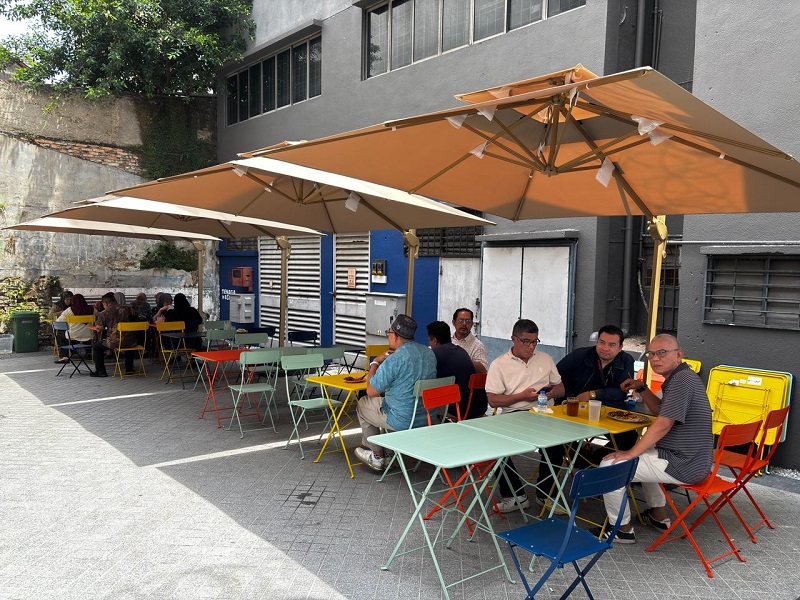
Street hawkers and patrons using the Hang Lekiu laneway following its revitalisation.
Gentrification often follows improvements. How do you balance place improvement while keeping local communities intact?
Daniel: Any intervention will drive towards gentrification –, you can't avoid it, but you can find balance. We're very clear about the objectives from the beginning and consistently negotiate with stakeholders. For example, we might ask landlords, "If we improve this area, could you keep these businesses that have been here for four generations? Could you give them longer leases?”
Surprisingly, many landlords subscribe to this because they have sentimental attachments too. Perhaps their family has owned the building and rented to the same kopitiam for 80 years. When we manage grants, we find ways to make this a condition of support. For instance, we might say, “We'll support your building restoration, but can you work out a model that doesn't displace existing tenant simmediately?"
What was your biggest learning from a project that initially failed?
Daniel: Early in my career, I worked on activating four laneways in George Town. Everything looked perfect on paper –such as community commitment, clear plans, all stakeholders engaged. It was successful for a few months, but the efforts were not sustained.
The lesson? I had engaged the community, but when people moved out, the new occupants did not buy into the vision. I should have engaged more broadly including getting council buy-in so that even if individuals left, institutional support remained. Today, we always ensure a very wide range of stakeholders are engaged, not putting all our eggs in one basket.
Interestingly, that "failed" project eventually inspired similar laneway activations across Malaysia. Sometimes, failure plants seeds that grow elsewhere.
How do you work with diverse communities from different socio-economic backgrounds and interests?
Daniel: Understanding everybody is key – that's why stakeholder profiling is crucial. We map different intentions, objectives, and expectations, then find commonalities that cut across all groups and design around those.
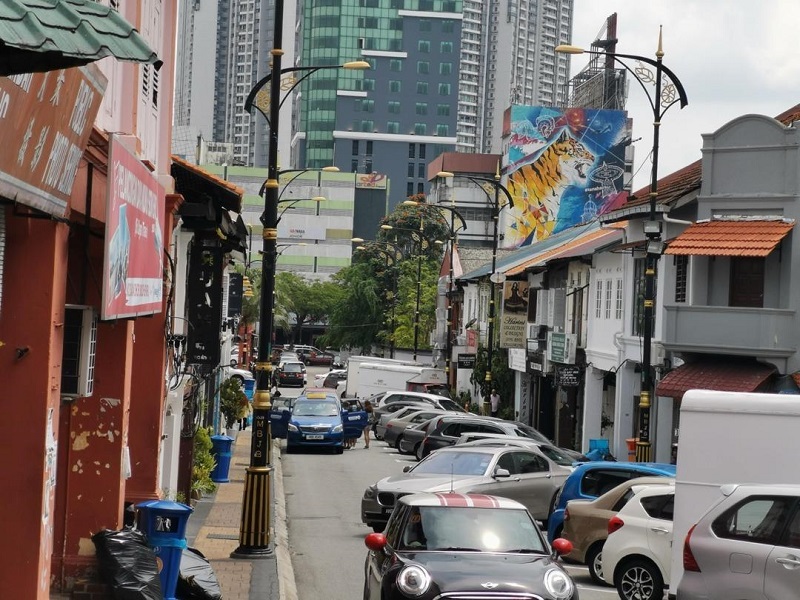
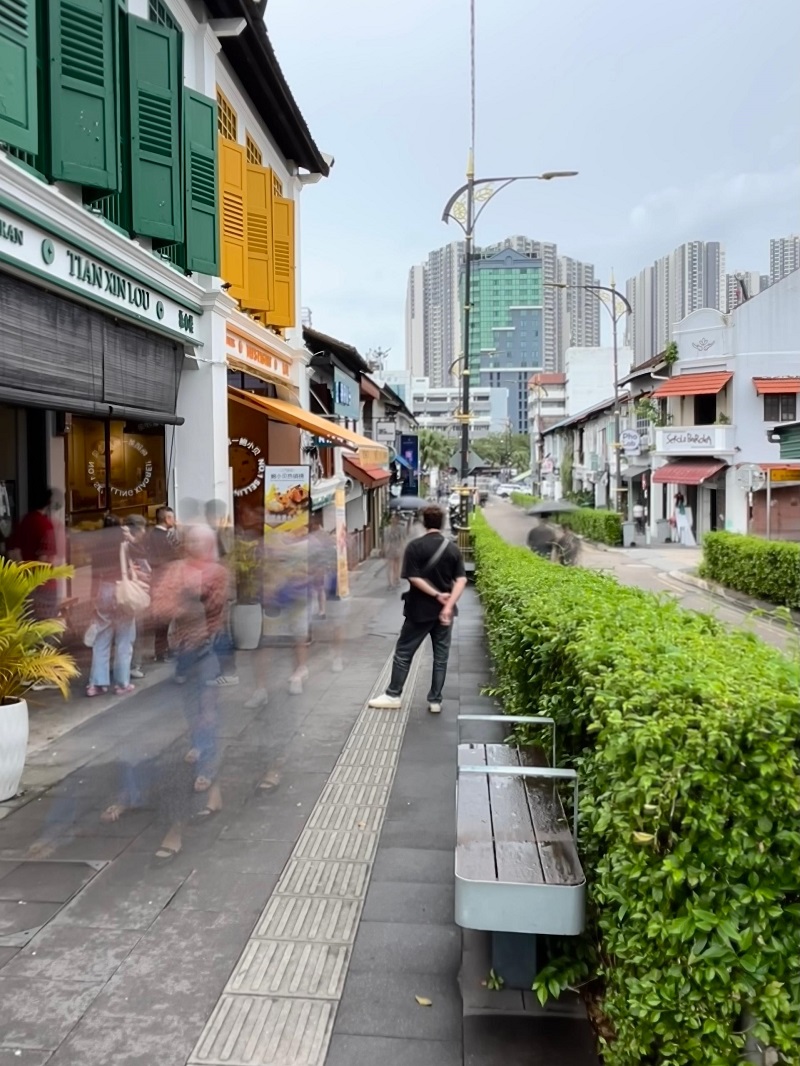
But beyond workshops and conversations, you need to truly be part of the community. When I started work in Johor Bahru, I initially stayed there from Monday to Friday and left on the weekends. However, there were times when I was also needed on Saturday or Sunday. . Hence, I made the decision to move there entirely, as I wanted people to see me as genuinely part of their community, not just a weekday visitor. We even opened our Think City office on Jalan Dhoby where the action is.
How do you measure success in placemaking work?
Daniel: Success has multiple dimensions. On a personal level, when I returned to Penang after more than a decade for our recent Think City 15th anniversary, meeting project partners who were still championing similar work and maintaining connections felt deeply impactful.
Methodologically, baseline data is crucial. You need both hard data (e.g. vacancy rates, economic indicators) and soft data (e.g. community cohesion, sense of ownership). If your objective was reducing vacancy from 30 per cent to 5 per cent, you need to track that. But you also need to look at outputs (e.g. painting a wall), outcomes (e.g. more collaborators like artists get involved), and impacts (e.g. communities better appreciating good public spaces).
The key is being deliberate about what you want to change from multiple perspectives – environmental, social, economic.
What shifts have you observed in local communities in shaping their own environments?
Daniel: The spirit of collective action – the gotong-royong kampung spirit – has always existed. What's changed is that communities are more aware of and believe in the importance of the participatory processes. This has also influenced professionals and city councils to embrace more significant placemaking work.
A major shift I witnessed was in Johor Bahru's City Council. Now, when people approach the council with a project proposal, the council’s first questions are, "Have you engaged with the surrounding community? Have you spoken to the key stakeholders?" This acknowledgement that the first step to any placemaking project is the participatory process reflects a fundamental shift in the way we shape our spaces together.
How do you build and sustain local champions?
Daniel: It starts with building our own team. Each team member must be a placemaking champion who shares the same values. When they work on projects, they carry these values, empower local champions, and pass this on. It's about cascading and scaling through authentic interactions: people learn from how you interact with them. When they see results, they embrace the approach and continue it. That’s how you build a real movement.
We also create strategies with flexibility for organic evolution and adaption. We not only accept failures, but embrace them too. In fact, failures are the foundation of success – they make room for authentic outcomes to emerge.
What would you like to see more of in the future of placemaking?
Daniel: I'd love to see more local authorities and state governments establish dedicated placemaking units, like how URA has done. Having clear institutional intention and dedicated teams within governments would push participatory processes further and help optimise social impact and community cohesion.
We don't need to impose concepts like "placemaking" or "collectives" – just getting the community to participate and take ownership is good enough. The labels matter less than authentic engagement.
What advice would you give to other cities starting placemaking initiatives?
Daniel: City leaders should understand that placemaking is about the journey, not just the destination. The journey might take you somewhere you never imagined, and that's often where the real magic happens.
Be prepared for failure – it's necessary. Most importantly, invest time in understanding the place and the local community. The participatory process isn't just consultation – it's about genuine partnership where communities are involved in conception, implementation, and ownership.
If you're still guiding the community after the project ends, you haven't truly succeeded. The goal is to work yourself out of a job by building stronger community capacity and ownership.
About Think City (Malaysia) and Daniel Lim
Daniel Lim, Director, Urban Solutions & Placemaking, Think City (Malaysia) leads the organisation’s placemaking practice. With over a decade of experience, Daniel has pioneered transformative placemaking and economic regeneration projects across Penang, Johor Bahru, Kuala Lumpur, and India. His work focuses on activating spaces that drive economic revitalisation, foster community engagement, and promote social inclusion through culture-based urban regeneration. His approach is people-centric, blending experimental and unconventional methods to create spaces that stimulate economic activity while enhancing quality of life.
He spoke at URA’s Place Management Forum 2026, "Shaping Tomorrow’s Precincts: Role of BIDs and Stakeholders", on 29 Jan 2026. He spoke together with Jeffrey LeFrancois, Executive Director, Meatpacking District Business Improvement Association (New York City), and Ruth Duston, Founder and Chief Executive, Primera Corporation (United Kingdom).