
Master Plan 2025
Identity Corridors spark new possibilities
14 July 2025
This article has been migrated from an earlier version of the site and may display formatting inconsistencies.
From activating back lanes in Katong-Joo Chiat to using Kallang River as an outdoor classroom and creating a cycling festival in Jalan Besar, passionate residents and an ex-student dream of new possibilities for Singapore’s many charming neighbourhoods as part of the Identity Corridors’ 10-month public engagement.
Five Identity Corridors were identified as part of the 2022 Long-Term Plan Review to deepen efforts in strengthening the heritage and identities of larger neighbourhoods and streets: Thomson-Kallang, Rail Corridor, Historic East, Inner Ring and Southern Ridges and Coast. These five Corridors form significant routes around our island, with unique and outstanding urban or natural characters.
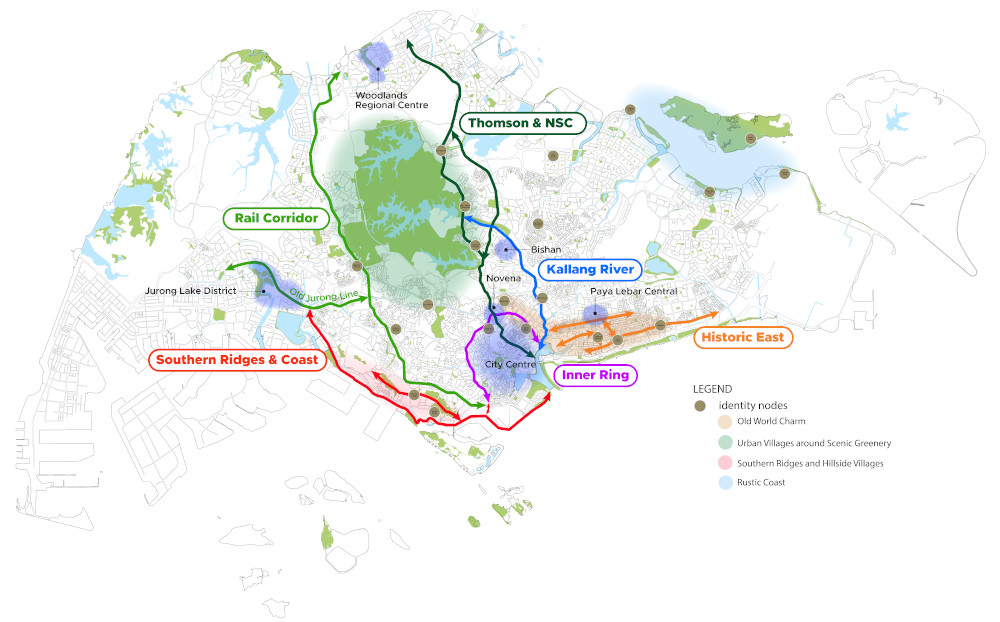
The five Identity Corridors as identified in the 2022 Long-Term Plan.
The engagement exercise from July 2024 to January 2025 sought feedback and people’s aspirations on three Identity Corridors - the Historic East, Kallang River (part of Thomson Kallang Corridor) and Inner Ring. These Corridors offer potential opportunities for co-creation with the community to further enhance their unique characters, build up more continuous walking and cycling networks along them and develop more meaningful public spaces for communities.
We catch up with some of the stakeholders who joined the engagement sessions.
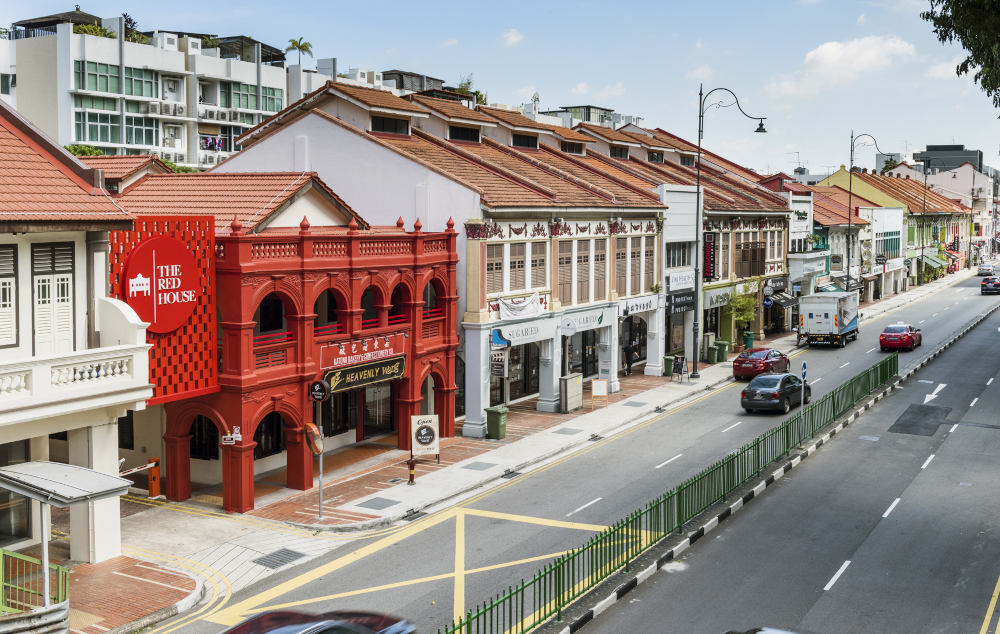
The Katong-Joo Chiat neighbourhood has a rich heritage and culture that is well-loved by many.
Edmond Wong, third-generation owner, Kim Choo Kueh Chang and resident of Katong-Joo Chiat (part of the Historic East Corridor)
Tell us about growing up in Katong-Joo Chiat. What is unique about the area?
Edmond: I’ve spent my entire life here. I grew up here and now I am also the third-generation owner of the heritage business, Kim Choo Kueh Chang, started by my grandmother. My family’s business has been around since 1945. We used to live in one of those zinc houses in the area. Growing up, I would be playing in the nearby fields, climbing trees, making makeshift forts and hanging out with friends. We would go to a neighbour's house for a meal. It was a very open and carefree environment. People looked out for each other.
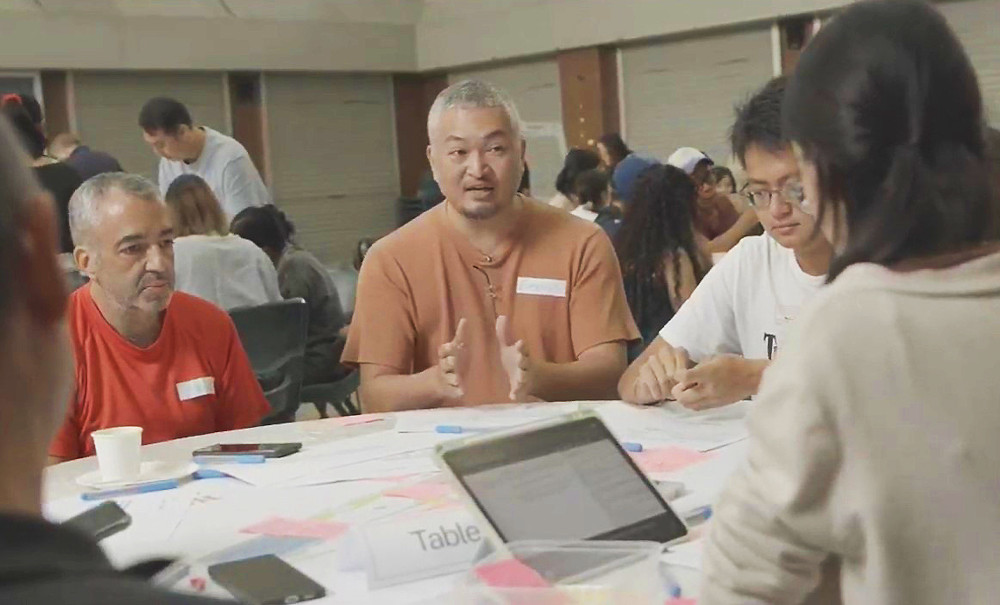
Edmond Wong (in orange T shirt) at one of the Historic East Identity Corridor engagement sessions.
Beyond the beautiful architecture and rich cultural heritage, it is the intangible aspects that draw people to this place. There is a strong sense of belonging and attachment to this neighbourhood. I have had many customers who have moved away and still come back to the shop sharing fond memories of the area.
As Chairman of the new Katong-Joo Chiat Business Association, how do you see the role of this group in contributing to the neighbourhood?
Edmond: The association seeks to bring business owners together and help support one another for all our businesses to continue to thrive. We want to explore how we can build up a stronger community spirit and help make this area even better, strengthening our gotong royong spirit. We hope stakeholders such as artists and residents can also come forward to collaborate with us. We are not just promoting and celebrating the rich heritage and culture of our neighbourhood, but we want to create new memories and interesting experiences for residents and visitors.
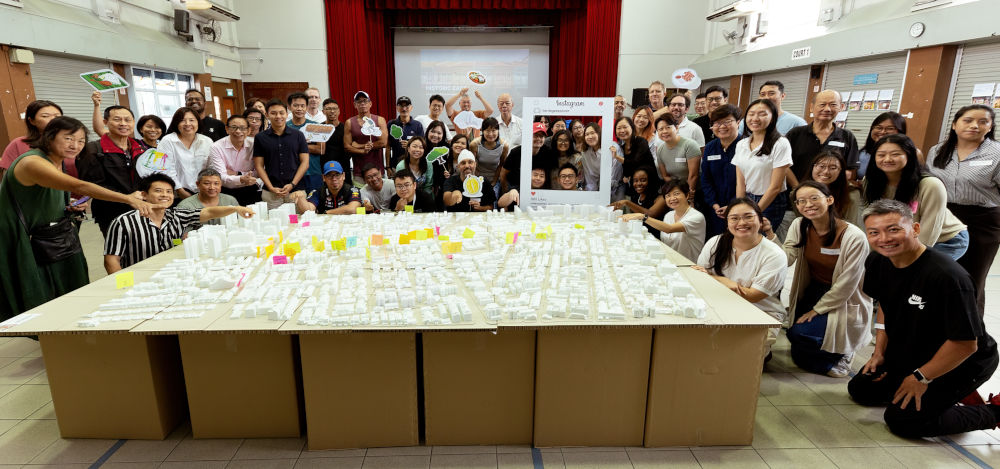
One of the Historic East Identity Corridor engagements with a physical model developed by the Singapore University of Technology and Design students who did a studio study of Katong-Joo Chiat.
We hope to enhance the safety and walkability of the area. We could have wider pedestrian pathways and place simple furniture along these to make it more conducive for people to relax and hang out with their families and friends. We could introduce clearer wayfinding and navigation for people to further explore and discover the neighbourhood. This should also include the backlanes.
You see the activation of backlanes as a way to build stronger community bonds.
Edmond: The back lanes are where families and residents used to gather and hang out. It encourages us to re-discover our own neighbourhood in a different way. You will get to see another side of Katong-Joo Chiat. Activating the back lanes can bring communities and business owners closer together. Members of my association are currently engaging with stakeholders to explore the possibility of linking a few back lanes near Haig Girls' School, with the aim of creating an exciting initiative for the upcoming year-end season.
Sivasothi N., Senior Lecturer & Fellow, Department of Biological Sciences, National University of Singapore and ex-student of St Andrew’s Secondary School located near Kallang River (part of the Thomson-Kallang Corridor)
Tell us about your experience of Kallang River while attending St Andrew’s Secondary School.
Sivasothi: I attended St Andrew’s Secondary School from 1973 to 1982. This was prior to the river clean-up. I recall that the river then was extremely polluted, it was black in colour! Older schoolboys shared legends about crocodiles which had been sighted in the river up to the 1980s.
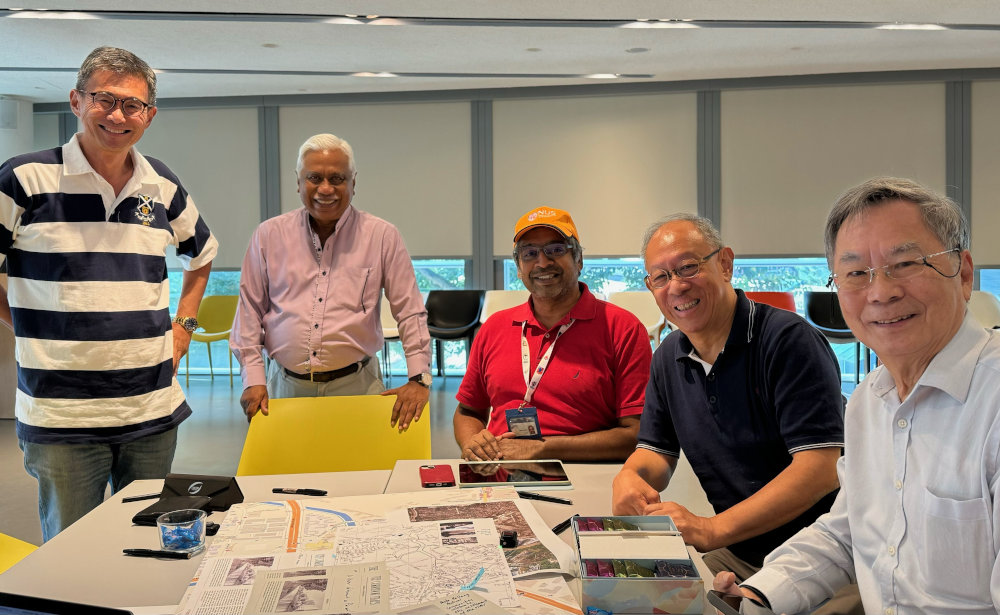
Sivasothi (in red) at the engagement session on Kallang River, together with other former students at St Andrew’s Secondary School.
After school, we would occasionally explore the surrounding areas, visiting villages, fishponds and the temple down the road. The river and its environs today are a far cry from what we experienced as kids.
What is the potential of the river in supporting the students’ learning experiences?
Sivasothi: I think the river is a gift not just to the students but to all of us. An enhanced natural landscape around the river can serve as an outdoor classroom for students where it offers intangible experiences that cannot be gained from formal lessons in school.
Kallang River connects many neighbourhoods and areas from Ang Mo Kio-Bishan Park to Marina Bay. Beneath the urban build-up is a network which connects the hills of the Central Catchment to the Singapore Straits. This may not be immediately evident as developments and expressways hide the narrative of the topography. This is an asset connecting us to our heritage and is something valuable we should cherish.
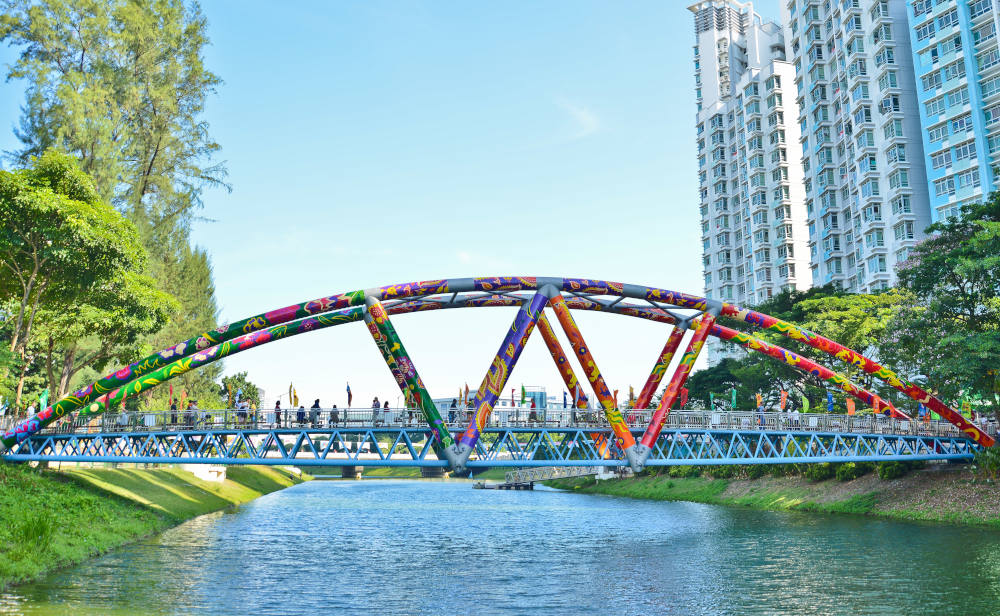
As Singapore’s longest river, Kallang River runs through many neighbourhoods across Singapore from the Lower Peirce Reservoir through Bishan and Toa Payoh, to Kallang Basin.
By exploring our hidden natural terrains connected by the river, students and residents can gain a glimpse into our geography, history and culture. This is important to nurture in not just our young but in all of us today. With our fast pace of development, we lose our sense of understanding of our natural and urban geography and even our navigational skills from living in technologically aided high-density cities.
Through Kallang River, students can also give back to the community.
Sivasothi: The students can contribute to establishing gardens and micro forests at and around the Kallang River. They can help share the heritage and identity of the river with residents and even have joint learning experiences with seniors and residents in the area who can share their stories too. They can also teach younger kids about what they learnt about the geography and heritage of the river and its surrounding areas.
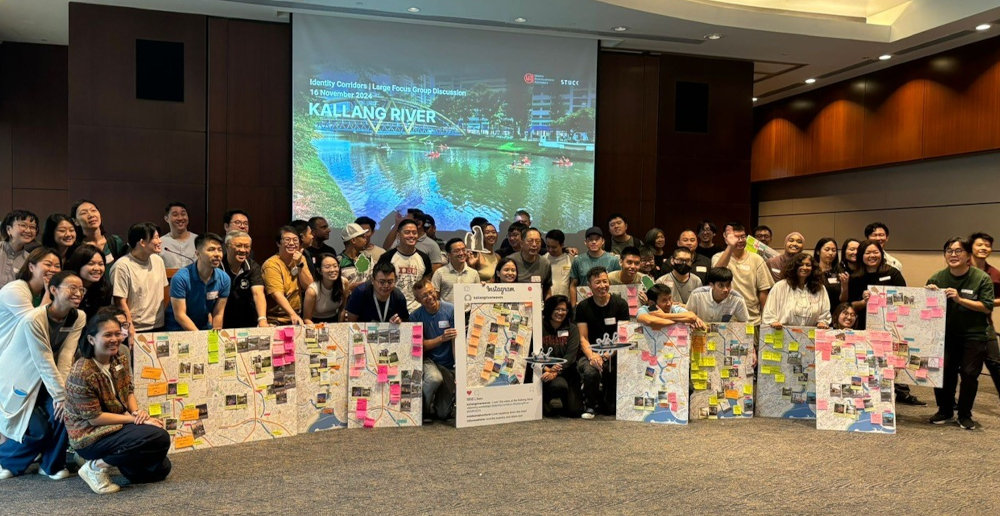
One of the Kallang River engagement sessions, where many residents and stakeholders shared their aspirations and ideas on how to further enhance the river to continue to cherish and enjoy it.
What is one lesser-known insight about Kallang River?
Sivasothi: Behind Kallang River, we have an interconnected network of waterways that may not be immediately evident to us. It is our smooth-coated otters who returned to reveal this as they drew our gaze to our waterways and as we followed families of otters which move around our waterways from Kallang River through Marina Bay to Singapore River. Such layers add to the richness of our natural landscapes and enriches us as we discover more about Singapore and ourselves.
Martin Lim and Lavinia Kwek, residents of Jalan Besar (part of the Inner Ring Identity Corridor)
Tell us about growing up in Jalan Besar. What is unique about the area?
Lavinia: We have both been living in Jalan Besar for about four years. I grew up here and moved away for a while before returning. My family still lives here. In fact, my grandmother is well known to many senior residents living in the area as “Ah Ma” to them. Growing up here, I recall playing in the nearby playgrounds and buying ice cream from the ice cream uncle who frequented the area.
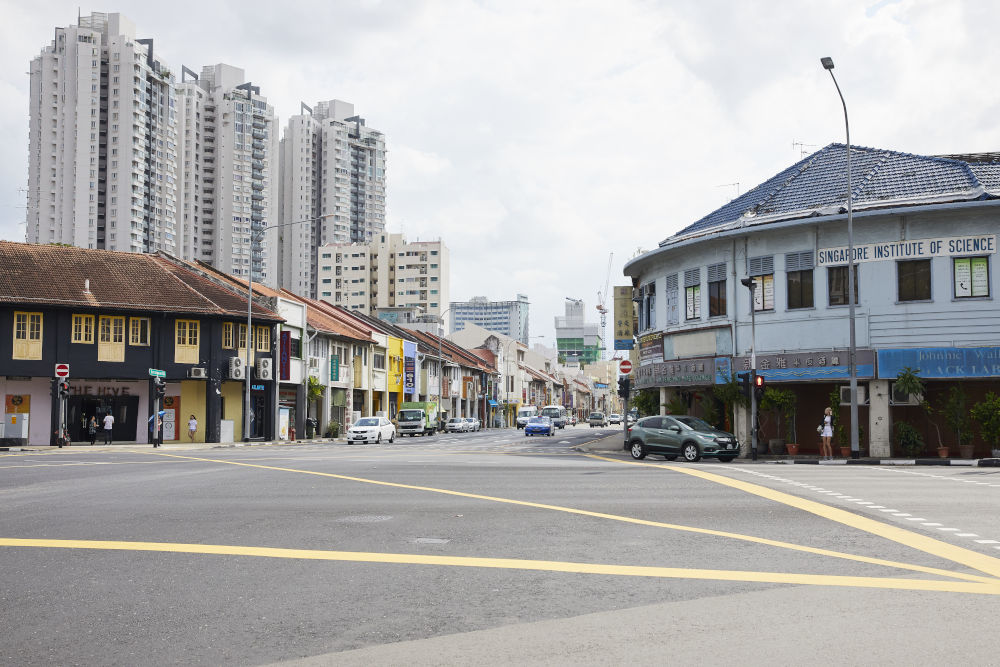
The Jalan Besar neighbourhood is located on the fringe of the city and has a rich heritage with many charms.
Martin: What is unique about this area is the strong sense of community. There are a lot of senior residents who have retired, and they hang out at the various coffee shops. This creates a warm and friendly atmosphere. Everyone knows one another.
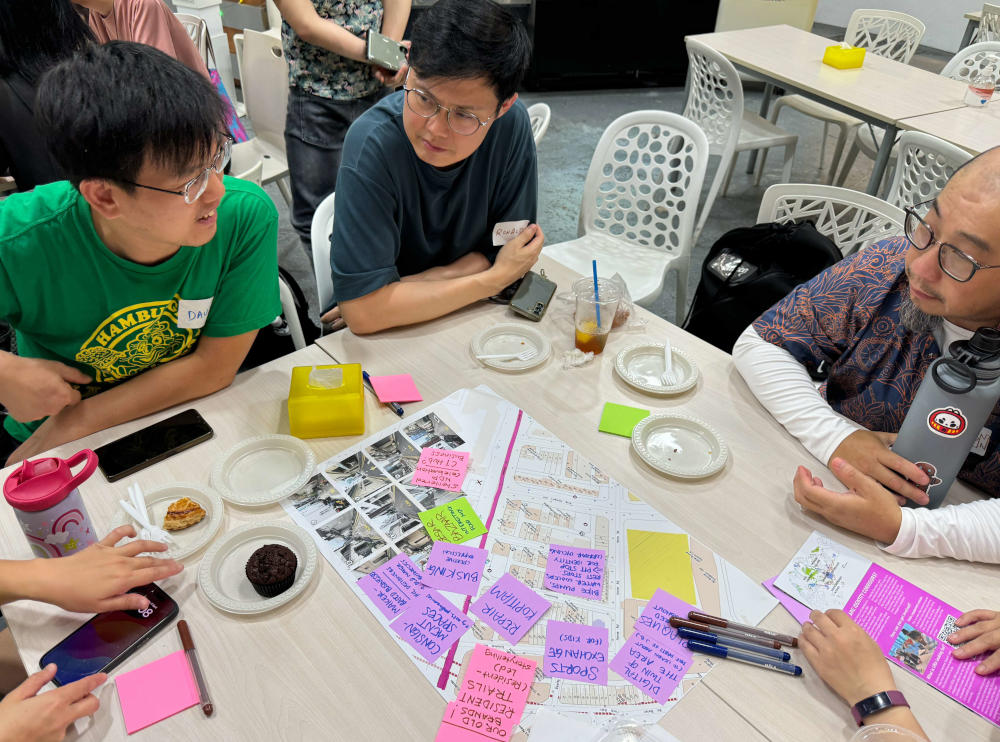
Martin (on the far right) at one of the Inner Ring Identity Corridor engagement sessions.
Jalan Besar serves as a wonderful focal point connecting to many nearby neighbourhoods and the city centre. It is also a stone’s throw away from the bustling Little India. From our flat, we’ve enjoyed great views of the area. In addition, we often see tourists walking through this neighbourhood to get to other places and discovering this charming area.
How did you feel about the engagement session that you joined for the Inner Ring Corridor?
Martin: The engagement session was special as it brought together people who are passionate about this area and wanted to make this place better. We are grateful for the opportunity to be able to explore new possibilities.
During the engagement session, the group came up with the idea of “shelf consignment”. Tell us more about it.
Lavinia: We observe that there are a few vacant spaces in some of the industrial developments. There are also shophouse units that become vacant as businesses close. We think that such vacant spaces can be turned into short-term pop-up shops to inject greater vibrancy and enhance the community spirit in the neighbourhood.
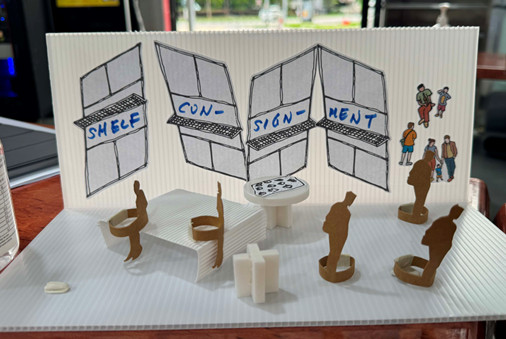
A mock-up done at the Inner Ring engagement session illustrating the “shelf consignment” idea to explore interesting uses in vacant spaces in Jalan Besar.
Some of these spaces could be used by artists and students to create installations using materials from shops in the area. There could also be a neighbourhood library in one of these spaces where residents can borrow or exchange books. Back lanes can also be activated where we can use them to teach kids how to cycle.
You are inspired from the engagement session to explore activating public spaces in Jalan Besar.
Martin and Lavinia: We are exploring how we can organise a fun cycling festival in Jalan Besar, activating some of the public spaces in the area to bring interested communities and individuals together. There can be cycling workshops for kids and bicycle repairs offered for those who need it.
As avid cyclists, what kind of possibilities do you envision for Jalan Besar and the Inner Ring Corridor?
Martin: I aspire for Jalan Besar to be a more car-lite neighbourhood. It is very well connected today. We already have park connectors nearby that connects to many parts of Singapore. It would be great if it can also be more cycle friendly.
There is potential to have more extensive cycling pathways that can link Jalan Besar to other fringe areas in the Inner Ring Corridor. The key issue is safety. For example, we can easily cycle from Jalan Besar to Balestier, but we aren’t able to do so as there are no clear continuous pathways, and it is not safe to cycle on our roads.
Learn more about the Identity Corridors here (opens in new tab).