
20 Under 45: Fourth Edition
How these two architects’ design of sacred spaces help people find greater meaning and purpose
22 January 2026
While they have contrasting personalities, Eugene Aw and Ho Tzu Yin of LAUD Architects share a common goal of creating meaningful communal spaces. Both are recognised in the third and fourth editions of the ‘20 Under 45’ programme, which celebrates exceptional Singapore architects.
Having designed more than 20 churches, why is this meaningful to you?
Eugene: Designing churches is personal as they manifest life's most important facets — community, relationships and friendships. Designing Living Sanctuary Brethren Church's Annex building (also known as Omega Wing) is particularly meaningful as I now attend services there. My relationship with the building and community has grown further.
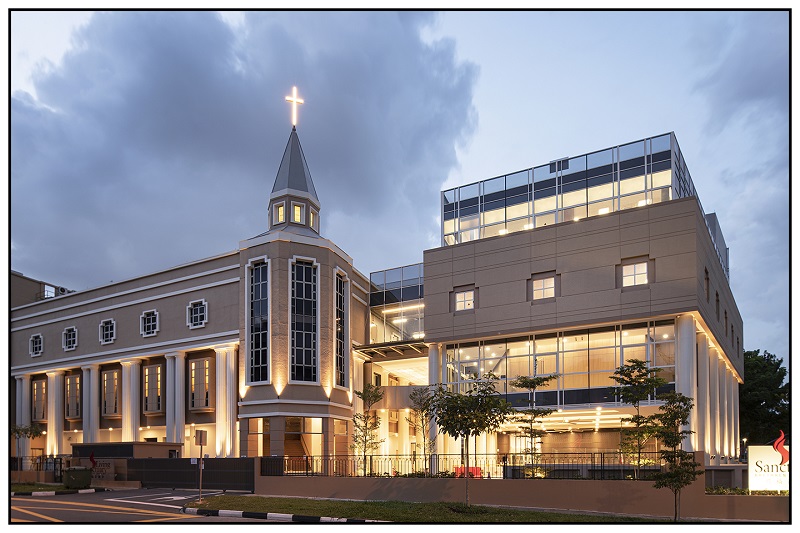
Living Sanctuary Brethren Church. Photo credit: LAUD Architects.
Tzu Yin: Designing spiritual places is rewarding because they are where people seek deeper meaning and reflection. It is fulfilling to shape sacred spaces that quietly support life’s important moments — from everyday worship to major milestones. Knowing that these spaces can positively influence people’s lives over many years gives our work a lasting purpose.
How has the design and use of churches evolved?
Eugene: Churches have become more embedded within local communities. Living Sanctuary Brethren Church keeps its foyer open for people to walk through and host community events. They offer weekday childcare facilities. The church’s design is changing to have fewer boundary walls and more open, porous communal spaces for multiple uses.
You have been creating communal spaces within churches from as early as 2015 with the Grace Assembly of God Church.
Eugene: I worked on this with Tzu Yin. We wanted to design a meaningful communal space within the church. To do so, we framed the space with two imposing double-curved walls clad in stone for people to feel a sense of awe and also carved various names into the stone, picked by church members. Located at the main atrium where many pass through, the transparent foyer space attracts the public as well.
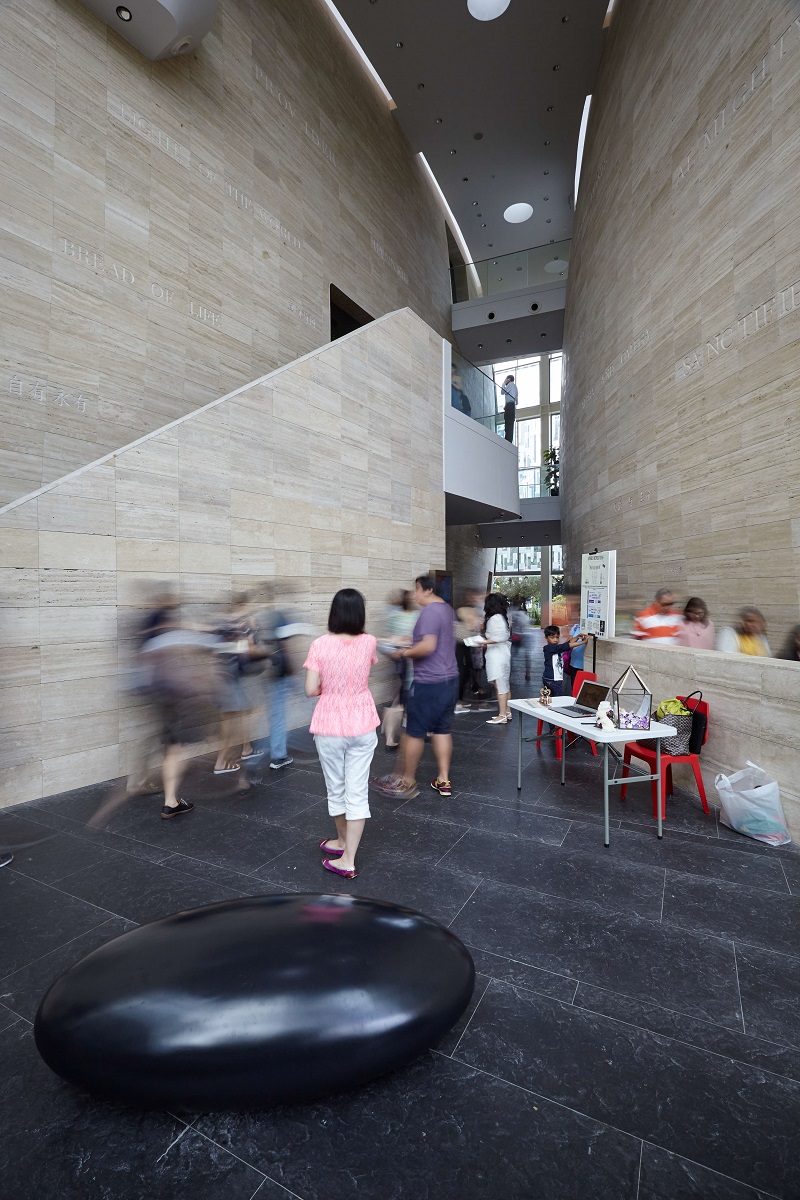
Grace Assembly of God Church. Photo credit: LAUD Architects.
For churches and many other projects, there are lots of collaborations and sharing of ideas within the firm. Tell us more about this way of working.
Tzu Yin: We believe no one has the best or right idea all the time. Architecture is inherently collaborative — no building can be attributed solely to one architect. If you look at our projects, there's no one single style. Instead, you see different design responses emerging from teams working closely together. That diversity comes from our culture of open sharing and critique.
Eugene: For any project, we open it for discussion and exchange, then bring different elements together where suitable. In addition, we also have regular critique sessions where any architect working on a project can invite those not working on it to contribute ideas.
How do you keep growing and staying curious as architects?
Eugene: It's important to always have a sense of wonderment about the world and life around you. Suspend judgement and listen closely to stakeholders, clients and others. Reading helps me connect — I read broadly, especially psychology books about why people think the way they do.
Tzu Yin: Every new project is a learning journey. When we design childcare centres, we talk to early childhood educators about pedagogy and how children behave physically and psychologically. We try imagining ourselves as children again and design the best environments for them. Through this process, we learn so many aspects about the world we didn't know.
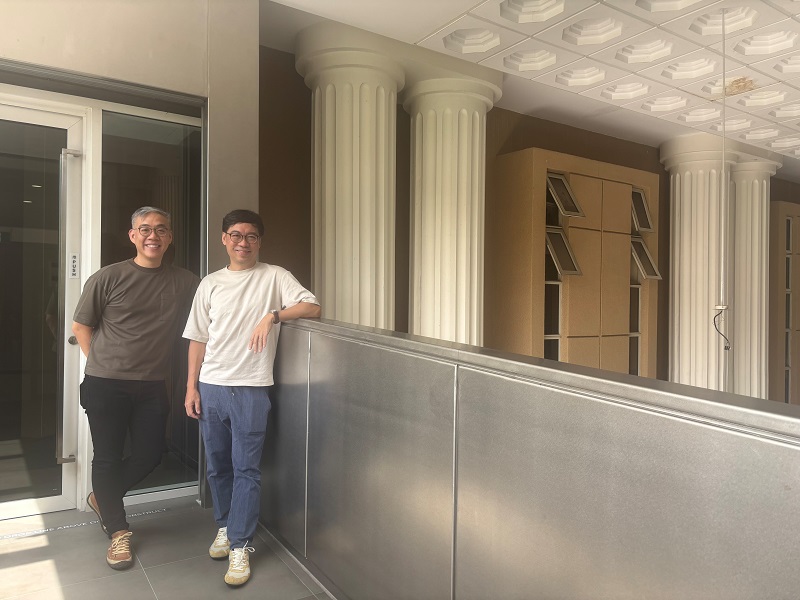
Eugene Aw (left) and Ho Tzu Yin (right).
Why should one be an architect today?
Eugene: Being an architect is a way to understand the world and yourself in establishing what's important to you. In my first year studying architecture at NUS (National University of Singapore), when asked what architecture is, the professor shared that "architecture is love — love for people". As an architect, you gain valuable skills relating to people from all walks of life. You get to actively contribute to shaping the world around us. Your work is tangible — you can see the product of your efforts and how it influences the way people live.
Tzu Yin: What's most rewarding as an architect is seeing the spaces I design being well used by people. My wife's friend shared how she found a particular meditative garden I’ve designed many years ago very peaceful and would often return to visit. This is what's most satisfying about being an architect — what we design has real impact on people which could last for many years.
‘20 Under 45’ architects from LAUD Architects across generations
Ar. Ho Tzu Yin (‘20 Under 45’ Third Edition) Ar. Eugene Aw (‘20 Under 45’ Fourth Edition) Year founded Selection of works |
|---|
About the ‘20 Under 45’ programme
First launched in 2004, the ‘20 Under 45’ programme by Urban Redevelopment Authority recognises young emerging Singapore-registered architects for their design excellence, ideas and leadership and the positive impact of their works on the built environment and communities. Across its three previous editions in 2004, 2010 and 2017, the programme has spotlighted 60 architects, many of whom have gone on to deliver impactful works locally and internationally, strengthening Singapore’s architectural standing.
The '20 Under 45': Fourth Edition exhibition is at the URA Centre from 23 January to 31 March 2026, with the accompanying publication for sale at all major bookstores soon. Join the public talks on the architects’ journeys, works and creative solutions in addressing larger urban challenges for the future.