
Nature
From cyclist to conservation pioneer: Building New Zealand's model mountain bike park
20 February 2026
This article has been migrated from an earlier version of the site and may display formatting inconsistencies.
What started as a childhood love for cycling has grown into one of New Zealand's most successful conservation stories. Simon Kennett, one of the creators of Wellington's Mākara Peak Mountain Bike Park, shares enduring lessons on how communities of riders and residents hand-built trails and regenerated a forest.
Growing up, how did your love for biking start and grow over time?
Like most children in Christchurch, I was exploring the neighbourhood by bike by age eight. When my family moved to Dunedin, I became more interested in biking, especially around the hilly neighbourhood that required more effort and better equipment. I saw the bike as a symbol of independence and rebellion. I bought a nice second-hand touring bike with my own savings and from then on, I was hooked!
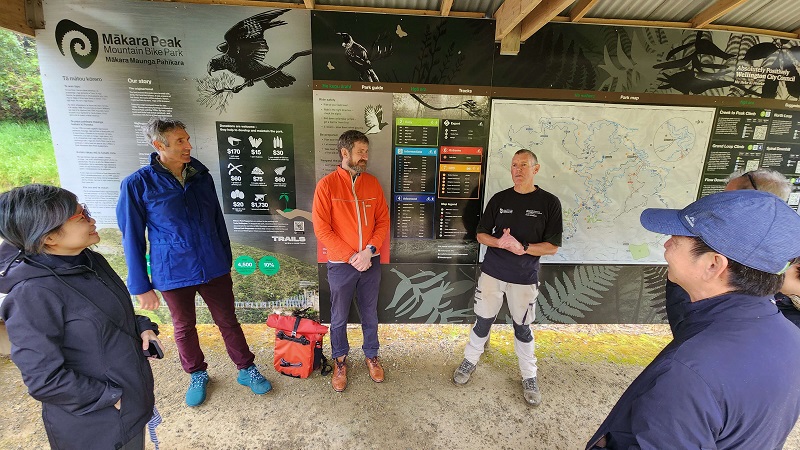
Simon Kennett (in orange) with Kerei Thomson (on left; Chair, Mākara Peak Park Committee), Mark Kent (on right; Ranger), together with Yap Lay Bee, Lee Kuan Yew World City Prize (LKYWCP) Secretary and Lim Eng Hwee, LKYWCP Nominating Committee member.
How did you and your brothers, Paul and Jonathan, get involved in leading the Mākara Peak Mountain Bike Park in the 1990s?
Our family moved to Wellington in 1984, opening new terrain to explore by bike. Paul and I joined the local cycle touring club and began leading rides. In 1986, Paul organised the first New Zealand Mountain Bike Championships, which we grew into the biggest race in the Southern Hemisphere. In 1991, we started writing cycling guidebooks and organising volunteer work parties to repair local biking trails.
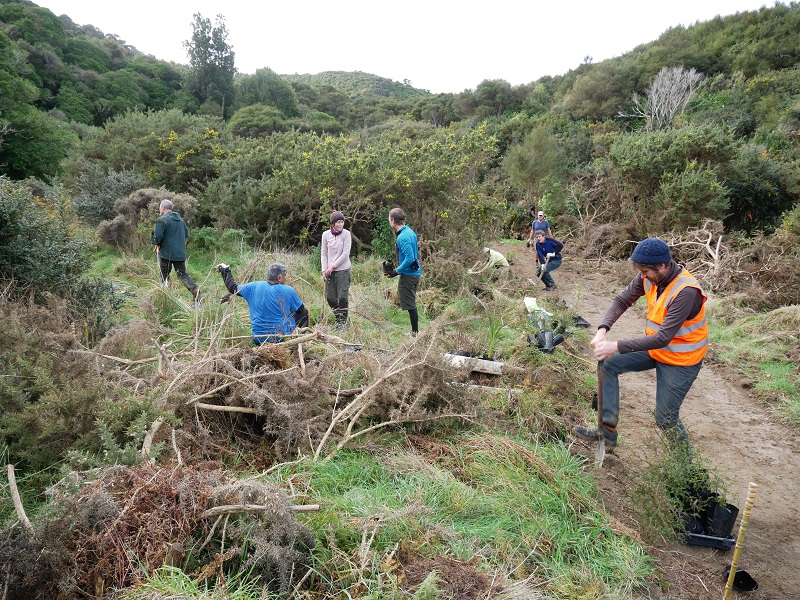
Simon (in orange) at work with other supporters planting Podocarps. Image: Ben Swale.
We were also passionate about the environment — Jonathan is a botanist and I studied environmental management. When Wellington City Council purchased 200 hectares of retired farmland in Karori, seeing the potential to develop mountain biking trails in the area, we were ready for the challenge.
My brothers and I teamed up with local residents and riders to form the Mākara Peak Supporters group in 1999, with a vision to develop a world-class mountain bike park in a restored native forest. The group is mostly made up of volunteers such as park neighbours, conservation enthusiasts, and mountain bikers who wanted to give back to the park. The group partnered with the Wellington City Council, who provided ranger and contractor support.
What key factors shaped the park into what it is today?
We promoted the vision of riding in beautiful native forest from the start. The Department of Conservation's research showed that riders preferred native forests over other kinds of terrain. In areas where there is a lack of forest, biking experiences are likely to be more challenging with Wellington's notorious gusty winds.
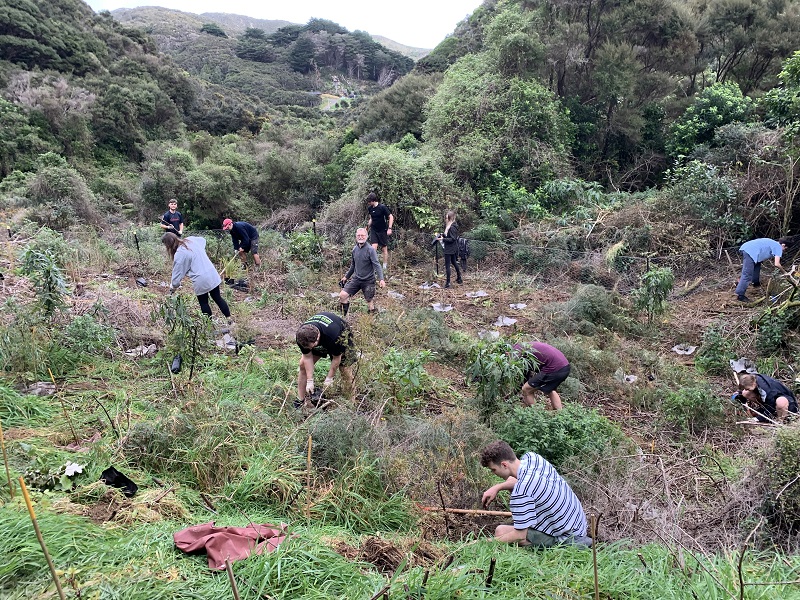
Volunteers tree planting at Mākara Peak. Image: Simon Kennett.
The first work party was a planting party, and we established the rule of planting one seedling for every metre of track built. The track network gave us access for effective pest control of feral goats and possums, which later expanded to include rats, stoats and noxious weeds. We also planted uncommon species, growing the slowly regenerating forest. Wellington City Council supplied free seedlings and trapping gear, whilst donors provided additional seedlings and funding support for professional weed control.
Most of the conservation work is carried out by volunteers. Fortunately, there are a lot of people in Wellington who are keen to help restore native ecosystems. Over the years, ordinary citizens and bikers have hand-built most of the bike trails, catering for all riding levels. Whilst it is positioned as a mountain biking park, it is also open to pedestrians, with about 15 per cent of users being runners or walkers.
What are your proudest achievements for the park?
I'm most proud of the park's growth in terms of its rich biodiversity and its expansive 45-plus kilometres of bike trails across 250 hectares. The forest area has roughly doubled over 27 years. Species like titipounamu, kereru, kaka and kiwi now nest in the park and podocarp trees have increased from four to over 200.
I'm particularly passionate about re-establishing podocarps because they were once such a massive part of the forest at Mākara Peak and getting them to thrive in significant numbers is a huge challenge.
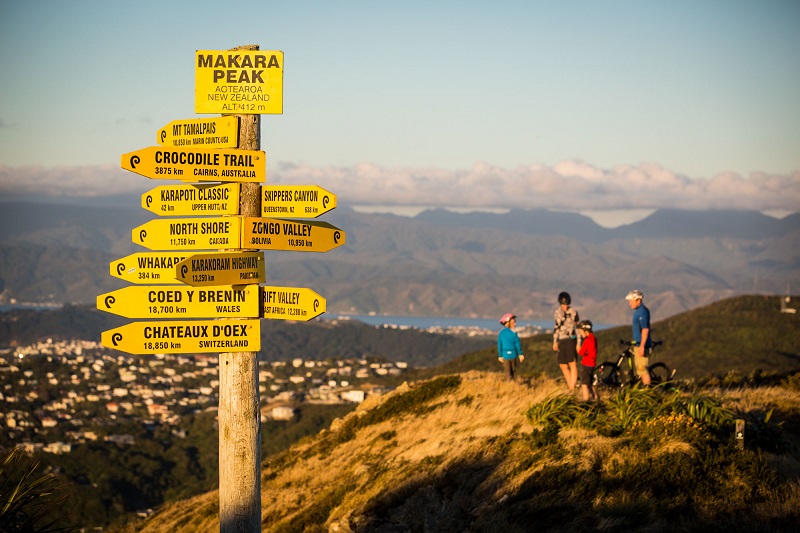
The Mākara Peak summit. Image: Caleb Smith.
How do you engage volunteers meaningfully? How has the volunteer model evolved?
We engage volunteers via email and Facebook, occasionally using posters or our website. We find out how people want to be involved, offering options from financial support to hands-on track building. Work parties start with briefings about Mākara Peak's history and project goals and end with sharing food and wonderful conversations. Enthusiastic volunteers with useful skills may also be invited to join planning committees.
This volunteer model approach has not changed much over 25 years. Efforts have deepened further with Wellington City Council supporting a full-time ranger for the park and providing contractors. Our main supporters committee has also expanded to include subcommittees overseeing the management of biking tracks and nature conservation.
Tell us about the first-of-its-kind 72-metre swing bridge.
I had proposed an easier summit route, requiring a track crossing the main valley at a higher altitude. We had initially planned for a 40-metre bridge, but an engineer determined that 72 metres was more optimal. Wellington City Council had given its approval based on supporters raising the necessary funds.
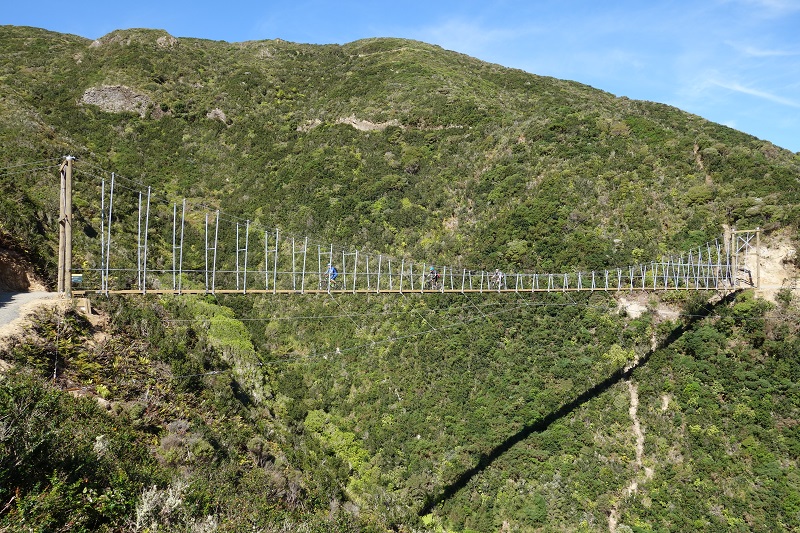
The iconic bridge at Mākara Peak. Image: Simon Kennett.
The bridge has become an iconic structure, opening the track to a wider range of people, requiring bikers with intermediate-level skills rather than just advanced ones.
How has the park changed perceptions about caring for nature areas?
Mākara Peak has set an example for other bike parks — combining trail building with pest trapping and tree planting. It demonstrates how restored forest enhances recreation, as riders, walkers and runners enjoy diverse native forest and encounter uncommon native birds.
What are the biggest challenges for the future?
Pest control is the biggest challenge. We need improved control of feral cats, rats and pigs for full ecosystem restoration, particularly of small birds and tree species with palatable seeds. We also need more bio-control agents for weeds impossible to control manually or with herbicides.
What lessons have you learnt on leading a successful mountain bike park?
Communicating clear project visions and showing how people can help is vital. Treating people with respect and ensuring they feel good about their contribution is crucial for long-term success. We need to continuously make people feel proud of the park and their roles in shaping its success.
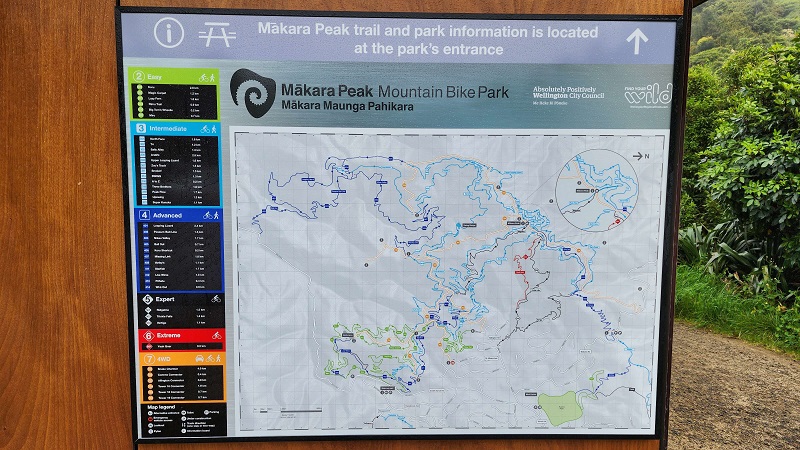
Information board at Mākara Peak, showing its extensive trails.
What advice would you give others wanting to initiate similar efforts?
Even though your goal may be enhancing the natural world, your restoration efforts must enhance the lives of people who experience your park if it's to continue growing and healing from one generation to the next.
You need to stay focused on the long-term vision. The transformation of Mākara Peak is the result of ordinary riders and residents pitching in, one seedling at a time — playing the long game for rewards that will keep getting better.
About the Kennett brothers
Since 1984, the Kennett brothers, Simon, Paul and Jonathan, have been heavily involved in advocating for cycling, earning widespread respect for their riding prowess, experience and enthusiasm. They work full time from downtown Wellington organising, lobbying for and writing about cycling. They led the initial track development and restoration at Mākara Peak Mountain Bike Park for many years and remain keenly involved. They have transformed off-road riding in New Zealand by organising world-class events, promoting rides through their national guidebooks, building sustainable trails coupled with mass tree planting, and garnering strong support for mountain bike access.