
Master Plan 2025
Charting new frontiers in the digital economy
14 November 2024
This article has been migrated from an earlier version of the site and may display formatting inconsistencies.
Ng Nam Guan, Senior Director, Cloud Native Architecture and APJC AI Innovation Hub, Dell Technologies and Chair of Smart Nation Chapter of SGTech reflects on how technology advancements are shaping the way we work and highlights the importance of remaining resilient and to continue to nurture our younger generation for Singapore to remain competitive on global stage.
What are fundamental shifts in the recent years you have observed in the use of technology by businesses?
Nam Guan: One of the biggest changes I am seeing is that more companies are tapping on AI (Artificial Intelligence) to create more customised services and solutions for their customers.
Based on our Dell Technologies Innovation Catalyst survey, 85 per cent of our respondents believe AI will transform our industries in the future. Many more companies and users are expecting and demanding more personalised services and companies are tapping on AI to provide real-time customised services and solutions.
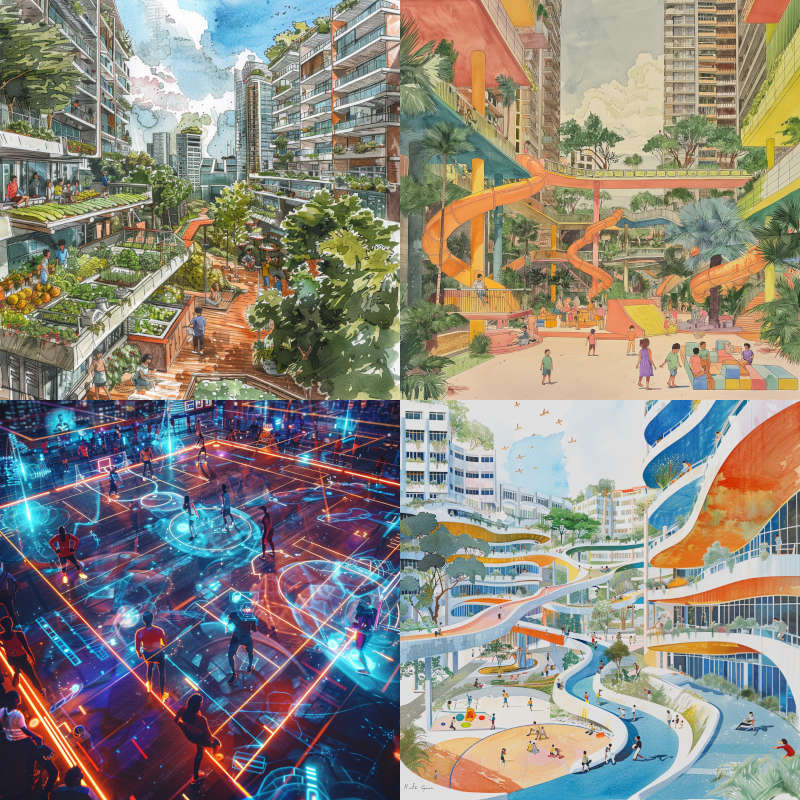
URA’s urban planners and designers increasingly tapping on the potential of AI for our public engagement efforts. The above images were generated by various stakeholders for the Recreation Master Plan using the AI tool – Midjourney, as they imagine the future recreation play-ces in Singapore.
What kinds of industries are tapping on AI? How is AI used to benefit customers?
Nam Guan: A key part of tapping on AI is being able to analyse customer data wisely to understand people’s needs. In the past, collecting and analysing such data requires long surveys which can be time consuming and limited in results. But these days, you can tap on AI to analyse data and information, derive insights and offer real-time customised solutions on the fly.
Examples of sectors that are using more AI are the e-commerce, finance and banking industries. AI's magic touch to businesses also extends to manufacturing, logistics and supply chains, creating a more accurate projection of what's wanted and what's produced. Less waste, more efficiency—it's a win-win for both businesses and customers.

A visual illustrating the combination of AI and data to explore new possibilities. Image: Getty images.
As we move towards a digital economy, what do you think will enable Singapore to remain globally competitive?
Nam Guan: Singapore’s foresight in digital infrastructure investments has well-positioned the country to capitalise on opportunities in the digital economy. For instance, we started implementing the Next Generation National Broadband Network (NGNBN) in early 2000s resulting in a very good set of optical network that gives Singapore quite a fair bit of a head start. Singapore’s robust infrastructure, coupled with its strategic role as an internet exchange and trusted digital hub, attracts companies across the AI value chain. This in turn anchors critical data, workloads, high-value business functions, talent, and jobs.
The successful implementation of AI depends on a strong foundation of data resiliency and security, necessitating organisations to adopt comprehensive data management practices to ensure that their AI systems are built on accurate, reliable information.
What more can we do to expand our competitive edge?
Nam Guan: The key to expanding Singapore's competitive edge is to be agile in responding to rapid technological changes.
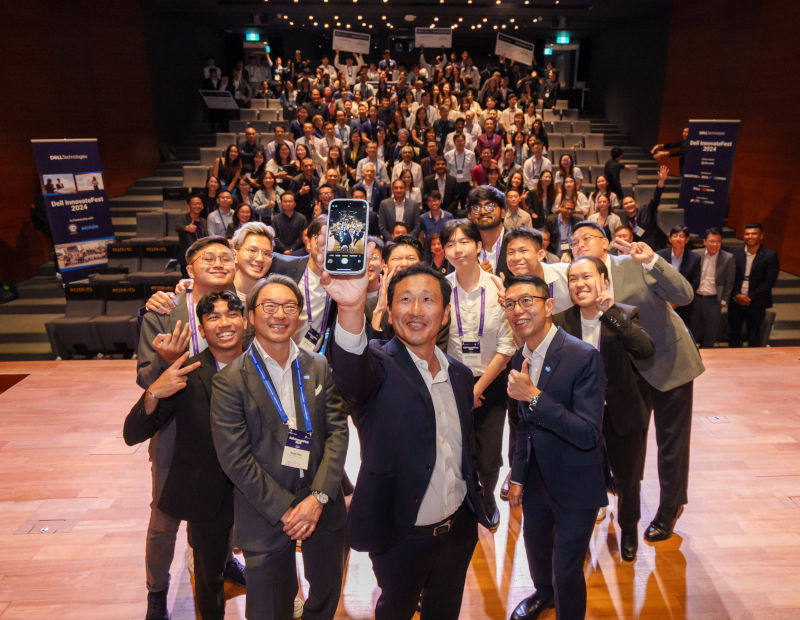
Minister for Health, Ong Ye Kung, with students at the Dell InnovateFest 2024. Image: Dell Technologies.
Deeper public-private collaboration on Smart Nation projects and talent development are important aspects that would bolster Singapore’s position and capabilities in the digital economy. We need to continue to build the talent pool, strengthen initiatives such as collaborations between educational institutions and companies to nurture the next generation of tech talents and to foster an innovative and robust ecosystem. The clustering of our Institutes of Higher Learning together with industries in places like Changi Business Park and Punggol Digital District makes it easy and seamless for students, faculties and industries to collaborate on projects, which in turn drives innovation and value creation.
Table caption
Dell InnovateFest This year marks the second iteration of the event, focusing on leveraging technology to combat social isolation faced by seniors and persons with intellectual disabilities. Through their creative solutions, students have demonstrated their proficiency in emerging technologies and their social awareness, proving they are well-equipped to tackle the challenges of tomorrow. |
|---|