
20 Under 45: Fourth Edition
Designing for connection: How young architects are shaping stronger communities
22 January 2026
This article has been migrated from an earlier version of the site and may display formatting inconsistencies.
Through empathy, shared goals and fostering stewardship, Seah Chee Huang and Ng Ching Hsiung of DP Architects show how architects can create more memorable and engaging communal spaces for communities to thrive. Both of them are recognised in the third and fourth editions of the ‘20 Under 45’ programme, which celebrates exceptional Singapore architects.
Many of your projects include communal spaces. Is there anything we must do differently to create more meaningful and inclusive spaces?
Chee Huang: These projects stemmed from DP’s pursuit of not only creating inspiring architecture but also extraordinary everyday spaces. Rather than focusing on novelty, it is about understanding who we're designing for and with. A communal space in a nursing home requires different sense and sensibility from one in a public building like Our Tampines Hub. We need to respond sensitively and purposefully to context, to create spaces where people feel a strong sense of belonging, familiarity and dignity.
I believe architects can become agents of stewardship within the community. Through the design process and engagements with residents and stakeholders, we can establish shared goals and help people develop collective ownership and pride in the spaces designed for them. This deepens emotional connection, encouraging communities to care for, adapt and steward the spaces over time.
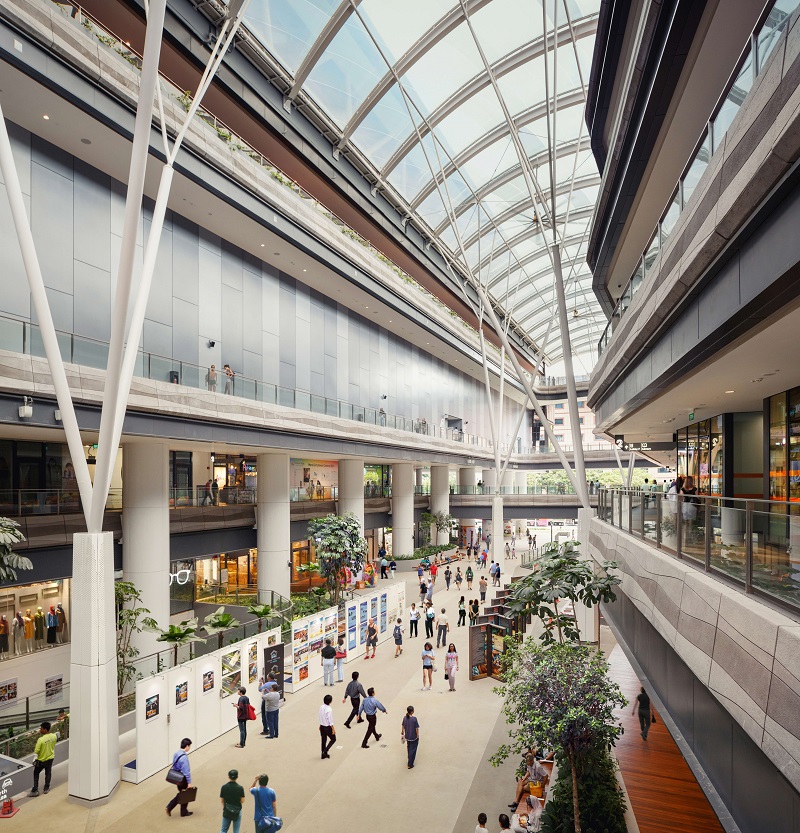
Tampines Hub. Image: Bai Jiwen.
Ching Hsiung: I believe some communal spaces do not need to be overly designed. Simplicity allows users the freedom to appropriate, reinterpret and evolve spaces over time. It is therefore important for architecture to accommodate flexibility, with spatial cues that guide appropriate use without being overly prescriptive.
How can we prioritise creating more engaging public spaces in our key developments?
Chee Huang: At the policy level, URA’s planning and urban design guidelines are already establishing strong parameters for a quality public realm to ensure sufficient public space provision in new developments. Working with like-minded partners and enlightened clients, we can advocate for higher-quality public spaces and demonstrate how their design enhances developments, well-being and the attractiveness of the precinct in the long term.
At the design level, we should continue to explore and test new approaches to create memorable spaces with a higher level of participation from stakeholders and local communities. There should be more opportunities for architects, stakeholders, residents and communities to co-create in the design process, co-leading the enhancement, activation and curation of our public spaces.
In many of your design works, engagements with stakeholders are a key aspect. How are you working with stakeholders to meet their needs?
Ching Hsiung: The key is clear communication and the development of a shared vision with our clients and stakeholders. When the larger goals are clear, people are more willing to work together to realise the vision.
Beyond communication, we must design communal spaces with elements that people can meaningfully relate to. For example, for the HomeTeamNS Khatib Clubhouse, we created a corridor that showcased artefacts such as the unit’s headgears. This encouraged members to share stories about their experiences during service, prompting conversation, memory sharing and intergenerational exchange.
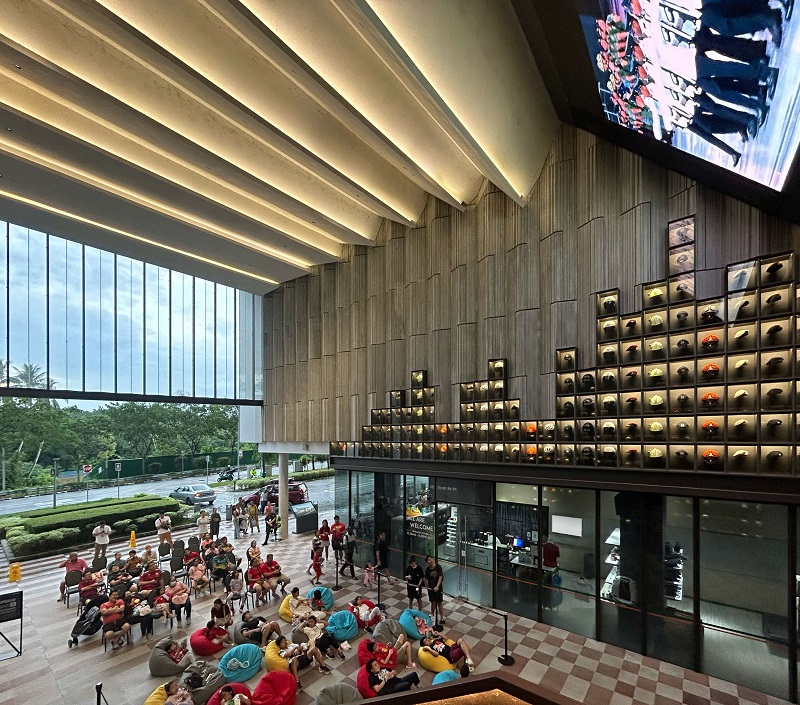
HomeTeamNS Khatib Clubhouse. Image: HomeTeam NS.
Chee Huang: In our engagement with community stakeholders, we employ the "Five E's" framework. First, we Engage the local communities through outreach and exchange opportunities. Second, the team Enriches through two-way information sharing and feedback. Third, Empathy is developed by understanding diverse users' perspectives. Fourth, stakeholders are Empowered through alignment and shared goals, instilling ownership. Finally, we Evaluate continuously, recognising that there is never an exhaustive solution. Spaces evolve over time and must allow for appropriation and reappropriation, with opportunities to refresh, so communities can continue shaping their environment meaningfully.
DP has led several mixed-use developments with co-location of multiple amenities and uses. What are the challenges and opportunities in designing such developments?
Ching Hsiung: Challenges include regulatory complexity and stakeholder engagement, which takes time. However, mixed-use developments also create opportunities to intensify land use and make every space count. For example, in Our Tampines Hub, Chee Huang and the team created a unique indoor running track on the fifth storey to maximise the space and offer additional amenities for residents. This idea was well received and has since been included in other projects such as SAFRA Choa Chu Kang Clubhouse and further adopted as a dedicated IPPT running track within the new Central Manpower Base.
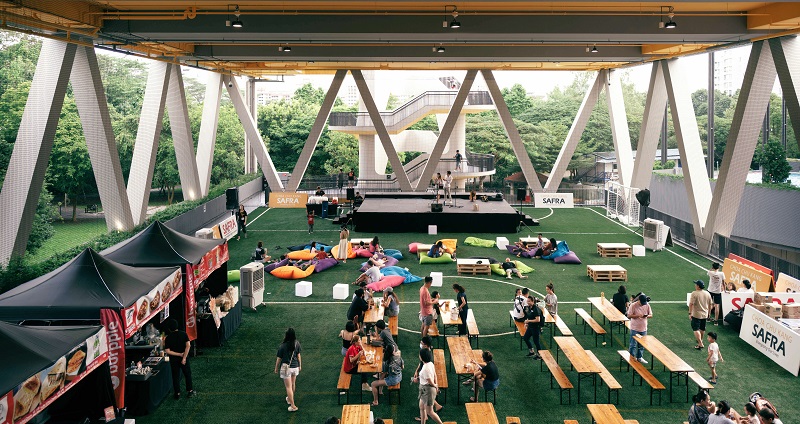
SAFRA Choa Chu Kang futsal field. Image: Andrew Lee.
Chee Huang: In Singapore, mixed-use typologies are largely inevitable due to land constraints. The opportunity lies in how a greater diversity of stakeholders introduces richer programmes, services and communities. The curation of the mix is what results in more dynamic and inclusive environments. The challenge is achieving alignment when many voices with differing priorities are involved. Our role is to synthesise these shared goals into spaces that stakeholders can share and enjoy.
How do you manage competing needs from different stakeholders?
Chee Huang: We start with structured visioning workshops, bringing stakeholders together to articulate a shared vision. Working closely with our partners, our team facilitates these discussions, sometimes collaborating with community designers and grassroots as part of the exchange. For Our Tampines Hub, we spent weekends reaching out to various interest groups and age groups. These workshops were critical in drawing out ideas, building consensus and shaping collective aspirations.
When conflicting needs arises, we engage with stakeholders to consider trade-offs, prioritising outcomes that benefit the wider community. Strong leadership from coordinating agencies are crucial in aligning stakeholders to the core vision, objectives and intended outcomes.
Ching Hsiung: I agree. Architects facilitate and communicate the vision of the development to a broad user group, guiding everyone towards a shared goal. It is, however, ultimately the client’s leadership and long-term commitment that establishes priorities and ensures coherence.
What were your initial encounters with one another? What were your impressions?
Ching Hsiung: We met through our then Chairman, Chan Sui Him, who mentored both of us at different stages of our professional journeys. Mr Chan had a profound influence on our design thinking, particularly his emphasis on planning principles as the foundation of good architecture.
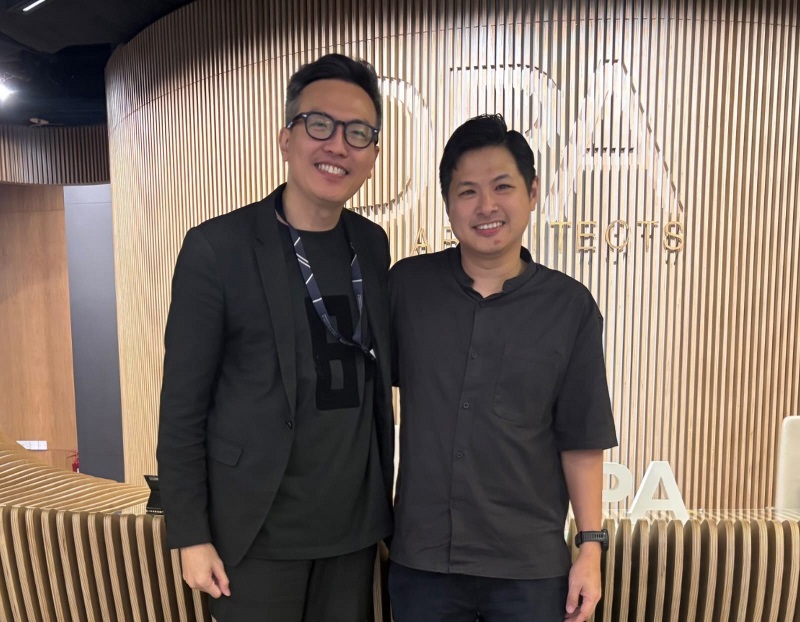
Seah Chee Huang (left) and Ng Ching Hsiung (right).
Chee Huang: What struck me about Ching Hsiung was his quiet rigour — he was always deep in thought, yet precise and disciplined in execution. This quality translates into a considered and thoughtful architectural approach, and I have taken delight in witnessing his growth and professional maturity over the years.
Why should one be an architect today?
Ching Hsiung: As architects, we have the potential to shape our environment and our future. In the face of climate change, this responsibility has never been more urgent. Buildings account for nearly 40 per cent of global energy-related greenhouse gas emissions. This represents both a challenge and an opportunity. Architects can make a meaningful difference by improving the performance, longevity and sustainability of the built environment.
On a personal front, there are few professions that match the reward of seeing a project through from inception to completion, where abstract ideas are tested, refined and ultimately realised as spaces that shape everyday experiences.
Chee Huang: Architecture offers us the opportunity to be change-makers. Through what we love doing, we can extend our care to society and the environment, creating positive and lasting change. What makes this vocation particularly powerful is our ability not just to visualise impact, but to spatialise and manifest it into something tangible!
Consider this: buildings in Singapore can last 30 to 40 years or more - that is a significant legacy. Today, approximately 50 per cent of our building stock is over 30 years old. We stand at a critical juncture: do we continue with tabula rasa, or do we adapt and breathe new life into existing buildings, strengthening connections and deepening social bonds? This is where we as architects can make a meaningful contribution -- shaping not just buildings but also bringing delight to everyday experiences as part of a thriving city.
Table caption
‘20 Under 45’ architects from DP Architects across generations Ar. Angelene Chan (‘20 Under 45’ Second Edition) Ar. Tan Chee Kiang (‘20 Under 45’ Second Edition) Ar. Seah Chee Huang (‘20 Under 45’ Third Edition) Ar. Ng San Son (‘20 Under 45’ Third Edition) Ar. Ng Ching Hsiung (‘20 Under 45’ Fourth Edition) Year founded Selection of works |
|---|
About the ‘20 Under 45’ programme
First launched in 2004, the ‘20 Under 45’ programme by Urban Redevelopment Authority recognises young emerging Singapore-registered architects for their design excellence, ideas and leadership and the positive impact of their works on the built environment and communities. Across its three previous editions in 2004, 2010 and 2017, the programme has spotlighted 60 architects, many of whom have gone on to deliver impactful works locally and internationally, strengthening Singapore’s architectural standing.
The '20 Under 45': Fourth Edition exhibition will be held at the URA Centre from 23 January to 31 March 2026, with the accompanying publication for sale at all major bookstores. Join the public talks on the architects’ journeys, works and creative solutions in addressing larger urban challenges for the future.