
Architecture & Design
Community architecture that transforms: Mexico City's PILARES lessons
30 January 2026
This article has been migrated from an earlier version of the site and may display formatting inconsistencies.
Well-designed communal spaces have the power to transform neighbourhoods and people’s lives as can be seen in Mexico City’s PILARES (Points of Innovation, Freedom, Art, Education, and Knowledge) centres, two of which are designed by Saidee Springall, Co-Founder of multidisciplinary firm, a|911. She shares lessons for cities in developing important community architecture and spaces.
What are some major lessons learnt in designing good communal spaces from your two PILARES projects in Mexico City?
The most important lesson was confirming that good community spaces are defined not by form alone, but by how carefully they respond to their social context. In complex urban areas, architecture needs to be humble, flexible, and open-ended.
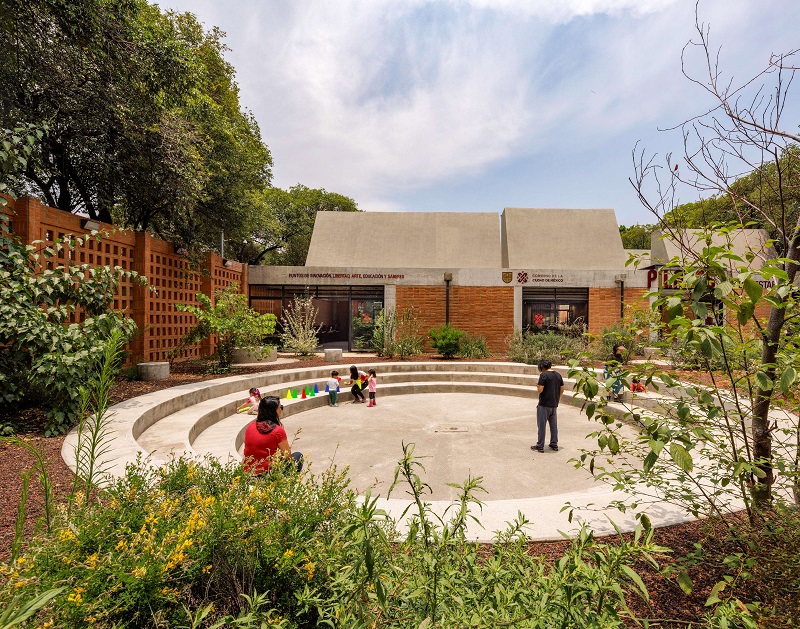
Outdoor forum areas are part of the larger design of PILARES Valentín Gómez Farías to encourage learning and interactions by both young and old. Image: Sandra Pereznieto.
We learnt that community spaces work best when they feel welcoming, safe, and adaptable, allowing people to appropriate them over time rather than prescribing a single use. When these spaces prioritise spatial quality—focusing on light, proportion, openness, and dignity—users develop a strong sense of pride and belonging.
In PILARES, this belonging extends further: people not only make the space their own, but they also care for it. This relationship between spatial quality, appropriation, and collective care is fundamental to successful community spaces.
What were the biggest challenges and how did you overcome them?
The biggest challenges were social resistance, security concerns, and mistrust due to the difficult histories of both sites. In Iztapalapa, the site had previously been used as a safe house for kidnappings, creating strong neighbourhood opposition. Our response was to adopt a clear ethical position: do no harm. Rather than imposing a project, the architecture sought to rebuild a new narrative. The building became a social infrastructure that helped weave the community back together, transforming a dangerous, avoided area into an active, welcoming neighbourhood node.
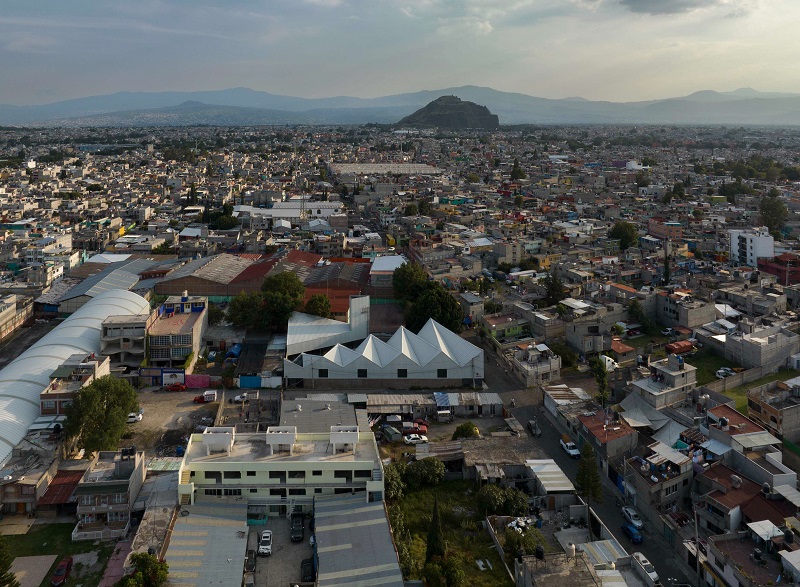
PILARES Úrsulo Galván transforms an underutilised residual plot into a thriving community space. Image: Sandra Pereznieto.
In Benito Juárez, the site was in a public park with former fronton courts associated with drug dealing. We placed the building within an already impacted area and designed it as a visible, civic object that clearly signalled new, positive use.
In both projects, minimising impact, working with discretion, prioritising open spaces, and designing architecture that integrates rather than imposes were key strategies for overcoming resistance.
How have these PILARES projects influenced people’s lives and surrounding areas?
What's been especially meaningful is seeing how people have truly made these spaces their own. PILARES help reframe everyday life by offering dignified, accessible public spaces where learning, culture, and community activities become part of daily routines.
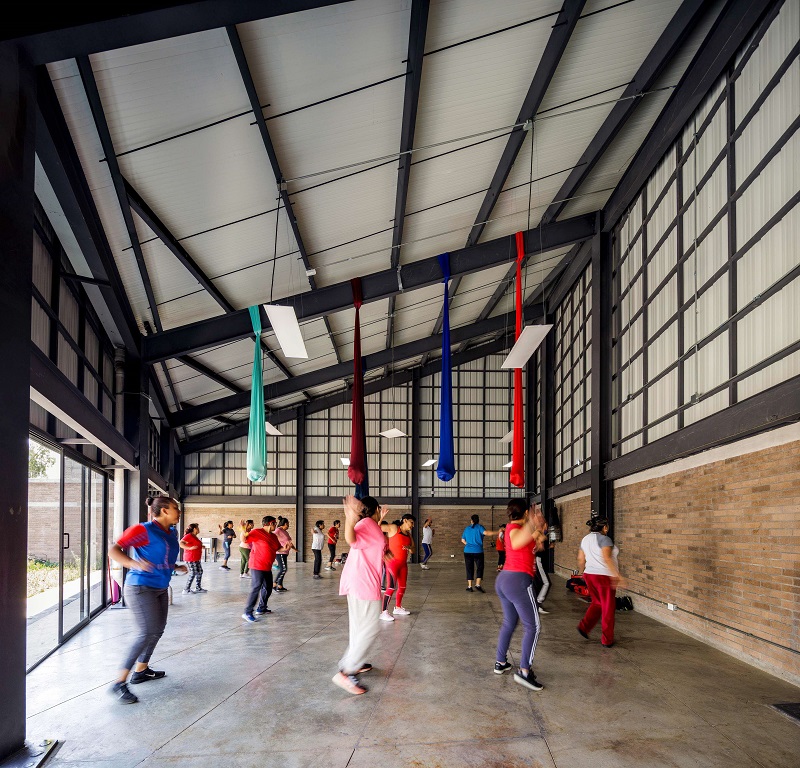
The larger north volume of PILARES Úrsulo Galván features a roof of dynamic triangular planes that decreases in height as the plot narrows, creating diverse environments for community activities. Image: Sandra Pereznieto.
These have become living, energetic places used by all ages for recreational activities, technical workshops, and learning experiences. Learning has translated into new economic opportunities—for example, women who learnt face painting now generate additional income at children's parties.
Beyond interior spaces, their presence has brought life back to surrounding neighbourhoods. Areas once inactive or avoided now feel animated, safer, and more connected. PILARES send a powerful message: these neighbourhoods deserve quality public architecture, investment, and care.
Why are PILARES projects important for communities?
PILARES operate at the scale of everyday life, bringing public investment closer to local communities and creating opportunities in neighbourhoods that historically lacked public resources.
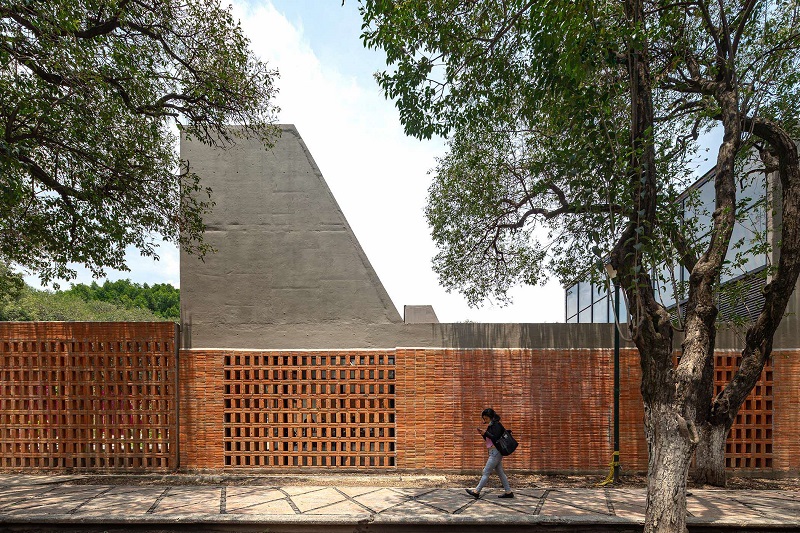
Two lattice walls frame the building at the east and west ends of the PILARES Valentín Gómez Farías site, developing a reticular enclosure inside. Image: Sandra Pereznieto.
They transform how we understand and experience the city by introducing constantly active spaces that generate safety, encourage public life, and change perceptions of entire areas. They're emblematic, high-quality projects showing that communities who need it most deserve the very best public architecture.
What essential factors contribute to successful communal spaces?
Accessibility, safety, flexibility, and strong relationship to surrounding context are essential. Successful communal spaces are easy to enter, comfortable to stay in, and open to different interpretations and uses.
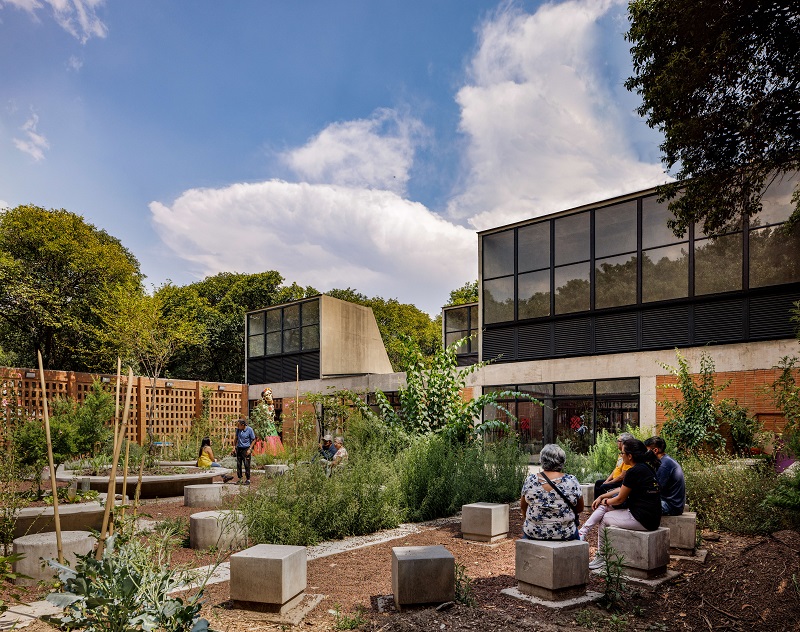
Two gardens at the north and south ends of PILARES Valentín Gómez Farías welcome the centre’s users and function as an extension of the park. Image: Sandra Pereznieto.
They must be inclusive environments, respectful of diversity, genuinely public yet human in scale, where different ages, backgrounds, and activities can coexist comfortably. Finally, they must evolve over time, allowing communities to adapt them as needs change.
What are the biggest challenges and opportunities in designing communal spaces for the future?
One major challenge is addressing inequality and exclusion in rapidly growing cities, whilst there's significant opportunity to rethink spaces through lenses of care, gender equity, and sustainability.
Working with limited budgets is challenging, but constraints push us to think carefully about resources. Material choice becomes fundamental—we need durable materials that age well and withstand intensive public use whilst maintaining dignity.
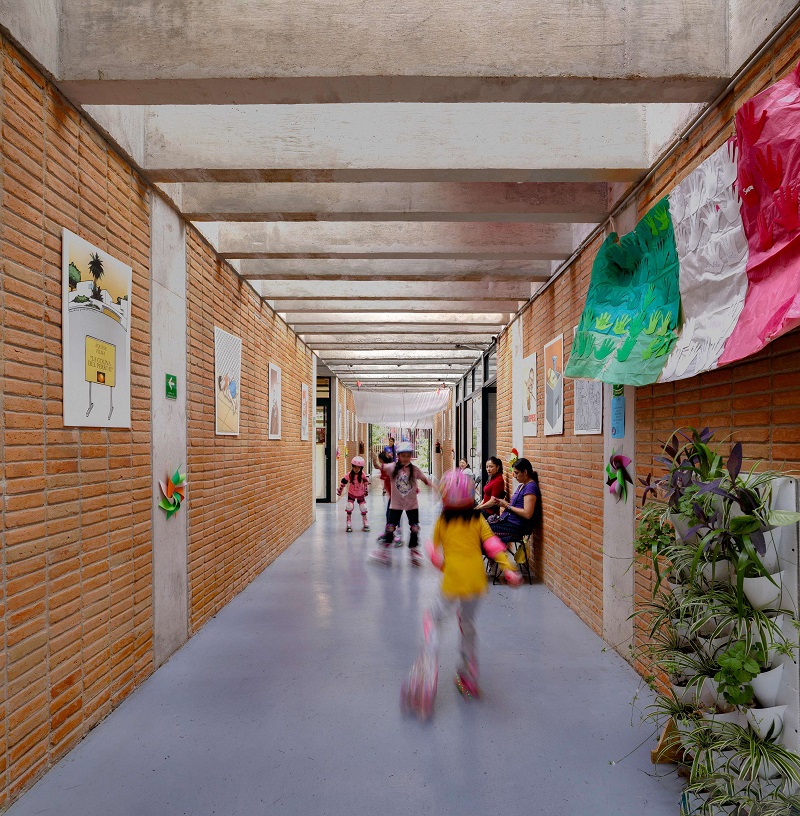
The classrooms in PILARES Valentín Gómez Farías are connected by a longitudinal walkway, making this a pavilion rather than a building. Image: Sandra Pereznieto.
In public projects, architects must clearly articulate social intentions, ensuring design decisions respond to long-term public value rather than short-term metrics.
What communal spaces would you like to see more of?
I'd like to see more small-scale, well-distributed community spaces embedded within neighbourhoods that prioritise care, learning, and everyday interaction. Social buildings should create real belonging and pride, not just meet programmatic checklists.
Social infrastructure should combine sobriety with civic monumentality —recognisable and meaningful whilst remaining accessible and community-rooted. Whilst cities invest hundreds of millions in single, centralised projects, initiatives like PILARES propose decentralised, equitable, democratic public investment that reaches more people and strengthens everyday life.
About PILARES
PILARES (Points of Innovation, Freedom, Art, Education, and Knowledge) were introduced from 2018 as a series of cultural and learning centres across 12 of Mexico City’s municipalities in vulnerable areas with higher levels of social insecurity and lack of public infrastructure. 26 local and international architecture studios were invited to design some of these centres in exploring how good design can create safer havens for communities to flourish.
PILARES centres designed by a|911
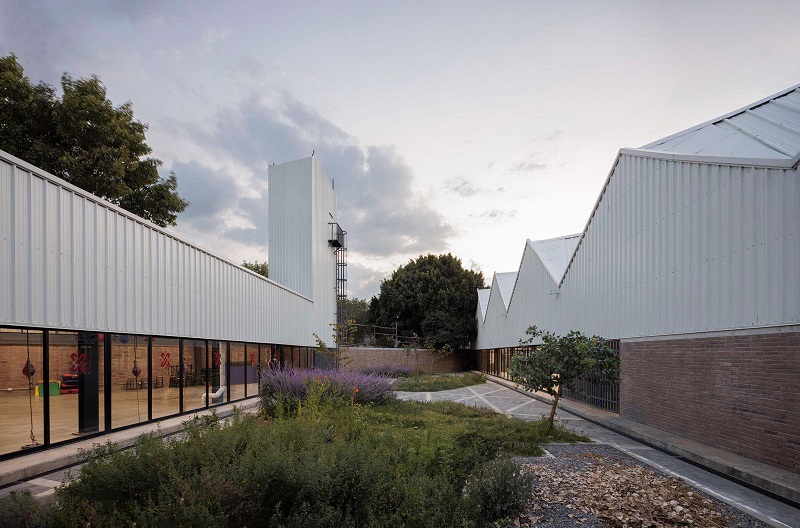
PILARES Úrsulo Galván. Image: Sandra Pereznieto.
In the Desarrollo Urbano Quetzalcóatl neighborhood, one of the most marginalised areas of Iztapalapa, PILARES Úrsulo Galván transforms an underutilised triangular plot into a community space that opens opportunities for collective development. The project responds efficiently to restrictive material and budgetary conditions, organising classrooms, workshops, and services in two volumes positioned at opposite ends of the site. Between them, a landscaped central courtyard functions as the heart of the complex, creating a meeting place that fosters community appropriation.
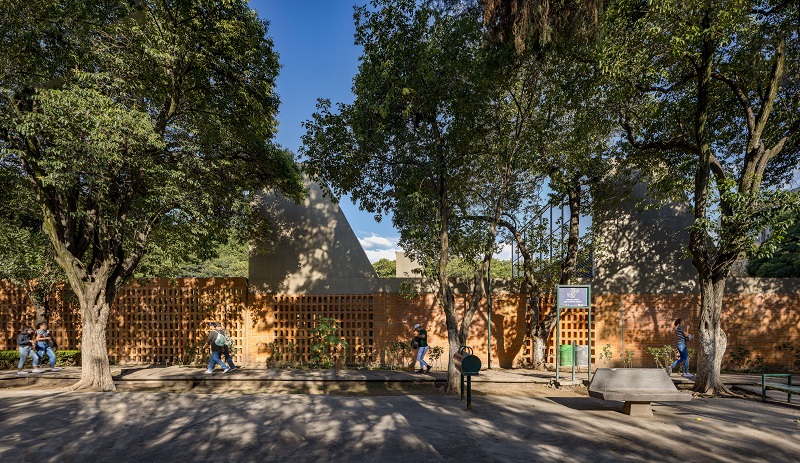
PILARES Valentín Gómez Farías.Image: Sandra Pereznieto.
PILARES Valentín Gómez Farías is part of a public policy initiative that reclaims the value of quality public works as a tool for rebuilding community fabric. Located within Rosendo Arnaiz Park in the Benito Juárez district, adjacent to San Antonio metro station, the project transforms the site of disused fronton courts, deteriorated spaces that fostered insecurity, into a community centre serving young people who have left formal education and communities without access to cultural and sports facilities.
About Saidee Springall
Saidee Springall is the Co-Founder of Mexico City–based firm a|911. Since co-founding the practice with José Castillo in 2002, she has led projects focused on public, cultural, and educational infrastructure, alongside the development of over 2,000 units of affordable housing in Mexico City, as well as work in urbanism, mobility, landscape, and research, framing these areas as complementary approaches to inclusive urban environments. Springall trained as an architect at Universidad Iberoamericana and holds a Master of Architecture from Harvard Graduate School of Design. In 2025, she received the V National Architecture Award in Mexico. a|911 has also been recognised internationally, including with the Emerging Voices Award from The Architectural League of New York (2012) and the Audi Urban Future Award (2014).