
Master Plan 2025
Building blocks of a nation
14 July 2025
This article has been migrated from an earlier version of the site and may display formatting inconsistencies.
A larger thematic framework is being developed to map out sites of heritage significance across time periods covering four key themes - economy, defence, housing and social. Ho Weng Hin, Co-founder of Studio Lapis and Jerome Lim, heritage blogger, tell us why it’s timely to develop these thematic narratives and why and how we can tell better stories about our built heritage.
URA planners and architects are mapping out sites of historical significance covering themes like the economy, defence, housing and social, reflecting Singapore’s development over the years. Why is this significant?
Jerome: This will help us to identify important narratives that contribute to the building blocks of a nation. They contribute significantly to our economy and help shape our national and personal identities. We should seek to understand and capture sites and buildings’ functions, designs and social history so that we can better chart the future of these buildings.
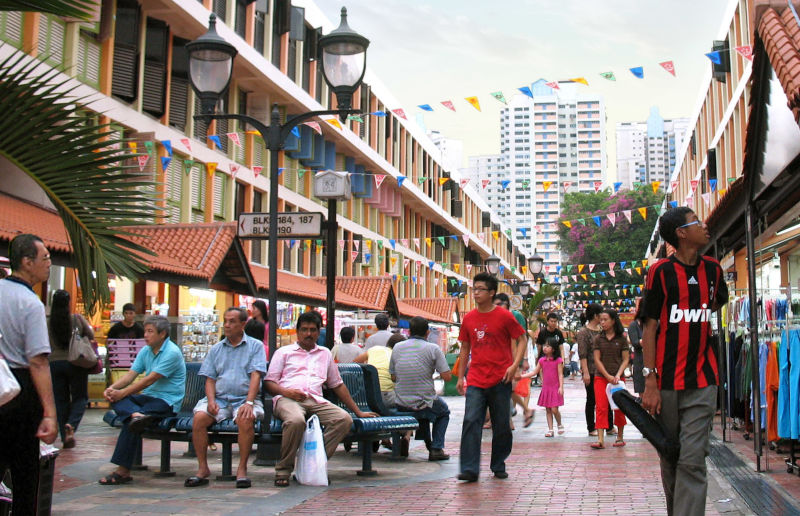
The thematic framework includes public housing, covering key areas of significance like the Toa Payoh town centre shown above, one of the earliest public housing estates in Singapore.
Weng Hin: Buildings for defence, industry and housing make up a large part of Singapore’s building footprint and stock. Given our ongoing climate change challenge, it is timely for us to review such clusters of buildings. While we cannot avoid tearing down and rebuilding, delving deeper into understanding the extent and scale of these building types can guide us in revitalising and renewing our city in a more sustainable manner.
Thematic framework
As part of the Draft Master Plan 2025 Review, beyond the conservation of individual buildings, URA planners and architects are delving deeper to develop a thematic framework to map and assess sites of heritage significance across time periods from 1800s till today, covering four key themes - economy (e.g. industry, infrastructure & utility), defence, housing (government staff housing and public housing) and social (e.g. healthcare, schools). This will provide a more robust lens in evaluating and assessing historical sites and buildings in light of important broader narratives shaping Singapore’s development over the years.
Engagement sessions were held from April to November 2024 with the Heritage & Identity Partnership, developers, building owners, heritage interest groups and others to contribute to the themes and narratives being developed.
Why is it important to develop the larger narratives that contribute to Singapore’s development? What is the role of storytelling?
Weng Hin: The narratives and stories will help us appreciate that buildings are not just bricks and mortar but are an integral part of our daily lives. For example, given that so many of us live in public housing flats, we are likely to have similar cross-generational experiences of living in public housing estates. Yet people tend to see the HDB (Housing & Development Board) landscape and their own personal living experiences as separate from one another.
This is the same for factories. Reading Loh Kah Seng’s book, “Theatres of Memory: Industrial Heritage of 20th Century Singapore” made me realise how much of our personal lives are intertwined with the creation of our factories. It is in our factories that some of us build our careers and form lifelong friendships especially in the 1960s and 1970s. While our factories may not have groundbreaking designs, they are still an important part of Singapore’s industrial heritage.
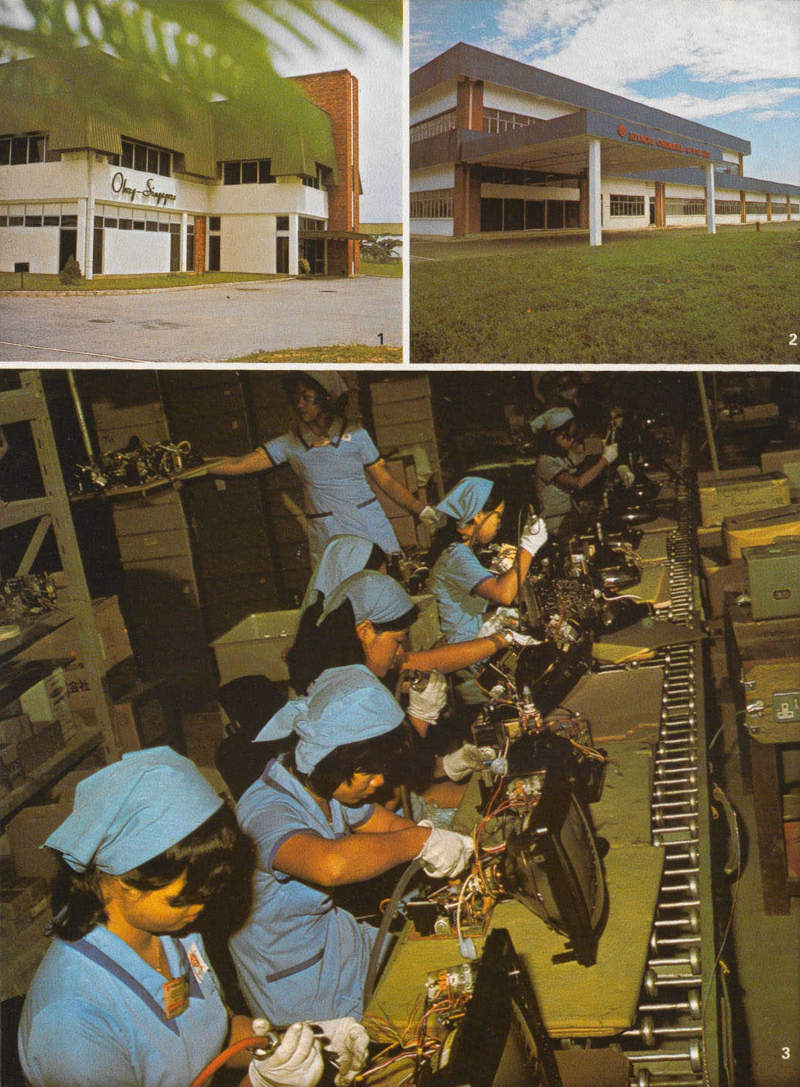
Images from the Housing & Development Board’s Annual Report in 1974, reflecting Singapore’s early factories.
Jerome: Storytelling has the power to connect us to buildings and places more deeply. I grew up being exposed to stories that my father told me. He used to drive me around Singapore and would stop at different places to share about what happened and who was there. This not only sparked my curiosity for places, but the stories also leave a deeper impression on me. This makes me feel more rooted to people and places in Singapore.
How can the community contribute to our public housing narratives?
Weng Hin: They can share their stories and experiences in public housing across generations, from old to new residents, including those who visit the town centres. You will be surprised by what people remember and what matters to them. If we layer people’s social histories with a detailed documentation of our public housing heritage, we will have a richer reservoir of insights.
I am seeing an increasing interest in our public housing heritage amongst our young. Two of my students’ thesis works are on studying how older estates such as Toa Payoh can be developed sustainably and how neighbourhood centres reflect community identities.
On our industrial building heritage, what aspects of it is worth celebrating?
Weng Hin: It is about celebrating the spirit of the time and paying tribute to those who contributed to Singapore’s economy and growth. Some of these earlier jobs were very tedious and challenging but were essential for our early growth. Many of our factories were places where people were trained with highly specialised skills. In fact, Sembawang Shipyard had at one time contributed to almost 20 per cent of jobs in Singapore. It offered very specialised apprenticeship programmes on ship repair and other related fields.
Jerome: Beyond our industrial factories, the parks and gardens and recreational landmarks such as Jurong Bird Park and Jurong Hill Tower also make Jurong more attractive and engaging for workers and families.
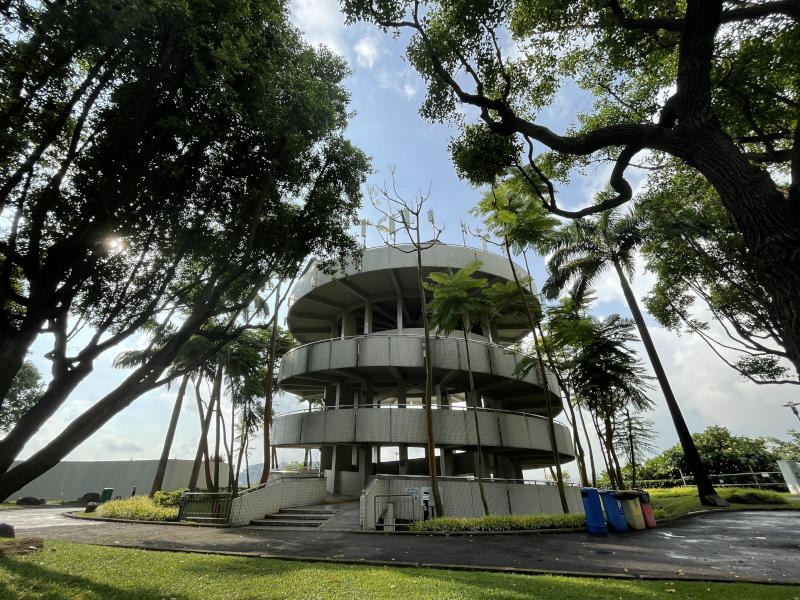
Jurong Hill Tower was built in 1969 by the Jurong Town Corporation. It was a key part of a plan to transform Jurong Hill into a garden for visiting dignitaries and the public to enjoy panoramic views of the developing Jurong Industrial Estate.
Buildings to be conserved
As part of the Draft Master Plan 2025, Jurong Hill Tower together with buildings in four other sites are proposed to be conserved:
The former Royal Malayan Navy (RMN) Admin Block
Former SIT blocks at Dakota Crescent
The Grandstands at Bukit Timah Turf City
Singapore Badminton Stadium
What can our local building owners and developers do to help celebrate and share more about our buildings’ heritage?
Weng Hin: Building owners could consider curating and offering meaningful guided tours for buildings with rich histories. Such tours can be part of the building’s branding and marketing efforts in extending people’s experiences. For example, regular tours could be explored for South Beach Towers’ conserved buildings where the buildings served as the headquarters of the Singapore Volunteer Corps (in the 1930s) and the Singapore Military Forces (from 1954). There is still a tangible link between these conserved buildings to World War veterans. A wreath is placed at the plaque in the former SSVF (Straits Settlement Volunteer Corps) Drill Hall building at South Beach Towers during Remembrance Day every year.
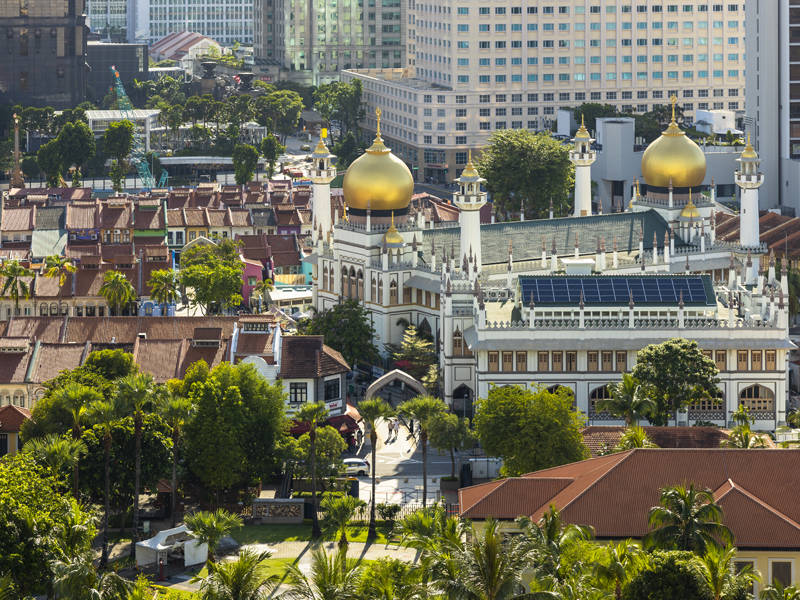
More than just a historic building, the leaders of the Sultan Mosque play an active role in strengthening the community spirit in Kampong Gelam. It has an active outreach programme that regularly shares about the rich heritage of the mosque and the immediate area.
Guided tours could also cover larger areas such as Beach Road, where the history and stories around Raffles Hotel and Kampung Gelam could be shared. This not only deepens our appreciation for our built heritage, but it could also bring more footfall and increased spending in these areas.
Jerome: Beyond putting up storyboards, I think building owners could consider offering something more experiential as part of the storytelling. This will help people to remember more of the stories and insights. For example, the National Gallery conducts regular tours that includes a look at the former Supreme Court’s holding cells while the tour of the Victoria Theatre & Victoria Concert Hall allows you to get up close to its Clock Tower to learn its inner workings. I also contributed to the self-guided audio tours at Dempsey on the cinewav app that help to bring the area’s heritage to life beyond its dining experiences.
Heritage Interpretation
Building owners and developers together with local stakeholders have been exploring ways to share more about Singapore’s built heritage through various heritage interpretation options. Heritage interpretation reflects ways for building owners, developers and stakeholders to share the historical, architectural, cultural and social meanings and heritage values of buildings and sites in actively sustaining interest and engage communities on Singapore’s built heritage. These could be through putting up heritage storyboards, organising relevant talks, publishing books, heritage multimedia contents etc. Check out the heritage interpretation efforts of 16 buildings in Singapore here.