
20 Under 45: Fourth Edition
Beyond buildings: How a 360 approach is transforming architecture’s impact on society
22 January 2026
This article has been migrated from an earlier version of the site and may display formatting inconsistencies.
Ong Tze Boon and Fu Zhuo Joe of ONG&ONG reflect on how architects can make a bigger impact on the world and people’s lives. Both are recognised in the third and fourth editions of the ‘20 Under 45’ programme, which celebrates exceptional Singapore architects.
What were your first encounters with one another?
Joe: My first encounter with Tze Boon was when I was an intern and he was giving a speech as the Chairman. I was struck by how thoughtful and inspiring he was yet very grounded. He had a way of making big ideas easy to understand and relatable.
Tze Boon: I recall meeting Joe at one of the regular orientation meetings for new joiners. Beyond the essential skills and knowledge that one should have as an architect, Joe has a certain X factor, a sense of confidence and charisma.
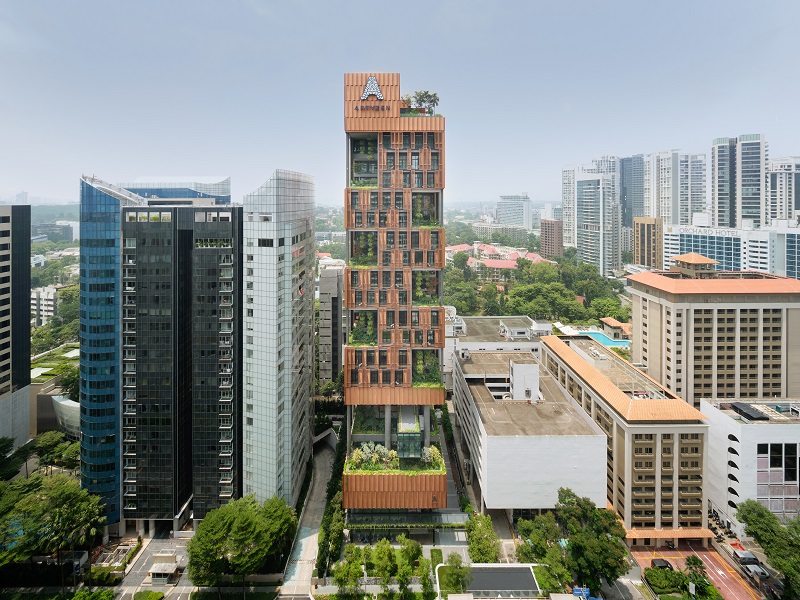
Artyzen Singapore. Image: ONG&ONG.
What are some important values shaping the culture within your firm?
Tze Boon: It depends on what kind of culture you are referring to. There is a difference between design and working cultures. In terms of design culture, where the emphasis is on innovation and creating good architecture, that is a given.
But in terms of working culture, it is about creating an environment where people thrive and grow long-term. It's not about everyone following one signature style. I want people to find their own identity and feel supported by the firm.
Joe: Two things define our culture: trust and adaptability. Trust allows people to take ownership, make decisions, experiment, and find their own solutions. This builds confidence and resilience. Adaptability means adjusting to different clients, projects, and contexts — understanding what each situation requires.
Tze Boon, what is unique about the firm is your earlier decision to build a 360 multidisciplinary practice. What inspired you to do so?
Tze Boon: Twenty years ago, I realised that just focusing on providing architectural services was not enough. We were pioneers in a way when we decided to build a 360 integrated service model that covers architecture, interior, landscaping, lighting and engineering, which includes mechanical and electrical, and even branding.
Beyond the architectural practice, the firm is also exploring new ideas and innovations to make a difference in the world.
Tze Boon: Because of the 360 integrated services we have in-house, we are in a unique position to be able to dream of new ideas and solutions to tackle larger global challenges. The small ecosystem we have within the firm allows us to do everything, from prototyping to implementing our designs.
In addition to the buildings we have designed, we wanted to make an impact on people's lives. Thus, we developed Cotel, a container housing module for off-grid environments, which can manage electricity, water and waste independently. Beyond just design, this required mechanical and electrical engineering expertise. Once we were able to address the engineering aspects, we realised that such housing need not be in just one form — it could be a cave, or even a bamboo house.
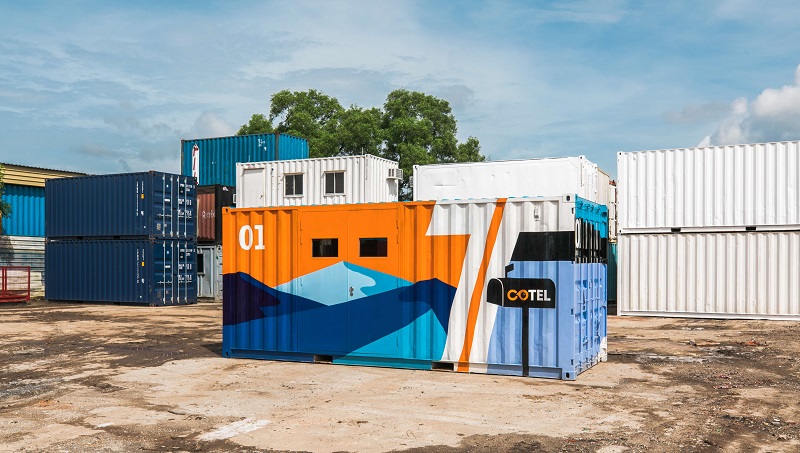
Cotel by ONG&ONG. Image: ONG&ONG.
In addition, we developed GoFlow, a lightweight water filter based on rotational motion, bringing clean water to rural areas, and Charge+, a smart alternating current EV charger that champions clean mobility. Such innovations are funded by the Ong Foundation that we set up in 2012. When you combine these different disciplines, you are no longer working in silos. We are showing that as architects, we can do so much more to effect change in the world.
The firm is also effecting change through your adaptive reuse projects.
Joe: We've worked on various major conservation projects, including St. Joseph church, and we’re currently working on the Tanjong Pagar Railway Station. We have also worked on buildings that went through voluntary conservation. Adaptive reuse is increasingly important given our limited resources in ensuring our buildings are sustainable. This also helps to reduce our carbon footprint.
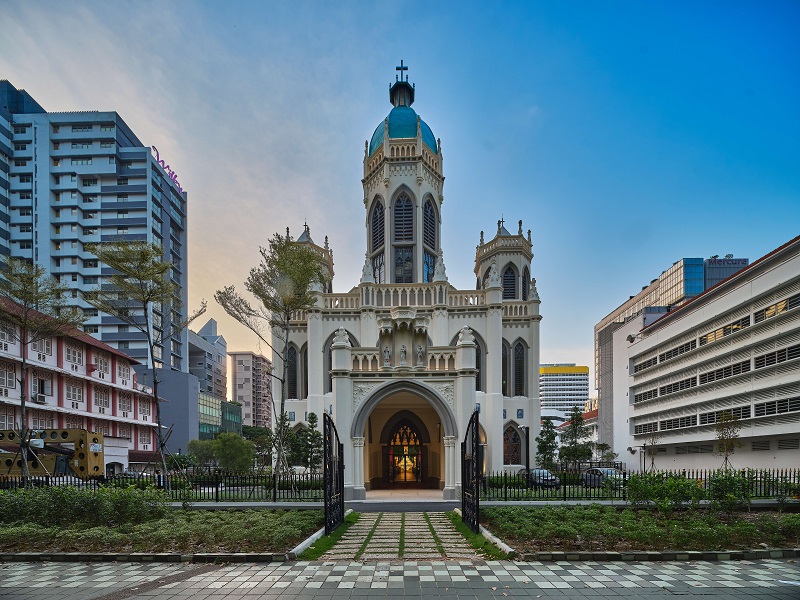
St. Joseph's Church. Image: ONG&ONG.
A key aspect of adaptive reuse is working with different stakeholders like the building owners and authorities to find a common goal of giving buildings new meaning and relevance that can last for a long time. Every building has a story to tell. Whether through the building interiors, walls and other interpretative elements, we need to learn how to tell better stories about our buildings.
We need to take the time to uncover the layers and details in the buildings we restore and adapt. This was what I discovered while working on a historic building at South Bridge Road, where we found richer layers of original façade covered by newer materials, which offer more interesting stories to share about our buildings.
Tze Boon, you grew the firm from 62 staff to 600 today. What has been your focus in building a sustainable practice?
Tze Boon: In building a practice, you need to be clear about what's your end game and the path that you are choosing. As a second-generation owner, I was very clear from early on that I wanted to build a firm that could carry on my mother's hard work and last beyond my generation.
Thus, the focus has always been to build a great organisation. One that can carry everyone forward, that reflects quality and a certain brand promise that continues to keep finding relevance and meaning in contributing to the larger environment and world around us.
Why should one be an architect today?
Joe: What is most rewarding as an architect is that while we are a small cog in a very big machine, we play very important roles in understanding this machine and connecting different elements to create physical buildings and environments for people. The skill sets we have gained can also be applied to many other different professions, whether it is in being good communicators, finding common ground with different stakeholders, or understanding our world with a different lens.
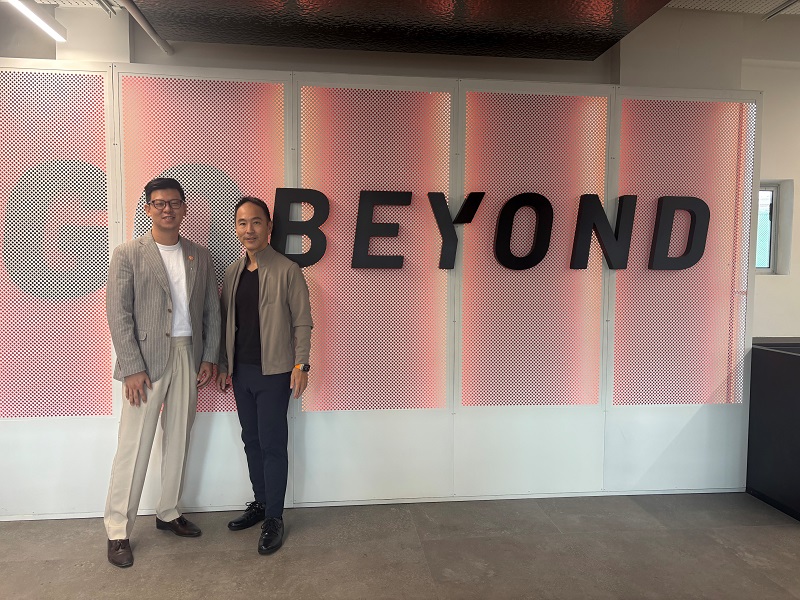
Fu Zhuo Joe (left) and Ong Tze Boon (right).
Tze Boon: Architecture is probably the only profession that requires both halves of your brain working simultaneously—the right brain (aesthetic, visual, emotional) and the left brain (logical, methodical). It combines arts and science in a way no other profession does. This unique combination allows architects to see solutions where others cannot, to visualise things that haven't been built yet, and to balance three sets of requirements: the client's needs, government regulations, and creative visions. As architects, the ability to stand on an empty piece of land and imagine new possibilities and shape our future environments with others in tangible ways is quite powerful.
Table caption
'20 Under 45' architects from ONG&ONG across generations Ar. Ong Tze Boon (‘20 Under 45’ Second Edition) Ar. Fu Zhuo Joe (‘20 Under 45’ Fourth Edition) Year founded Selection of works |
|---|
About the ‘20 Under 45’ programme
First launched in 2004, the ‘20 Under 45’ programme by Urban Redevelopment Authority recognises young emerging Singapore-registered architects for their design excellence, ideas and leadership and the positive impact of their works on the built environment and communities. Across its three previous editions in 2004, 2010 and 2017, the programme has spotlighted 60 architects, many of whom have gone on to deliver impactful works locally and internationally, strengthening Singapore’s architectural standing.
The '20 Under 45': Fourth Edition exhibition will be held at the URA Centre from 23 January to 31 March 2026, with the accompanying publication for sale at all major bookstores. Join the public talks on the architects’ journeys, works and creative solutions in addressing larger urban challenges for the future.