
20 Under 45: Fourth Edition
Architectural education: Why it should be more playful and enjoyable
22 January 2026
This article has been migrated from an earlier version of the site and may display formatting inconsistencies.
From mentors to peers, architects Khoo Peng Beng, Belinda Huang and Tan Cher Ming reflect on their friendship, explore the intangible qualities that make spaces truly liveable, and share why architectural education needs to give students more time and space to play and have fun. They are recognised in the first and fourth editions of the ‘20 Under 45’ programme, which celebrates exceptional Singapore architects.
Can you tell us about your first encounter with each other? What were your impressions?
Peng Beng and Belinda: We met Cher Ming in 2007 when he joined our practice as his first job after graduating. At that time, our our office was located at Oxley Road in an old terrace house. It was quite an unusual environment. It felt like a home-office.
Cher Ming: I remember reading about Pinnacle@Duxton and was very inspired by their design approach. What struck me the most during my interview with Peng Beng and Belinda was how warm, friendly, and approachable they were.
What was happening at ARC Studio during that period?
Peng Beng and Belinda: We were working to complete the Pinnacle@Duxton, having created the winning design through the international competition in Singapore, which was significant for a young outfit like ours. We wouldn't have had such opportunities otherwise.
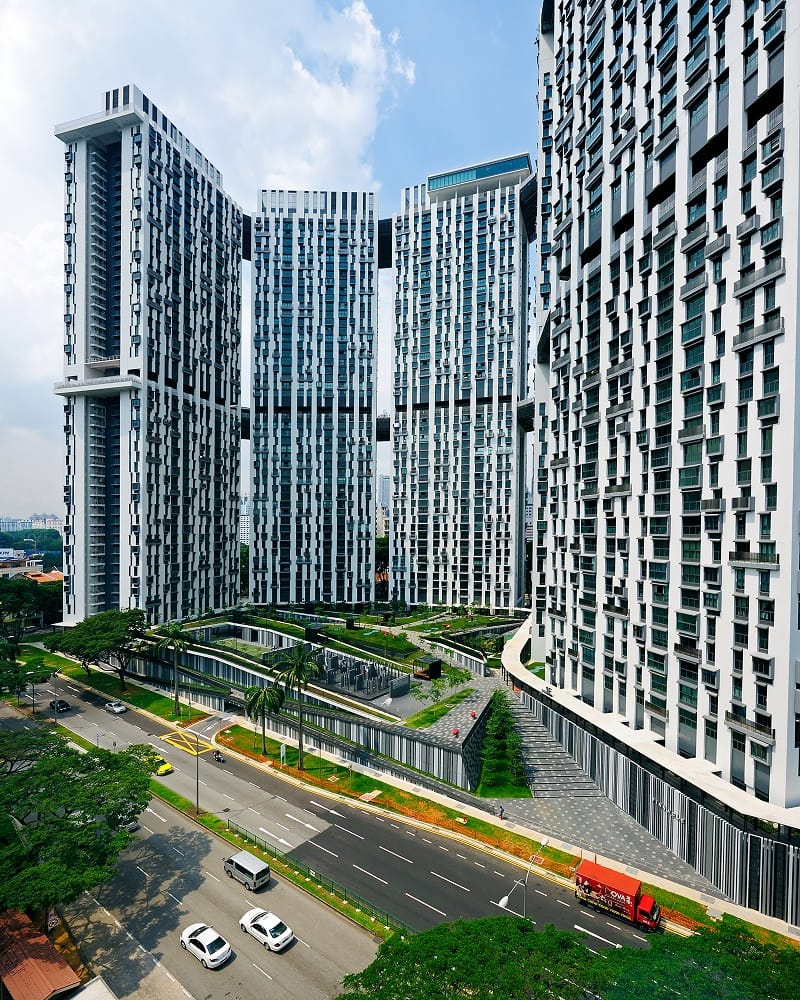
Pinnacle@Duxton. Image: ARC Studio Architecture + Urbanism.
It was a formative period where we were growing the firm. Over the years, we expanded the diversity and scale of our work. We had also been contributing to the architectural community through teaching and mentoring future generations of architects.
Cher Ming, why did you eventually set up your own practice?
Cher Ming: I’ve always knew I wanted to have my own practice. After about three years with my previous firm ARC Studio, which helped to lay a strong foundation for my journey as an architect, I left to set up a firm with a few other partners for about two years before I established my current practice. It has been a tough period but is certainly a great learning experience. It makes me more resilient as an architect.
Peng Beng and Belinda, you continued to keep in touch with Cher Ming over the years.
Belinda: We see everyone who comes through our practice as being on different paths of their journey towards making architecture better. It's like a pilgrimage. People join us at various stages of their development, and when they leave, it's because of where they are in their journey relative to our needs.
We maintain good relationships with those who leave; they continue to call us for advice and mentoring sessions. We feel proud when people grow and develop their own voice.
Having designed many residential homes, what are some major shifts in people’s needs? What are important things to focus?
Cher Ming: The biggest shift I've seen, especially in the post-COVID-19 pandemic, is a greater emphasis on health and wellbeing. More homeowners want to create spaces for relaxation and respite, with views of nature and connection to water.
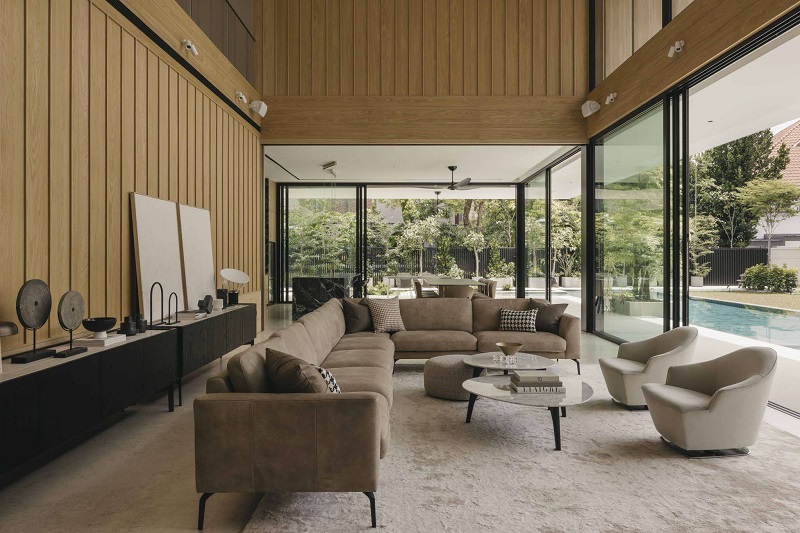
House at Newton. Image: Ming Architects.
There's also a greater desire to be closely connected to the outdoors. In residential homes I design, I try to create closer connections with nature and the outdoors through framed views, gardens, landscaping, and water features. Not just glass boxes, but spaces where you can open doors and windows, where there are sheltered areas to walk and use.
Peng Beng: What we are seeing is an increasing focus on the intangible aspects of architecture beyond lighting, materials, and geometry. For example, how does a space make you feel? How can a space be designed so that you automatically feel calm?
Architecture has this power of creating positive energy and experiences for people. We see the process of creating architecture as a three-way co-creation between the architect, clients and users, where each of us can contribute to the design process and bring positive energy to spaces.
Peng Beng and Belinda, both of you have been teaching and mentoring students over the years. What are some things you would like to see more of in our architectural education?
Peng Beng: Beyond just imparting knowledge, I hope that we can provide more opportunities for students to discover and explore their own path and to find their own identity. Everyone is unique. We need to create ways for people to tap into their own source of wisdom. Often, the thing that prevents people from fulfilling their fullest potential tends to be more emotional than cognitive. Students are afraid to try, to be different, to experiment. We need to give them permission to fail. This is where creativity can flourish.
Belinda: Our education system tends to still focus a lot on grades and academic results. This can make it more challenging, especially for first-year students in architecture, as they need to embrace a different way of learning when studying architecture. In supporting our students on their creative journeys, we need to give them more time and space to play, to ponder, to wander, to have fun.
Why should one be an architect today?
Cher Ming: I enjoy being an architect because of the depth and challenges the profession requires — not only intellectually, but also emotionally in relation to others. I also enjoy the creative freedom during the design process to create powerful spaces that improve the human experience of living in modern day Singapore.
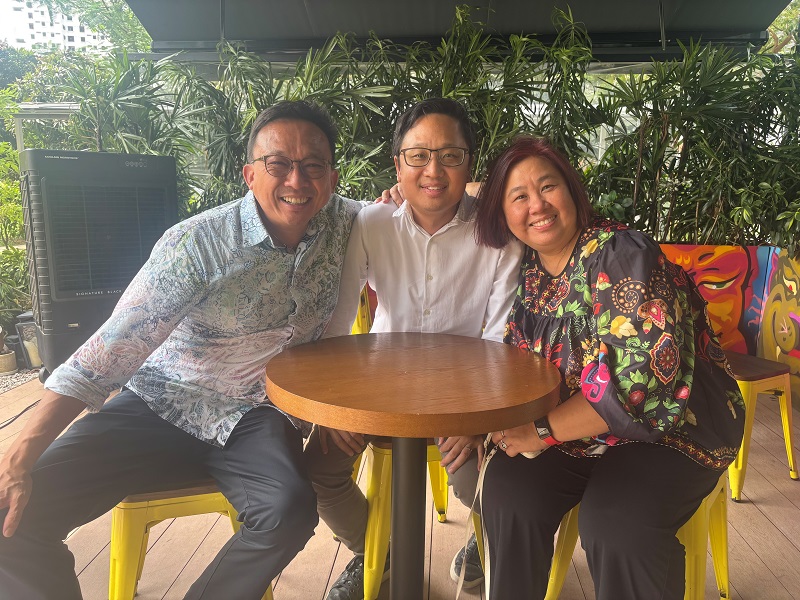
From left, Khoo Peng Beng, Tan Cher Ming and Belinda Huang.
The architect has a meaningful role to play in bringing things together. You're like an orchestra conductor: you need to know the capabilities and limitations of every instrument in your symphony and how to get the project team organised and heading in the same direction, working towards the same goal. You interact with clients, contractors, engineers, suppliers, and your own team. When you complete a project well, from the first concept sketch to the final handover, it’s incredibly rewarding.
Peng Beng: As an architect, you can affect the future. We directly influence how our world is built and materialised. We inspire not with words but with how we put things together. The work we produce affects how memories are formed and becomes a stage for future generations. We are creating buildings and spaces that current and future generations get to enjoy.
Belinda: We've reached an inflection point in our practice. We're no longer simply responding to design briefs — we're shaping the vision itself, bringing psychological and developmental depth to every project we work on.
Our expertise now extends into the "software" of architecture: well-being, mental health, and developmental science. In a single home, we might position a child's bedroom near communal spaces rather than in isolation, fostering family connection through thoughtful adjacency. In larger developments, we weave values like loving kindness, ambition, joy, and community into the very fabric of our buildings. We're designing not just spaces, but the conditions for human flourishing.
Table caption
‘20 Under 45’ architects across generations Khoo Peng Beng (‘20 Under 45’ First Edition) Belinda Huang (‘20 Under 45’ First Edition) Tan Cher Ming (‘20 Under 45’ Fourth Edition) Year ARC Studio was founded Year Ming Architects was founded ARC Studio selection Pinnacle@Duxton, The Tembusu, 1000 Singapores exhibition, An-Nur Mosque, Tampines West Community Centre, Chestnut Drive |
|---|
About the ‘20 Under 45’ programme
First launched in 2004, the ‘20 Under 45’ programme by Urban Redevelopment Authority recognises young emerging Singapore-registered architects for their design excellence, ideas and leadership and the positive impact of their works on the built environment and communities. Across its three previous editions in 2004, 2010 and 2017, the programme has spotlighted 60 architects, many of whom have gone on to deliver impactful works locally and internationally, strengthening Singapore’s architectural standing.
The '20 Under 45': Fourth Edition exhibition is at the URA Centre from 23 January to 31 March 2026, with the accompanying publication for sale at all major bookstores soon. Join the public talks on the architects’ journeys, works and creative solutions in addressing larger urban challenges for the future.