Attractive Job Nodes
Learn how future job nodes will bring workplaces closer to homes, with mixed-use spaces and flexible work options to support businesses and communities.
Last updated on 25 May 2026
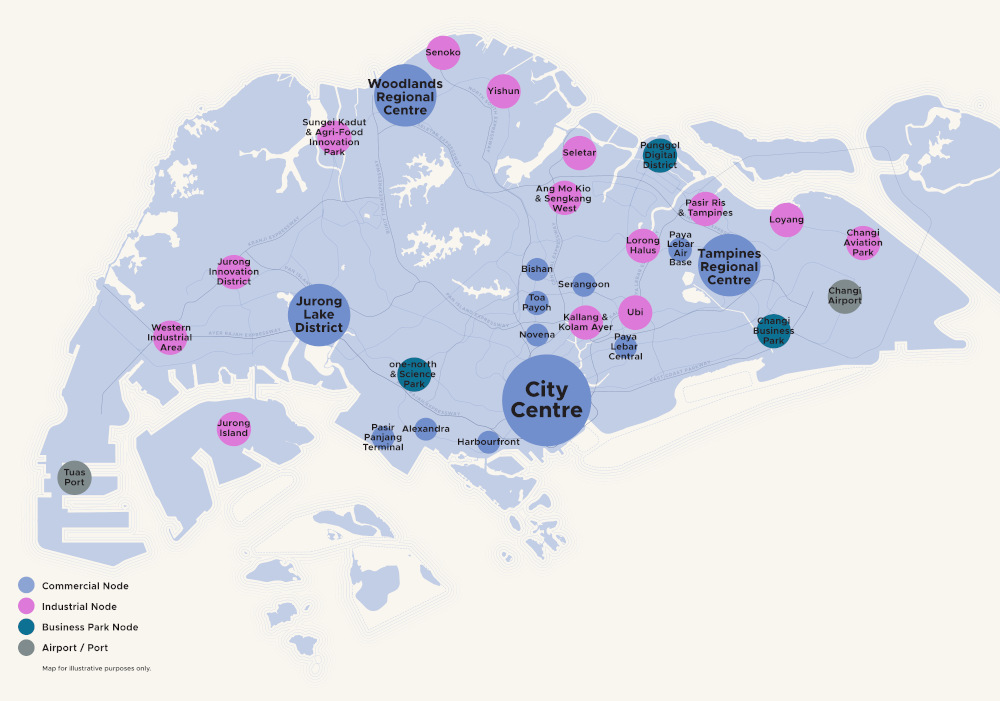
To sustain Singapore’s economy and ensure a diversity of job opportunities, workplaces, and environments for all, we will continue to strengthen the variety of commercial, business park and industrial nodes as part of our polycentric approach for workplaces to be closer to homes.
How will the rise in flexible work arrangements change where we work?
Our survey on lifestyle preferences in Singapore found that:
38% would like a flexible work arrangement for more than half the time
53% prefer to work close to homes (e.g. within two MRT stations)
12% prefer to work in the City Centre
As flexible work arrangements become more popular, alternative types of workspaces are being explored, such as community co-working spaces and work booths in community centres. As new work preferences and needs emerge, our planning for workspaces remains flexible to cater for new possibilities.
Injecting more mixed uses
Job nodes will continue to be designed with people in mind, becoming more mixed-use to provide a range of job options and amenities to support businesses and the community.
Enhancing the City Centre
In a post-pandemic world, our City Centre will continue to remain vital to anchor Singapore as an international business and financial hub. It is undergoing transformation to become a vibrant place for work, live and play.
More mixed-use developments
We will continue injecting more mixed uses and housing to create lived-in neighbourhoods. A good variety of amenities and uses will be provided to create inclusive, family-friendly neighbourhoods.
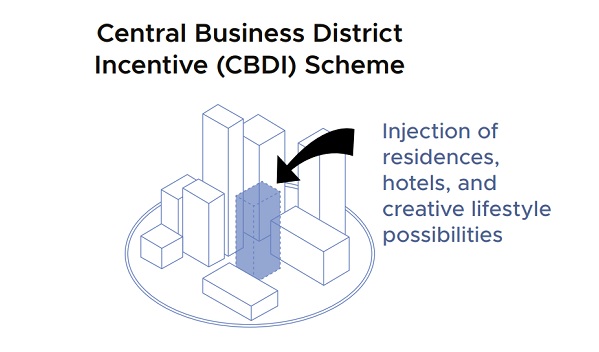
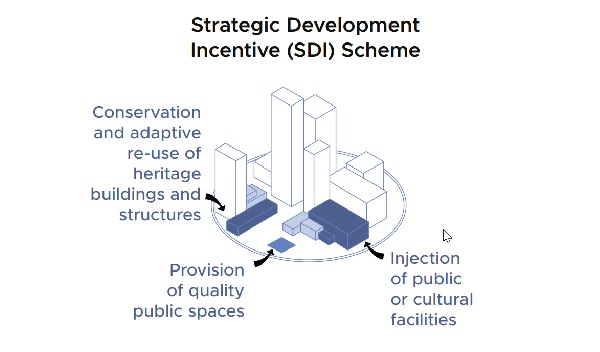
Development incentives are in place to encourage existing, older office developments to transform into mixed-use projects that are bold and innovative.
More public destinations and spaces for the community
We will have welcoming public destinations and spaces that are open to all. People who live or work in the city, or who are just visiting, can make use of these spaces to interact or enjoy the city.
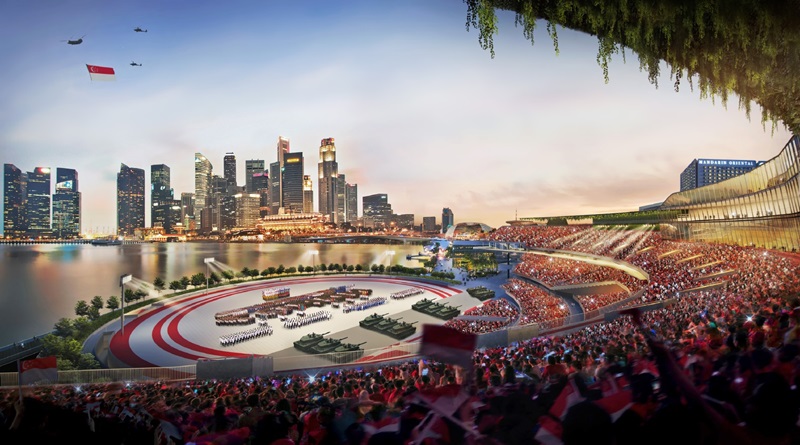
© MINDEF and MND
Anticipating new economic trends and work practices
We will have to consider how the distribution and configuration of workspaces could evolve to support the needs of businesses and workers.
Redistributed arrangement
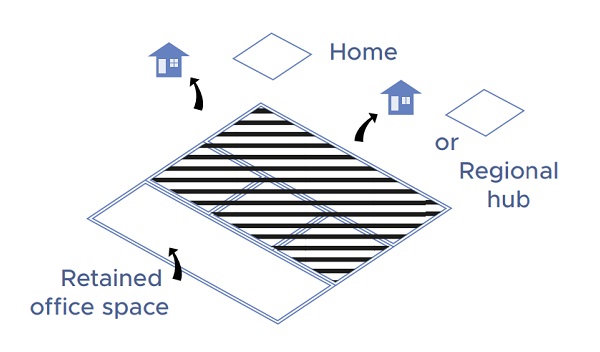
Headquarters in the City Centre would be mainly for in-person meeting and collaboration. It would be supported by distributed offices in polycentres or workspaces near homes, where day-to-day work will be carried out.
Sharing of spaces
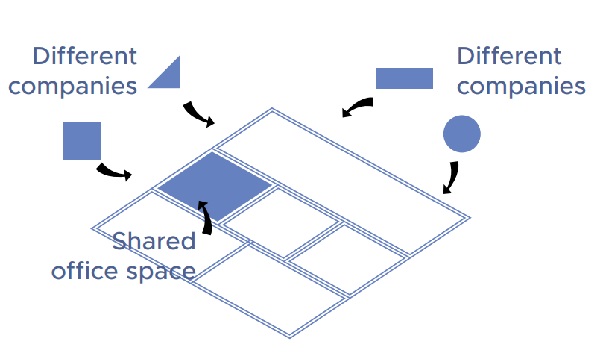
Sharing of facilities and workspaces by different companies will enable more efficient use of space in the City Centre. This also increases opportunities for cross sector collaboration and interaction.
Reimagining industrial estates
Our industrial areas—both upcoming and existing ones—will continue to support new economic needs while accommodating a greater diversity of uses. JTC has been collaborating with the private sector to envision what renewed industrial estates such as Kallang, Kolam Ayer and Yishun could look like in the future.
Supporting a varied economic ecosystem
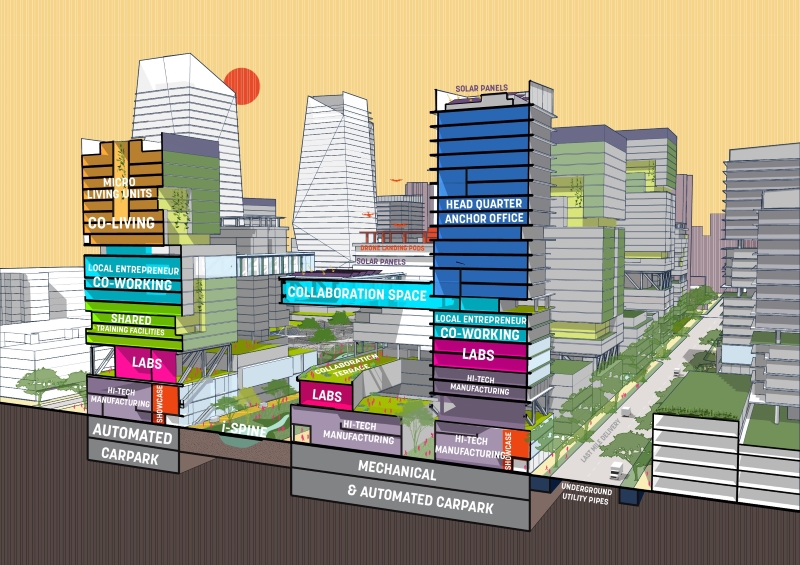
© Sasaki Associates
New types of buildings and spaces can enhance our workspace. For instance, in future, a building can be designed with clean manufacturing on the lower levels and co-working spaces on the mid-floors, which create a buffer for residences on the upper levels.
This “vertical zoning” concept can enable integration of many activities in a single development and save land.
Opening spaces for live and play
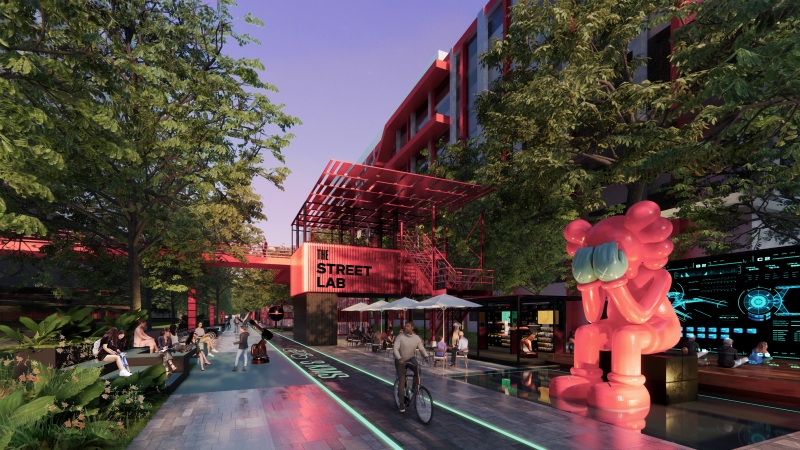
Design Alley @ Kolam Ayer © Broadway Malyan
Our industrial estates can become more vibrant with live and play options. The ground level of the estate can be accessible to the public with amenities or even maker spaces, showrooms and production facilities that open to the street to showcase their products and technology.
Co-living spaces such as studio lofts above industrial blocks can provide homes for workers in the estate. Community events will create a greater sense of belonging for workers, residents and businesses too.
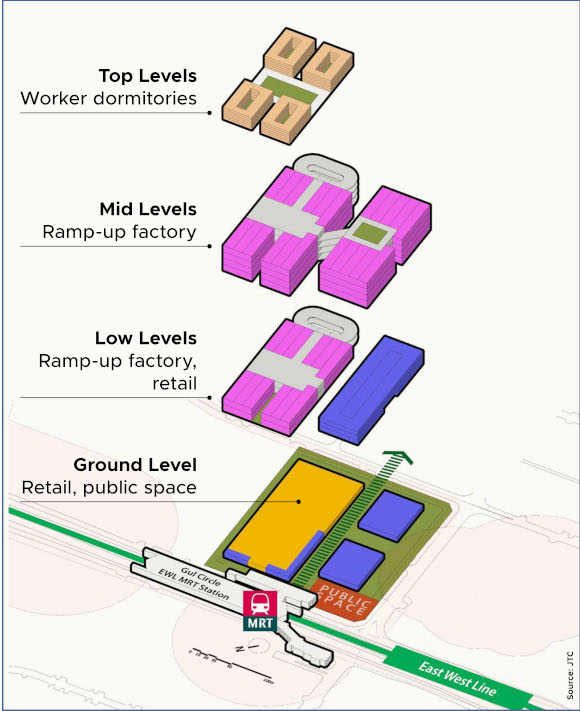
© JTC
While the Western Industrial Area will continue to house mostly industrial activities, we are exploring ways to introduce more amenities for those who live and work in the area, as well as different businesses around its MRT stations.
Weaving in nature and recreation
More greenery and leisure options can enhance the health and wellness of workers. More trees and plants will improve the ambient temperature and air quality, while a connection to recreational corridors and cycling paths makes the estate more accessible and attractive. Building designs can also foster more collaboration and have greater focus on health and wellness.
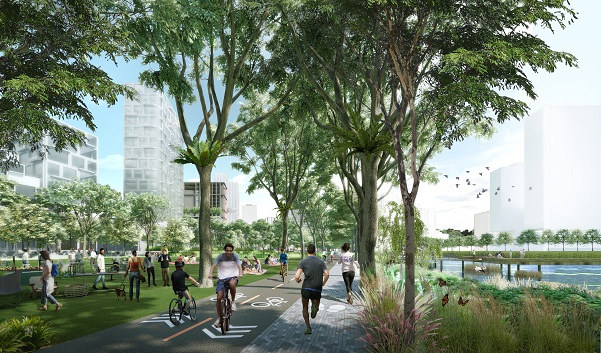
Kallang River Park © Broadway Malyan
We can leverage some industrial estates’ locations along the waterfront, to offer a range of leisure activities and create vibrant public spaces when they are revamped, such as in Kallang and Kolam Ayer Industrial Estates.
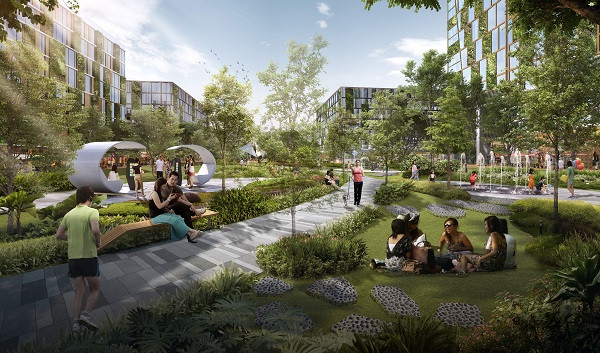
Bulim Green © JTC
There are also ongoing efforts to plant more trees in industrial areas.
Developing bustling ecosystems
Businesses, research and other related activities and infrastructure can be linked for greater synergies.
City Centre
Our City Centre will continue to remain vital to anchor Singapore as an international business and financial hub.
Western Region
Tuas Port, Jurong Lake District and Jurong Innovation District will complement the existing industrial uses and turn the West into a stronger engine of growth.
Changi Region
Anchored by Changi Airport, the region will become a thriving business hub that supports our global trade flows.
Northern Gateway
New lifestyle and employment hubs will support sectors such as agri-tech, digital technology and cybersecurity, with seamless connectivity via Woodlands to the rest of Singapore and Johor Bahru.