
Multi-Functional Green and Blue Spaces
Our green and blue spaces can serve a variety of uses through creative design, integration with the urban environment and shaping them with the community.
Last updated on 22 June 2026
This will optimise land use while enhancing ecological connectivity and liveability as well as meet social and recreational needs.
Green and blue spaces for nature and play
The green and blue spaces that house Singapore's natural habitats also support our recreational needs.
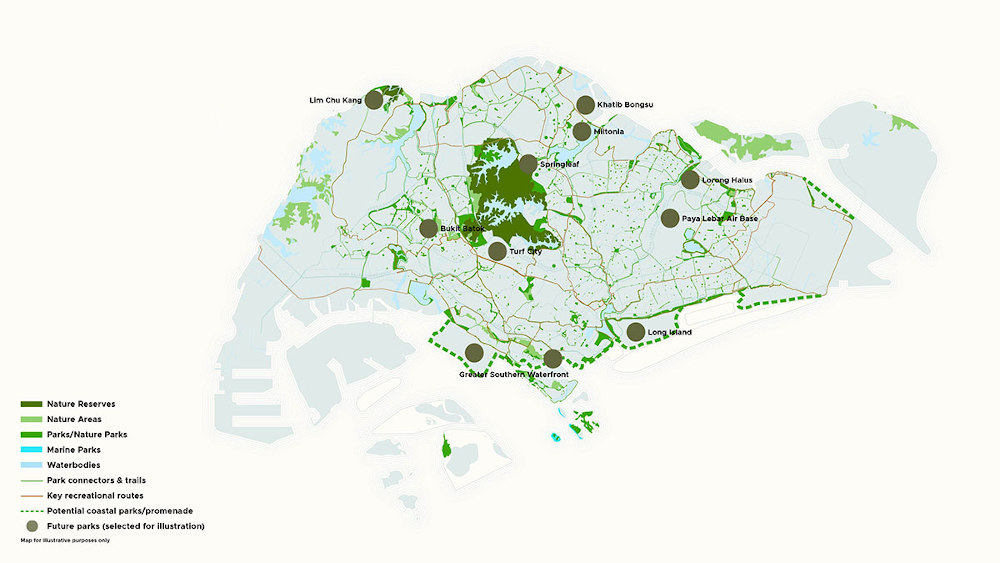
We will protect our core ecological areas by developing buffer parks and gardens around them for the public to enjoy for as long as possible. More naturalistic landscapes to attract biodiversity and enhance ecological connections will also be introduced through processes such as rewilding. We will continue to partner the community (opens in new tab) in the design.
Nature parks
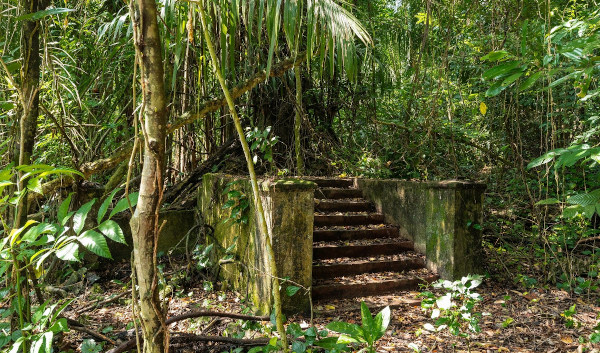
Thomson Nature Park © NParks
These green spaces support our Nature Reserves while offering spaces for recreation. Where feasible, they will be linked with the Nature Corridors identified through the Ecological Profiling Exercise.
Thomson Nature Park is one such example, as a buffer park to the Central Catchment Nature Reserve. It is unique for its rich cultural heritage as the site of a former Hainan village.
Parks
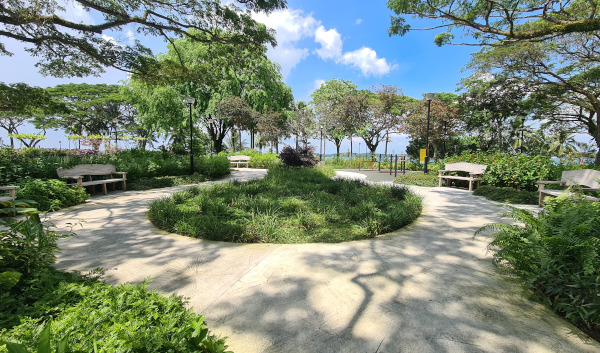
Pasir Ris Park © NParks
Such inclusive, communal spaces provide residents and communities many recreational opportunities. To meet the diverse lifestyle needs and aspirations of Singaporeans, we will plan for parks amidst new developments to ensure residents have access to green spaces. By 2030, we aim to have all households within a 10-minute walk from a park.
For example, the therapeutic garden at Pasir Ris Park offers a sea view, a fitness area that incorporates play elements and a swale that functions as a naturalized drain.
Park connectors and recreational routes
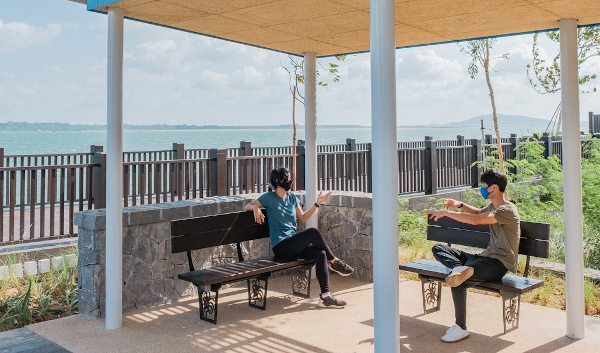
Round Island Route© NParks
They form an integrated network that connects communities and helps our small island city-state seem many times larger to explore. By 2030, we plan to create a total of 500km of park connectors.
An example is the Round Island Route, a continuous 150km park connector that goes around Singapore.
Our green and blue spaces will also be better integrated to provide leisure spaces for use during dry weather while managing stormwater during wet weather.
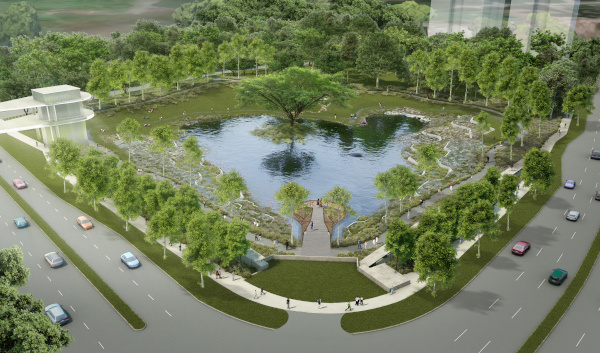
Alkaff Lake @Bidadari Park © HDB
This waterbody will be integrated within the new Bidadari Park to serve as a stormwater retention pond to slow down and reduce stormwater runoff into the drainage system during a heavy storm, thus reducing flood risks.
It is also designed with terrace wetlands and a cascading creek to help channel and cleanse stormwater run-off from the park before it discharges into Alkaff Lake. During dry weather, the banks of the lake and viewing decks will be a communal space for the public.
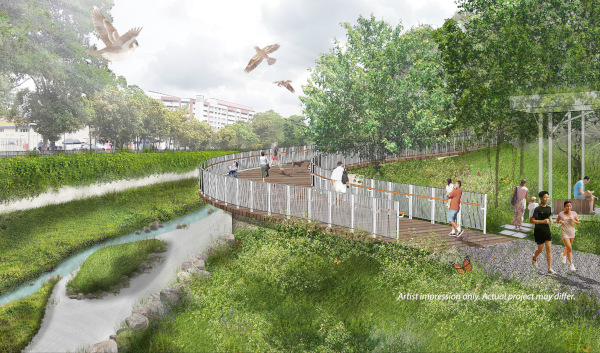
Sungei Tampines @Tampines Eco Green © PUB
This project demonstrates how a utilitarian canal is being integrated with the surrounding landscape to create multi-functional blue-green spaces for the public to enjoy.
Besides widening and deepening of the canal to serve the new HDB residential estates, the design for Sungei Tampines incorporates a naturalised bank on one side to seamlessly integrate with the adjacent Tampines Eco Green to create additional communal and recreational spaces and enhance the overall liveability of the environment.
Restoring nature into the urban landscape
Adding greenery to our urban structures and settings, we create mini habitats for wildlife that serve as connections between key habitats while enhancing the living environment.
As we review the current Landscaping for Urban Spaces and High-Rises (LUSH) scheme in partnership with our stakeholders – industry, nature groups, academics and relevant agencies – we are exploring introducing guidelines for ecologically-sensitive development that can enhance ecological connectivity between key habitats with urban greenery.
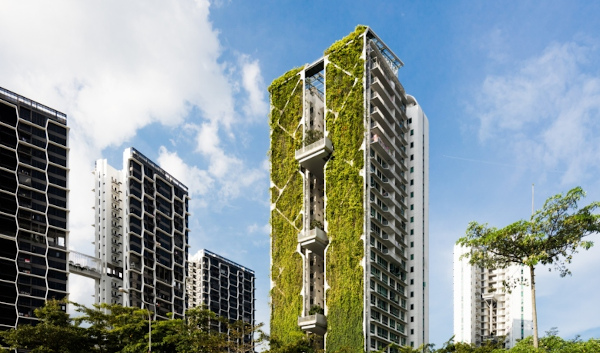
Tree House Condominium © ADDP Architects
The residential development’s 24-storey-high green wall holds the Guinness World Record as the largest one in the world. It acts as a bio-shield on the west-facing end of the building, harnessing the sun for vegetation growth and blocking solar radiation heating.
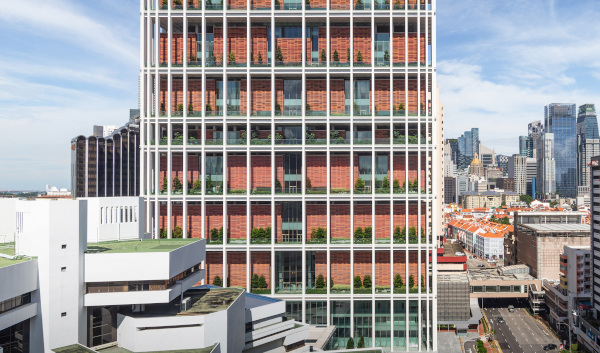
State Court Towers © Finbarr Fallon
There are no glazed facades around the court tower. Instead, the courtrooms face an open setting surrounded by lush greenery in the sky. Visitors can enjoy the calming greenery in the sky terraces and gardens en route to the courtrooms.
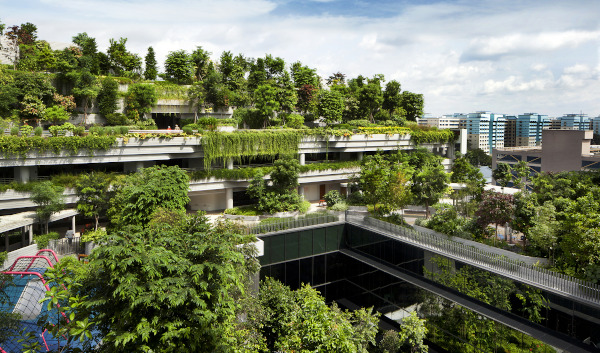
Kampung Admiralty © WOHA Architects
A series of terraced gardens stretches from the third to ninth storey, acting as a communal green space for this ‘vertical kampung’. This development also integrates green and blue infrastructure, interweaving its lush landscaping with a water collection and filtration system, rain garden and eco-pond.
Springleaf: building homes for people and nature
The upcoming estate balances development with nature conservation using an approach that is sensitive to biodiversity.
Singapore’s last primary freshwater swamp forest, the Springleaf Forest, is home to a variety of native flora and fauna, and is a critical area along the Ecological Corridor. In the Master Plan 2019, part of the land around Sungei Seletar was safeguarded as a green space.
To balance development needs with nature conservation in Springleaf, we undertook the following:
Understanding the site
An environmental baseline study was conducted in 2018 to better understand the ecological context of Springleaf district. It uncovered the rich biodiversity and variety of landscapes within the area.
Engaging stakeholders
Industry experts, academics and nature and heritage groups were consulted early in the planning phase.
Exploring new approaches
A multi-disciplinary team, including ecologists and landscape architects, was engaged to explore ways to develop sensitively. These ideas were then reviewed via an Environmental Impact Assessment in 2020 to understand their potential consequences and how development should proceed. Find out more about these ideas and their potential environmental impacts [PDF, 2.17 MB] (opens in new tab).
In response to findings from the baseline study, a larger green area in the Springleaf district will be safeguarded than originally planned for. This will protect its rich biodiversity and strengthen the ecological connectivity along the Khatib Nature Corridor.
The new mixed-use development will also be built to take into account its heritage and natural environment.
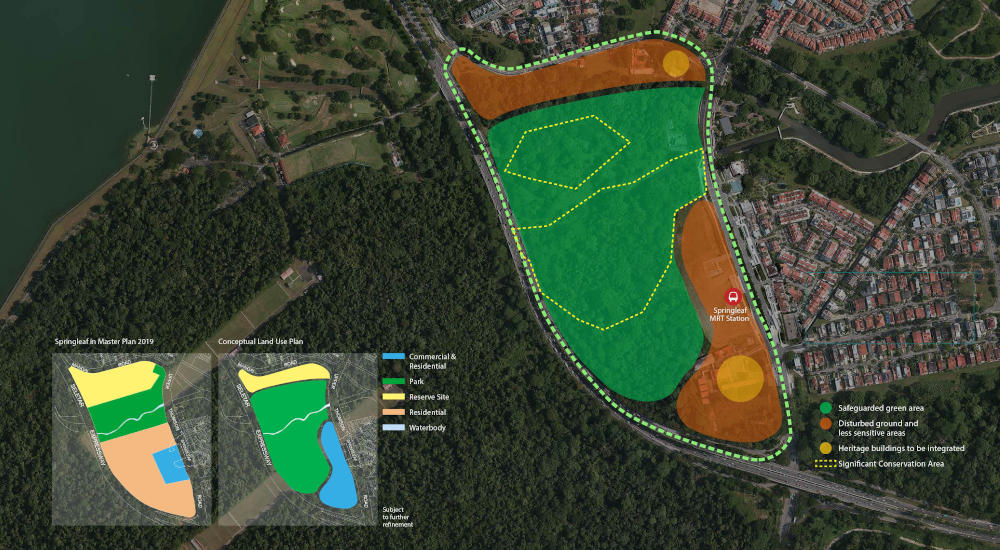
Introducing more nature-based recreation
The retained areas will be turned into the upcoming Nee Soon Nature Park to offer the public access to more nature-based recreation.
Retaining natural assets
Significant Conservation Areas and their immediate surroundings will be kept to protect sensitive habitats. In addition, new habitats will be created and ecological connectivity between existing habitats will be enhanced through targeted tree planting.
Conserving heritage
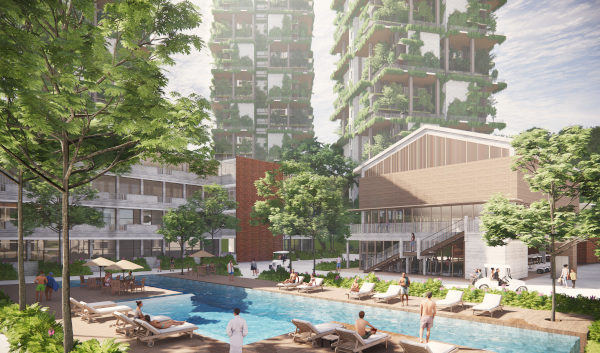
© MKPL Architects
Heritage landmarks such as the former Seletar Institute and Nee Soon Post Office will be conserved and integrated into future developments.
Developing with sensitivity
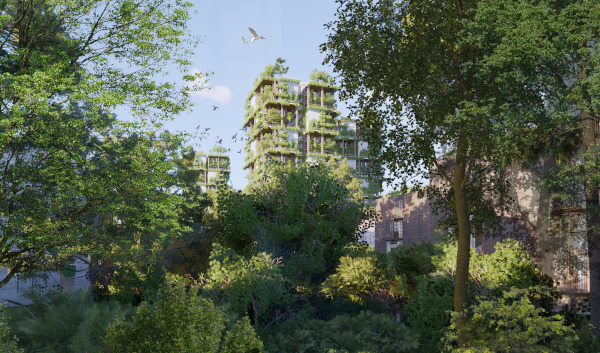
© MKPL Architects
The upcoming buildings and developments will be on disturbed grounds and less sensitive areas. Development will also be carried out in phases to maintain ecological resilience and capitalise on new MRT infrastructure.
Conserving biodiversity by design
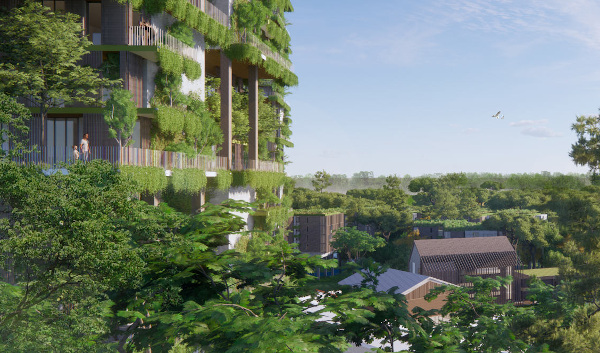
© MKPL Architects
Buildings in the upcoming development will have small footprints to minimise habitat loss, and come with greener facades to minimise bird strikes. There will be pedestrian-friendly developments with green public spaces too. Finally, waterways and drainage infrastructure will integrate features from the Active, Beautiful, Clean Waters (ABC Waters) Programme to maintain hydrological integrity.