
Parking
Check the guidelines relating to parking for educational institutions.
Last updated on 23 June 2026
LTA prescribes the parking provision standards and requirements for motor vehicles and bicycles. The requirements are usually based on the quantum of the gross floor area or the number of units of the development uses.
Separately, to enhance commuter experience and reduce congestion at Pick-up and Drop-off Points (PUDOs), LTA and URA collaborated with the industry to develop a design guide for PUDOs [PDF, 4.8 MB] (opens in new tab) containing best practices that building owners and professionals can consider applying to new and existing PUDOs.
Car and Motor-Cycle Parking
Under LTA’s Range-based Parking Provision Standards (RPPS), developments are subject to car and motor-cycle1 parking provision requirements.
Unless explicitly approved as private parking lots in the approved plans, all car and motor-cycle parking lots shall be treated as common property.
1 Motor-cycle parking provision is mandatory in all non-residential developments.
Range-based Parking Provision Standards (RPPS)
The RPPS allows developments to provide any level of car and motor-cycle parking provision within a specified range, defined by a lower bound and an upper bound – see figure below. The range varies according to location zones and land uses. Details may be found in LTA’s Code of Practice for Vehicle Parking Provision in Developments [PDF, 4.5 MB] (opens in new tab).
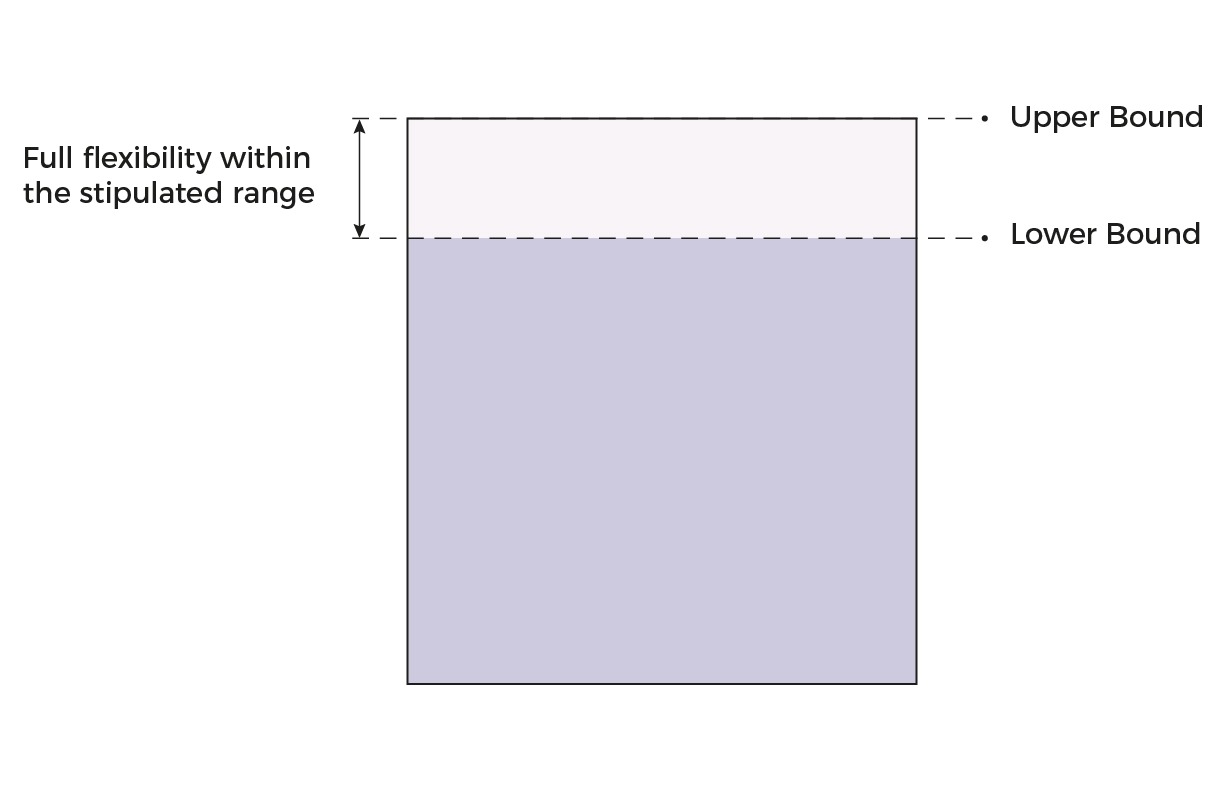
Range-based Parking Provision Standards
New EI developments shall be subject to a process of waiver evaluation by LTA, if one wishes to provide surplus car and motor-cycle parking lots, ie parking provision above the upper bound based on the new RPPS.