Circulars
Revisions to Gross Floor Area (GFA) exemptions for roof eaves, sun-shading devices and covered linkways
26 November 2026
Tags
Development Control
Circular No: URA/PB/2026/12-DCG
Our Ref: DC/ADMIN/CIRCULAR/PB_26
CIRCULAR TO PROFESSIONAL INSTITUTES
Who should know
Architects, Building Owners, Developers, Engineers
Effective date
With immediate effect
REVISIONS TO GROSS FLOOR AREA (GFA) EXEMPTIONS FOR ROOF EAVES, SUN-SHADING DEVICES, AND COVERED LINKWAYS
This circular informs the industry of revisions to GFA exemptions for:
Roof eaves and sun-shading devices; and
Covered linkways.
These initiatives are part of the Government’s wider efforts, led by the Inter-Ministerial Committee on Pro-Enterprise Rules Review, to review regulations and reduce compliance burden for businesses.
BackgroundAll covered areas currently count towards a development’s GFA, unless otherwise exempted. URA already grants GFA exemptions for building elements that support shade, shelter and pedestrian connectivity, including roof eaves, sun-shading devices and covered linkways. With climate change expected to bring about hotter temperatures and more intense rainfall events, URA has reviewed these provisions to better support all-weather movement within and between developments.
Revised GFA Exemption for Roof Eaves and Sun-Shading DevicesCurrently, the area covered by roof eaves and sun-shading devices below the sixth storey may be exempted from GFA up to a maximum depth of 2m.
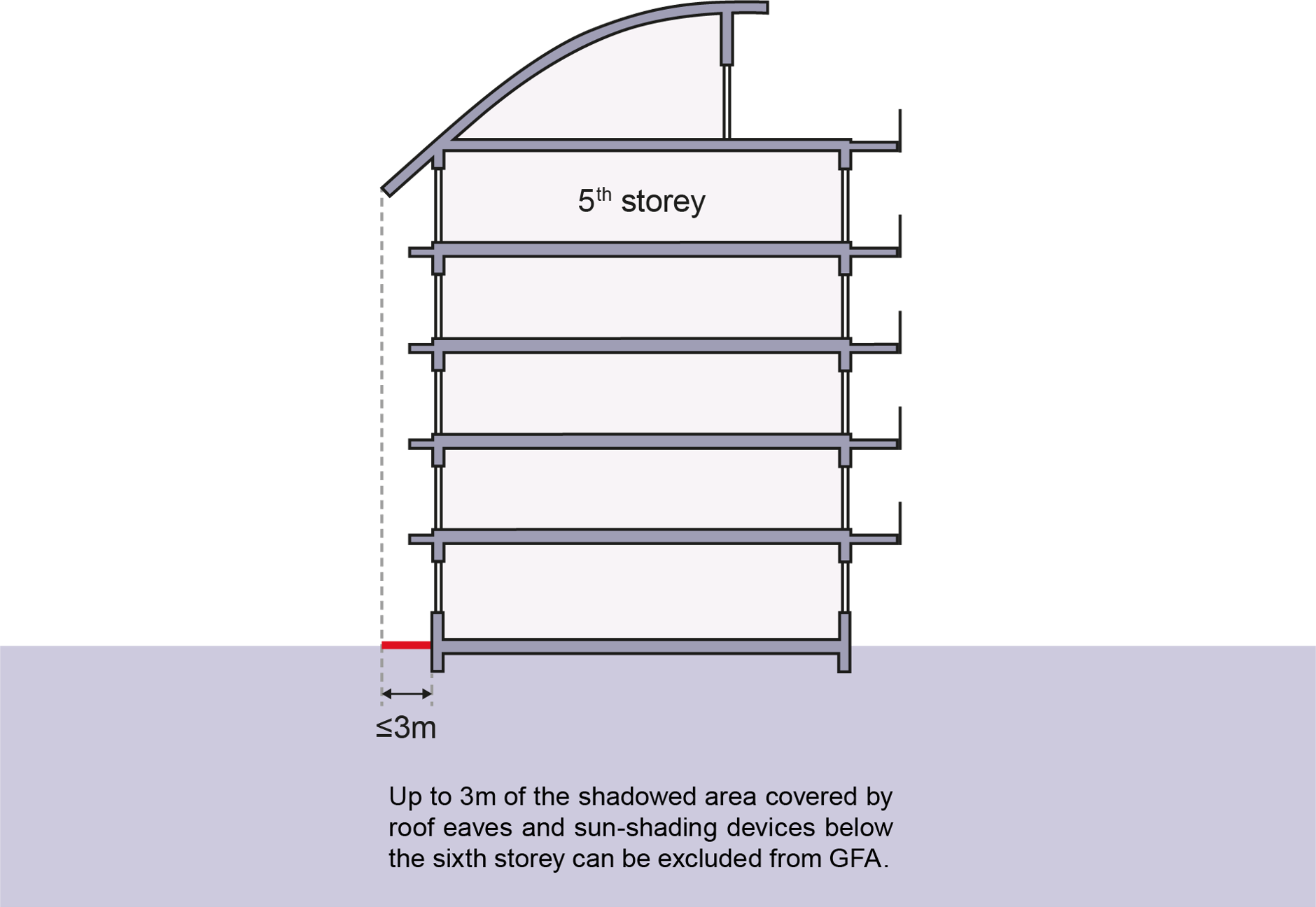
With immediate effect, the maximum depth of such covered areas below roof eaves and sun-shading devices will be increased to 3m (refer to illustration in Annex). The relaxation is intended to facilitate more effective shade and rain protection. The GFA exemption of up to 3m for areas covered by roof eaves and sun-shading devices located below the sixth storey is subject to the prevailing requirements:
The roof eaves and sun-shading devices are column-free with no vertical supports;
The roof eaves and sun-shading devices are not accessible except for maintenance purposes only; and
The roof eaves and sun-shading devices are to comply with prevailing building setback requirements and green buffer/planting verge requirements.
Vertical drop panels or rain screens may be installed at the outer edge of the roof eaves or sun-shading devices to improve protection from wind-driven rain, provided they do not compromise the open-sided nature of the sheltered space.
URA’s planning permission is generally not required to add roof eaves or sun-shading devices to existing buildings, where works fulfill the requirements in para 5.
Proposals involving conserved buildings will continue to require URA’s planning permission.
Revised GFA Exemption for Covered LinkwaysCovered linkways are standalone open-sided shelters that provide covered connections between buildings. Currently, covered linkways qualify for GFA exemption if they are open sided, connect one building to another without forming part of the main building, and are incorporated as part of a landscaped area.
With immediate effect, covered linkways will be exempted from GFA computation even if they are not incorporated as part of a landscaped area. However, developments will still need to comply with relevant greenery requirements (e.g. provision of landscape replacement areas).
Building owners, developers and Qualified Persons should ensure that the proposals applying the revised GFA exemptions comply with all other planning and technical requirements from relevant agencies.
I would appreciate it if you could convey the contents of this circular to relevant members of your organisation. We have updated the GFA Handbook with the revised requirements. You are advised to refer to the Handbooks for the up-to-date guidelines. For feedback or enquiries, please email (opens in new tab) us.
Thank you.
GOH CHIN CHIN (MS)
GROUP DIRECTOR (DEVELOPMENT CONTROL GROUP)
for CHIEF EXECUTIVE OFFICER
URBAN REDEVELOPMENT AUTHORITY
ANNEX
GFA Exemption for Roof Eaves and Sun-Shading Devices Below the Sixth Storey