
Circulars
RELAXATION OF LODGMENT CRITERIA FOR LANDED HOUSES AND CLARIFICATION ON LANDED HOUSE GUIDELINES
1 March 2025
Tags
Development Control
Circular No : URA/PB/2025/05-DCG
Our Ref : DC/ADMIN/CIRCULAR/PB_25
CIRCULAR TO PROFESSIONAL INSTITUTES
Who Should Know:
Building Owners, Developers, Architects
Effective Date:
With effect from 1 April 2025
This circular is to:
inform the industry of URA’s relaxed lodgment criteria for single landed house proposals, as well as
provide clarifications on URA’s landed housing guidelines in response to industry feedback.
Revised Lodgment Criteria
Under URA’s Plan Lodgment Scheme, qualifying additions and alterations (A&A) or new erection (NE) proposals for a single landed house are not required to apply for planning approval. Qualified Persons (QP) can simply lodge the proposal plans with URA and declare compliance with the prevailing development control guidelines and lodgment criteria. Planning approval would be deemed granted under the terms of the lodgment.
To further streamline processes and reduce regulatory burden, URA will be relaxing the lodgment criteria to allow more proposals that involve works to an existing landed house to qualify for lodgment.
The key changes under the revised lodgment criteria are as follows:
Table 1: Revised lodgment criteria
Existing lodgment criteria | Revised lodgment criteria |
|---|---|
|
|
|
|
The full list of the revised lodgment criteria can be found on URA website.
Clarification of Landed House Guidelines
Arising from feedback, we would like to provide clarifications on the application of landed housing guidelines.
Envelope Control (EC) for sloping sites
a. Landed housing proposals on sloping sites, where there are existing level differences between the front and rear of the site, may apply EC from the respective levels. Applicants should apply the relevant EC height controls from the proposed (allowable) platform levels, along the permissible front and rear setback of the site. These front and rear measurements are then connected diagonally to form the permissible EC. For flexibility in designing spaces that transit between levels, protrusions of up to 1m height can be allowed beyond the permissible EC (see Diagram 1).
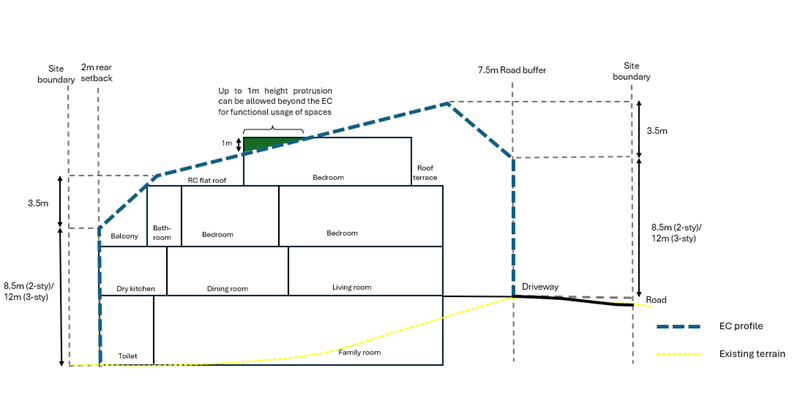
Diagram 1: EC Application for sloping sites (Section)
Dormer window beyond the Envelope Control
b. Dormer windows are typically a small feature that protrude beyond the plane of a pitched roof to allow light and/or ventilation for the space beneath the roof. Proposed dormer windows can be allowed beyond the permissible EC provided it does not protrude more than 1m (both vertically and horizontally) (see Diagram 2). This is consistent with the controls for other minor building appendages (e.g. ledges, lift overrun) that may be designed beyond the permissible EC without compromising the intent of the EC to control overall building bulk, while providing some flexibility to incorporate such functional design features.
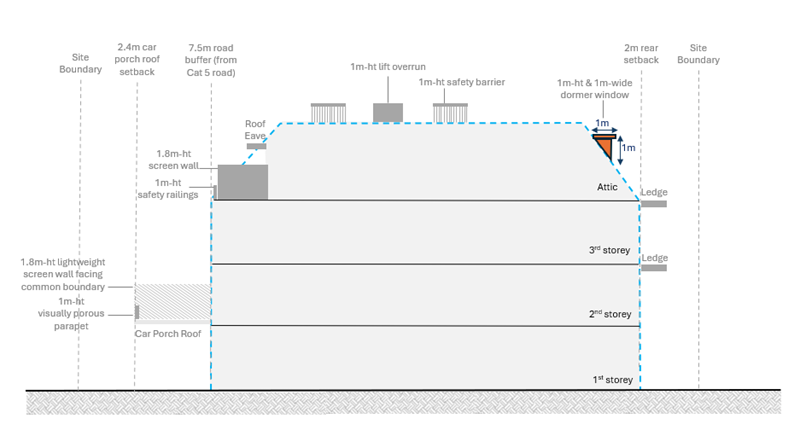
Diagram 2: Allowable size of dormer windows (Section Plan)
Implementation
The revised lodgment criteria in Para 4 will apply from 1 April 2025. EDAforms updated with the new criteria for submission via Corenet2 will be made available by 1 April 2025.
I would appreciate it if you could convey the contents of this circular to the relevant members of your organisation. We have updated the same in the Development Control Handbooks. You are advised to refer to these Handbooks for the most updated guidelines and procedures instead of referring to past circulars. For feedback or enquiries, please email (opens in new tab) us.
Thank You.
GOH CHIN CHIN (MS)
GROUP DIRECTOR (DEVELOPMENT CONTROL)
for CHIEF EXECUTIVE OFFICER
URBAN REDEVELOPMENT AUTHORITY
1 Lodgment is for works carried out to an existing single landed house with its own land title i.e. one house within one land lot.
2 URA’s retention guidelines include retaining at least 25% of the existing floor plate. In addition, a PE needs to certify that the approved structure(s) to be retained are structurally sound, can accommodate the new works and will not be damaged in the construction process. For more details, see guidelines here.