
Instil (DC Services & Good Practices)
Make EDARAD work for you
1 April 2008
We introduced the Electronic Development Application Replacement & Addition of Documents (EDARAD) in 2001 as a quick avenue for QPs to rectify minor amendments to drawings, plans or forms so that Written Permission (WP) can be released early.
Before the introduction of EDARAD, URA planners would require QPs to comply with minor plan presentation requirements through issuing a Written Direction (WD). QPs would have to resubmit their proposals and wait a further three to four weeks for the WP.
In complex proposals involving substantial changes to plan requirements, URA might ask QPs to resubmit their proposals. All these add up to a lot of work and time spent.
With EDARAD, waiting time is much shortened but QPs are also expected to follow up on the amendments faster within three to five working days.
Below are some useful tips to make EDARAD work for you:
DO’s
Do encrypt and sign all requested documents using Netrust Software into a single “ENT” file the same way you would for an EDA submission.
Do follow the steps spelt out clearly in the request email and submit the requested documents through the designated web-page/link in the email.
Do submit the requested documents before the specified due date as any submission after this date will not be accepted.
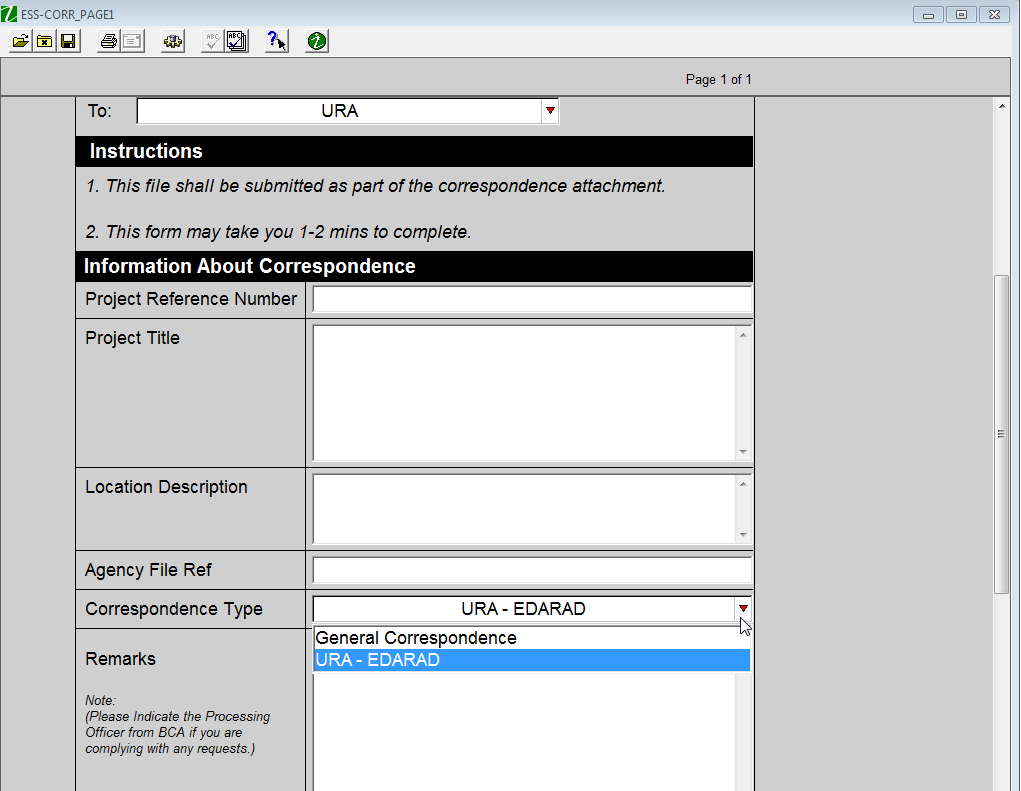
Do select the correspondence type as “URA-EDARAD” when you are submitting through CORENET instead of selecting “General Correspondence” which is not correct (Refer to diagram below).
DON’Ts
Do not submit the requested documents through the EDA website as that is for a fresh submission/resubmission. Submit only through the designated web-page/link in the email.
Do not submit documents that are not asked for and do not miss out any documents requested for. The submission may be rejected if all the requested documents are not submitted.
Do not change the filenames of the documents to be replaced as it will result in rejection of a submission.
Do not submit a covering letter as it is not necessary.
Note: All Best Practice articles are only for general information. We strongly advise readers to read the relevant circulars we issue to professional institutes for full and accurate information on development control matters as these will continue to take precedence.