
Conserved Building
6 Bukit Purmei
Applicable Guidelines
Other Building Guidelines
Conservation Area
Tang Gah Beo Conservation Area
Historic address: 6 Bukit Purmei
Tang Gah Beo Temple
About
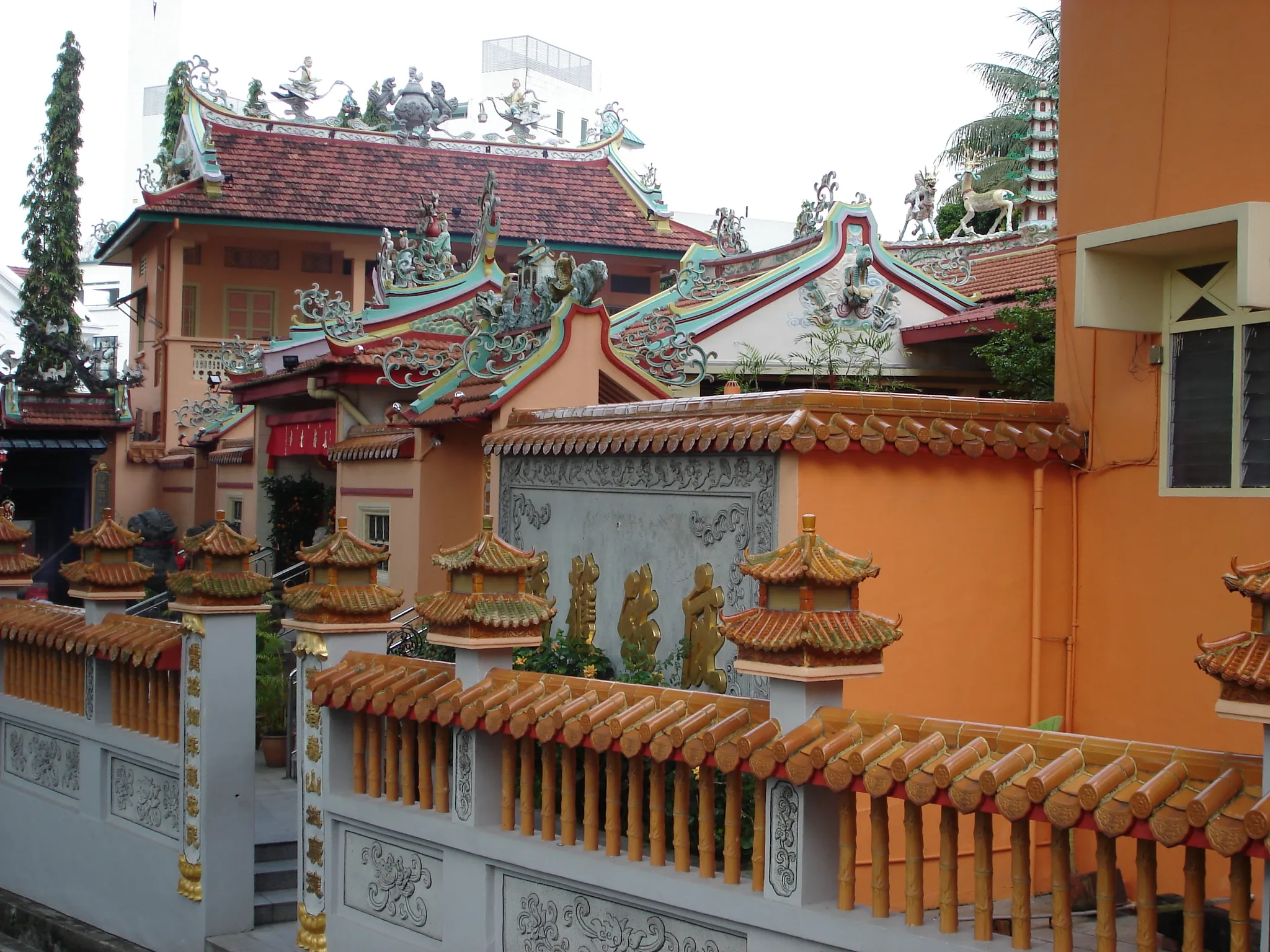
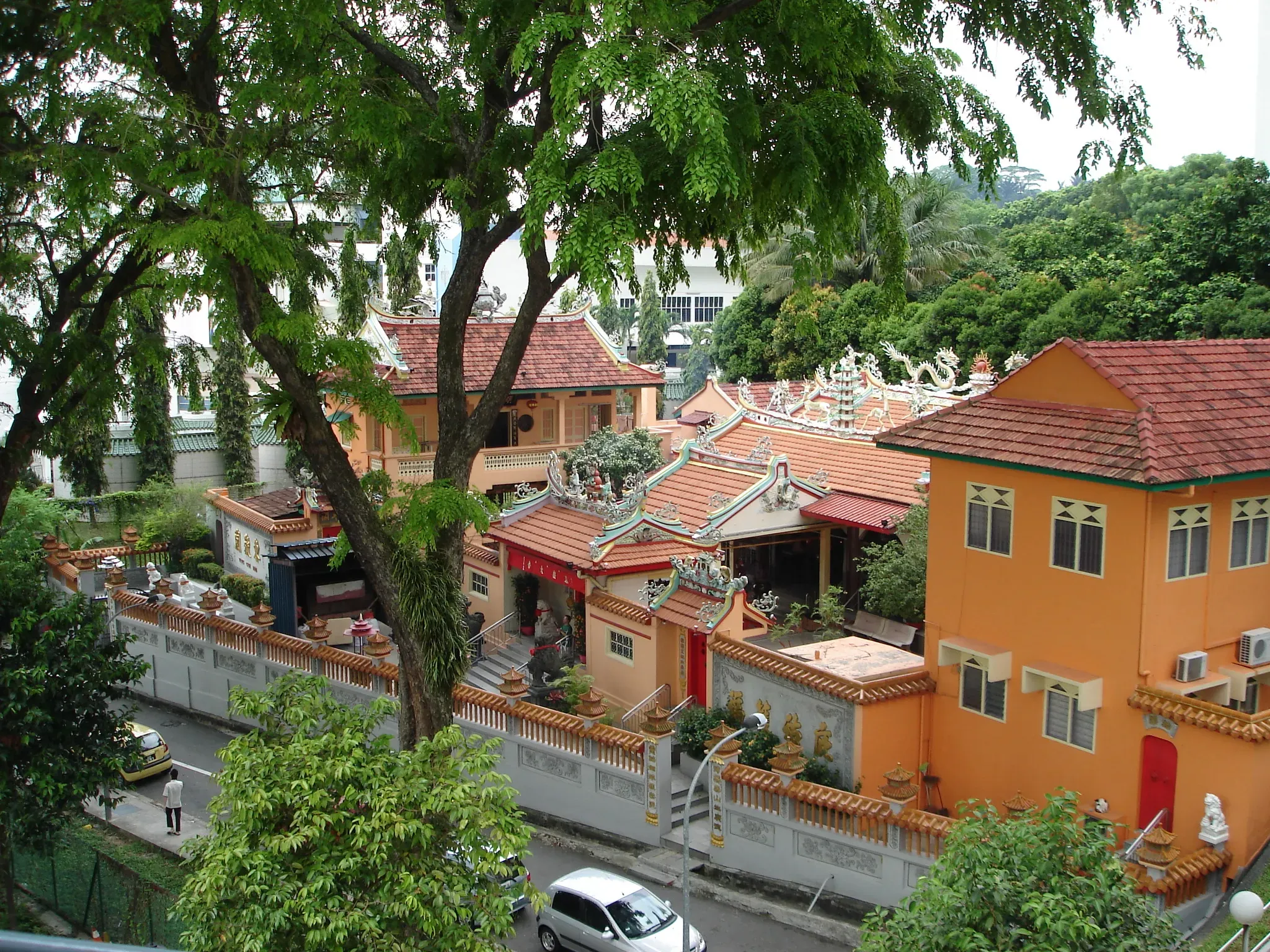
Tang Gah Beo (东狱庙) is a Taoist temple named after Dong Yue (东狱), one of the five sacred mountains in China. The temple is located at 6 Purmei Road within the area used to be known as Silat and close to the present day Bukit Merah HDB estate.
The History
It was built in 1908 on hallowed ground where many places of worship were built.[1] Examples are the Silat Road Sikh Gurdwara and St. Theresa Church. It is the only temple in Singapore dedicated to the Emperor of the Eastern Peak and much frequented by devotees.
[1] Geraldene Lowe-Ismail, Chinatown Memories (Singapore: The Singapore Heritage Society, 1998) 42.
The Building
The temple complex follows that of a traditional Hokkien/Teochew courtyard house, with a series of halls along the main axis and 2-storey side wings for residential use. In-between are open air courtyards.
The structural elements of the single storey halls are of brick load-bearing walls and timber roof beams/brackets system.
The curved roof ridges are of plaster work and are adorned with short dragons and other carved or moulded ornaments that symbolise luck and longevity. Unusually, the ends of the roof ridges of the gate-house and halls are a unique combination of the Teochew ‘Curling Grass’ and the Hokkien ‘Swallow’s Tail’ design. Natural-coloured terracotta Marseilles roof tiles are used throughout the building. It is not clear if they were original or a subsequent replacement.
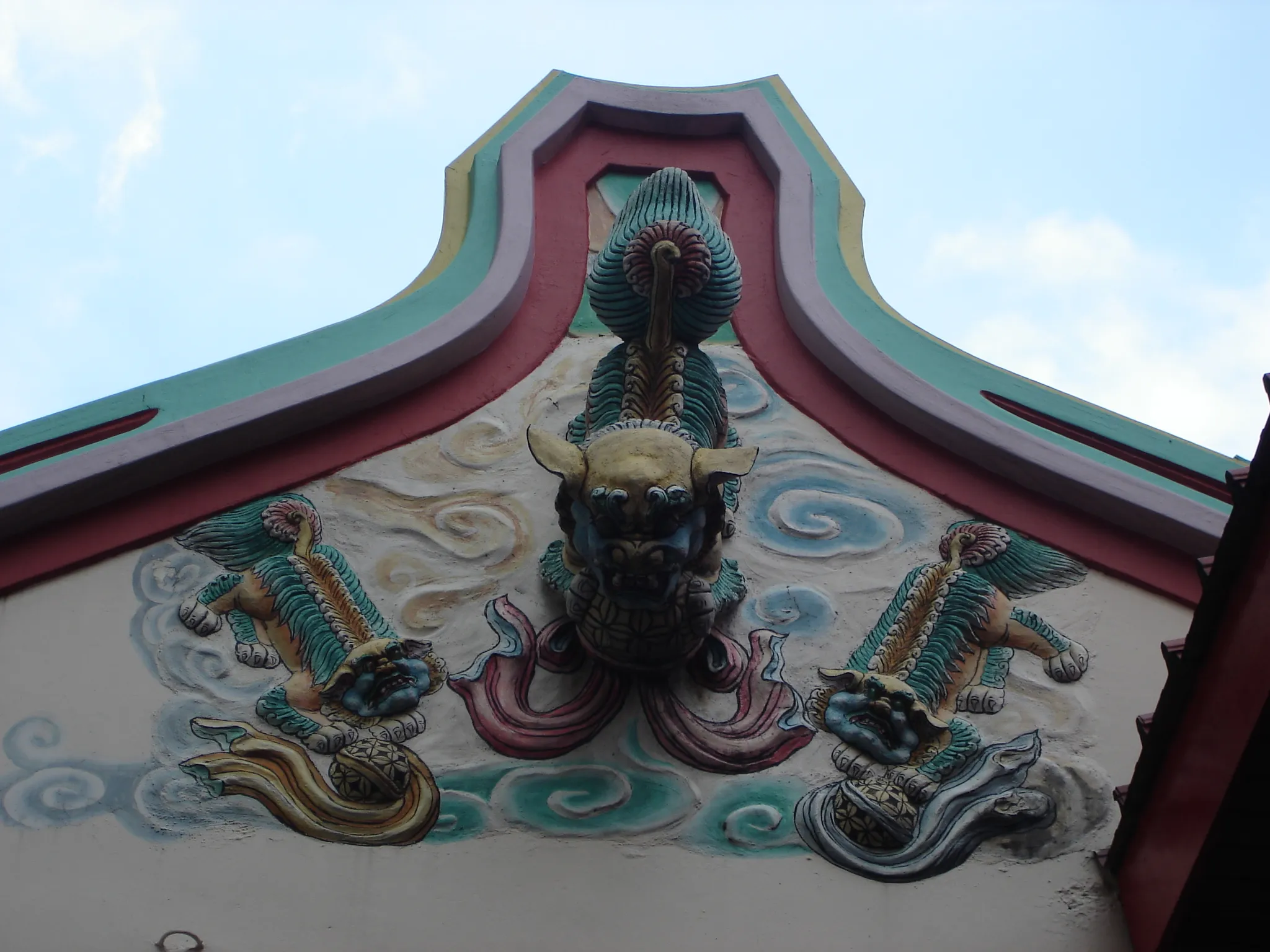
The moulded gable ends of the central halls are of the ‘Wood-element’ in Chinese belief, and it is one of the more prevalent motifs that can be seen in Singapore. The choice of which of the Five-elements to use as a gable profile is often dictated by the characteristics of the site, its builder and the intended occupant.
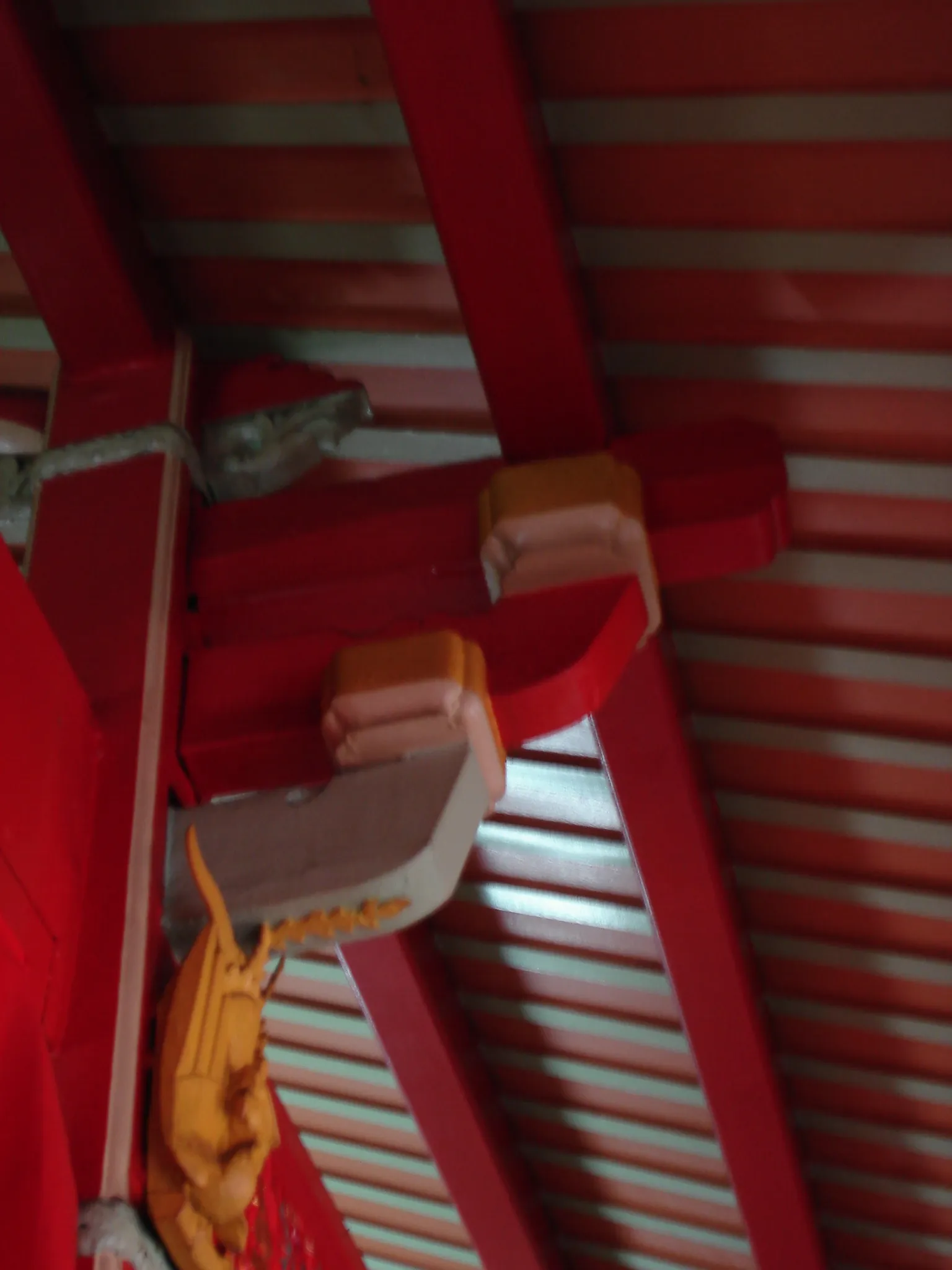
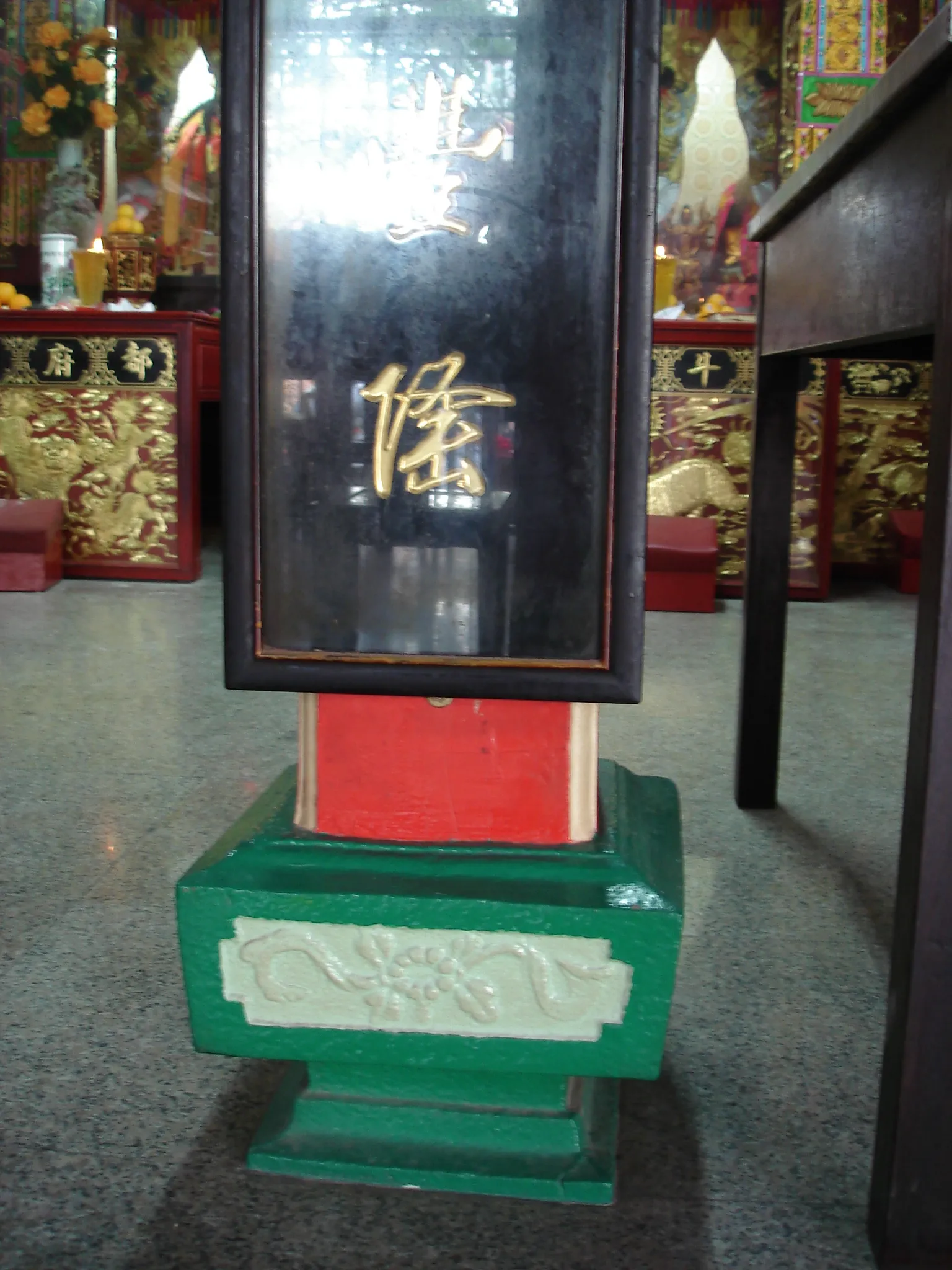
Within the main prayer hall, one can see the timber bracketing system that is a common feature of Chinese timber construction. Of particular note are the richly carved timber screens that frame each of the altars of the various deities.
The pair of two-storey side buildings are of a more modern style, appearing to be possibly from the 1920s/30s onwards. These are of brick and concrete construction, with pre-cast cement parapets for the upper floors. They complement the overall scale of the complex.
Its main architectural features are largely intact, although substantial embellishment has been carried out over the past decade.
The Legacy
The temple site is a good example of perfect feng shui – “sitting on the hills and looking at the sea”[1]. As a building, it is a fine example of the cultural hybridisation that happened in Singapore in the 19th Century.
In addition, together with the adjacent St Theresa’s Church (a National Monument), it illustrates the history of settlement in the area, the various cultural influences that have shaped Singapore’s physical landscape. Furthermore, the two buldings acts as markers of community identity for the wider public that strengthens the sense of place, and demonstrates religious and ethnic co-existence in a multi-cultural Singapore.
Gazetted on 6 June 2014.
Guidelines and Procedures
All proposed works will need to comply with the Conservation Guidelines and the Specific Restoration Guidelines (SRG). Conservation Permission is required before all additions & alteration works and operations of new use can begin.
Residential Fronts are characterised by timber casement windows flanking a double-leafed timber door. All buildings with residential front which is existing and/or identified in the 'Specific Restoration Guidelines', regardless of land use zoning, shall be retained and restored.
Any proposed additions and alterations to this conserved building are subject to evaluation. Please submit your proposal for URA's review.
Apply for Specific Restoration Guidelines (SRG) (opens in new tab)
Gallery
Explore Street View
The building can be found at this street.