
Conserved Building
3 Havelock Square
Applicable Guidelines
Other Building Guidelines
Conservation Area
Subordinate Courts Conservation Area
Historic address: 1 Havelock Square
Former Subordinate Courts Of Singapore
About
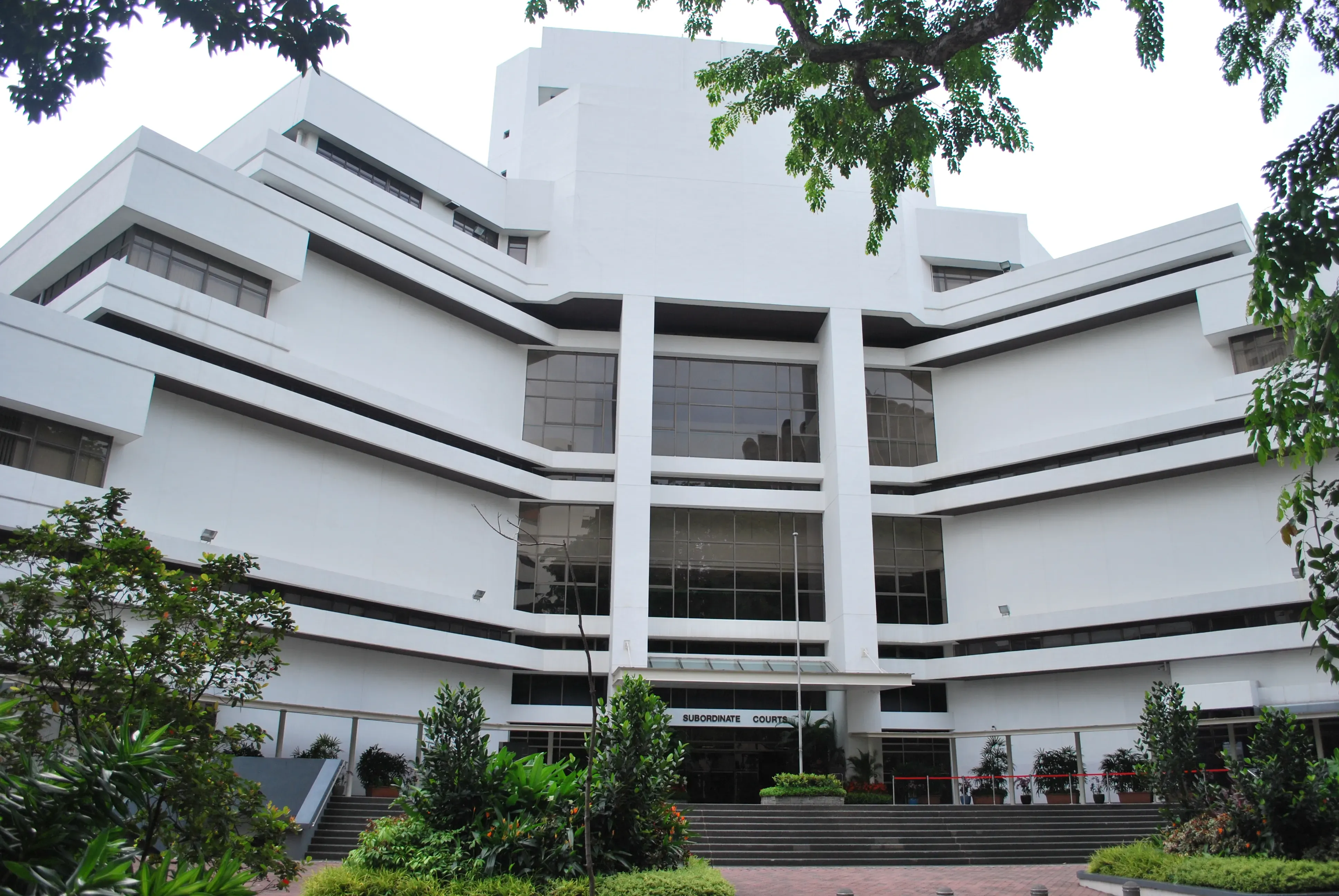
The former Subordinate Courts of Singapore, now renamed as the State Courts, is the lower of the two tiers of the court system in Singapore, the other tier being the Supreme Court. The State Courts comprise the District and Magistrate Courts - both of which oversee civil and criminal matters - as well as specialised family, juvenile, coroner's courts and a small claims court called the Small Claims Tribunal. Initially, these courthouses were located in different areas of Singapore, but this came to an end in 1975 when a centralised Subordinate Courts Complex was constructed at 1 Havelock Square.
The History
Before 1975, the administrative and judicial functions of the lower courts had been scattered throughout the city in various pre-WW2 buildings from the Colonial era. The new Subordinate Courts Building was the first modern court complex to be built since independence and it centralized all functions under one roof.
The Building
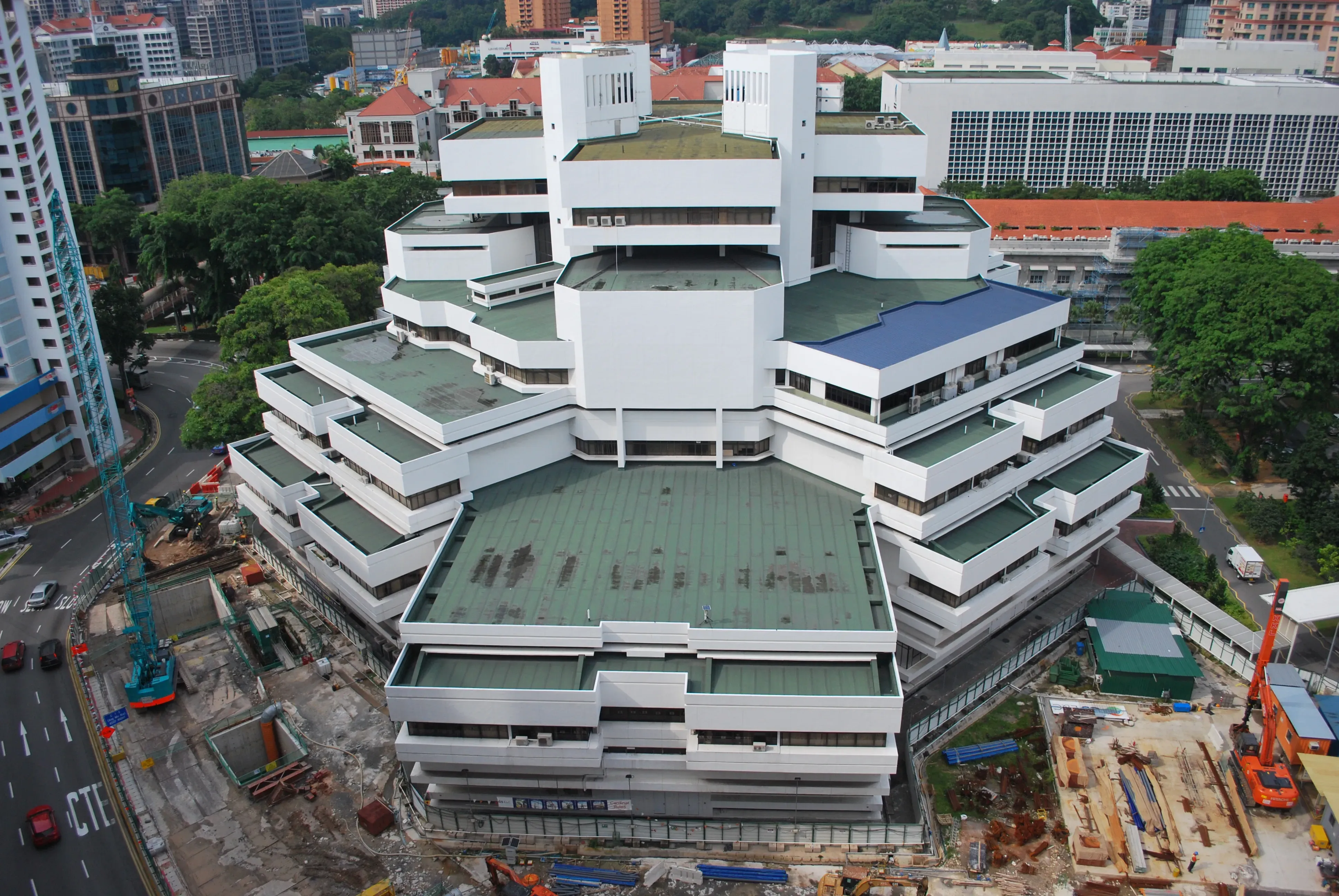
A competition was called for the building of this new landmark State institution. The winning scheme by the local firm Kumpulan Akitek, is noted for its complex design that creates a powerful timeless exterior while having a well-considered internal layout that combines functional needs, all within a restrained and dignified aesthetic that marked a major departure from the neo-classical style that had be adopted for the court system (e.g. the former Supreme Court – now a National Monument).
The building, with its angular shapes, steps upwards like a modern day pyramid. The complex that rises above the ground is visually and symbolically detached from the surrounding busy urban environment. Composed of alternating bands of white masonry walls and continuous dark recessed bands of windows, the dazzling white and unadorned exterior is strikingly unlike the old court houses. The lack of non-functional ornamentation can be read to symbolize a new modern and efficient era of the administration of justice by an independent Singapore.
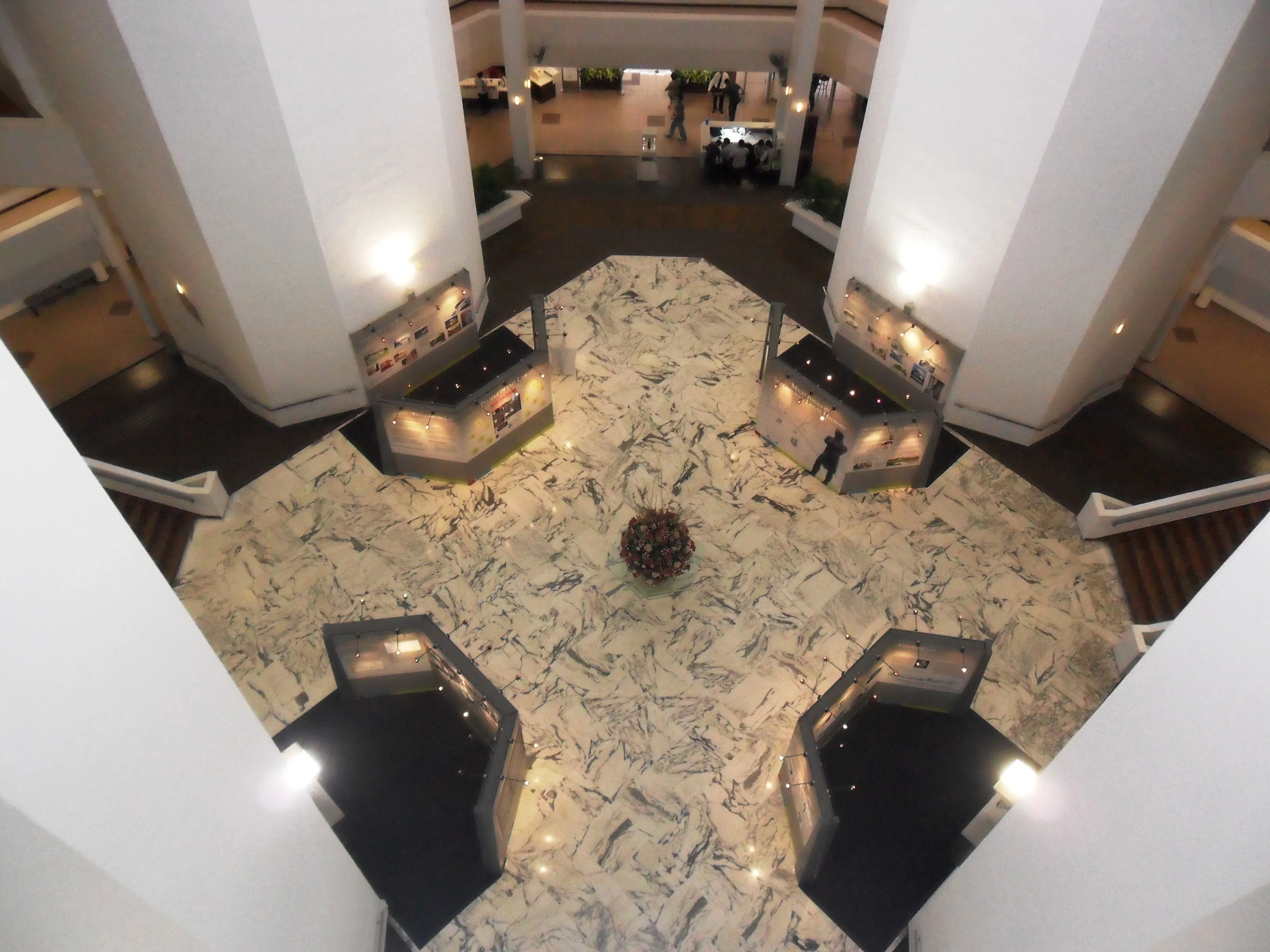
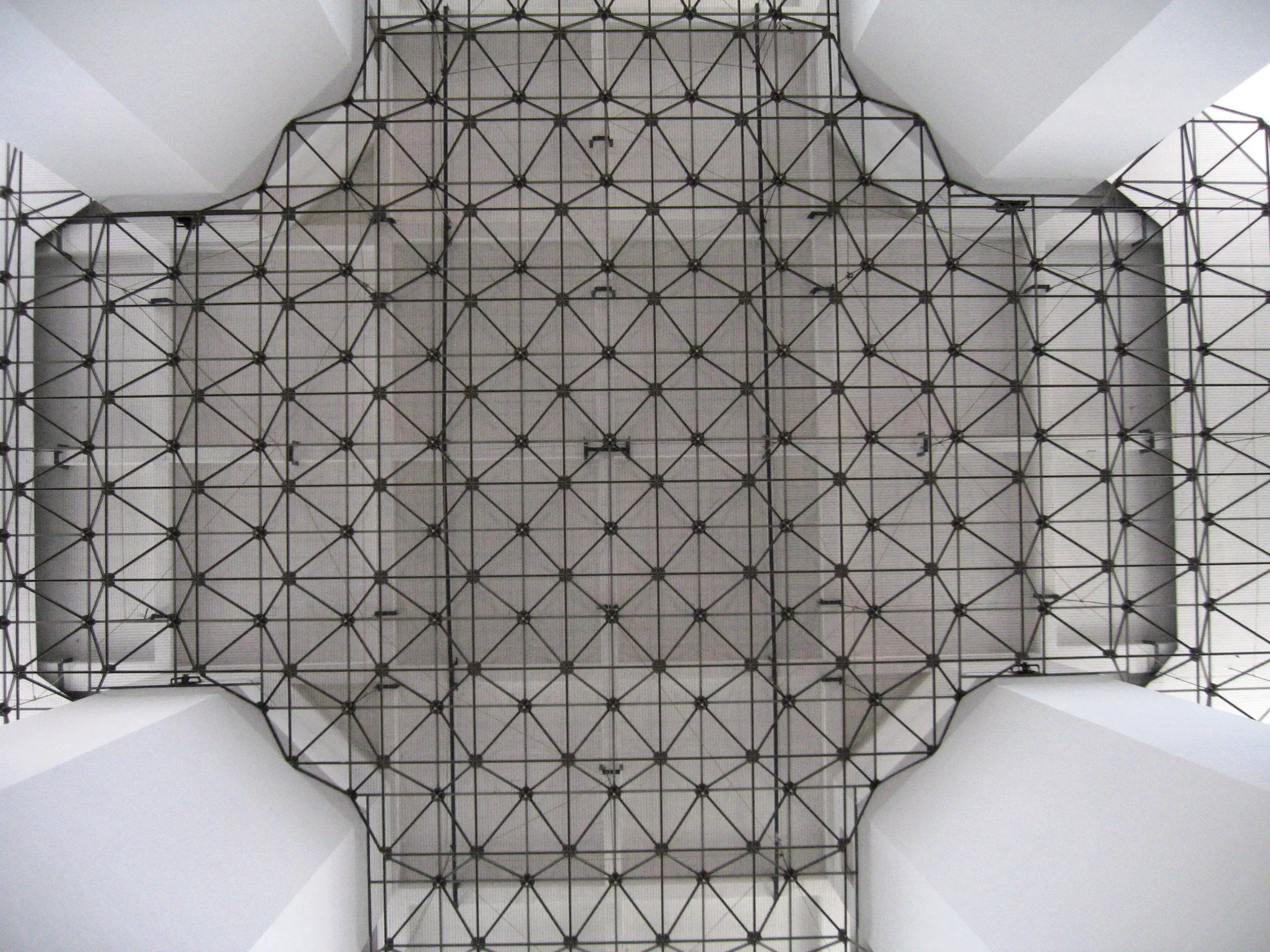
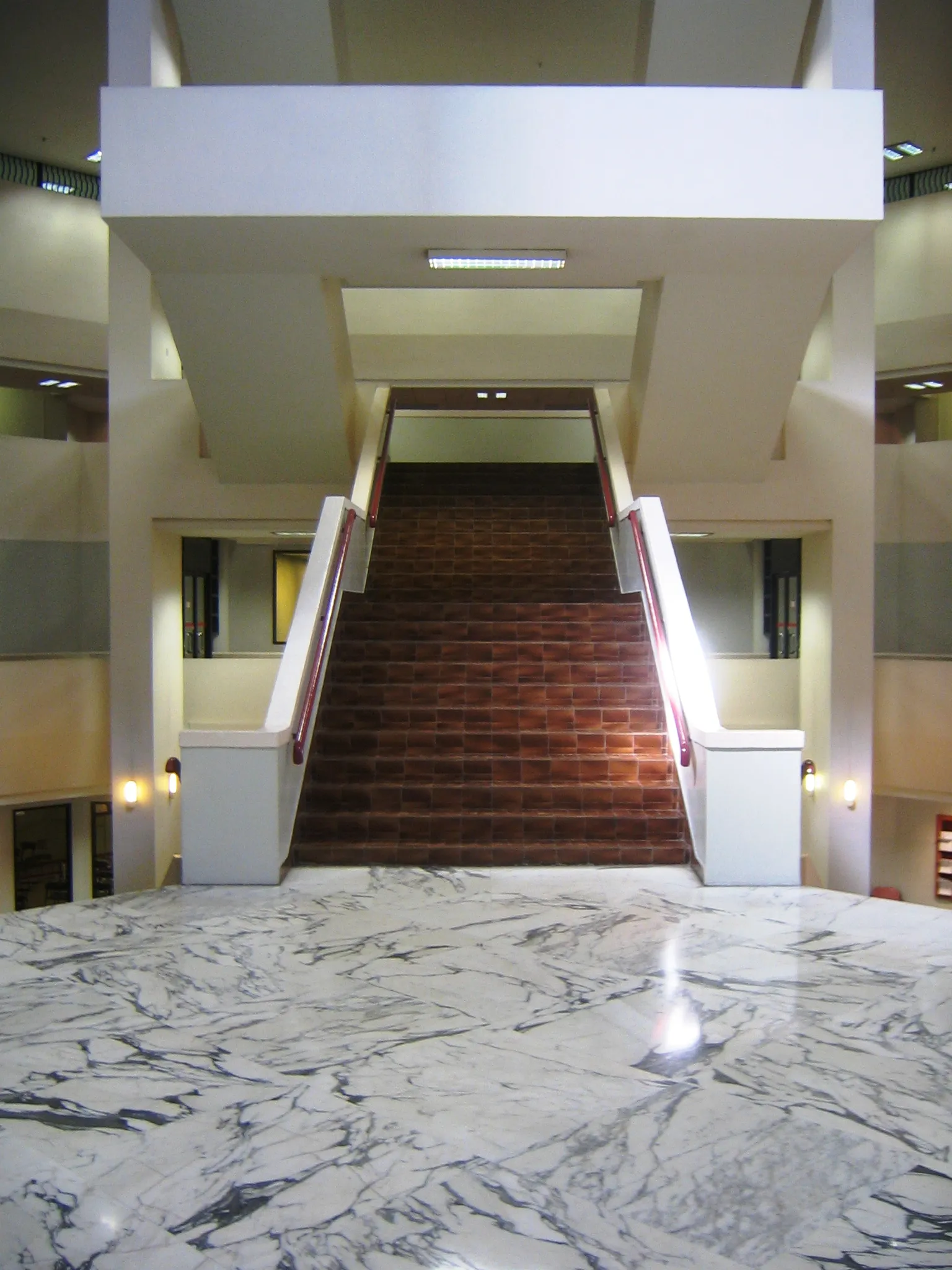
The main interior features are its full height central atrium, dramatically composed circulation spaces and natural lighting and ventilation. The approach of using natural lighting and ventilation for the main atrium can also be considered as a pioneering attempt to create more environmentally sensitive buildings in the Tropics. Other features are the use of a restrained palette of materials to create a dignified and severe aesthetic. The court rooms are also of a (then) radical Modern-style that evoked a space-age feel. The layout of the complex is noted for how the circulation of the judiciary, the accused and the public are all separated.
The Legacy
Due to its outstanding architectural appearance, the building has established itself as a landmark in the Havelock Road area. It is also a social landmark which the public has come to associate with the dispensation of justice.
Our modern public buildings built during the post-independence period, such as the Subordinate Courts building, are symbols and landmarks of our nationhood, and the evolution of Modern Architecture under the hands of local professionals. They also provide a sense of belonging and place. The former Subordinate Courts building is a good example of a modern public building that symbolizes a modern and forward looking nation.
The building was gazetted on 10 July 2013.
Guidelines and Procedures
All proposed works will need to comply with the Conservation Guidelines and the Specific Restoration Guidelines (SRG). Conservation Permission is required before all additions & alteration works and operations of new use can begin.
Residential Fronts are characterised by timber casement windows flanking a double-leafed timber door. All buildings with residential front which is existing and/or identified in the 'Specific Restoration Guidelines', regardless of land use zoning, shall be retained and restored.
Any proposed additions and alterations to this conserved building are subject to evaluation. Please submit your proposal for URA's review.
Apply for Specific Restoration Guidelines (SRG) (opens in new tab)
Gallery
Explore Street View
The building can be found at this street.