
Conserved Building
226 Kallang Road
Applicable Guidelines
Other Building Guidelines
Conservation Area
Sri Manmatha Karuneshvarar Temple Conservation Area
Historic address: 226 Kallang Road
Sri Manmatha Karuneshvarar Temple (Kallang Gasworks Sivan Temple)
About
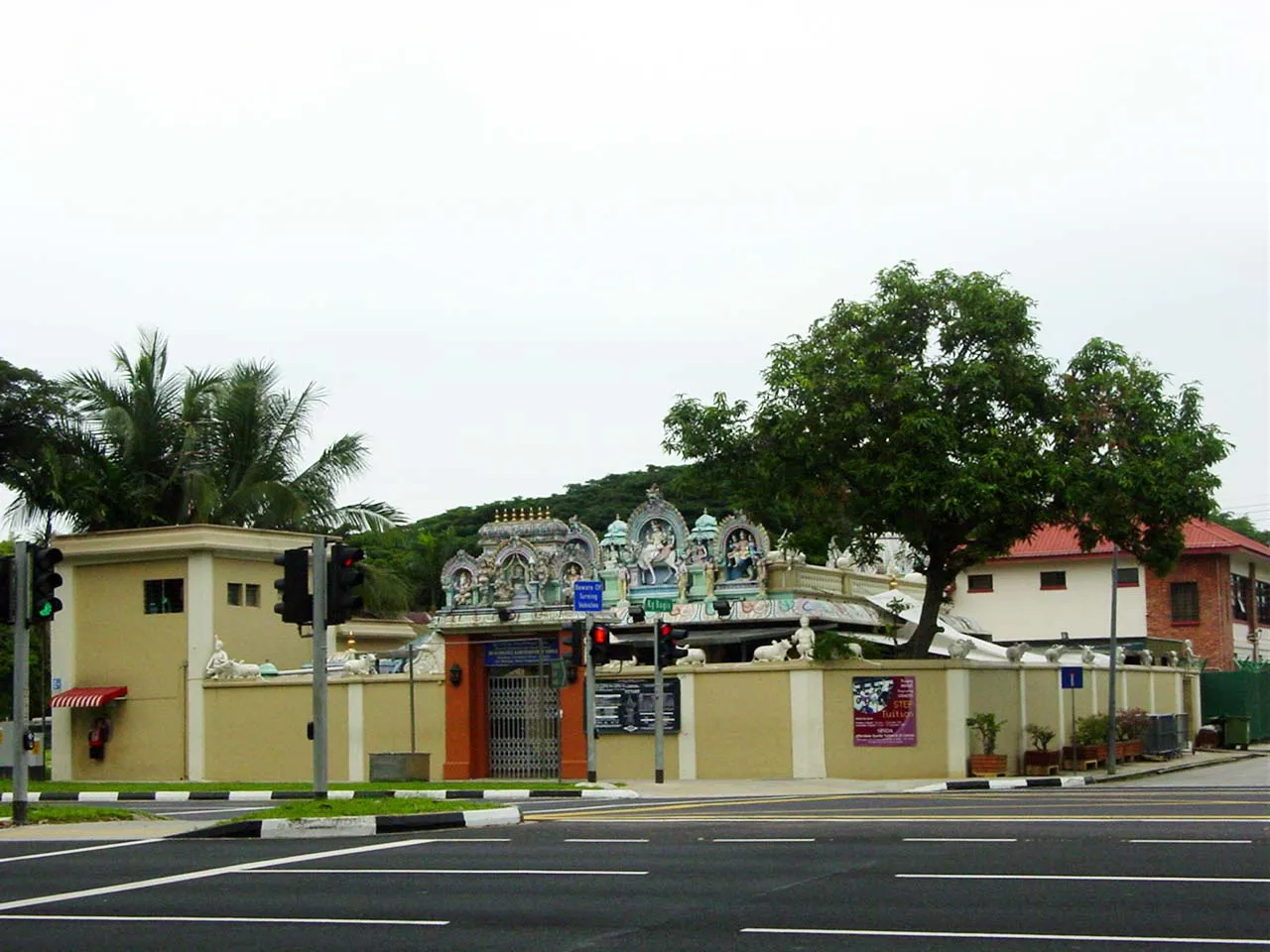
Sri Manmatha Karuneshvarar Temple (ஸ்ரீ மன்மத கருநேஸ்வரர் கோவில்) is also known to many as the Kallang Gasworks Sivan Temple. This is a Hindu temple dedicated to Shiva, one of the most important deities in Hinduism. It is located at 226-228 Kallang Road.
The History
The origins of this temple can be traced back to its initial establishment on site as a simple temple on 5 January 1888 soon after the Municipal Gasworks was set up here in 1862. The first formal chairman of the temple also the chief foreman of the Kallang Gasworks, A.V. Irullappa Pillay who was appointed in 1937.
The setting up of the Kallang Gasworks in the Kampong Bugis area was one of the key infrastructural works that lead to the modernisation of Singapore. The operations of the Gasworks was largely run by workers from the Tamil community. During the Colonial period, many employees of large companies or institutions would be provided with accommodation on or near their place of work. This naturally lead to the growth of a community, in this case, Hindu Tamils, around the place of employment. The workers and their families would need to create a place of worship for their faith and also serve as a community institution.
The Mandapam (main central shrine) was constructed in 1900 and the Sivalingam (a representation of Siva) was installed. After the Manadapam was completed, the temple was granted a 99-year lease from the government with effect from 26 March 1909.
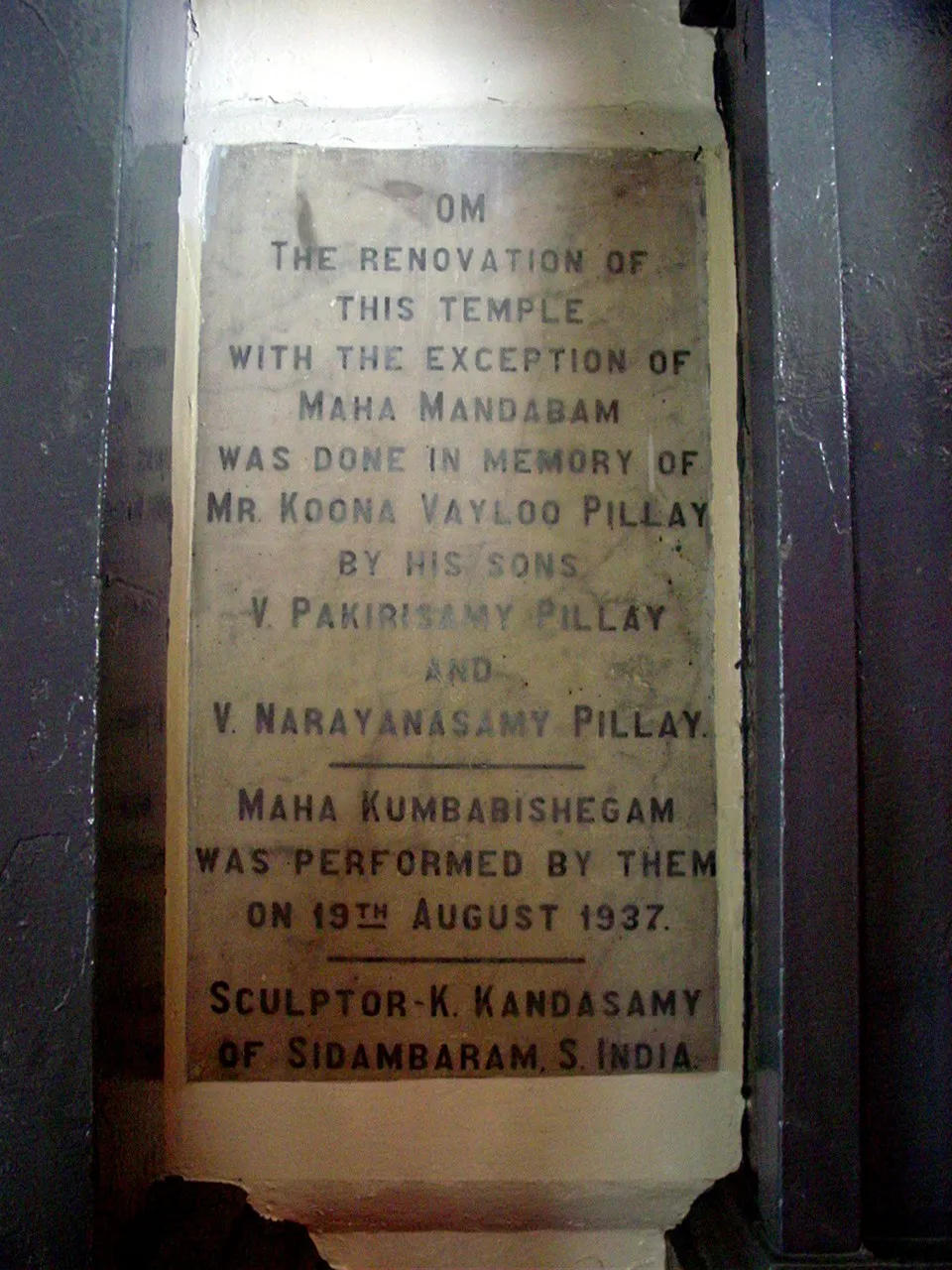
From 1935 to 1937, the entire temple, was renovated by V. Pakirisamy Pillay and his brother Narayanasamay Pillay. A sculptor, K. Kandasamy, from Sidambaram, south India was engaged for the works. The temple was subsequently consecrated on 19 August 1937. Further up-grading to the temple were carried out in 1951 and 1974. From 1993 onwards, the temple saw restoration and further upgrading works in stages culminating in the consecration ceremony on 27 April 1997.
Given its founding origins, it also became widely known as the Kallang Gasworks Hindu Temple to the wider non-Indian/non-Hindu community. Though the community of Gasworks workers have since been dispersed island-wide, many descendants of the workers still return to worship here.
The Building
As one of the earliest Hindu temples in Singapore established in the 19th century, it was constructed in the South Indian temple tradition as this was where the community originated.
It was constructed in the south Indian temple style for the worship of the Sivalingam, the simplest and most ancient symbol of Siva. Siva, the destroyer, being one of the deities worshiped in the Hindu religion.
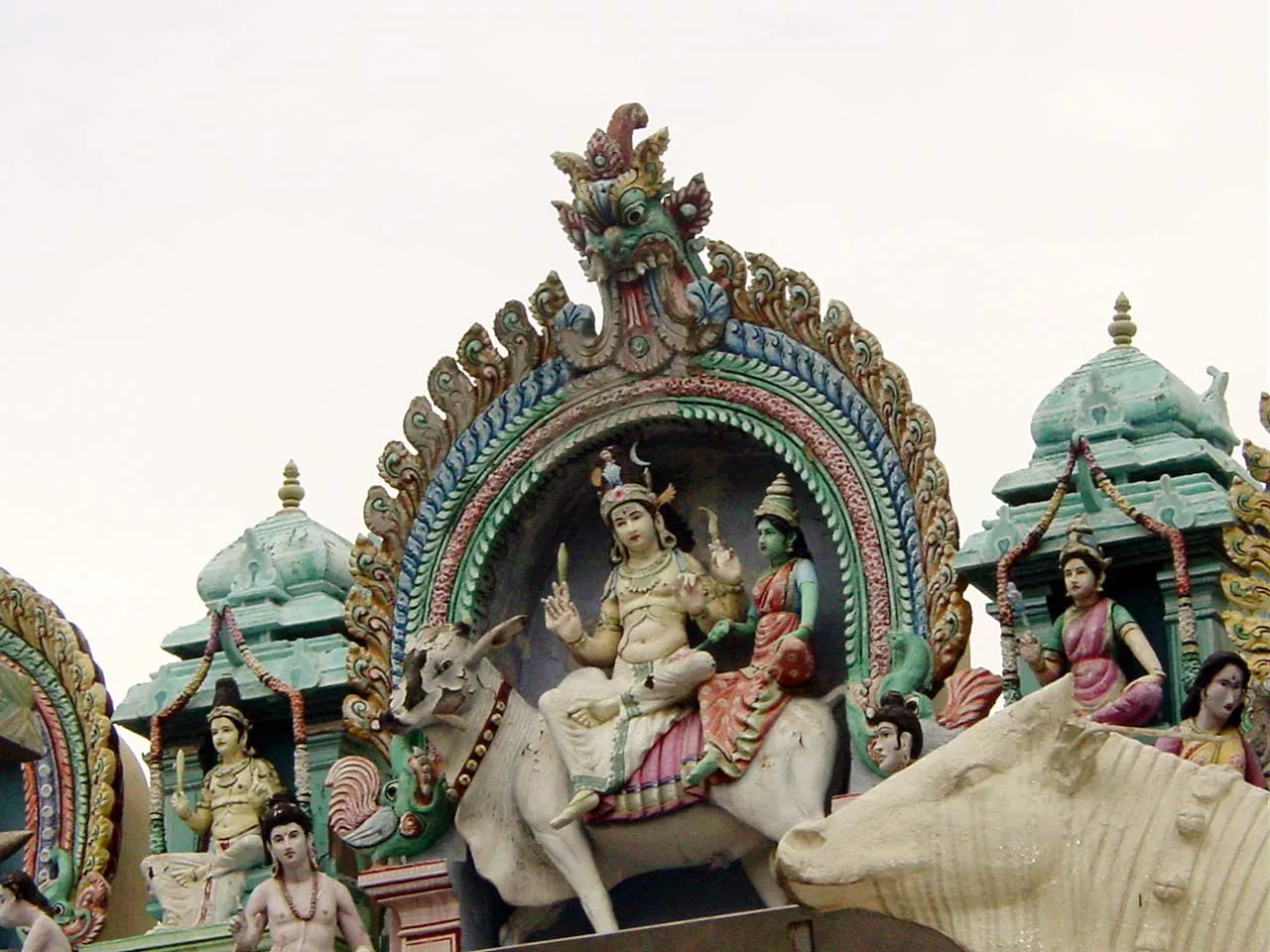
The temple is surrounded by a plain wall (formerly painted in red and white stripes that was typical of Tamil temples) that shields the internal worship area from the busy surroundings. Entry to the compound is via a gateway with an elaborately decorate roof of sculpted figurines. The top of the temple wall is graced by sculptures of cows – which is a sacred animal in Hinduism.
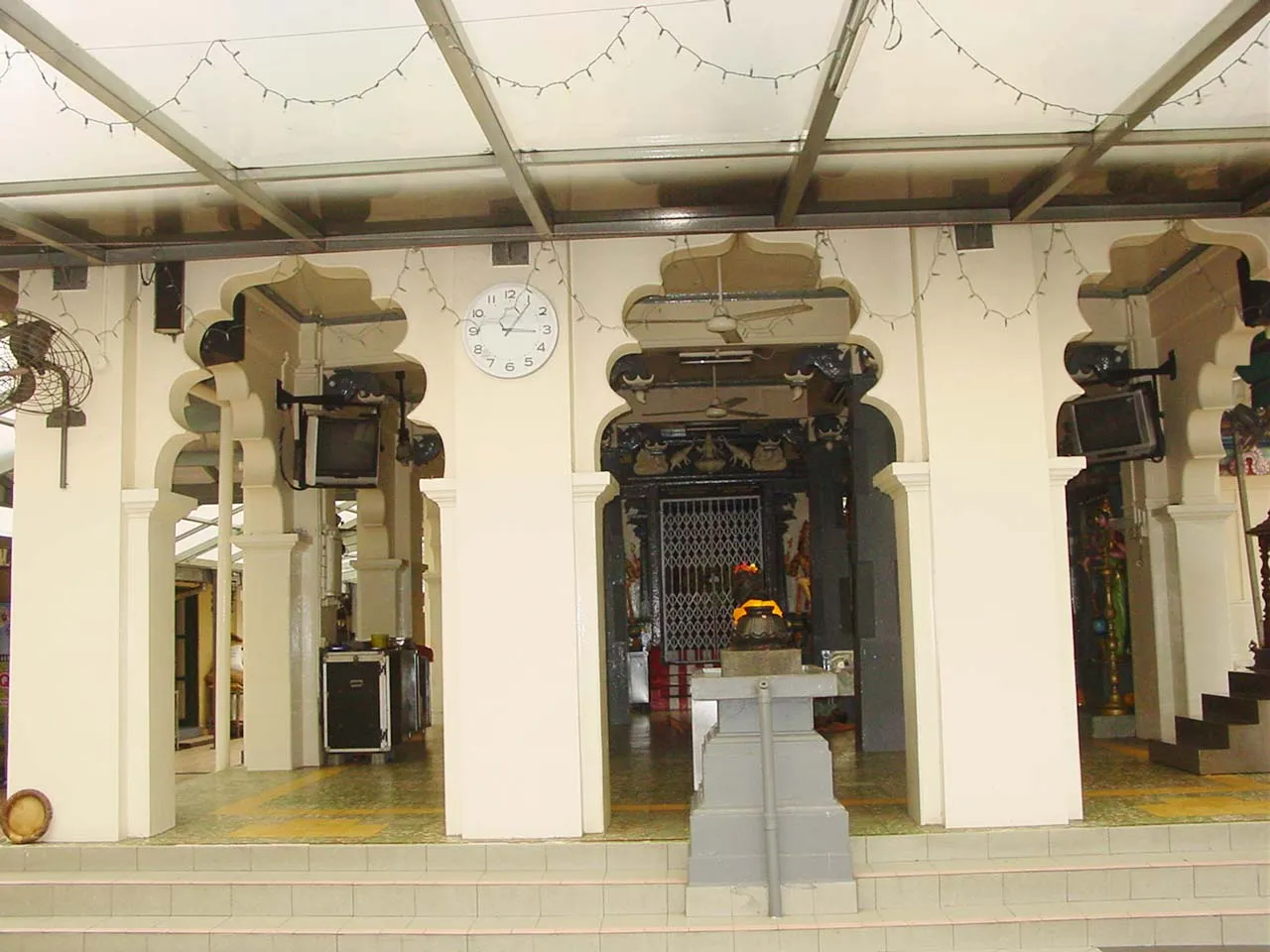
Upon entry into the temple compound, one will see the Mandapam which was the first permanent structure to be constructed in the temple Based on temple records, this Mandapam was modified in 1935 and following tradition, master craftsmen were brought in from South India.
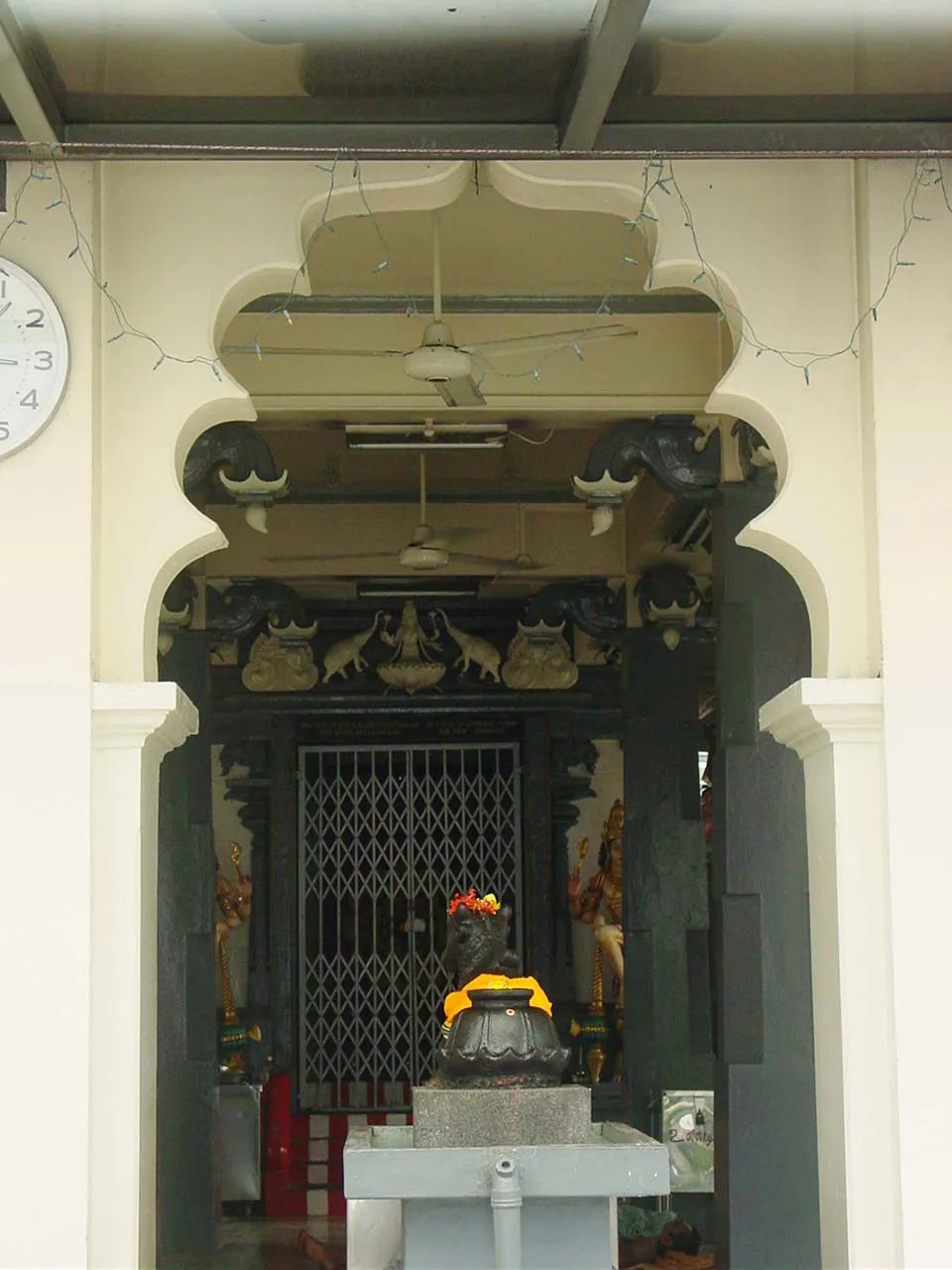
One enters the open-sided hall through lobed archways. The inner columns of the hall have profiles derived from the stone temples of Tamil Nadu, while the flooring retains the cement tiles that were popular in the 1930s.
The Mandapam is crowned by a large decorated dome above it making it the tallest structure in the temple and can be easily seen from the surrounding area.
The Legacy
The temple is very visible from Kallang Road where it is located. This major arterial road leads out of the city towards Geylang and the east. The temple serves as a landmark that is closely associated with the area for the wider community. It is also a reminder of a settlement that was closely linked to the former Kallang Gasworks (demolished 1998) where the worshippers came from before the gasworks was discontinued.
Gazetted on 6 June 2014.
Guidelines and Procedures
All proposed works will need to comply with the Conservation Guidelines and the Specific Restoration Guidelines (SRG). Conservation Permission is required before all additions & alteration works and operations of new use can begin.
Residential Fronts are characterised by timber casement windows flanking a double-leafed timber door. All buildings with residential front which is existing and/or identified in the 'Specific Restoration Guidelines', regardless of land use zoning, shall be retained and restored.
Any proposed additions and alterations to this conserved building are subject to evaluation. Please submit your proposal for URA's review.
Apply for Specific Restoration Guidelines (SRG) (opens in new tab)
Gallery
Explore Street View
The building can be found at this street.