
Conserved Building
152 Waterloo Street
Applicable Guidelines
Other Building Guidelines
Conservation Area
Sri Krishnan Temple Conservation Area
Historic address: 152 Waterloo Street
Sri Krishnan Temple
About
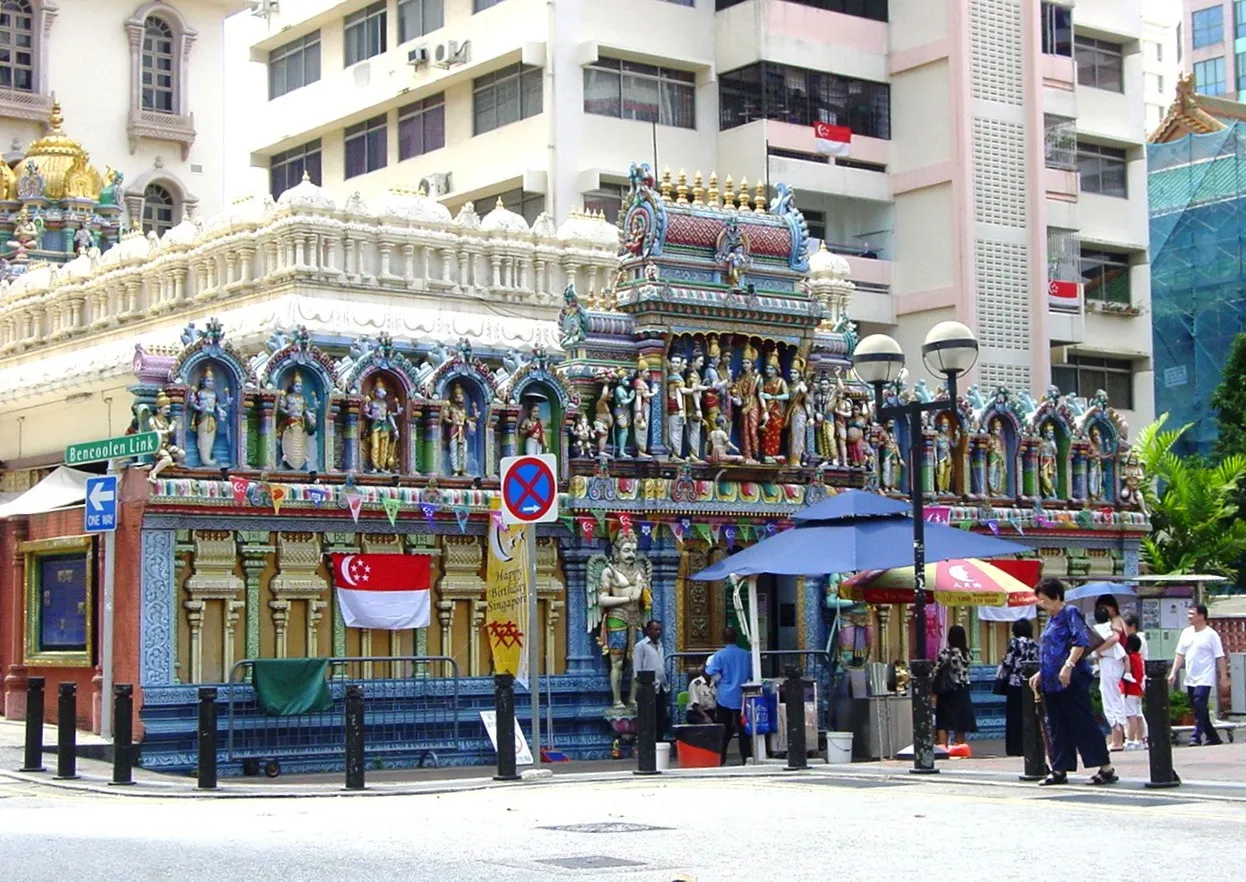
Sri Krishnan Temple is located at 152 Waterloo Street. This part of town north of Singapore River, was a place of ethnic diversity which can be seen from the presence of many different religious buildings within a very small urban area.
The History
The temple was first established to cater for the Hindus in the neighbourhood bounded by Bras Basah Road, Victoria Street and Albert Street. In 1870 Hanuman Beem Singh[1], a wealthy merchant, set up a shrine for Lord Krishna at the base of the banyan tree in Waterloo Street. Some years later, a larger platform was built to place a deity of Lord Krishna. This temple is dedicated to Krishna, the 8th incarnation of Vishnu. The worship of Krishna became prominent in southern India in the 7th to 9th centuries CE.
Therefore, the Tamil Hindu community refers to this street as krishmen kovil sadakku or "Street of the Krishnan Temple".
As the congregation of Hindus grew, the temple underwent successive renovations over the years. When Beem Singh was too old to manage the temple, he passed it on to his son Humna Somapah who was a land proprietor to manage from 1880 to 1904. He made improvement to the temple structure and erect a proper fence around the temple.
In 1904 Humna Somapah entrusted the management of the temple to his niece, Joognee Ammal. She built the main shrine and Vimanam. The Maha Kumbabhishegam ceremony was conducted in 1933.
In February 1935, V. Pakirisamy Pillai, Indian pioneer, community leader and philanthropist, took over the management and he built the temple Mandapam (or main central shrine) in front of the shrine with concrete roof and walls of the temple and dedicated them to the memory of his mother Alamayloo Ammal. A consecration ceremony was held on 21 January 1959. He and his brother V. Narayanasamy Pillai were also deeply involved in the building of the Sri Manmatha Karuneshvarar Temple at Kallang.
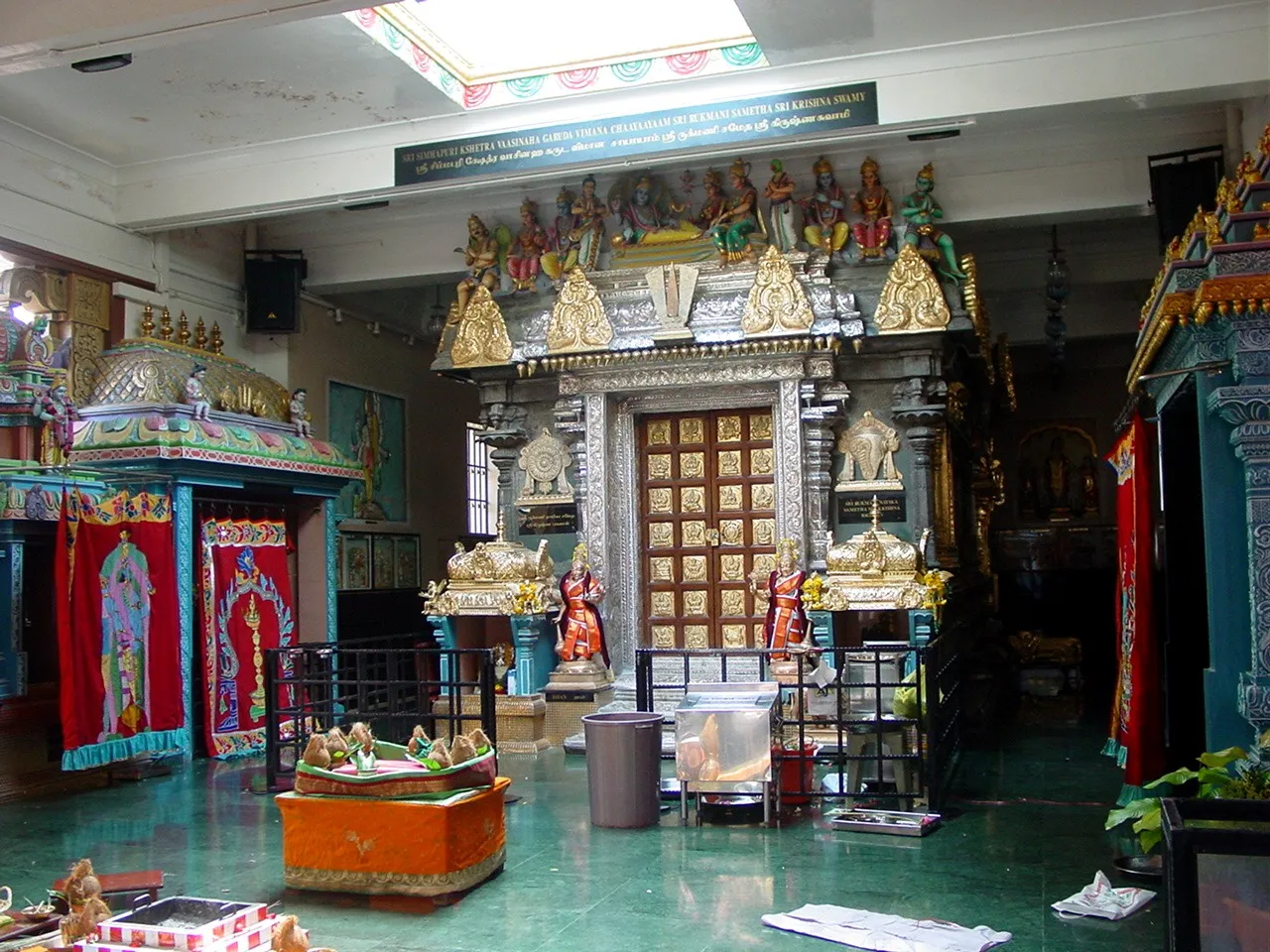
When V. Pakirisamy Pillai died in 1984 at the age of 89, his son, P. Sivaraman, took over the management and under took major renovation to the temple in 1989. This included the building of the main entrance, a gopuram, and additional sanctums for Sri Anjaneyar, Sri Vishnu Durgai, Sri Guruvaayurappan, Sri Sudarsana, Sri Maha Lakshmi and a Vasantha Mandapam. The Consecration Ceremony was conducted on 12 November 1989.
Under Mr. Siva’s guidance further improvements were undertaken. In 2001, a 5-storey ancillary block with multi-purpose hall was added. The temple was consecrated on 24 November 2002.
This is one of the principal temples of the Hindu Community in Singapore. It is famous for its Deepavali and Krishna Jayanthi celebrations.
[1] http://eresources.nlb.gov.sg/infopedia/articles/SIP_276_2004-12-24.html
The Building
The temple is constructed in five sections, head (dome above the sanctum), neck (sanctum containing the image of God), stomach (area in front of sanctum), leg (walls around sanctum), feet (gateway into the temple) and soul (lord of the sanctum). The neck (sanctum) is the most important part of the temple.
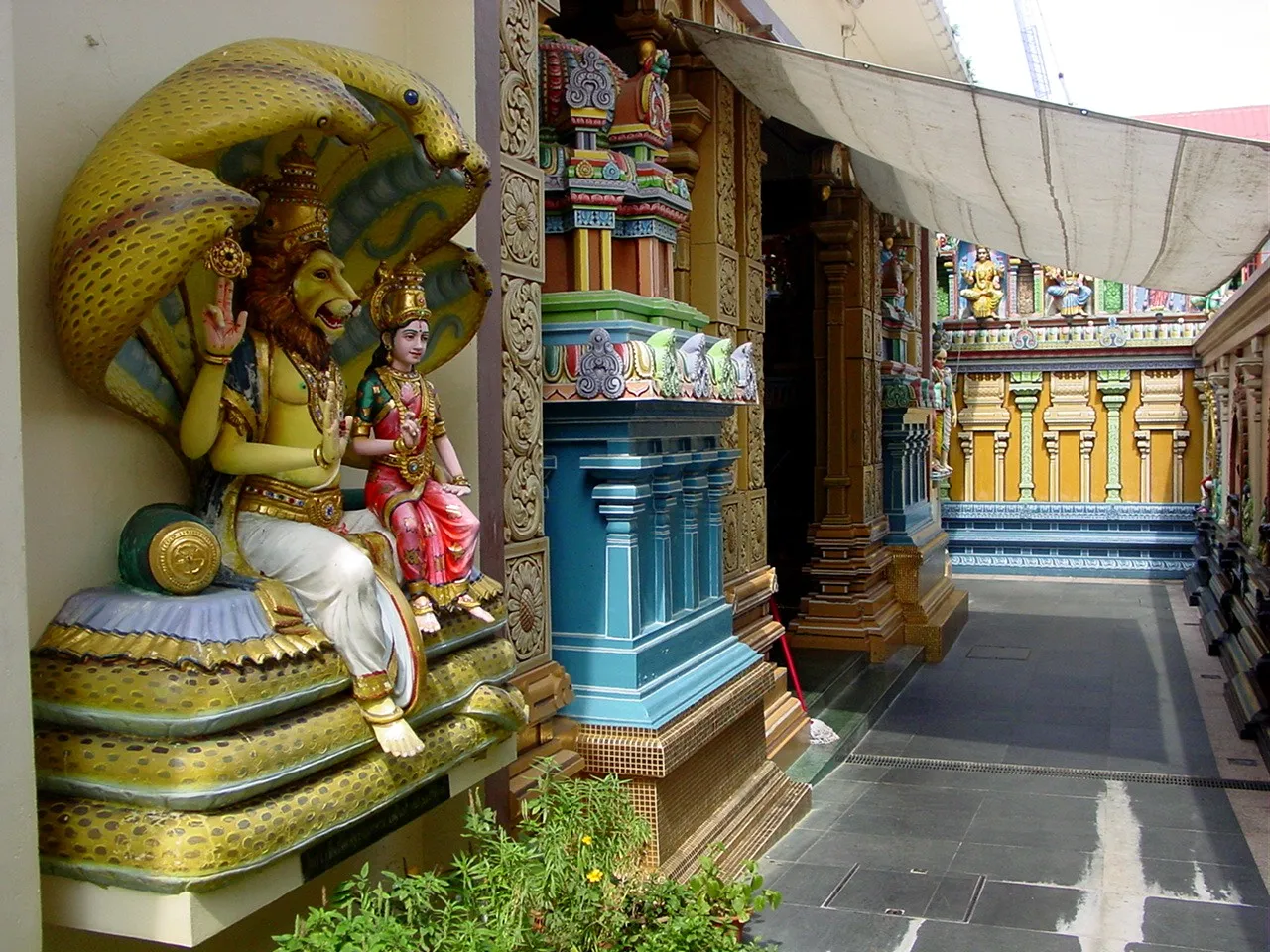
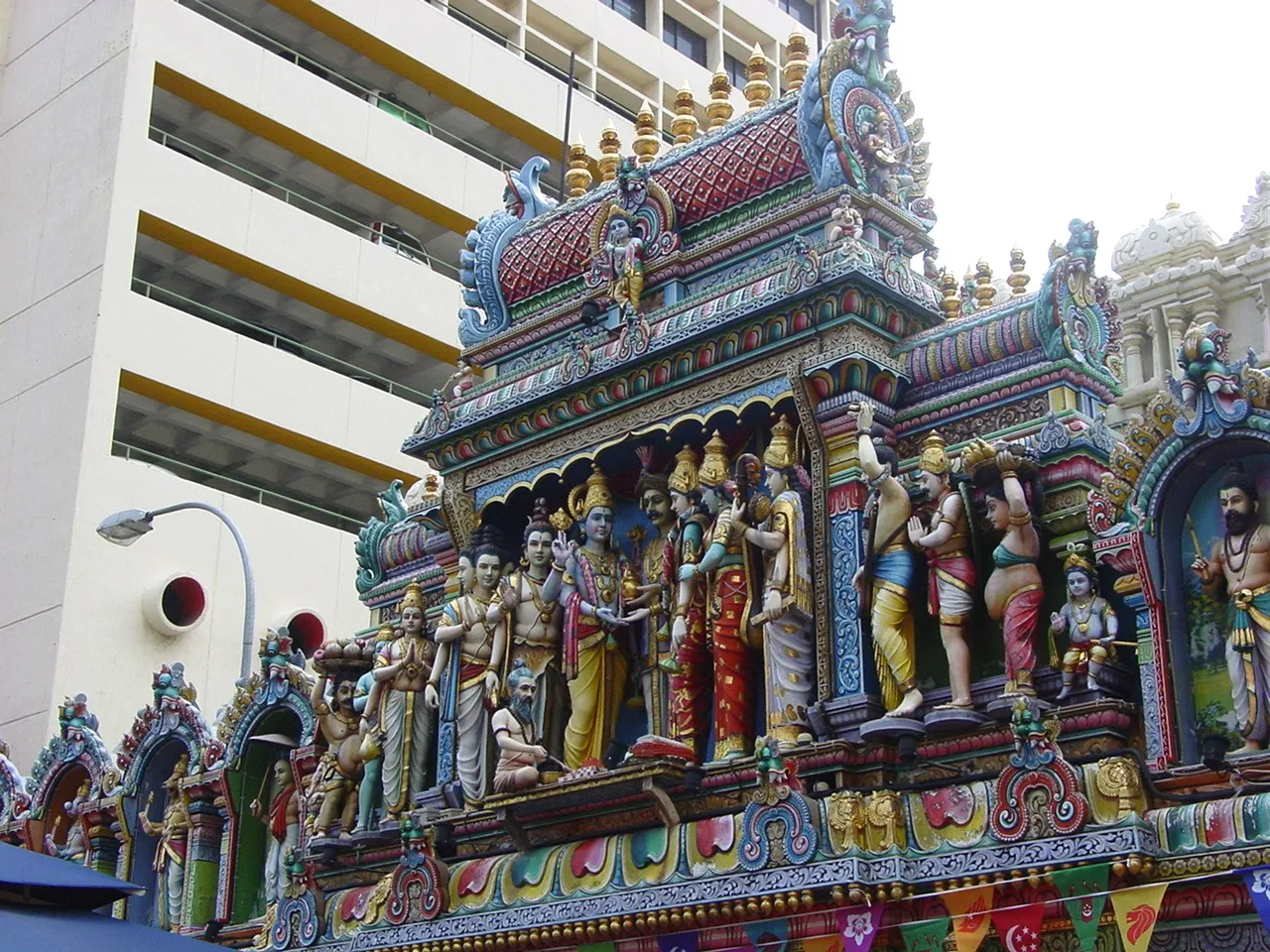
The Vimana (or dome) over the garbagraha (or sanctum) is about 8m tall and is the tallest point in the temple. It is well adorned with deities. Intricate designed works in copper and gold plating were done on the dome for the 2002 consecration ceremony. On top of the dome was added a golden Kalasha.
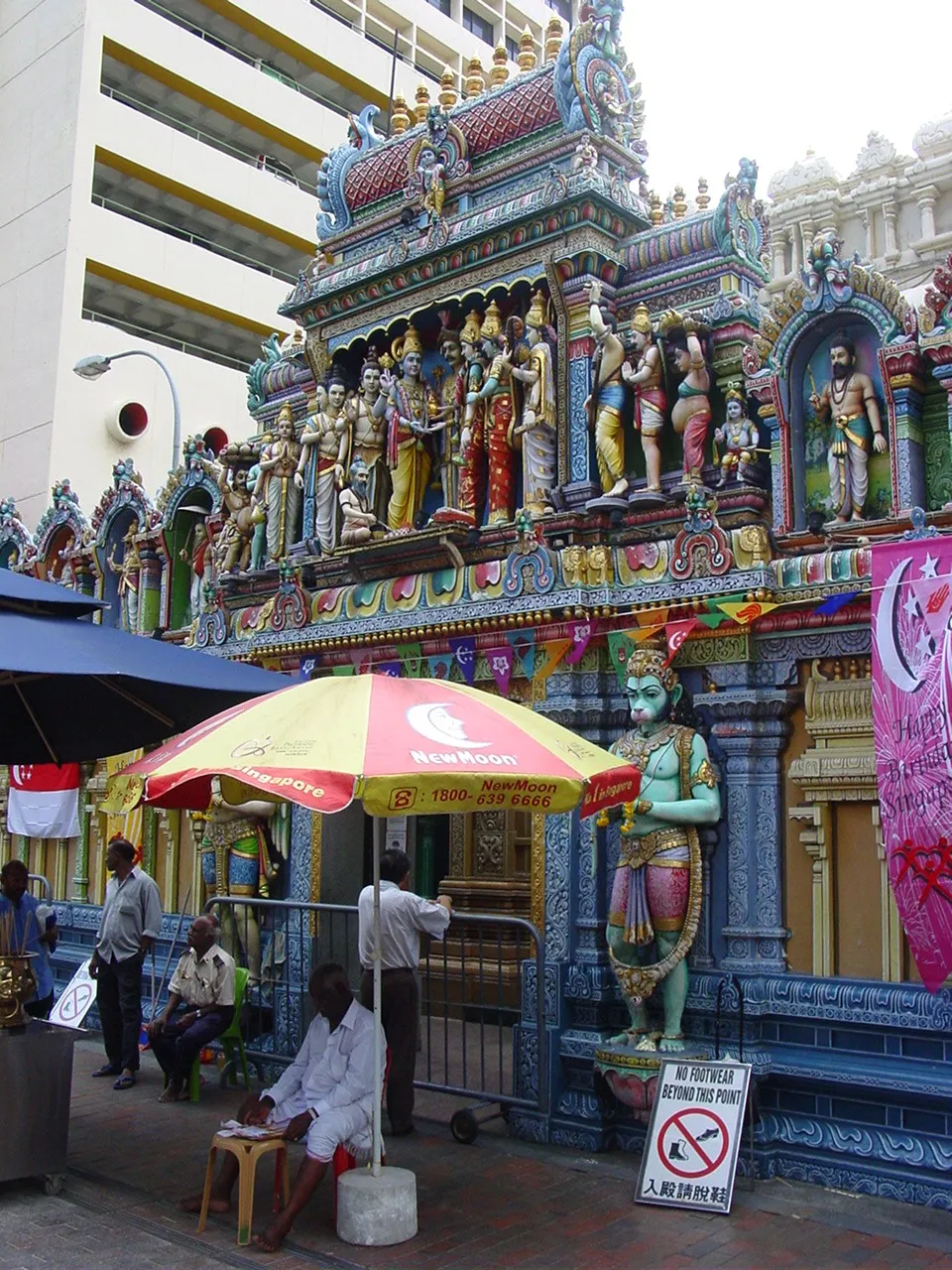
The gopuram (or main entrance tower) is the second tallest structure. On top of it is the wedding scene of Padmavathi to Lord Srinivasar presided by King Akasaraja in the presence of Siva, Brahma and their consorts. On both sides of the main entrance gate are Garuda and Anjjaneyar guarding the temple. Extending outwards on both sides of the main entrance are the front perimeter wall. On top of the wall are the images of the 10 incarnations of Vishnu.
The Legacy
The temple is located along Waterloo Street next to the Kwan Im Tong Hood Buddhist temple. Due to the close proximity of the temples, occasionally, some Chinese worshippers cross over to pray in the Hindu temple. The religious festivals of these two temples help to contribute to the street life in the area. Further along Waterloo street are the former Methodist Chapel (Historic Site) and the Maghain Aboth Synagogue (National Monument). Opposite the temple is the conserved former Stamford Girls School, which was initially founded before WW2 as the Japanese school, for the Middle Road area was also the centre of Singapore’s pre-WW2 Japanese community. The diversity of religious expression and ethnic history within this one street is a testament to the development of Singapore as a harmonious multi-religious, multi-cultural society.
Gazetted on 6 June 2014.
Guidelines and Procedures
All proposed works will need to comply with the Conservation Guidelines and the Specific Restoration Guidelines (SRG). Conservation Permission is required before all additions & alteration works and operations of new use can begin.
Residential Fronts are characterised by timber casement windows flanking a double-leafed timber door. All buildings with residential front which is existing and/or identified in the 'Specific Restoration Guidelines', regardless of land use zoning, shall be retained and restored.
Any proposed additions and alterations to this conserved building are subject to evaluation. Please submit your proposal for URA's review.
Apply for Specific Restoration Guidelines (SRG) (opens in new tab)
Gallery
Explore Street View
The building can be found at this street.