
Conservation Area
Queen Street Conservation Area
Applicable Guidelines
Other Building Guidelines
Conservation Area
Queen Street Conservation Area
Find out more about Queen Street Conservation Area.
Important Information
All proposed works will need to comply with the Conservation Guidelines and the Specific Restoration Guidelines (SRG). Conservation Permission is required before all additions & alteration works and operations of new use can begin.
Owners, architects and engineers intending to carry out restoration works or development within conservation areas are required to comply with the conservation principles, planning parameters and restoration guidelines for conserved shophouse and bungalow building typologies, as well as planning parameters and envelope control guidelines for new buildings within conservation areas accordingly.
For other building types, which do not conform to the standard shophouse or bungalow typology, these will be evaluated on a case-by-case basis in accordance with conservation principles. [1]
About
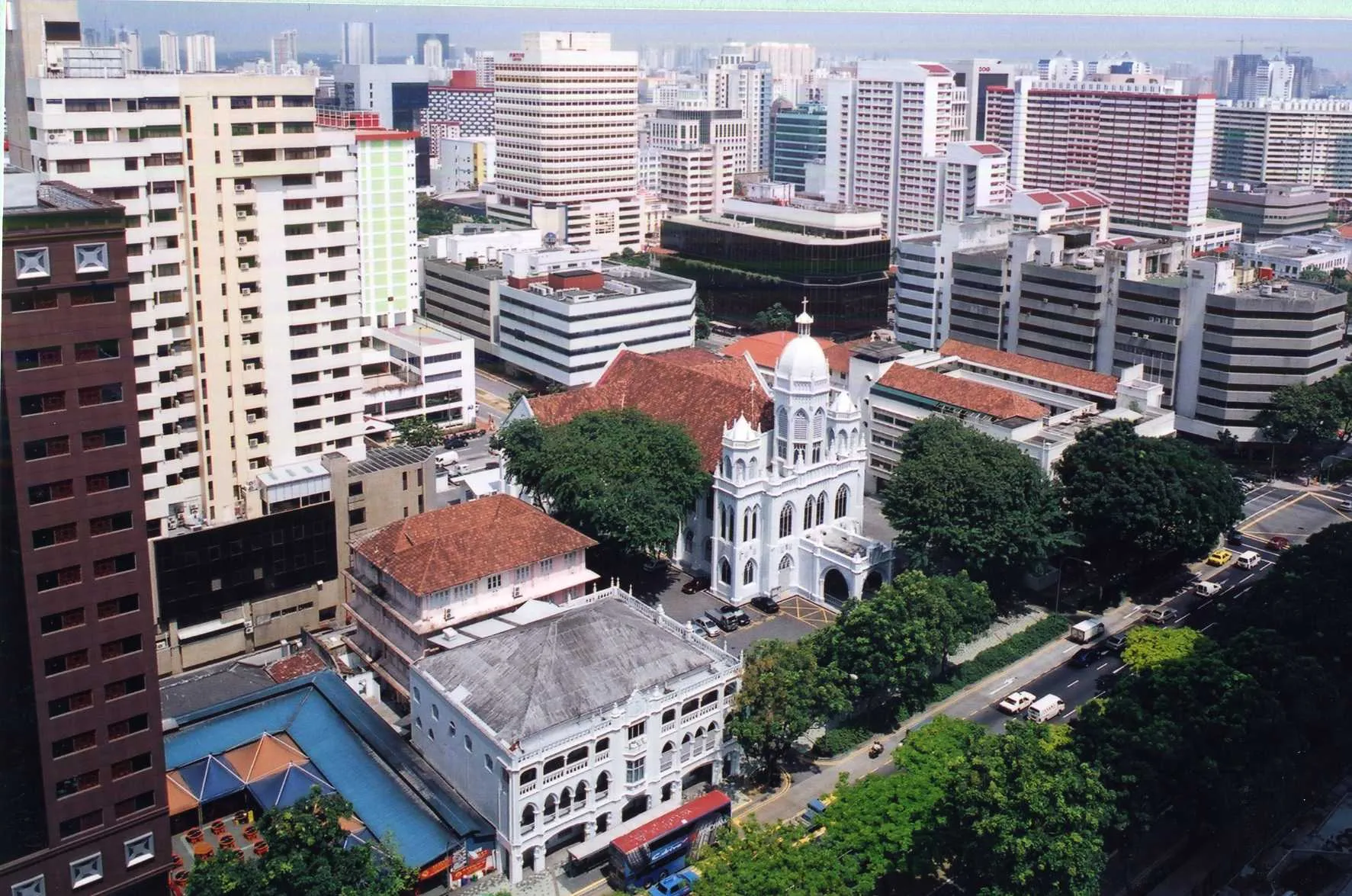
Bounded by Victoria Street, Middle Road and Queen Street, the Queen Street conservation area contains the St Joseph's Church, the Parochial House, the former St Anthony's Convent and the St Anthony's Boys' and Girls' Schools.
The History
Queen Street is located in the Civic District and is named after Queen Victoria. In the past, the street was part of the European enclave. There were also several distinguished schools clustered around the area. Some of these schools include Raffles Girls' Secondary School, St. Joseph's Institution, Catholic High School, St.Anthony's Boys' School, St.Anthony's Secondary School, Waterloo Girls' School and Stamford Girls' School. The schools had since moved away.
The Tamil name for the street, Dhoby Kampam meaning “street of dhobies” and the Malay name, Kampong Dhobi, both refer to the laundry services provided by the dhobies (laundrymen) that dominated the area.
The Architecture
In 1825, Father Francisco da Silva e Maia founded the Portuguese Mission on the site where St. Joseph's Church now stands. This was the first place of Catholic worship in Singapore. The old church building was demolished in 1906 and the new church, which still stands today, was opened in 1912. This Neo-Gothic beauty, designed by Swan and MacLaren, is structured in the form of a Latin cross and boasts beautifully crafted stained glass windows and a pitched roof with interlocking, unglazed clay tiles. First designated as a conservation building on 15 October 1993, it has more recently been gazetted as a national monument, on 14 January 2005.
The Parochial House was built in 1912 together with St Joseph’s Church. Throughout its history, the Parochial House has functioned as an important gathering place for the clergy and laity alike. The private chapel of the Bishop of Macau was located in this building as well as the administrative offices of the former Portuguese Mission. The ground floor of the building also once saw many social events that helped build bonds amongst the parish community.
St Anthony's Boys' and Girls' School was situated in the church compound and attached to the Mission. Father Jose Pedro Santa Anna de Cunha of St Joseph’s Church first started St Anna’s School within the Church compound for the poor parishioners in 1879 with an enrolment of six students. The school later became known as St Anthony’s Boys’ and Girls’ School in 1886. In Nov 1894 St Anthony's Girls’ School with 73 students was separated from the Boys' School. The Canossian nuns managed St Anthony’s Girl’s School where the girls were taught basic education and technical skills such as sewing and embroidery. In 1906, the school became known as St. Anthony's Convent.
The school began to grow and expand with new wings added in the pre-war years to house an orphanage, kindergarten, chapel and new quarters for the nuns. Other than providing education for its students, the Mission school also provided refuge for the poor and neglected. After the war, the school continued with its expansion with the erection of a new five-storey building in the 1950s. The school provided education for many girls in this campus until 1995, when it moved to its new premises in Bedok.
The Legacy
Overall, the unique architectural style and design of the buildings serves as a reminder of the story of the Portuguese Eurasian communities in Singapore, and the links between Singapore and Europe, and between Singapore and the rest of Asia with Portuguese presence like Macau and Melaka.
These mission school buildings serve as physical memories for the missionaries, staff and students that have passed through their age-old corridors. As well as adding to the mass of heritage buildings in the Civic District, the buildings present an interesting juxtaposition of the historical educational institutions with the modern institutions such as SMU and NAFA nearby.
Gazetted on 15 October 1993 for conservation
Guidelines and Procedures
[1] The conservation guidelines for shophouses and bungalows will generally be applied by URA in the consideration of a development application. However, if the circumstances or planning considerations relevant to a case warrant it, URA may in its discretion decide to depart from these general guidelines. The guidelines, principles and illustrations found in the guidelines are not exhaustive in covering all possible site conditions and variations in building type. Persons intending to carry out a development are advised to take this into consideration and check with URA through enquiries or development applications to confirm if their proposals can be allowed.