
Conserved Building
143 Victoria Street
Applicable Guidelines
Other Building Guidelines
Conservation Area
Queen Street Conservation Area
Historic address: 143 Victoria Street
Parochial House Of St Joseph's Church
About
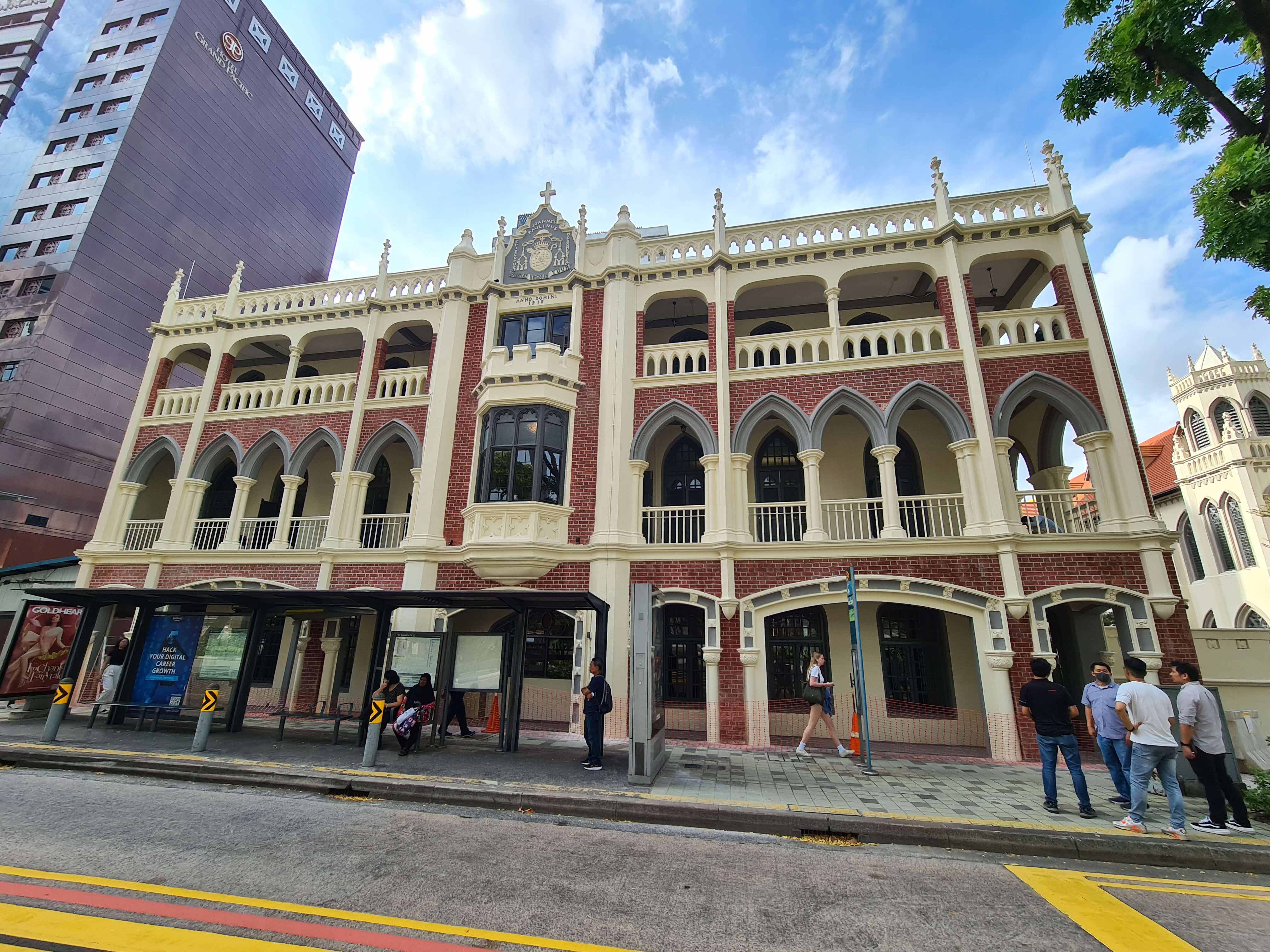
The Parochial House of St Joseph’s Church is located at 143 Victoria Street. This part of town north of Singapore River, was a place of ethnic diversity which can be seen from the presence of many different religious buildings within a very small urban area.
The History
Designed by David McLeod Craik at the same time as St Joseph’s Church, the Parochial House was built in 1912 with the generous aid of Joao Paulino d’ Azevedo e Castro, the Bishop of Macau from 1903 to 1918. It was the former headquarters of the Portuguese Mission in Singapore, established by Father Francisco da Silva Pinto e Maia, a missionary who came to Singapore in 1825 from the then Portuguese colony of Macau. It ceased to be the Portuguese Mission’s headquarters in 1981 when the church was changed from a parish church to a church of devotion within the jurisdiction of the Archdiocese of Singapore.
The Parochial House was the residence of the Bishop of Macau whenever he travelled to Singapore. Until 1999, with the cessation of the presence of the Portuguese Mission in Singapore, the chapel of the Bishop of Macau – a small room near the stairway landing on the third level of the building – was the only place where a visiting Portuguese priest could conduct any official duties prior to his audience with the Archbishop of Singapore.
Beyond its official functions, the Parochial House also performed an important communal role. The ground floor of the building served as a gathering place for the community. It was a space where communal ties were forged and strengthened. It was a place for lively social events. The ground floor of the Parochial House was also the site of the Parochial Library and Parish Canteen. The church’s aspiration was to make the Parochial
Library the best in Singapore. Lively and heated discussions during meetings of the Patrician Movement (a branch of the Legion of Mary which gathered monthly to discuss subjects of Catholic interests) were also held in the Parochial Library. The Parish Canteen was opened in 1960 and proved to be a popular venue for devotees. It had come to be regarded as the centre of social life of the parish and was used to host a wedding reception for the first time in 1965.
The Building
The façade of the Parochial House is in a typical Portuguese Baroque architectural style with fairfaced brickwork and Gothic accents. Pointed Gothic arches encircle the house and unique Gothic pinnacles decorated with crockets adorn the roof of the house. A pinnacle is a pointed conical termination to a tower and a symbol of the heavenly aspirations of pious medieval men. A crocket is in the form of a stylised carving of curled leaves, buds or flowers which is used at regular intervals to decorate the sloping edges of spires and pinnacles. In religious structures, they evoke a garden theme, harkening the believer to the eternal Garden of Eden.
As the main centerpiece of Parochial House, the Image of Our Lady of Fatima is an architectural sculpture that forms the keystone of the house, exhorting believers to emulate her example and inherit the eternal dwelling with God. The Corinthian classical order was used for the columns of Parochial House as its graceful proportions were associated with young maidens such as Our Lady of Fatima.
The wealth coming in from Brazil made the early 18th century a period of great opulence for the Portuguese. Woodcarving started to become popular in adorning numerous church and palace interiors. The Parochial House boasts of a carved wooden grand staircase.
The Parochial House is also home to nine sets of prized Portuguese wall tiles. These tiles are blue-and-white ceramic tiles that are done in the art of the Azulejo, a distinctive Portuguese painted tin-glazed ceramic tilework that adorn palaces, churches and important public buildings. These tiles are emblematic of Portuguese culture across their former colonies and places where they had settled.
The encaustic floor tiles that can be found in Parochial House express the sacred geometry of tetradic repetitive patterns to suggest Divine infinitude. The zigzag or chevron lines found in the tiles echo similar mosaic designs used in Romanesque architecture which is the primodal symbol for water, suggesting the flow of divine grace. It resonates with those who entered the faith through the waters of baptism.
The Legacy
The Parochial House has been home to the administrative offices of St Joseph’s Church, where the Eurasian community and Catholics of all races worship. The church still adheres to the age-old tradition of religious processions and continues to serve as a reminder of the contributions of the Portuguese and Portuguese Eurasian communities. Together with the adjacent St Joseph’s Church and old St Anthony’s Boys’ School, the Parochial House continues to awe many spectators with its magnificent Gothic edifice and grandeur.
The Parochial House was conserved on 30 June 2016. The main St Joseph’s Church was declared a National Monument on 14 January 2005. References
Professor James Newton Boss Journey of 190 Years: A History of the Eurasian Catholic Community in Singapore, 1825-2015, Global Cultural Alliance Ltd, 2016.
Guidelines and Procedures
All proposed works will need to comply with the Conservation Guidelines and the Specific Restoration Guidelines (SRG). Conservation Permission is required before all additions & alteration works and operations of new use can begin.
Residential Fronts are characterised by timber casement windows flanking a double-leafed timber door. All buildings with residential front which is existing and/or identified in the 'Specific Restoration Guidelines', regardless of land use zoning, shall be retained and restored.
Any proposed additions and alterations to this conserved building are subject to evaluation. Please submit your proposal for URA's review.
Apply for Specific Restoration Guidelines (SRG) (opens in new tab)
Gallery
Explore Street View
The building can be found at this street.