
Conservation Area
Pearl's Hill Conservation Area
Applicable Guidelines
Other Building Guidelines
Conservation Area
Pearl's Hill Conservation Area
Find out more about Pearl's Hill Conservation Area.
Important Information
All proposed works will need to comply with the Conservation Guidelines and the Specific Restoration Guidelines (SRG). Conservation Permission is required before all additions & alteration works and operations of new use can begin.
Owners, architects and engineers intending to carry out restoration works or development within conservation areas are required to comply with the conservation principles, planning parameters and restoration guidelines for conserved shophouse and bungalow building typologies, as well as planning parameters and envelope control guidelines for new buildings within conservation areas accordingly.
For other building types, which do not conform to the standard shophouse or bungalow typology, these will be evaluated on a case-by-case basis in accordance with conservation principles. [1]
About
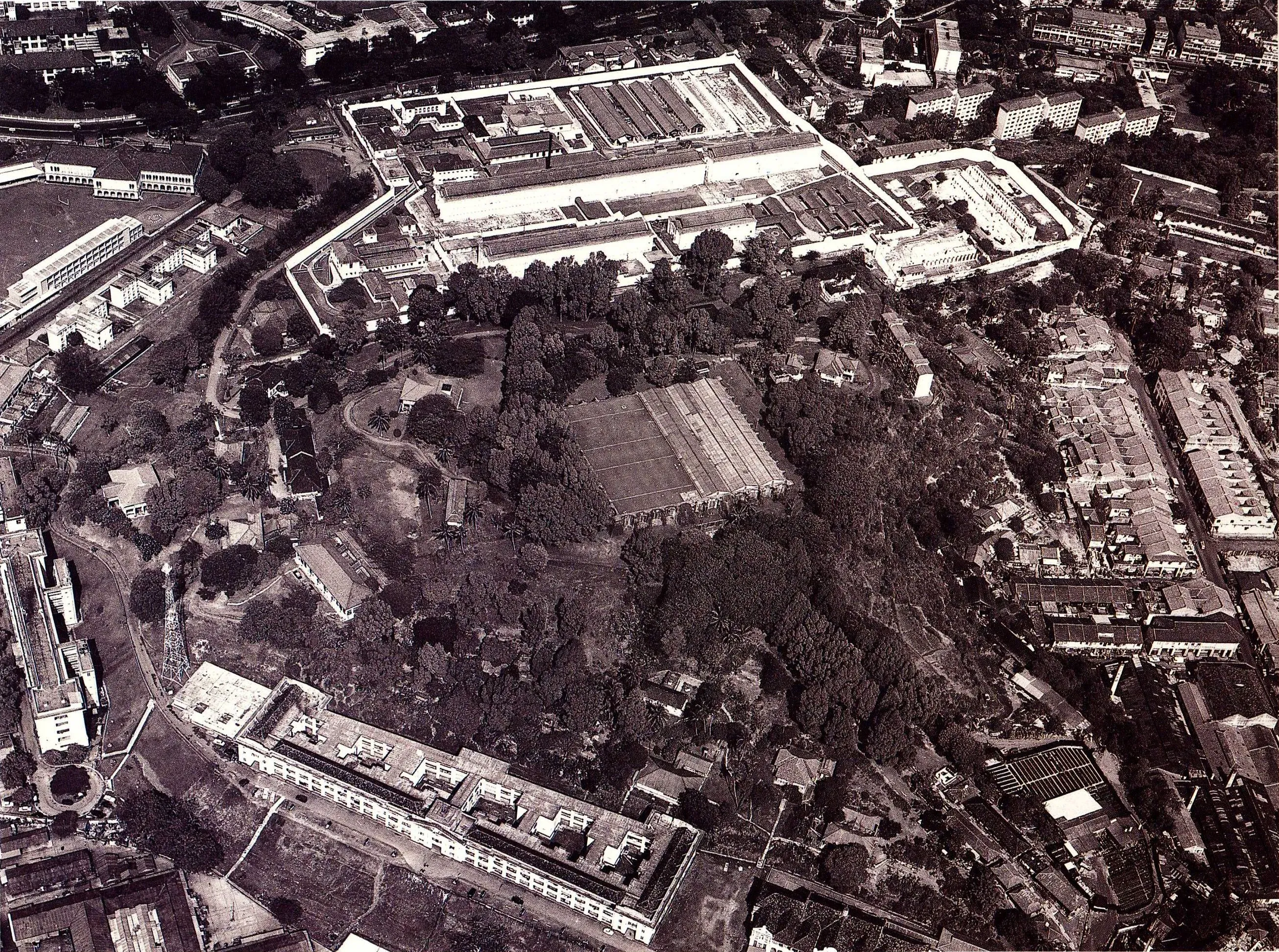
The Upper Barracks, Lower Barracks and the 2-storey bungalow are located in Pearl’s Hill, one of the few remaining significant hills in the City. The hill was named after Captain James Pearl who sailed into Singapore with Sir Stamford Raffles in 1819 and has a long history.
The History
The Lower and Upper Barracks were built in the 1930s to house the Sikh Contingent of the Straits Settlement Police (SSP). They are on the site of the original Tan Tock Seng Hospital. The Upper Barracks, on Pearl’s Hill Terrace, were used to house married policemen while the Lower Barracks, on Eu Tong Sen Street, housed the unmarried policemen. The SSP was disbanded in 1946, whereupon the buildings were put to other uses. They were used over the years as either the CID or the Police Headquarters, until the recent relocation of all police functions into the newly completed Cantonment Complex. From 1965, the Ministry of Interior and Defence (the predecessor of the Ministry of Defence and Ministry of Home Affairs) were also housed in the Barracks until the late 1970s.
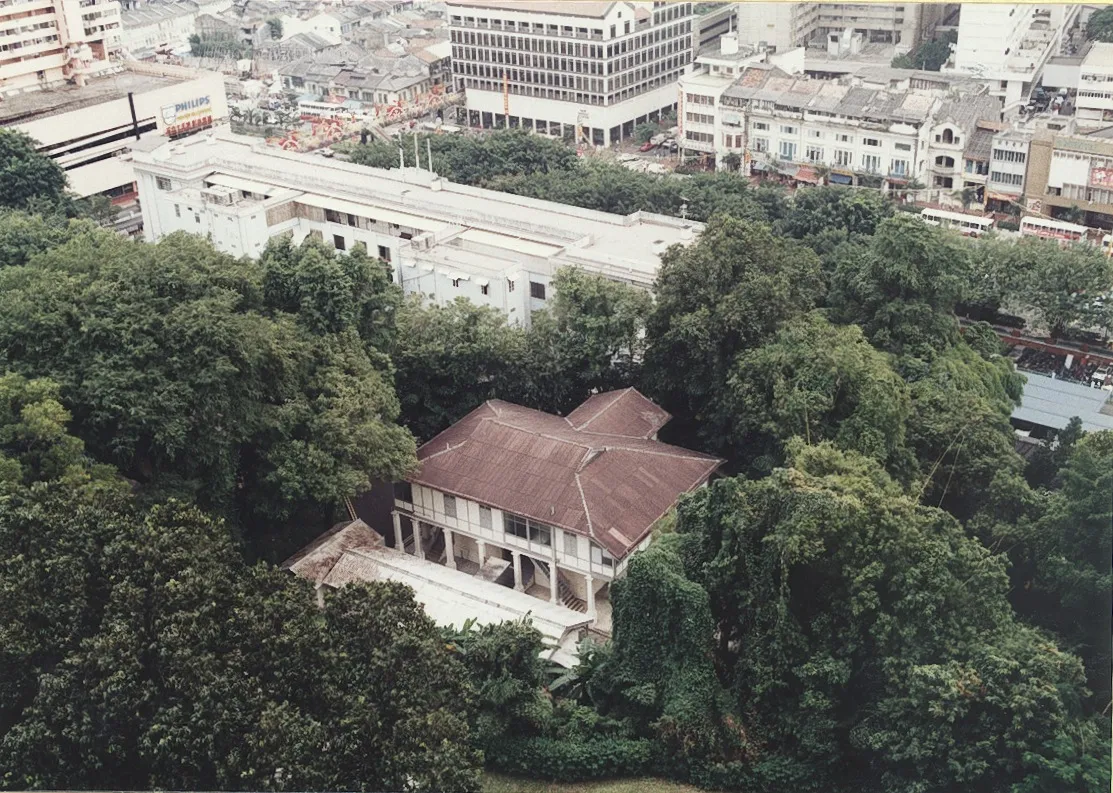
The 2-storey bungalow on Pearl’s Hill Terrace, was likely to have been built in the 1920s, as it exhibits stylistic features prevalent at the time. Given the history of the site, it was most likely built as accommodation for a higher ranking officer of the Police Force. In subsequent years, it was variously used as the Syriah Court and most recently, the Scene of Crime Unit.
The Architecture
The Lower and Upper Barracks were built in a simplified Neo-Classical Style that was popular with the Public Works in the 1930s for major government buildings. Both barracks are of reinforced concrete.
The 5-storey Lower Barracks are on street level. Set back from Eu Tong Sen Street with a generous plaza, it creates an impressive contrast to the prevalent two and three storey shophouses of Chinatown across the road. The building follows the Classical tradition of having the three parts of the building clearly articulated. The first storey gives a sense of firmness of appearance by having rusticated horizontal bands in the plaster-work. The top of the building is completed with a deep overhanging entablature with a strongly articulated geometric linear cornice line. The centre of the building is given greater emphasis through a shallow triangular pediment, surmounted by flag-poles.
The 3-storey Upper Barracks was built at a higher level on the hill, facing towards the Singapore River. At almost 160 metres in length, it is one of the longest pre-war civic buildings in existence. The combination of its impressive length and elevated position gives it a commanding presence overlooking the Chinatown area. The overall design treatment is more geometrical, with the details of the building articulated to greater emphasize the length of the thirty-one bays of the building. The building also has its ends emphasised through the protrusion of the building bays, while the central entrance is made prominent with the use of pairs of pilasters, in contrast with the single pilasters elsewhere. The features combine to give an overall appearance of palatial grandeur.
The 2-storey bungalow was built in ‘Black and White’ style that was a popular style for housing senior administrators of the Colonial Government. Typical of such bungalows, the design is in two parts: the first storey is composed of a grid of masonry columns that are elegantly proportioned and covered with detailed plasterwork mouldings; and the upper storey in timber post and beam construction with a verandah that runs around the front and sides of the building.
The Legacy
The presence of these 3 buildings on Pearl’s Hill are a reminder of the origins of our Police Force - from the importation of the Sikh Sepoys who were known for their bravery, to the eventual setting up of our own Police Force.
The buildings can also be said to have importance in marking the origins and growth of our Sikh community. They are also an important touchstone for the many others immigrants who eventually chose a career in the security forces, thus contributing to the maintenance of the security of first, the Colony and eventually, an independent Singapore.
Gazetted on 5 Dec 2008 for conservation
Guidelines and Procedures
Gallery
Resources
[1] The conservation guidelines for shophouses and bungalows will generally be applied by URA in the consideration of a development application. However, if the circumstances or planning considerations relevant to a case warrant it, URA may in its discretion decide to depart from these general guidelines. The guidelines, principles and illustrations found in the guidelines are not exhaustive in covering all possible site conditions and variations in building type. Persons intending to carry out a development are advised to take this into consideration and check with URA through enquiries or development applications to confirm if their proposals can be allowed.