
Conserved Building
25 Paya Lebar Road
Applicable Guidelines
Other Building Guidelines
Conservation Area
Wak Tanjong Mosque Conservation Area
Historic address: 25 Paya Lebar Road
Wak Tanjong Mosque
About
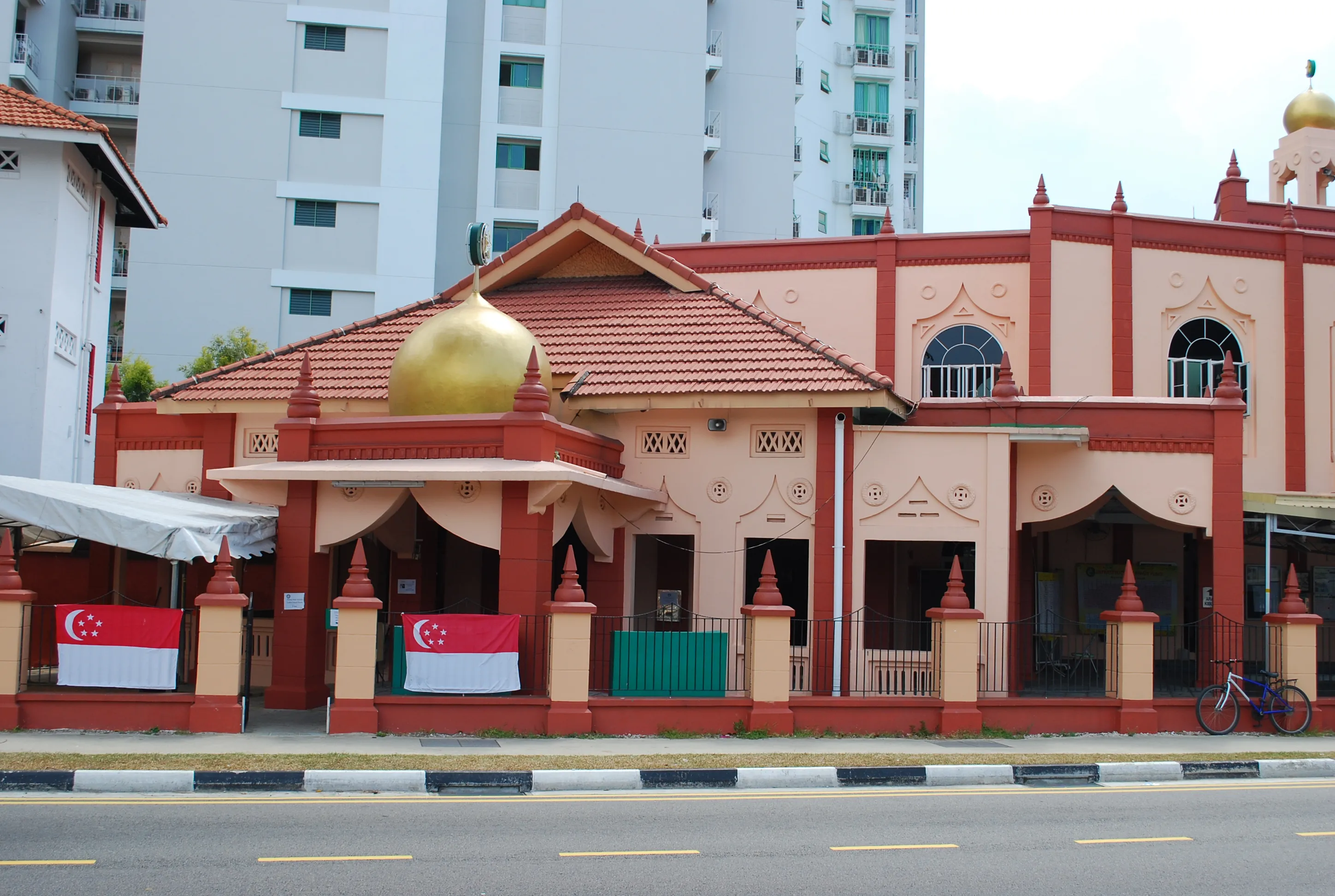
Located next to the conserved former Geylang Fire Station, the Wak Tanjong Mosque is an architectural and community landmark at where Paya Lebar Road meets Sims Avenue.
The History
From the late 1920s, with the reclamation and clearing of the Kallang River Basin, the Malay families who were living by and on the river were relocated to the area encompassing today’s Geylang Serai. With the establishment and growth of this area as Singapore’s main suburban Malay settlement, related institutions and services like mosques, madrasahs and markets were set up.
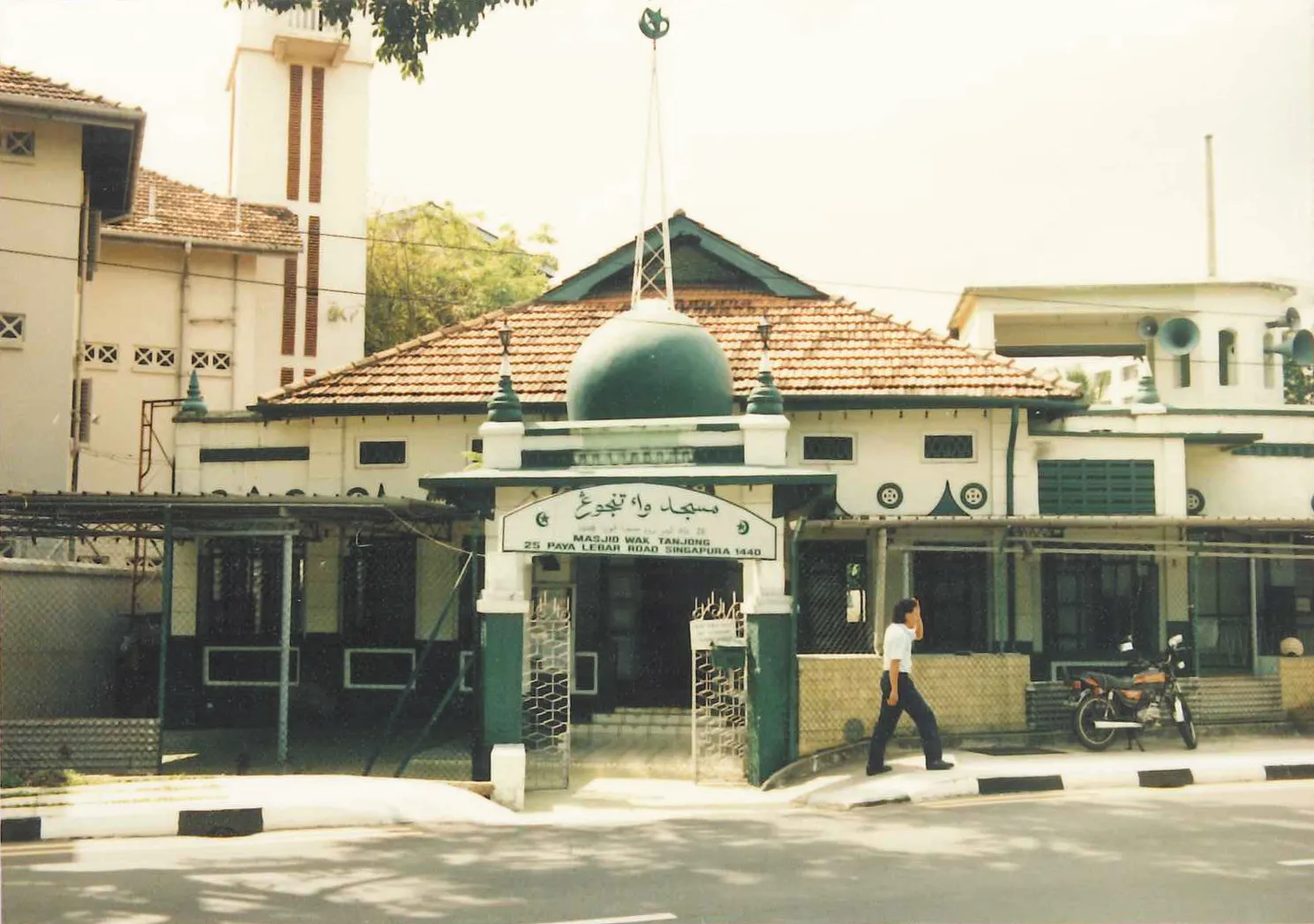
In the early years, Wak Tanjong Mosque was a smaller mosque set up next to the former Geylang Fire Station. It was built on land bequeathed to the community by Wak Tanjong (an honorific that can be translated to ‘Elder Uncle of the Cape’). In 1935, the mosque was substantially rebuilt in brick and plaster.
The Building
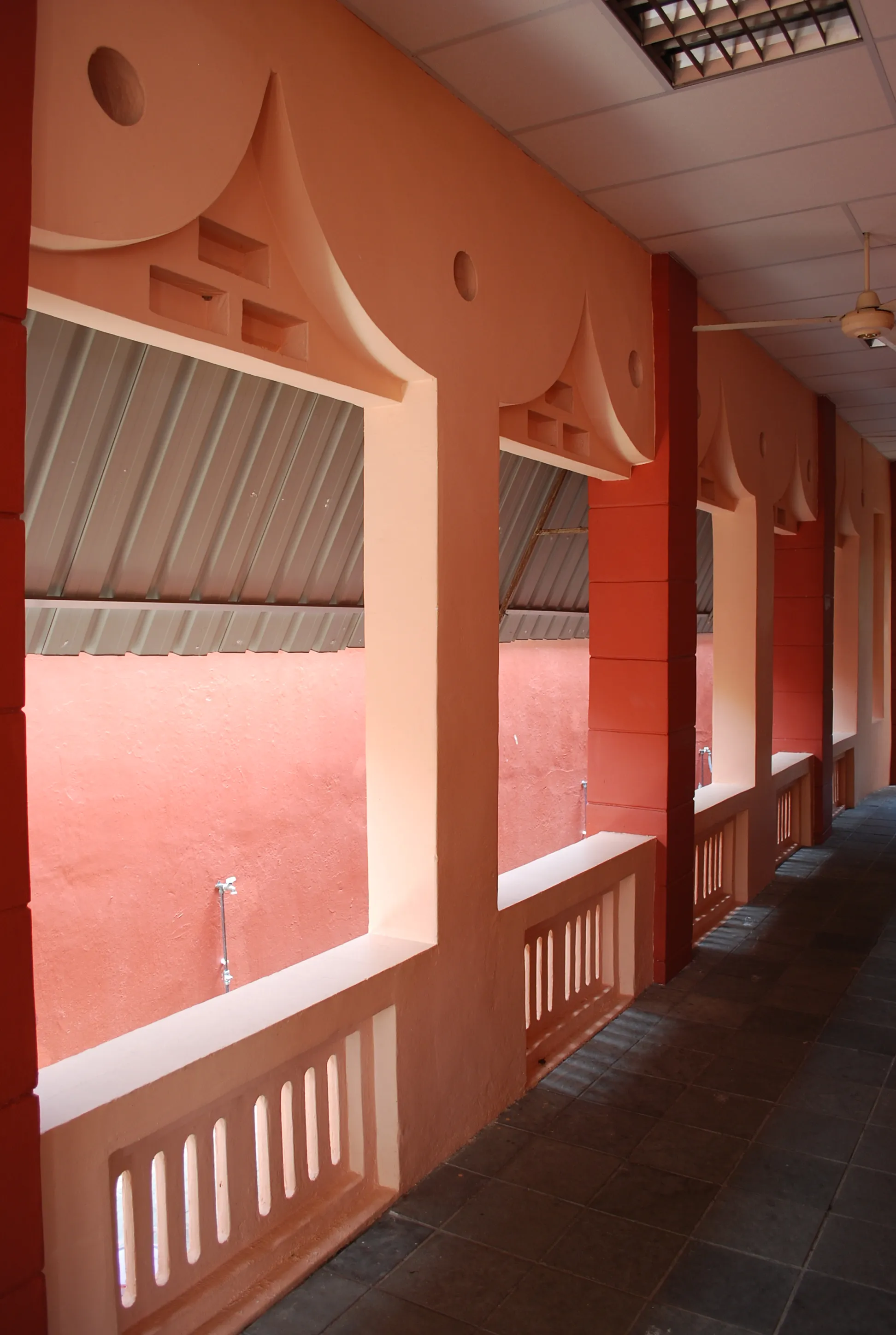
The mosque is a quaint brick and reinforced concrete building finished in plaster. Built in the Indo-Saracenic style that had by then become popular and synonymous with Islam (such as the Sultan Mosque, rebuilt in 1924 in this style), it also incorporates Art-Deco and Chinese motifs in its design. Such an eclectic approach was popular then, and reflected the openness within Singapore’s Muslim community in borrowing from the aesthetics of different architectural traditions.
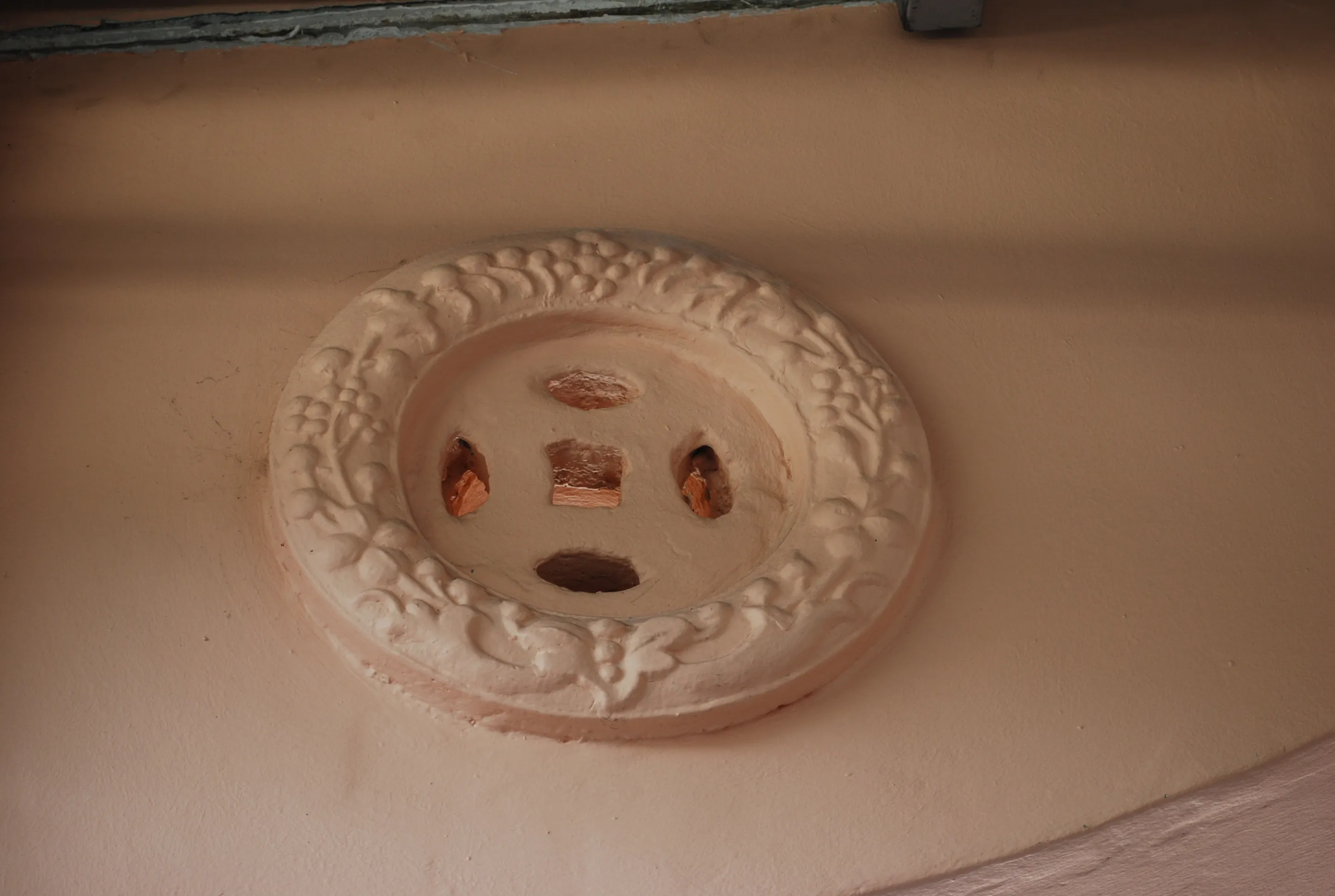
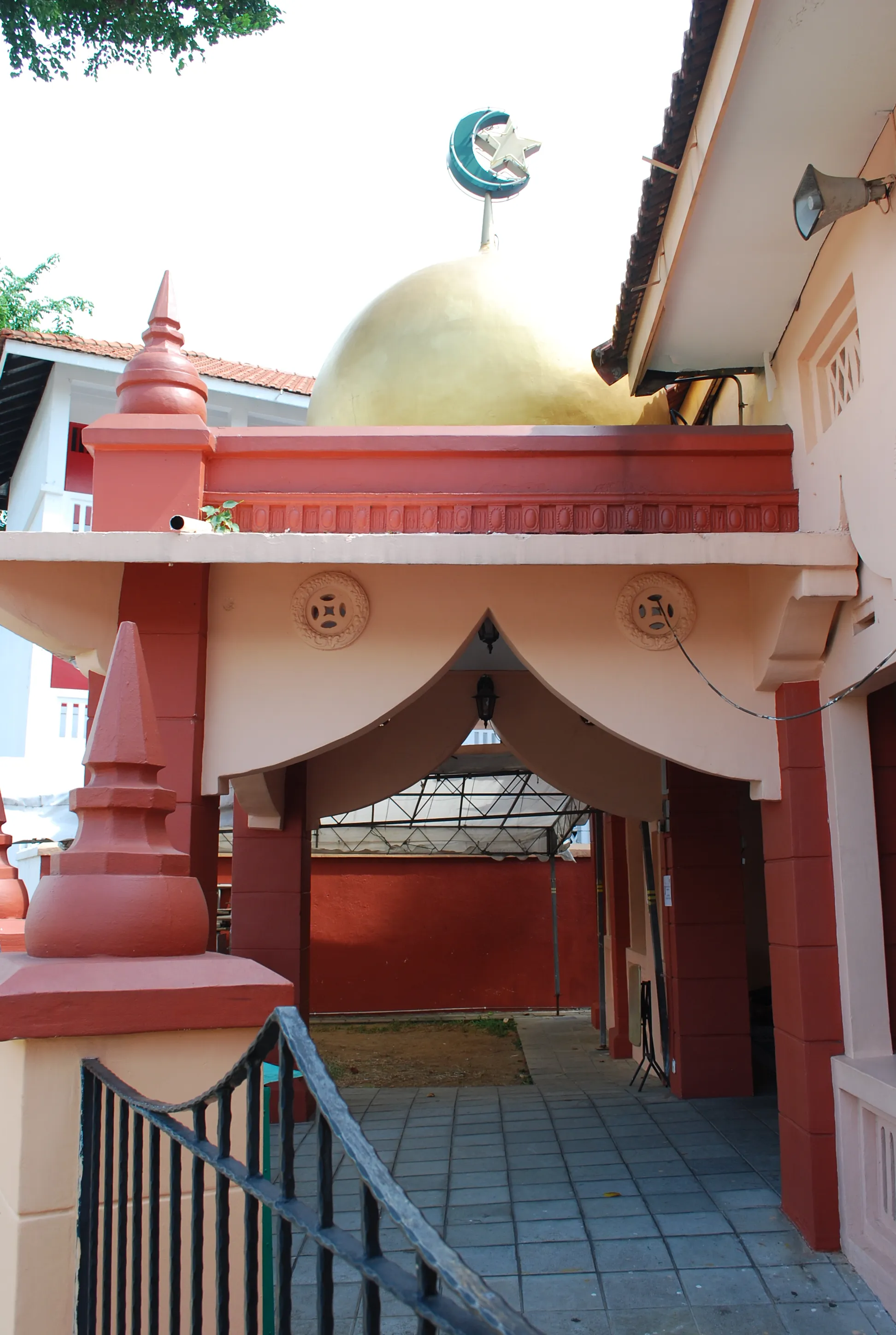
Unlike most mosques, this mosque does not have a minaret. However, it has, over its entrance portico, a reinforced concrete dome, and around the portico, finely proportion reinforced concrete chhajjas (projecting eaves) that are hallmarks of the Indo-Saracenic style. Adding to the eclectic design of the mosque are mouldings of neo-classical floral wreaths framing pre-cast air-vents of Chinese coin design on the facade.
The Legacy
Today, the mosque serves as an important reminder of the settlement history of the Geylang Serai area and stands as a testament to the spirit of self-help and philanthropy within the Malay Muslim community. It also demonstrates the diversity of architectural expression of Islamic buildings in Singapore.
Gazetted on 6 June 2014.
Guidelines and Procedures
All proposed works will need to comply with the Conservation Guidelines and the Specific Restoration Guidelines (SRG). Conservation Permission is required before all additions & alteration works and operations of new use can begin.
Residential Fronts are characterised by timber casement windows flanking a double-leafed timber door. All buildings with residential front which is existing and/or identified in the 'Specific Restoration Guidelines', regardless of land use zoning, shall be retained and restored.
Any proposed additions and alterations to this conserved building are subject to evaluation. Please submit your proposal for URA's review.
Apply for Specific Restoration Guidelines (SRG) (opens in new tab)
Gallery
Explore Street View
The building can be found at this street.