
Conservation Area
Former Kallang Airport Conservation Area
Applicable Guidelines
Other Building Guidelines
Conservation Area
Former Kallang Airport Conservation Area
Find out more about Former Kallang Airport Conservation Area.
Important Information
All proposed works will need to comply with the Conservation Guidelines and the Specific Restoration Guidelines (SRG). Conservation Permission is required before all additions & alteration works and operations of new use can begin.
Owners, architects and engineers intending to carry out restoration works or development within conservation areas are required to comply with the conservation principles, planning parameters and restoration guidelines for conserved shophouse and bungalow building typologies, as well as planning parameters and envelope control guidelines for new buildings within conservation areas accordingly.
For other building types, which do not conform to the standard shophouse or bungalow typology, these will be evaluated on a case-by-case basis in accordance with conservation principles. [1]
About
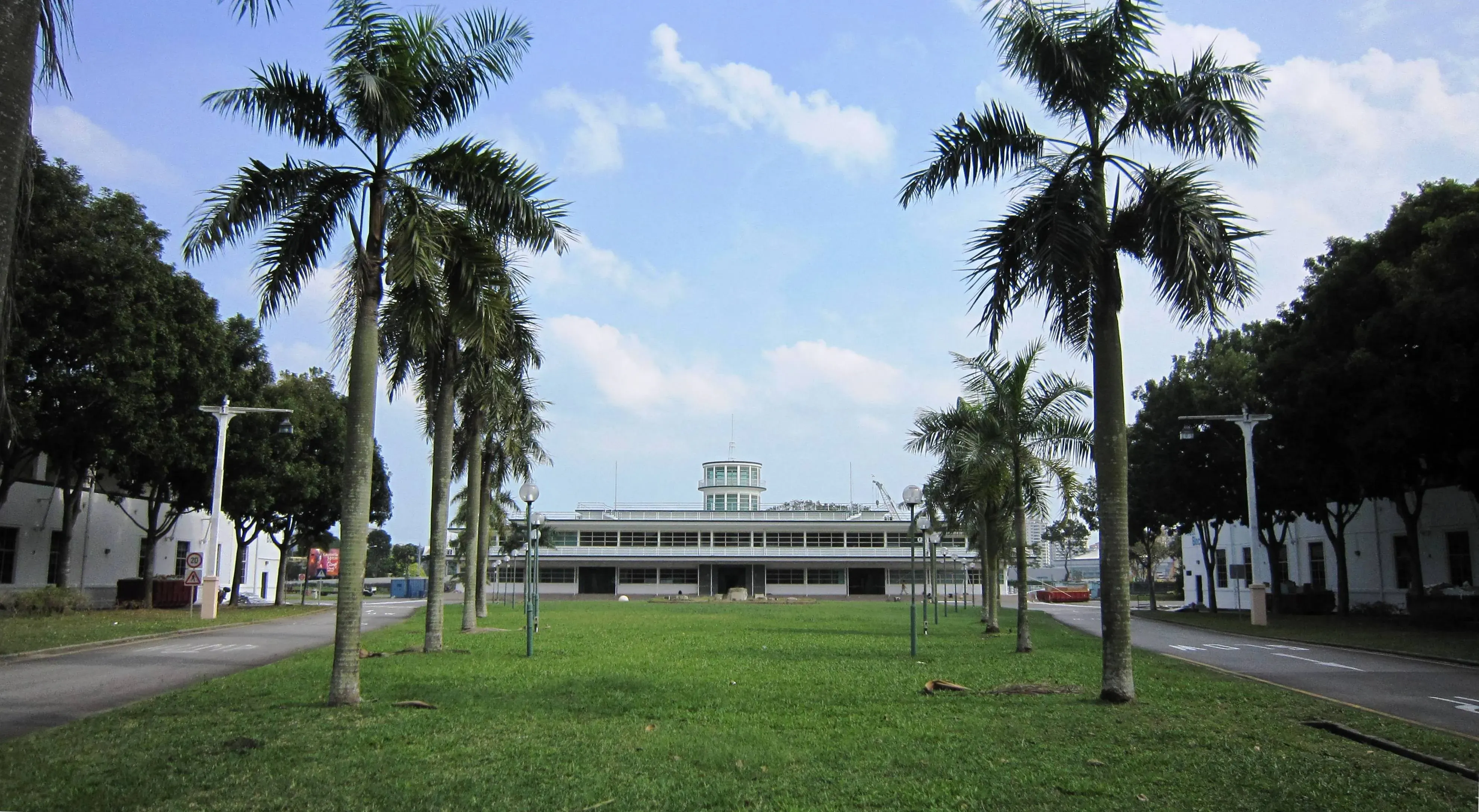
Located at 9 Stadium Link and fronting the Nicoll Highway today, the former Kallang Airport is sited on reclaimed land of what was once the swampy Kallang Basin. The landing strip was a large circular field in front of the Terminal Building. The boundary of the Airport once extended into what is now Old Airport Road. The surrounding land and the runways were redeveloped in the 1950s when the airport facilities were relocated to Paya Lebar Airport.
The History
The former Kallang Airport was built by the British Colonial government in the 1930s as Singapore’s first commercial international airport building, and served the city-state from 1937-1955.
At the time of the airport’s conception, Sir Cecil Clementi, the Governor of the Straits Settlements, indicated that the new airport, as Singapore’s aviation gateway to the rest of the world, should be located near to the heart of town. The site at the Kallang Basin was chosen as it possessed three outstanding advantages - its proximity to the centre of the city, its free aerial approaches, and the combined facilities for both land and marine aircraft.
Kallang Airport was officially opened on 12 June 1937 by Sir Shenton Thomas, who had by then replaced Sir Clementi as the Governor. Touted as one of the most modern airports of its time, it was hailed as the finest airport in the British Empire. It was also Singapore’s first purpose-built civil airport and a testament of the priority placed on the future of air travel, and Singapore as a gateway between England and Australia.
With the opening of the new and larger airport at Paya Lebar in 1955, the civil airport functions at Kallang ceased. The site was taken over by the People’s Association (PA) in the early 1960s, and the former Terminal Building became the PA HQ building until PA moved to its current site at Tyrwhitt Road in 2009.
The Architecture
The former Terminal Building of Kallang Airport is an iconic and visually stunning building. The Modernist language of the former Terminal Building can be interpreted as a metaphor of a contemporary airplane, with its elevated cylindrical glass control tower centrally placed as the cockpit. This made reference to the concepts of progress, speed and machinery.
The design of the building is accredited to Frank Dorrington Ward, the Chief Architect of the former Public Works Department. The building clearly displayed the new Modern architectural language of functionalism, with exposed concrete, horizontal lines, transparent glazed walls, and streamlined curves. The common characteristics of the International Style are easy to identify in the building: a radical simplification of form, a rejection of ornament, adoption of glass, steel and concrete as preferred materials, the transparency and ‘lightness’ of the building, and a clear reading of the function of the different spaces.
The East and West Blocks, originally built to house the airline offices, are designed simply and built in reinforced concrete. They are similar in appearance to other military buildings found within British military camps, with the regular repetitive columns and windows. Their contrasting heaviness balances the lightness of the former Terminal Building, and can be seen as anchors on either side of the site.
The hangar adjacent to the West Block is a lofty and simple column-free structure where planes used to park. The building is a functional piece with large expense of windows to bring light into the space. The hangar is also conserved to complete the aviation history for the site.
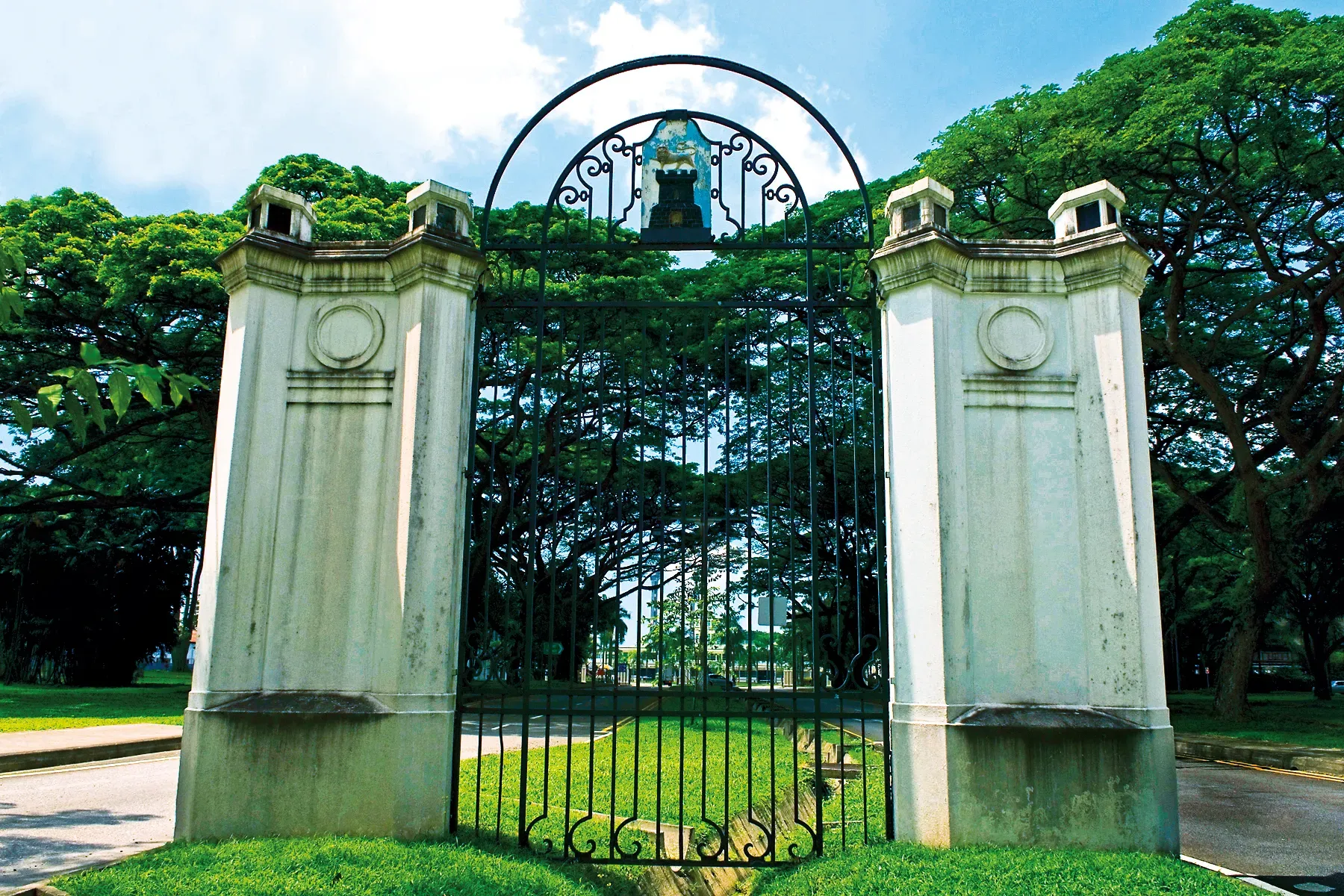
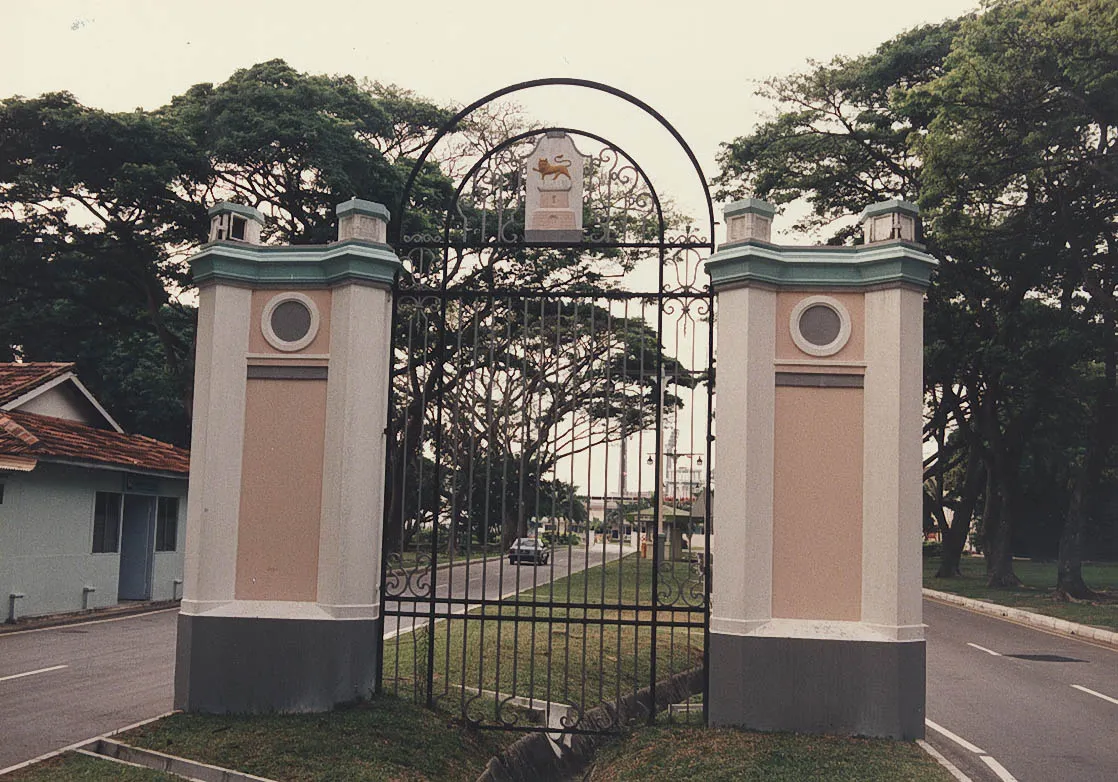
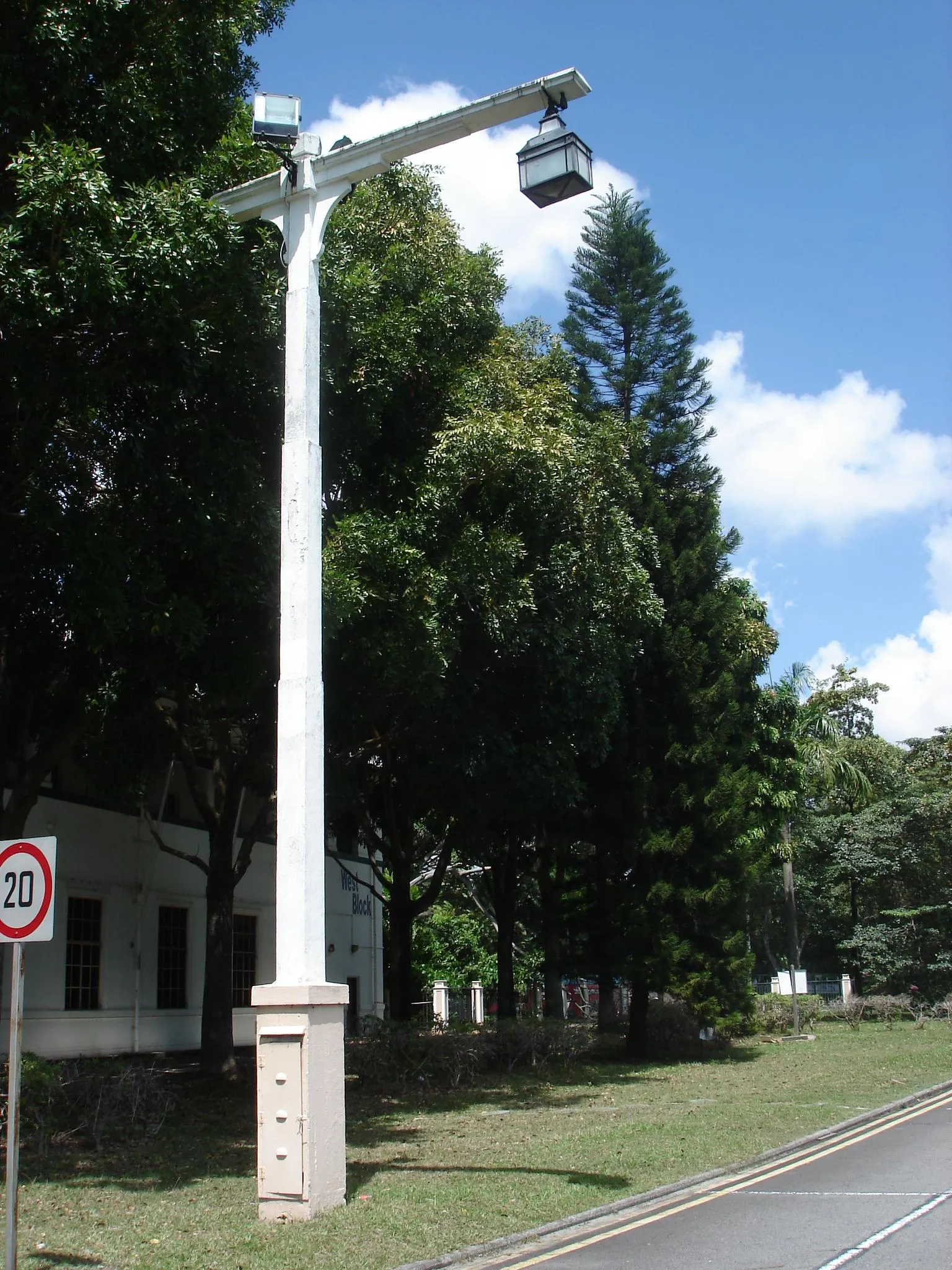
The gate posts with the lions crest and original lamp posts are also conserved to complete the historic setting of the site.
The Legacy
The Kallang Airport is Singapore’s first purpose-built civil airport and was touted as one of the most modern airports of its time. With the iconic architecture of the Terminal Building, and its rich social history adding depth as a backdrop for the area, the conservation of the selected buildings and structures at Kallang Airport serves as physical reminders and markers of the humble origins of the development of Kallang and its role in establishing Singapore’s position on the international aviation map.
Gazetted on 5 Dec 2008 for conservation
Guidelines and Procedures
Gallery
[1] The conservation guidelines for shophouses and bungalows will generally be applied by URA in the consideration of a development application. However, if the circumstances or planning considerations relevant to a case warrant it, URA may in its discretion decide to depart from these general guidelines. The guidelines, principles and illustrations found in the guidelines are not exhaustive in covering all possible site conditions and variations in building type. Persons intending to carry out a development are advised to take this into consideration and check with URA through enquiries or development applications to confirm if their proposals can be allowed.