
Conserved Building
1 Canning Rise
Applicable Guidelines
Other Building Guidelines
Conservation Area
Fort Canning Conservation Area
Historic address: 1 Canning Rise
Former Anglo-Chinese Primary School (Oldham Hall)
About
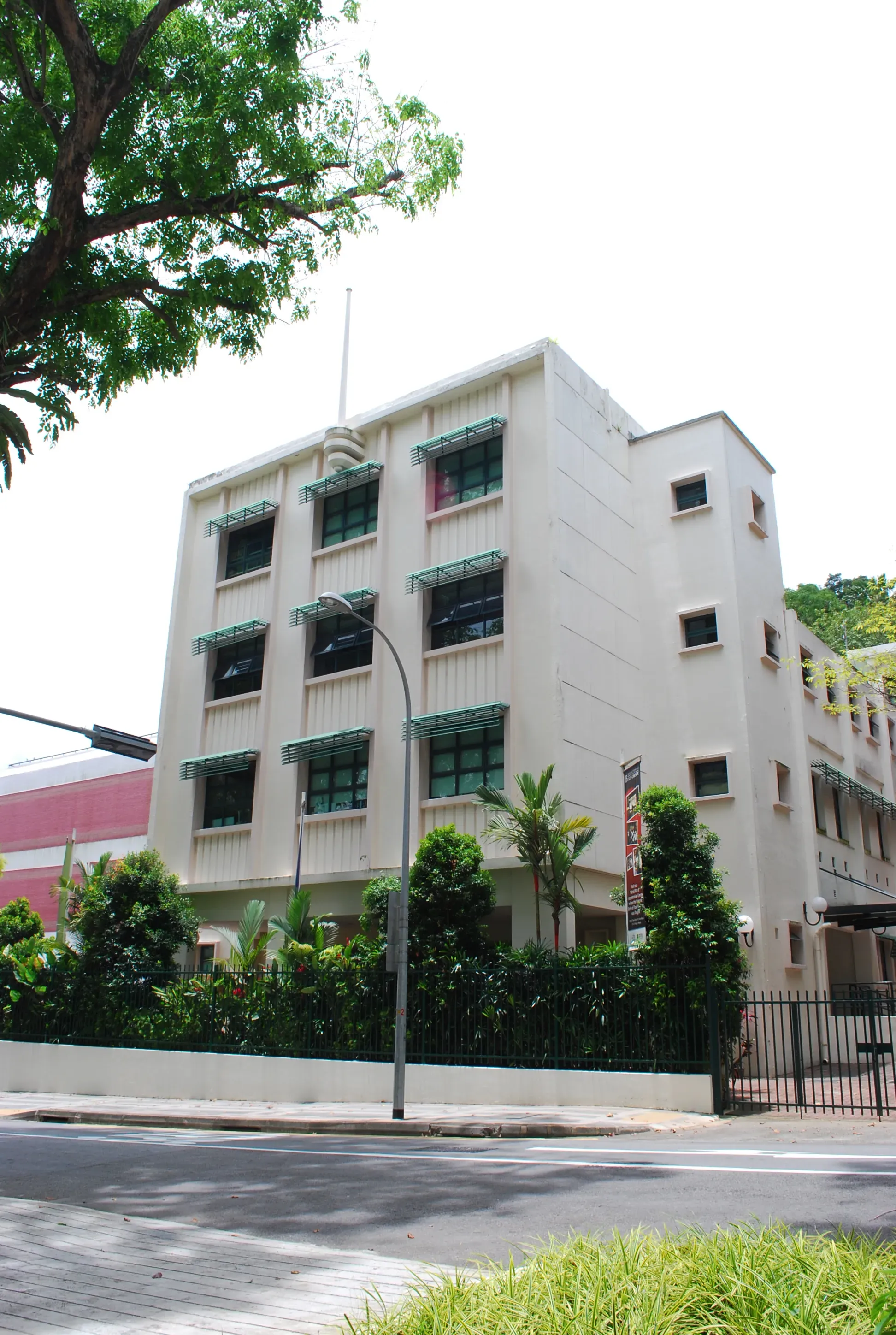
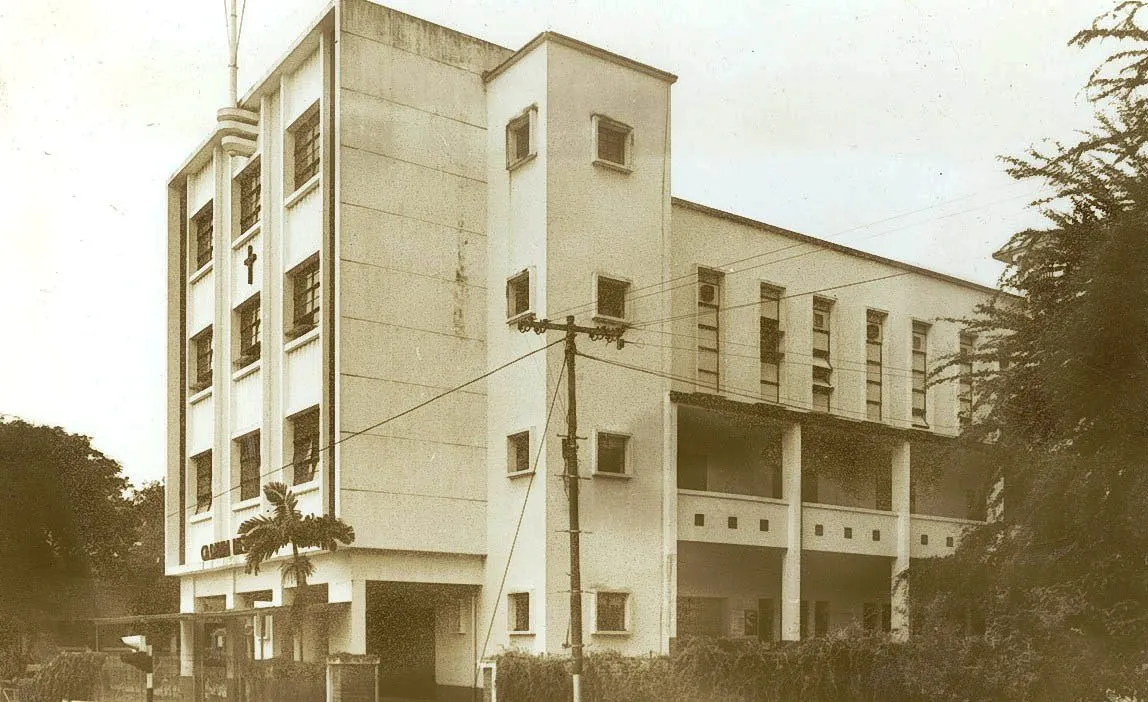
The site was originally occupied by an old school building (circa 1897) known as the Oldham Hall, which was part of the historic Anglo-Chinese School. It was redeveloped in 1959 when the school commissioned noted pioneer architect Ng Keng Siang to design an elegant Modern-style reinforced concrete building to serve as the new school hall. Today, it houses the National Archives of Singapore. At 4 storeys, the building is taller than the neighbouring Masonic Hall and the Singapore Philatelic Museum (former Methodist Book Room) but still retains a sense of scale that is in harmony with the park surroundings and the terrain of Fort Canning Hill.
The Building
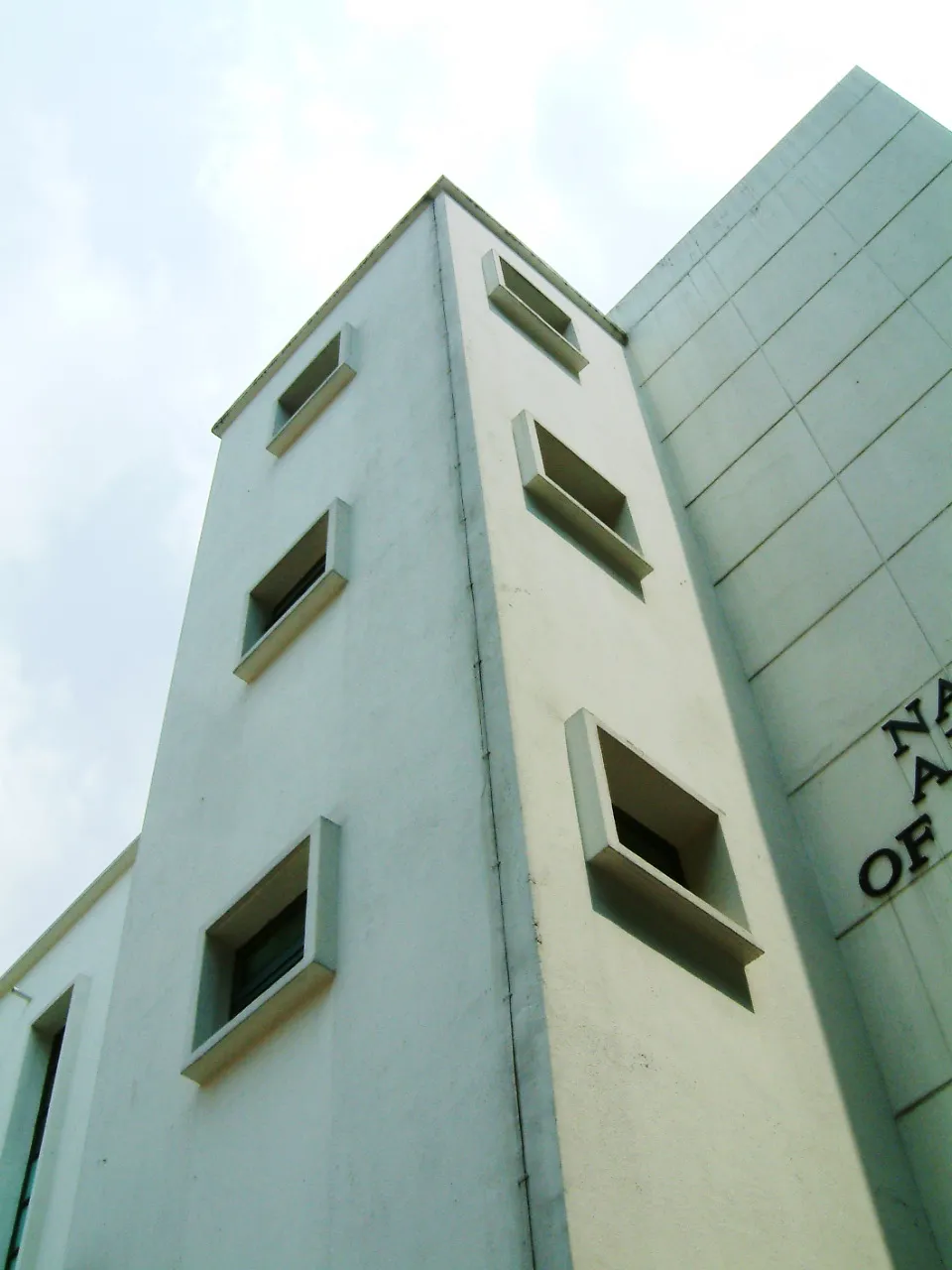
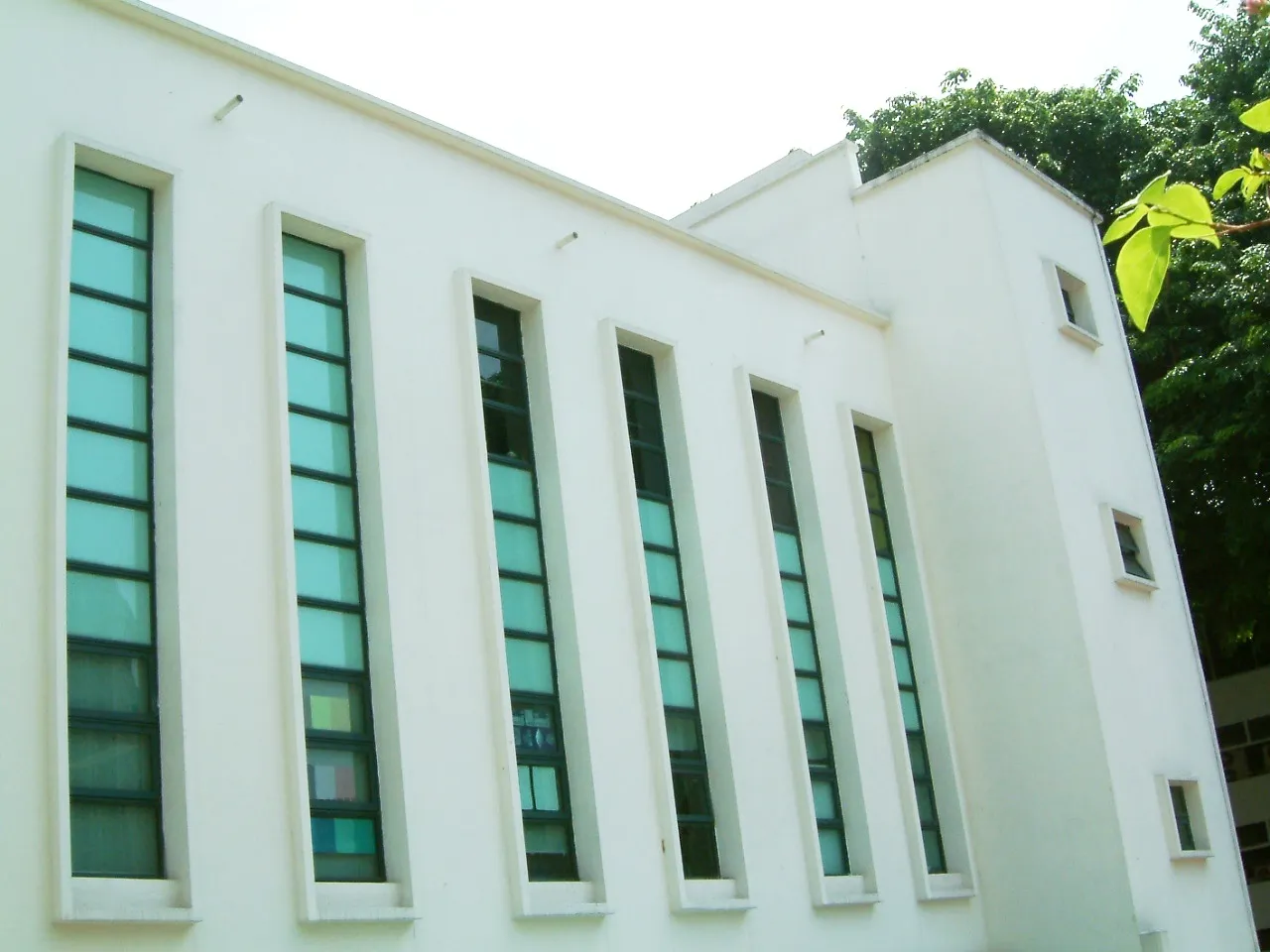
The different functional spaces of the building, such as the stairwells and the school hall, can be read through the form and fenestration of the building. Long thin vertical windows are used for the side façade of the school hall, while small square windows denote the stairwells. The well-proportioned, almost Art-Deco front façade is composed with ribbed mouldings and rectilinear concrete fins and sills adding visual interest while providing the necessary shelter from sun and rain, to create a pleasant and dignified appearance. At the ground floor, as a contrast to the overall orthogonal geometry of the hall, there used to be a sheltered corridor composed of a row of shallow vaults of thin reinforced concrete construction – reminiscent of the upper gallery of the former NCO Club at Beach Road (also conserved). This corridor was removed sometime in the 1990s.
The Legacy
The many significant buildings in the Fort Canning area serve as important markers to the historic land uses around Fort Canning Hill, enabling Singapore’s past to be read in the architectural, social and historical roots of the buildings.
This building is a reminder of the role of the area as a place where many schools and public institutions were set up by the various communities during the Colonial era, for the purpose of the betterment of society. The building itself is also a marker in the evolution of Modern architecture in the Singapore context. It is rare example of the work by a pioneering local architect to explore the area of architecture for educational use, at a period where increasingly, the building of schools was taken over by the Public Works Department.
Even as the surrounding areas undergo further development, their retention helps to ensure the uniqueness of the vicinity, adding to the critical mass of historically and socially significant buildings and sustaining the memory of the place for Singaporeans.
Building gazetted on 21 November 2005.
Guidelines and Procedures
All proposed works will need to comply with the Conservation Guidelines and the Specific Restoration Guidelines (SRG). Conservation Permission is required before all additions & alteration works and operations of new use can begin.
Residential Fronts are characterised by timber casement windows flanking a double-leafed timber door. All buildings with residential front which is existing and/or identified in the 'Specific Restoration Guidelines', regardless of land use zoning, shall be retained and restored.
Any proposed additions and alterations to this conserved building are subject to evaluation. Please submit your proposal for URA's review.
Apply for Specific Restoration Guidelines (SRG) (opens in new tab)
Gallery
Explore Street View
The building can be found at this street.