
Conserved Building
378 Alexandra Road
Applicable Guidelines
Other Building Guidelines
Conservation Area
Alexandra Hospital Conservation Area
Historic address: 378 Alexandra Road
Alexandra Hospital
About
Queenstown, which was named after Queen Elizabeth II to mark her coronation in 1953, was previously a large swampy valley characterised by 2 hills at either sides. The village in the area, with mainly Hokkien and Teochew-speaking dwellers, was known by the name ‘boh beh kang’ – or ‘endless river’. It was chosen by the Singapore Improvement Trust (SIT) as the site for the first full-scale satellite town for public housing in Singapore. The SIT was the precursor to today’s Housing and Development Board.
Prior to the construction of Queenstown, the southern part of the area that is known as Alexandra/Brickworks was already somewhat developed as part of the growth of military installations along the south-west coast of Singapore. Camps, housing and key infrastructure such as military hospitals (i.e. Alexandra Hospital) was built.
Major development of this area[1] that was occupied by farms and cemeteries started in 1953 as part of the first phase of relieving the population in the over-crowded old city. The Town which was designed as a conglomeration of smaller neighbourhoods to house about 150,000 to 160,000 residents, followed modern town planning principles developed in the UK. Each neighbourhood had a cluster of shops offering basic amenities. Careful consideration was given to the focal areas, open spaces and landscaping to provide a pleasant environment for the residents. A Town Centre located along Commonwealth Avenue was also created for the whole of Queenstown, which had civic and commercial buildings such as the former Commonwealth Avenue Wet Market/Food Centre, and the Queenstown Public Library.
As part of overall coordinated planning of the Queenstown area, URA has earlier gazetted the following buildings for Conservation in order to recgonise the architectural and social merits of the following buildings: former Anchor Brewery Brewmaster’s House (Gazetted in 1993 under the Voluntary Conservation Scheme) and the R.C. Church of the Blessed Sacrament (Gazetted in 2005) and Princess House (Gazetted in 2007).
In 2008, the Housing Development Board (HDB) announced that the Dawson Estate (previously known as the Princess and Duchess Estates within Queenstown), including the old Town Centre, would be redeveloped as part of the “Remaking Our Heartland programme” aimed ‘to rejuvenate housing estates without losing historical character and social memories’.
Since 2008, HDB has also worked with National Heritage Board (NHB) to produce walking trails of the Queenstown Estate to include familiar landmarks such as the Library and the Market/Food Centre. Both buildings are also showcased in community websites (e.g. http://myqueenstown.blogspot.sg/ and http://www.queenstown.org.sg/) initiated by the residents to share about the estates’ heritage and to instil a sense of pride and belonging in the community.
In response to the desire by the local community to further enhance the architectural history and social identity of Queenstown, URA studied additional buildings for possible conservation. The former Commonwealth Avenue Wet Market/ Food Centre, Queenstown Library and Alexandra Hospital were thus added to the list of gazetted conservation buildings on 6 June 2014.
[1] Calvin Low. 10-Stories: Queenstown Through the Years. Singapore: National Heritage Board, 2007
The History
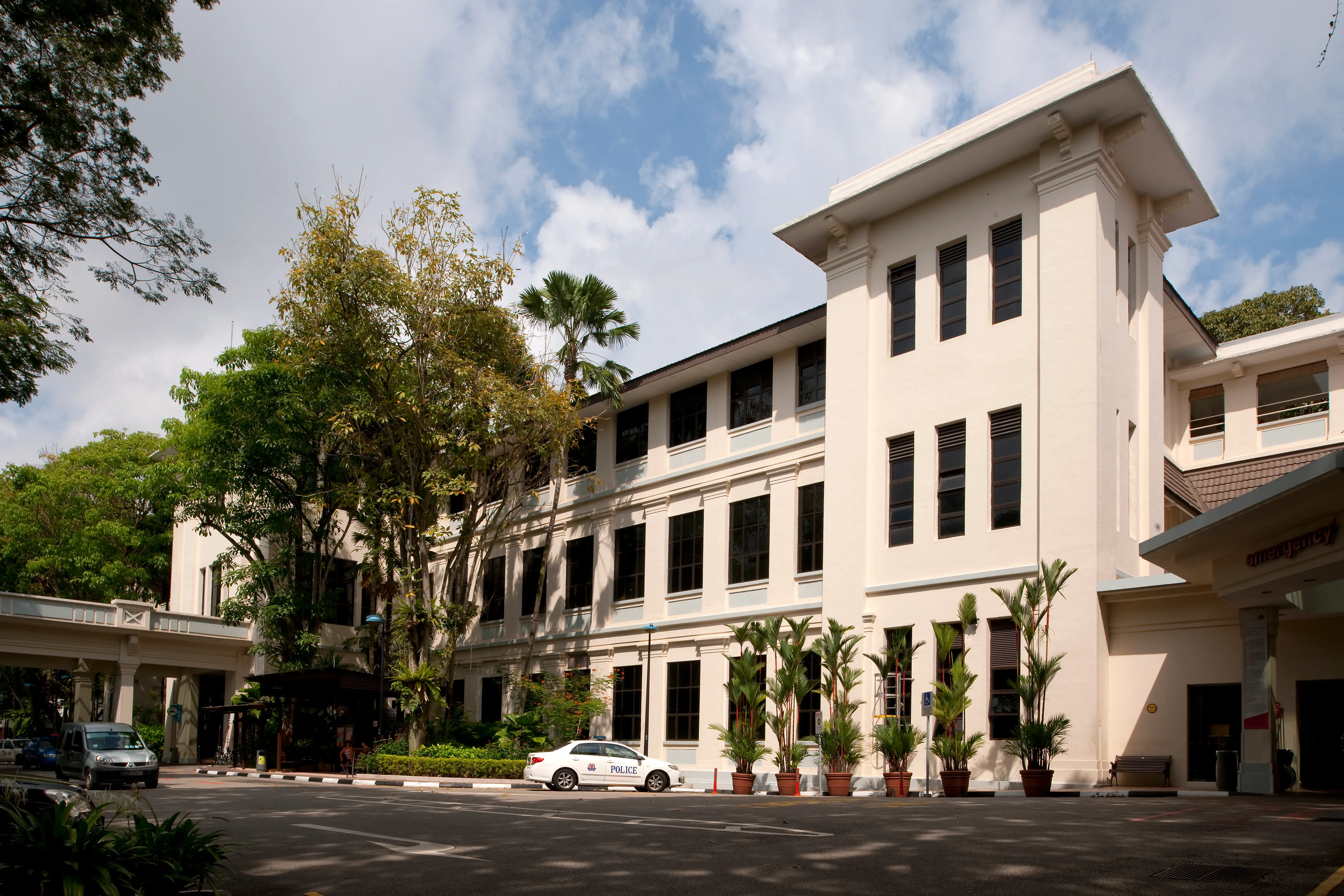
Located at 378 Alexandra Road, this was built by the British Armed Forces in 1938 as Singapore prepared for impending war. Known then as Alexandra Military Hospital[1] or the British Military Hospital, it was the largest and best equipped modern hospital in the ‘Far East Command’. It was designed to serve the growing number of military personnel in the Colony as Singapore was one of the key military fortresses of the British Empire.
On 14 February 1942, the hospital was brutally overrun by Japanese troops and more than 200 hospital personnel and patients were massacred in violation of the Geneva Convention[2].
When WW2 ended, the hospital continued to serve the British army as the “principal medical establishment for the Commonwealth forces in the Far-East”. It played a important role during the Malayan Emergency in 1940s and 1950s, when British troops engaged in jungle warfare against the Communist rebels and again during the Indonesian Confrontation from 1962 to 1965.
With the full withdrawal of British Armed Forces East of Suez, the British handed over the hospital to the Singapore Government in exchange for a symbolic $1 note. It was then renamed as the Alexandra Hospital and opened to the public as a general hospital.
Though it was more than 30-years old by the time of the hand-over, it was still regarded in 1970s as “the most modern hospital of its kind in Southeast Asia, containing many specialties not found elsewhere. It was also the first hospital in S.E. Asia to successfully perform limb reattachment to a patient.[3] Over the years, it has served as an important healthcare landmark for the residents of the wider Queenstown area and beyond.
In recognition of the WW2 history of this site, the National Heritage Board marked the Hospital as a Historic Site on 15 September 1998.
[1] Partridge, J. (1998). Alexandra Hospital: From British military to civilian institution 1938-1998. Singapore: Alexandra Hospital & Singapore Polytechnic.
[2] http://eresources.nlb.gov.sg/infopedia/articles/SIP_2014-04-07_090735.html
[3] http://www.ah.com.sg/
The Building
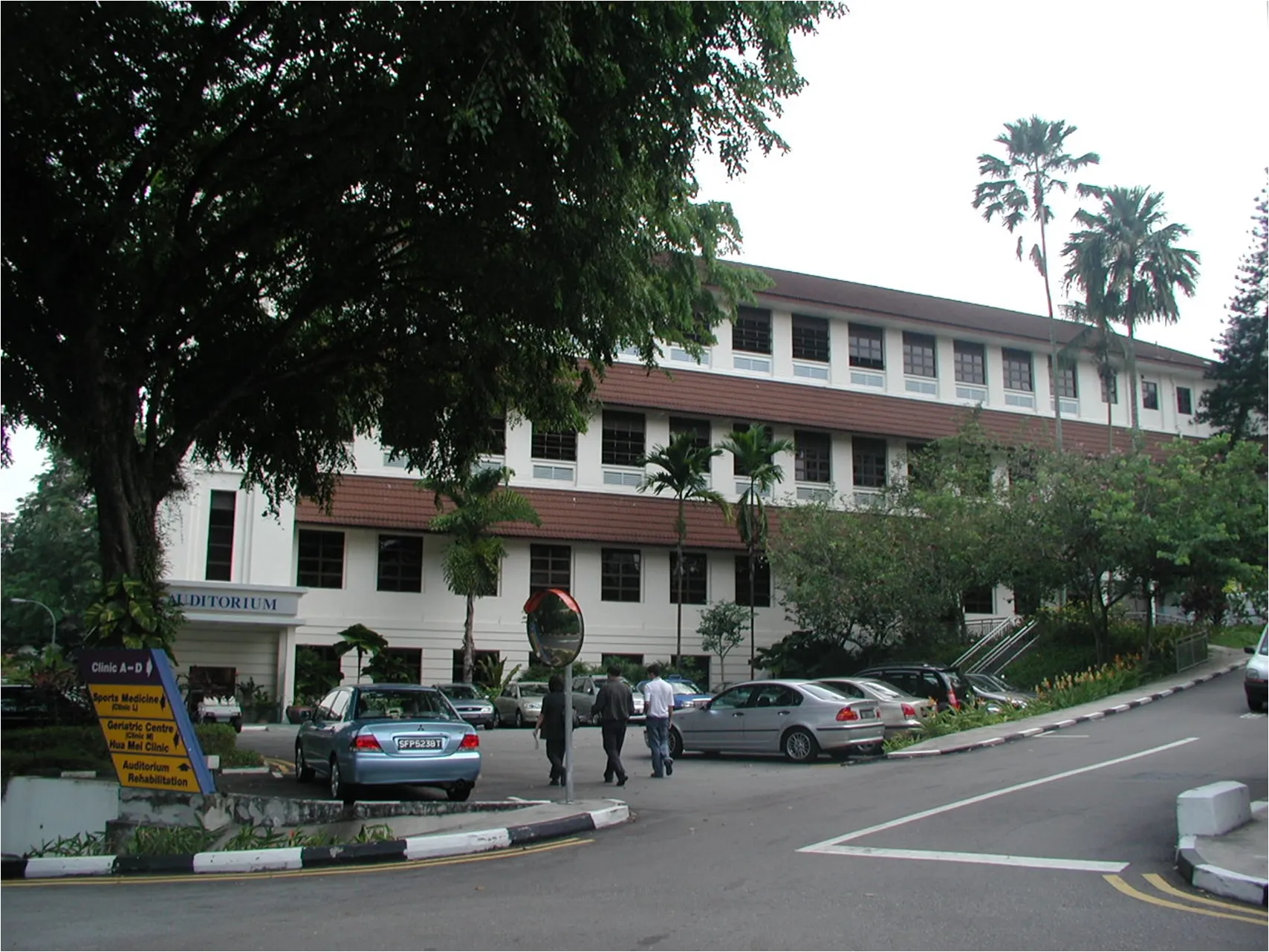
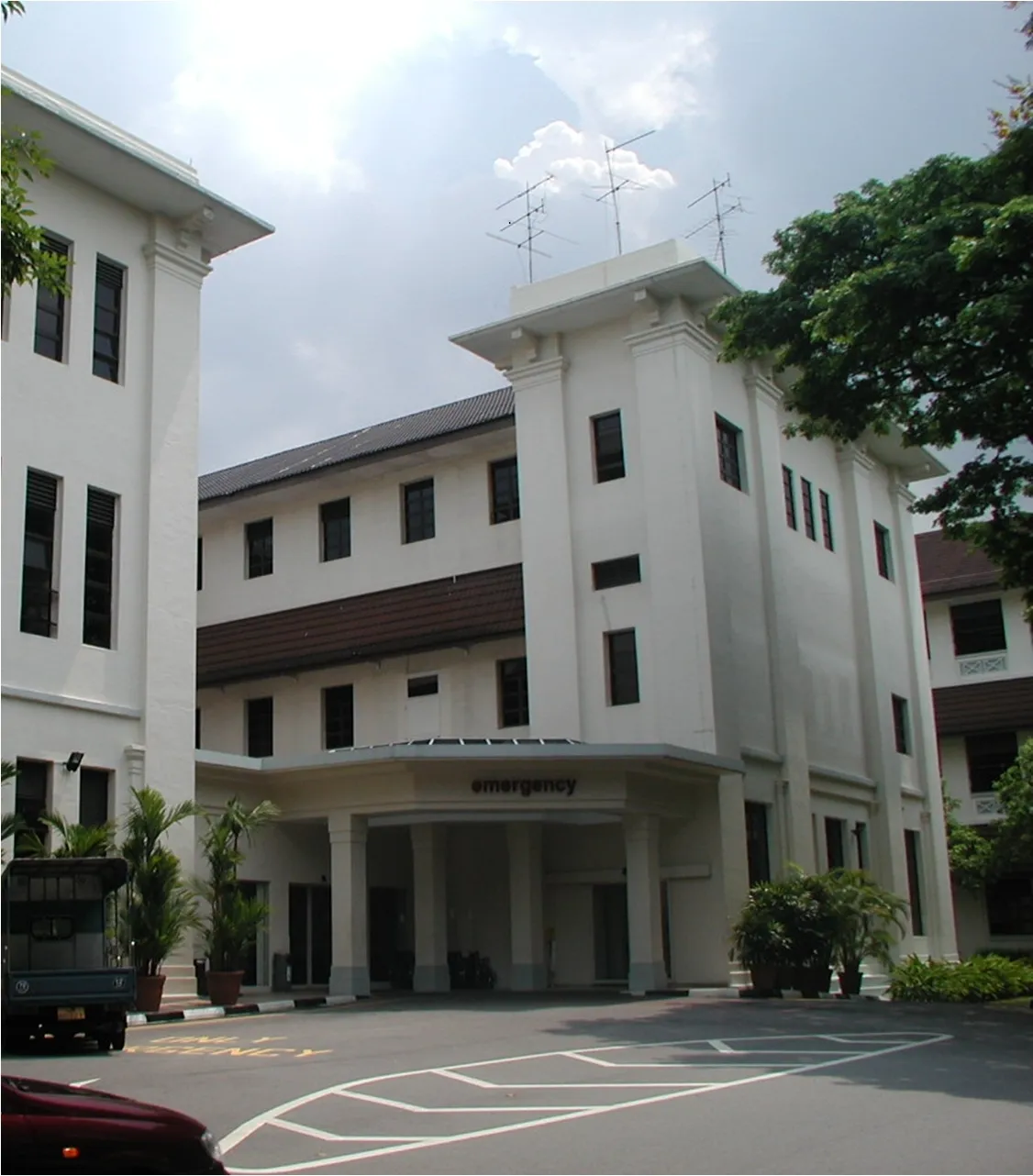
The hospital complex is made up of 5 linked buildings of reinforced concrete with infill walls of local bricks. This was the most modern building technique of its time and used extensively for all military construction in Singapore.
Designed for natural ventilation in the tropics, the buildings had high ceilings, large windows, overhanging eaves and generously shaded corridors. Set in generous grounds, it allowed for the patients to recuperate in an environment that was considered ‘healthy’ because of the fresh air that could circulate in the buildings.
Aesthetically, it was built in a simplified neo-Classical style, again, typical of military buildings in Singapore of the 1930s. There is extensive use of pre-cast concrete for vents and balustrades, an innovation in building technology that was introduced to Singapore in the preceeding decade. While the overall look was one of ‘no-frills’ architecture, the careful proportioning of the building structure, openings and the roof profile has created a harmonious ensemble that is integrated into the landscape.
The Legacy
The hospital complex is an example of modern architecture that was imported from the UK and adapted to the tropics. Situated prominently along Alexandra Road, it is both a physical and social landmark for the immediate neighbourhood and the wider population. The building’s is also a reminder of Singapore’s role as an important military base for the British Empire, the tragedy of WW2, and finally, the growth and provision of quality public healthcare after Singapore attained independence.
Gazetted on 6 June 2014.
Guidelines and Procedures
All proposed works will need to comply with the Conservation Guidelines and the Specific Restoration Guidelines (SRG). Conservation Permission is required before all additions & alteration works and operations of new use can begin.
Residential Fronts are characterised by timber casement windows flanking a double-leafed timber door. All buildings with residential front which is existing and/or identified in the 'Specific Restoration Guidelines', regardless of land use zoning, shall be retained and restored.
Any proposed additions and alterations to this conserved building are subject to evaluation. Please submit your proposal for URA's review.
Apply for Specific Restoration Guidelines (SRG) (opens in new tab)
Gallery
Explore Street View
The building can be found at this street.