Conserved Building
319 Pasir Panjang Road
Applicable Guidelines
Other Building Guidelines
Historic address: 319 Pasir Panjang Road
The History
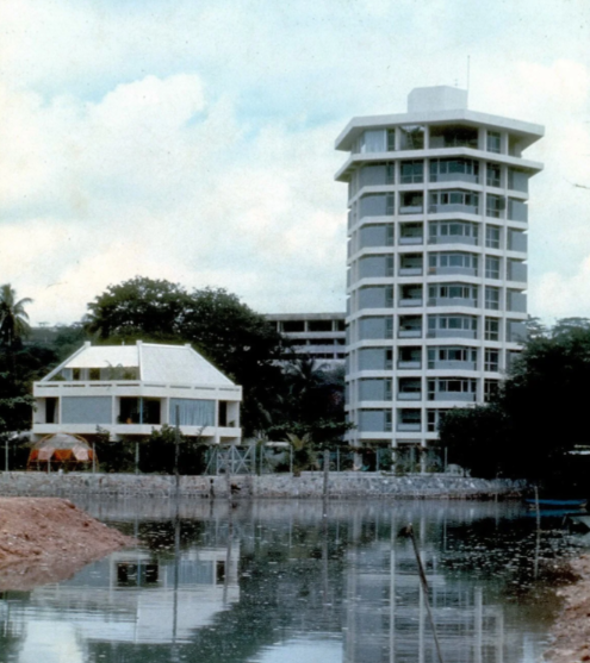
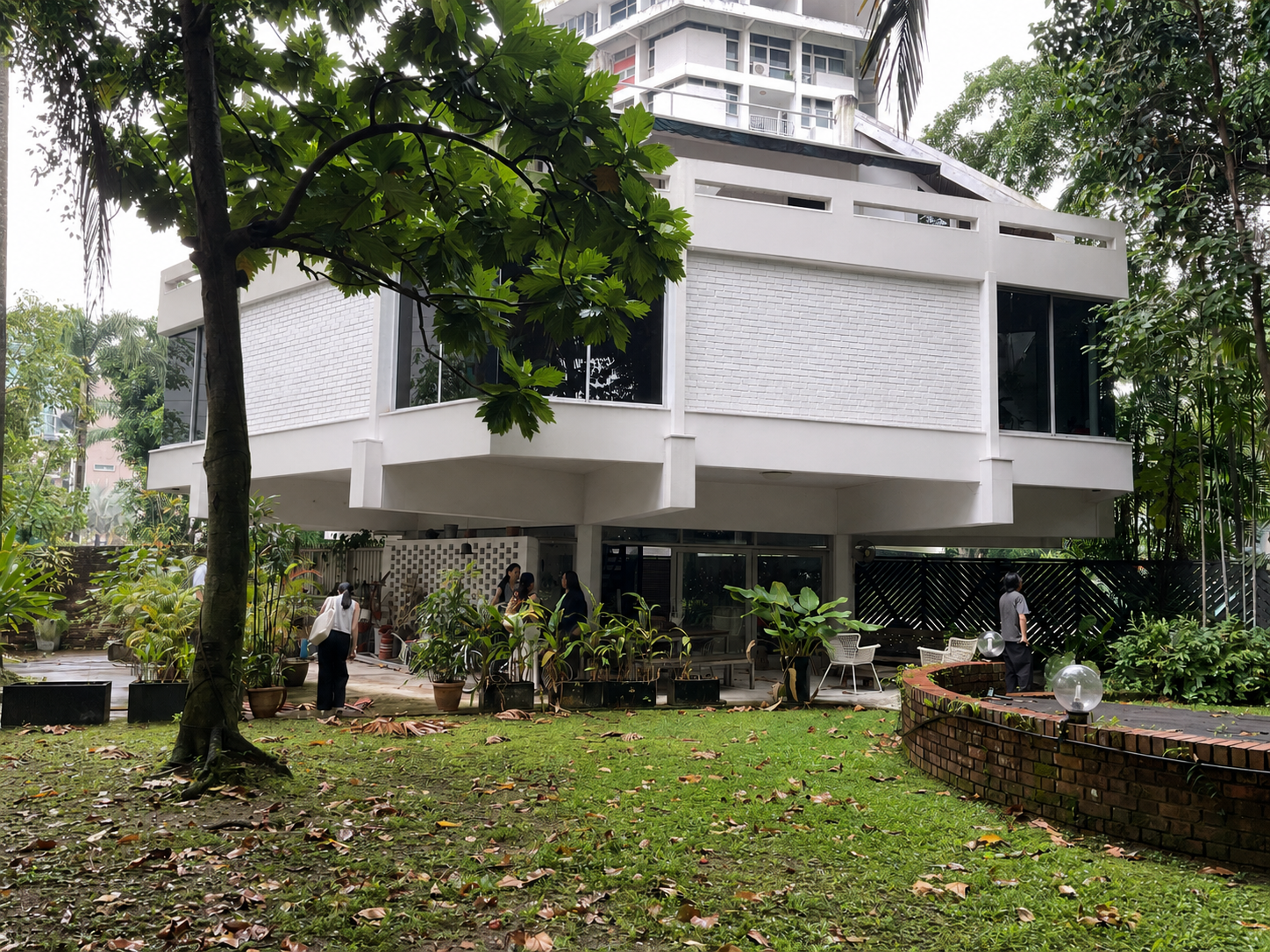
319 Pasir Panjang Road, also known as “Starpoint”, was a 1974 personal project of Datuk Lim Chong Keat, a local pioneer renowned architect. It comprised a 3-storey bungalow for himself and an 11-storey tower for his relatives and friends.
The site once fronted the sea before Pasir Panjang coast was reclaimed for port and infrastructure uses.
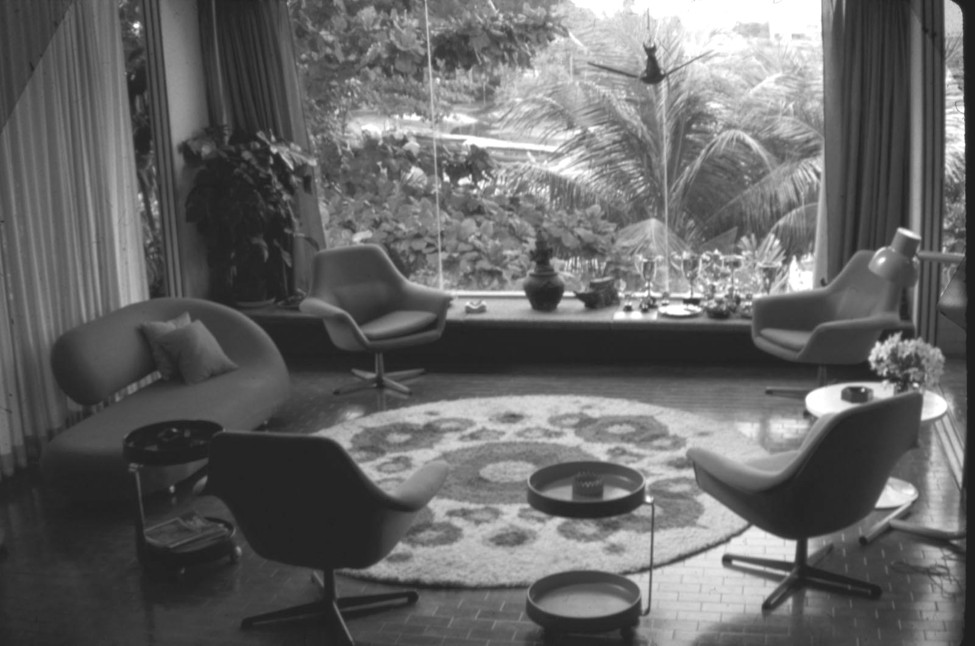
During his residence until 2006, Datuk Lim, who was an avid art collector and cultural patron, used the bungalow as an informal gallery. The house also welcomed luminaries such as Buckminster Fuller and Isamu Noguchi during their visits to Singapore.
The development was sold en bloc in 2025 to an enlightened developer who volunteered to conserve the bungalow.
The Building
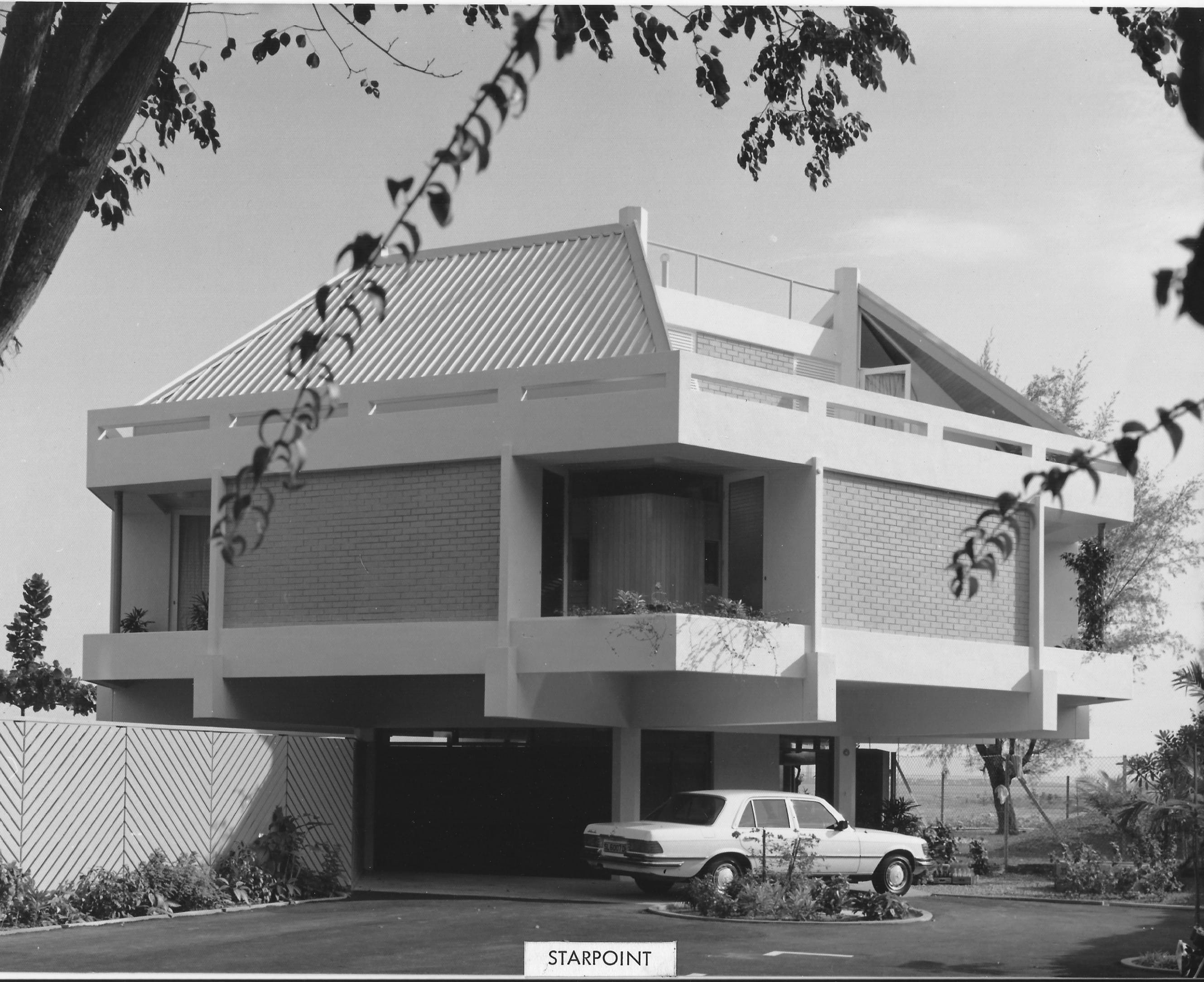
The conserved house features Datuk Lim’s signature geometric design language, inspired by Buckminster Fuller’s Dymaxion House.
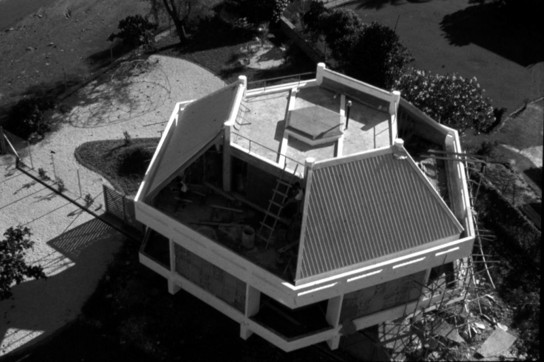
It has a hexagonal floor plate, with a central circulation core, from which deeply cantilevering beams radiate outwards to support an open plan layout. This structural expressiveness is a hallmark of Modernist design, freeing the floor plan from the constraints of load-bearing walls.
At the 2nd storey, open balconies at the corners provide views and cross ventilation, while masonry walls clad the sides for privacy – except on the southwestern facade which has an expansive frameless glass wall.
At the roof level, sloping planes give the building its distinctive silhouette, while open roof terraces afford panoramic views of the surroundings.
The Legacy
The bungalow will be integrated with a future residential development, with a site layout designed to ensure that the bungalow remains visible along Science Park Road.
The developer intends to make part of the bungalow publicly accessible, with the remainder serving as communal amenities for residents. The conservation of Starpoint complements URA’s existing efforts to conserve early Modern-style bungalows from before the 1950s, extending that narrative into the bold and experimental architectural era that followed.
Gallery