
URA Conservation Programme
Explore the history of URA's conservation efforts.
Last updated on 2 September 2026
Balancing Development and Built Heritage
Conservation of our built heritage is an integral part of urban planning and development in Singapore. Since 1989, through careful balancing of needs, detailed planning studies and public engagement, conservation status has been conferred to almost 100 conservation areas involving over 7000 buildings throughout the island.
Brief History of Conservation in Singapore
1960s: Survival Years
There was a need for new commercial centres and homes, offices and urban renewal was used as an approach to solve unemployment and housing shortage issues.
Valuable land in the Central Area was occupied by run-down low-rise buildings. Overcrowding and squalid living conditions prevailed in the early years.
Pre-1980s: Incubation Period
The earliest steps taken to preserve some of Singapore’s important monuments and landmarks were carried out through the then Preservation of Monuments Board (presently the Preservation of Sites and Monuments). The first 8 buildings granted legal protection as national monuments in 1973 were:
Cathedral of the Good Shepherd
Armenian Church
St Andrew’s Cathedral
Hajjah Fatimah Mosque
Telok Ayer Market
Thong Chai Building
Thian Hock Keng
Sri Mariamman Temple
These icons represented the multi-cultural origins of the new nation and were familiar urban, historical, cultural and social landmarks for the people.
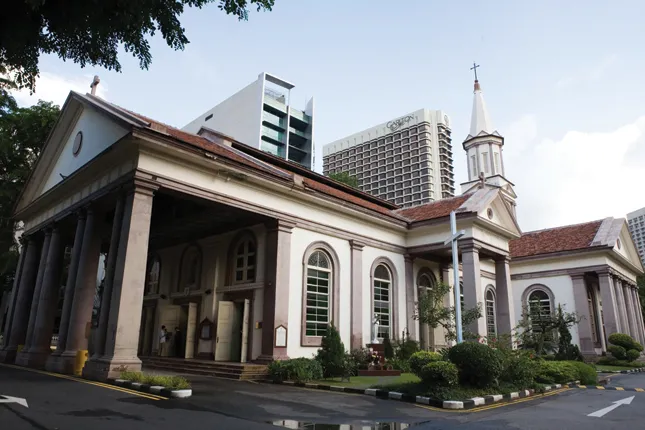
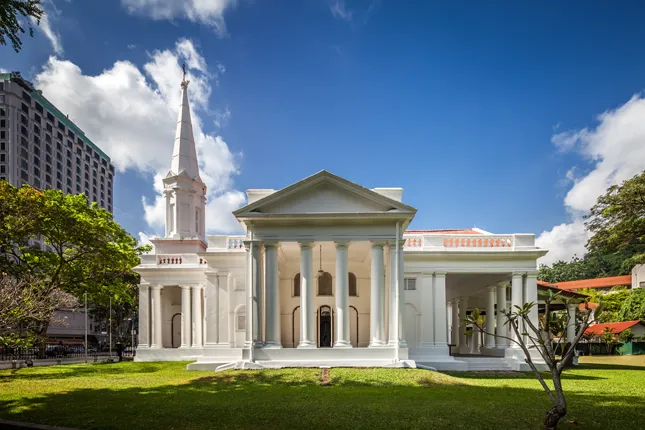
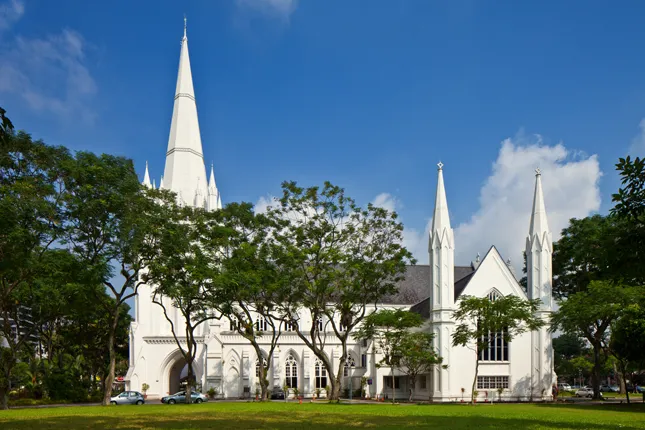
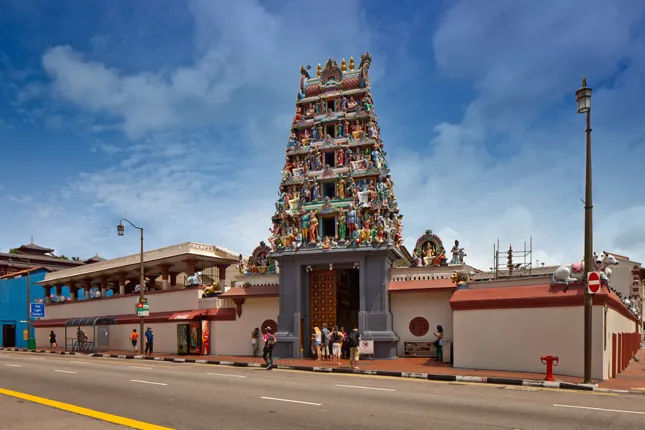
The 1970s and early 1980s also saw the rehabilitation of State-owned shophouses by URA. Buildings at Murray Street and Tudor Court were refurbished and put to new uses. This helped to change public perception of the value of these pre-war buildings. These planted the seeds for a greater interest in conservation by Singaporeans in the coming decade.
1980s
When Marina Bay was reclaimed it reduced the pressure to develop the city centre, allowing URA to study how significant areas of historic buildings to be kept.
Some key milestones of this period include the pedestrianization of Emerald Hill Road in 1981, and the unveiling of the Conservation Master Plan for the city’s historic areas in 1986. Between 1987 and 1988, the pilot restoration projects by French expert Didier Repellin at 53 Armenian Street, and by URA at No. 9 Neil Road, were completed and opened for public viewing. These demonstrated the latest approach to restoration best practises and helped convince more building professionals and the general public that restoration was technically feasible, economically viable and socially relevant. Subsequently, restoration was carried out for the rest of the Tanjong Pagar precinct and elsewhere.
7 July 1989 marked a milestone in Singapore, when 10 conservation areas such as Chinatown (Telok Ayer, Kreta Ayer, Tanjong Pagar and Bukit Pasoh), Little India, Kampong Glam, the Singapore River (Boat Quay and Clarke Quay), Cairnhill and Emerald Hill, with a total of over 3,200 buildings, were gazetted for conservation.
Since then, private participation in conservation grew and many shophouses were lovingly restored, resulted in the wealth of heritage buildings that surround us today.
2000s
The turn of the millennium saw increased public interest and participation in the topic of what should be identified for conservation, and how to put them to appropriate uses for greater social benefit. The Conservation Advisory Panel (CAP) was setup in 2002 to create a more regular and inclusive platform for individuals from diverse backgrounds to participate in and to provide inputs of URA’s built heritage proposals, to propose additional buildings for study and to promote greater public education and understanding of the gazetted built heritage. The CAP contributed greatly to the process of the Master Plan Reviews and in this period, additional regional clusters and landmarks of the Independence-era – such as the Tiong Bahru Pre-War estate, Balestier Road, Tanjong Katong, Bukit Timah Campus, the former Jurong Town Hall and the Toa Payoh Park lookout tower were placed under protection. Its tenure concluded in 2018.
The Heritage and Identity Partnership (HIP) then came into being in August 2018, to take the journey onwards - supporting deeper public-private-people collaboration in shaping and promoting Singapore’s awareness, use and relevance of our built heritage and identity as our nation continues to grow and evolve.
Introduction to the URA Conservation Programme
Conservation areas and conservation guidelines
The majority of conservation areas in Singapore fall into four distinct categories, and the conservation guidelines vary for each of these categories.
The four main categories are as follows:
Historic Districts
The Historic Districts, which include Boat Quay, Chinatown, Kampong Glam and Little India, are among the city’s oldest urban areas. Most of the buildings and streetblocks in these areas are still intact, and the entire building has to be retained and restored.
Residential Historic Districts
The Residential Historic Districts at Blair Plain, Cairnhill and Emerald Hill are residential areas which developed close to the city centre in the late 1800s. A new rear extension lower than the main roof can be built for greater flexibility in adapting the building for modern living.
Secondary Settlements
The Secondary Settlements such as Geylang and Joo Chiat are areas which developed later, largely after World War I, when people started to move out of the crowded city to live at the fringe. These are typically areas where there are already many new developments so emphasis is placed on retention of the streetscape. In these areas, a new rear extension up to the maximum height allowed for the area can be built.
Bungalows
The bungalows are detached buildings which come in a variety of architectural styles and are predominantly for residential use. New extensions can be built at the side and rear of the bungalow. Large sites can be subdivided for additional new developments. For a site where flat or condominium housing development can be built, the bungalow can be used for residential purpose or as a clubhouse to serve the development.
Facilitating restoration efforts
The Government provides various forms of assistance to encourage private owners to restore their buildings. They include:
waiver of land betterment charge and car park deficiency charge, where applicable; and
waiver of the need to provide car park lots where applicable.
Technical guidelines and standards are also drawn up to guide owners and professionals in restoring their buildings. Publications on conservation are produced to assist private owners to better understand the conservation principles and guidelines.
In addition, the government builds infrastructure and utilities to improve the environment of the conservation areas. Examples of these include pedestrian malls at Boat Quay to allow spillover of activities from the conserved buildings to liven up the areas.
Read more about our conservation resources here.